SWOLF calculator
SWOLF is the swimming equivalent of a golf score: seconds for one length plus the strokes you took in it, and lower is better. The arithmetic is trivial. What it means is not, and almost every explanation of it online skips the part that matters.
SWOLF calculator
Seconds for one length plus the strokes you took in it. Lower is more efficient.
22 seconds + 18 strokes. Distance per stroke: 1.39 m. Roughly efficient territory: typical of a trained masters swimmer holding a steady set.
SWOLF only means something against your own earlier SWOLF, in the same pool, at the same stroke. A 25 m score and a 25 yd score are different scales, and comparing yours to someone else's tells you nothing — a tall swimmer wins on stroke count without being more efficient. Watch it alongside distance per stroke: if SWOLF drops because you added a long glide, you have made the number look better and the swim slower.
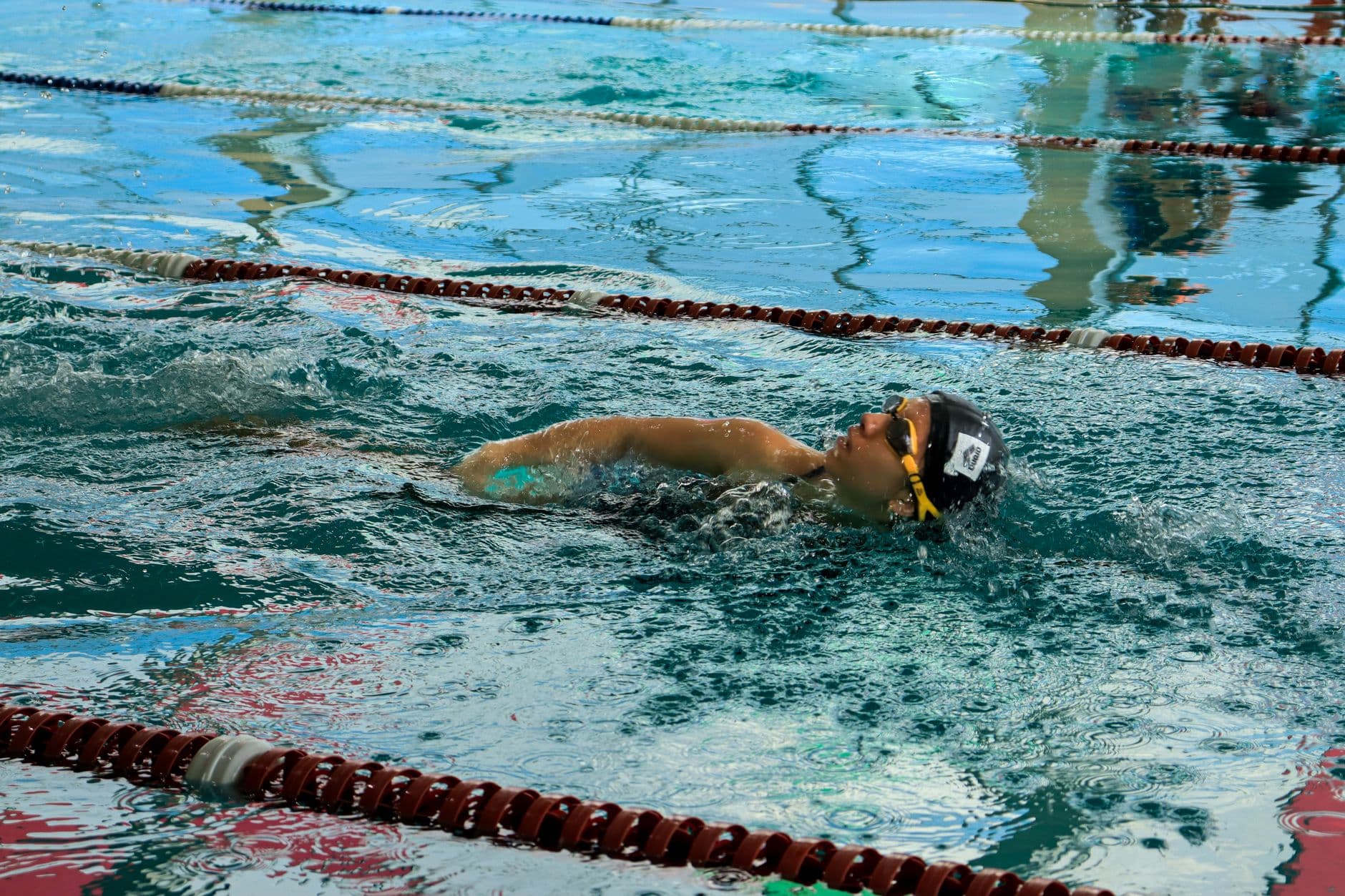
Where the number comes from
SWOLF is a portmanteau of “swim” and “golf”. You time one length and count the strokes you took, then add them together. Twenty-two seconds and eighteen strokes gives a SWOLF of 40.
The logic is that efficiency is a trade-off between how fast you move and how much work you do to move that fast. Anyone can drop their stroke count by gliding, and anyone can go faster by thrashing. Adding the two together penalises both, so improving the score means genuinely getting more out of each stroke.
The problem nobody mentions
SWOLF adds seconds to strokes. Those are different units, and the sum has no physical meaning — it is an index, not a measurement. Three consequences follow, and they are the whole reason the metric is so widely misused:
- It is not comparable between swimmers. A swimmer with a 1.95 m arm span takes fewer strokes per length than one at 1.70 m at identical technique. Their SWOLF will be lower. It says nothing about who swims better.
- It is not comparable between pools. A 50 m length has roughly twice the seconds and twice the strokes of a 25 m one, so the score roughly doubles. A 25 yd length is 8.5 % shorter than a 25 m one, which is enough to move the number.
- It is not comparable between strokes. Breaststroke has a far lower stroke count and a far higher time per length than freestyle. The two scores can look similar for entirely unrelated reasons.
None of that makes SWOLF useless. It makes it a personal trend line: same pool, same stroke, same effort level, watched over weeks. Used that way it is genuinely informative, and it is the cheapest efficiency measurement in swimming.
Rough bands, for a sanity check only
Freestyle in a 25 m pool, at a steady aerobic effort rather than at sprint pace:
| SWOLF | Roughly | What it usually means |
|---|---|---|
| 55+ | Developing | Usually a body-position problem, not a fitness one. |
| 45–55 | Competent | The stroke works. Distance per stroke is the next lever. |
| 35–45 | Efficient | Typical of a trained masters swimmer holding a steady set. |
| 0–35 | Elite | Competitive squad territory at race pace. |
These bands are deliberately wide. They exist so you can tell whether your number is plausible, not so you can grade yourself against them.
Read it alongside distance per stroke
SWOLF alone cannot tell you which half of the trade-off to work on. Distance per stroke — pool length divided by stroke count — can, and the calculator above gives you both.
If your SWOLF drops because distance per stroke went up, that is real improvement: you are holding more water. If it drops because the seconds went down while distance per stroke stayed flat, you got fitter, which is also fine but is a different thing. And if it drops because you added a long glide, the number improved while the swim got slower — the classic way to fool yourself with this metric.
What to do with a high score
A high SWOLF at an easy pace is almost always a body-position problem rather than a strength one. Dragging hips force you to take more strokes and more seconds simultaneously, which is why the score is so sensitive to it. The technique section covers the fix, and it is not a harder kick.
Once the line is good, the next lever is the catch, and after that it is fitness — at which point the CSS test gives you a threshold pace to train against and the pace calculator turns it into splits.
Frequently asked questions
What is a good SWOLF score?
In a 25 m pool swimming freestyle, most trained adult swimmers sit somewhere between 35 and 45, and competitive swimmers go below 35 at race pace. But the honest answer is that a good SWOLF is one lower than your own last one, in the same pool, at the same stroke and the same effort. A tall swimmer takes fewer strokes for reasons that have nothing to do with efficiency.
Why is my SWOLF different on my watch than in this calculator?
Most watches average SWOLF across a length or a set and count stroke cycles rather than individual arm strokes, and some brands adjust for pool length. If your watch shows roughly half the number you calculate here, it is counting cycles. Pick one definition and stay with it — the trend is what carries the information, not the absolute value.
Can I compare my SWOLF to someone else's?
No, and this is the mistake that makes the metric useless for most people. SWOLF adds seconds to strokes, two quantities with no common unit, and the sum depends on pool length, stroke, height and arm span. A 25 m score and a 25 yd score are not on the same scale either. Compare it only to your own history.
How do I lower my SWOLF score?
Either take fewer strokes for the same time, or swim the same strokes faster. What does not work is gliding to drop the stroke count — the seconds go up by more than the strokes come down, and you end up slower with a worse score. The lever that genuinely moves it is the catch: holding more water per stroke lets you cover more distance without slowing the tempo.
Sources
- Stroke count, stroke rate and the efficiency trade-off — U.S. Masters Swimming
- SWOLF and swim efficiency metrics in wearable devices — Garmin — definition as implemented in watches
SwimFast is an independent publication. We are not a swim school, a coaching service or a governing body, and nothing here is medical advice. Training paces and test protocols are cited from the published research or federation documents linked on each page. Never swim alone, never attempt breath-hold work without supervision, and check with a doctor before starting a new training programme.