Wetsuit for open water swimming: when you actually need one
The water temperatures at which World Aquatics, U.S. Masters Swimming and USA Triathlon require or ban wetsuits, what a suit does to your body, and how to measure it.
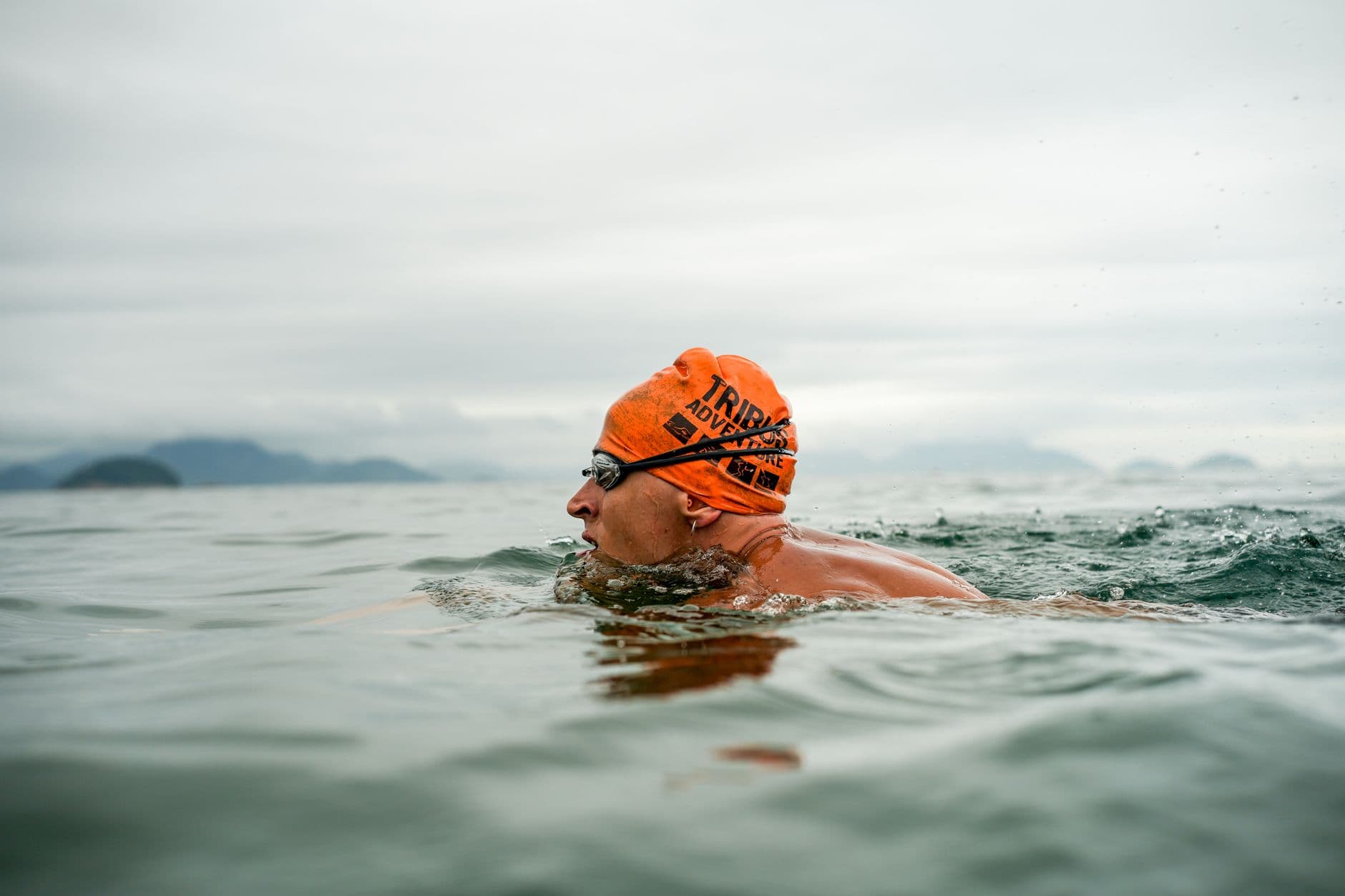
Ask whether you need a wetsuit for open water swimming and you will usually get an opinion about comfort. The real answer has two halves. At a race, a rule decides for you, and the rule is written in degrees. Outside a race nobody decides for you, and the question becomes three things at once: how cold the water is, how long you will be in it, and how much heat your own body makes while you swim.
This guide works through both halves using the current rulebooks of World Aquatics, U.S. Masters Swimming and USA Triathlon, and the handful of studies that have measured what a wetsuit actually does to a swimmer. The drag figures and the World Triathlon wetsuit table are in our guide to triathlon swim training and are not repeated here. If you have never swum outside, start with your first open water swim.
Read this first. A wetsuit does not make open water safe. It adds warmth and buoyancy; it does not keep your face out of the water if you are exhausted or gasping, which is what a life jacket is for. Never swim alone, and make sure somebody can see you the whole time. If you have a heart condition, or have ever had breathing trouble while swimming, talk to a doctor before swimming in cold water.
Do you need a wetsuit for open water swimming?
Not always, but below 16 °C (61 °F), yes for almost everyone. None of the three governing bodies we checked runs a no-wetsuit race in colder water without special approval, and the RNLI calls anything under 15 °C cold water that can impair breathing and movement. Above that, it depends on duration and on you.
Sixteen degrees is not a line where water turns dangerous. It is the point at or above which three organisations, writing for different athletes, all draw their limit for racing without insulation. A review of open water swimming in cold and warm water by Tipton and Bradford says plainly that the evidence behind such regulations is limited. That cuts both ways: warmer is not automatically comfortable, and colder is not automatically an emergency for an acclimatised swimmer with support. For a first season, treat 16 °C as the floor below which you wear the suit.
What a wetsuit actually does
Insulation. Neoprene foam slows heat leaving your body. In a Ball State University study, swimmers covered 30 minutes in water of 20.1, 22.7 and 25.6 °C, once in a wetsuit and once in a swimsuit. Trunk temperature in the wetsuit ran 3.2 to 4.3 °C warmer, in all three water temperatures.
This matters more for a swimmer than it seems. At rest, muscle with little blood flowing through it acts as insulation — roughly 70% of the body's total, according to Tipton and Bradford. Once you swim, blood floods the working muscles and that insulation largely disappears, leaving only the fat under the skin. A swimmer working hard in cold water is less insulated than the same person floating still in it.
Buoyancy. The foam also floats. In a Colorado State University study, the body density of fourteen competitive swimmers fell from 1.048 to 1.021 g/ml when they put on a wetsuit. Water is close to 1.0, so the suit moves a swimmer much nearer to floating on their own, and most of that lift arrives at the hips and legs.
The temperatures the rulebooks actually use
These are three different kinds of event, so the numbers are not interchangeable. World Aquatics governs elite open water swimming, U.S. Masters Swimming (USMS) runs adult open water events in the United States, and the USA Triathlon column is for its ordinary local races; its national championships and elite races are stricter.
| Rule | World Aquatics (elite open water) | U.S. Masters Swimming | USA Triathlon (local races) |
|---|---|---|---|
| Wetsuit mandatory | Below 18.0 °C (64.4 °F) | No swim starts below 16 °C (60.8 °F) unless all swimmers must wear heat-retaining swimwear, or an approved thermal plan is in place | 15.9 °C (60.6 °F) and below |
| Your choice | None: 18.0 °C and above is swimsuit only | Wetsuit swimmers compete in a separate category, if the event host allows it | 16.0–25.5 °C (60.7–78.0 °F) |
| Allowed, but no awards | — | — | Above 78 °F and below 84 °F (25.6–28.8 °C) |
| Wetsuit not allowed | 18.0 °C and above, unless the referee requires wetsuits for everyone | Above 25.5 °C (78 °F) | 84.0 °F (28.9 °C) and above |
| Thickness | 3 mm minimum, 5 mm maximum | Not specified | 5 mm maximum anywhere |
| Too cold or too hot to race | Outside 16.0–31.0 °C the referee delays, postpones or stops the race | Below 13.9 °C (57 °F) even with wetsuits required, unless a thermal plan is approved; above 29.45 °C (85 °F) for 5 km or longer, 31 °C for shorter swims | Below 12.0 °C (53.6 °F) adjusted, or 32.0 °C (89.6 °F) and above |
Sources: World Aquatics Competition Regulations (February 2026), the 2026 USMS Rule Book, Part 3, and the USA Triathlon Multisport Competition Rules (v.2026.01.01). British Triathlon, Triathlon Australia and individual organisers publish their own versions; the event guide for your race is the document that counts.
The World Aquatics detail most summaries get wrong
You will often read that World Aquatics makes wetsuits “optional between 18 and 20 °C”. The regulation does not say that. At 18.0 °C and above, athletes wear a swimsuit. Between 18.0 and 20.0 °C, the Chief Referee can require every athlete to wear a wetsuit if the safety and medical officers judge conditions hazardous. It is a switch officials throw for the whole field, not a personal preference.
How the temperature is taken matters as well. World Aquatics measures two hours before the start, at three points on the course, 40 cm below the surface, and averages them. USA Triathlon recommends measuring an hour before, 24 inches down, in the middle of the course and at two other points — and when the average is 27 °C or below, the lowest reading becomes official. The figure on a lake's website or your watch is usually a surface reading from somewhere else. Treat it as a rough guide.
Why the air counts as much as the water
This is the rule almost nobody mentions. Under USA Triathlon's rules, when the water is 22 °C or colder, the air is 15 °C or colder, and the air is colder than the water, the official water temperature may be adjusted down: measured water temperature minus half the gap between water and air.
Water most people would call pleasant in a suit is treated as 15.0 °C, which makes wetsuits mandatory. The same rules cancel the swim outright if the air is below 6.0 °C (42.8 °F).
The logic carries over to a swim with friends. Your head and arms keep leaving the water, wind on wet skin pulls heat quickly, and you stand around on the shore before and after. A cold, windy morning is a reason to wear the suit even when the water reading alone says you could manage without it.
How cold can you swim without a wetsuit?
There is no single safe number. The RNLI defines water below 15 °C (59 °F) as cold water that can seriously affect breathing and movement, and cold shock is strongest between about 10 and 15 °C in lightly dressed people. No governing body we checked runs no-wetsuit races below 16 °C without special approval.
Cold shock is the dangerous part of the first minute: a gasp, breathing you cannot control, a racing heart. The RNLI's guidance is that its effects pass in less than a minute, that you should get in slowly rather than jump, and that if it catches you, you roll onto your back and float until it passes. It also says a wetsuit of suitable thickness greatly improves your chances of getting through that initial shock.
Some swimmers do swim much colder without a suit, and cold acclimatisation is real. Tipton and Bradford also describe the catch: a slow fall in core temperature does not always trigger the warning sensations you would expect, so feeling fine is not reliable evidence that you are. That is something to build towards over seasons, with experienced company. If fear of cold, deep water is what holds you back, overcoming a fear of water as an adult is a better starting point than any temperature chart.
What a 2026 study found about the cold limit in a wetsuit
Until this year there was little direct evidence for where the limit sits when swimmers are wearing wetsuits. A study from Indiana University, published in the Journal of Applied Physiology in March 2026, tested it. Twenty trained swimmers, twelve men and eight women, swam for 120 minutes at race intensity in a swim flume, in wetsuits approved by World Aquatics. The water started at 16 °C and was cooled by about 0.15 °C every ten minutes, and the researchers identified the temperature at which each swimmer's core temperature stopped holding steady.
- The median limit was 15.0 °C, below the 16 °C floor. World Aquatics' own summary adds that some swimmers were already cooling at 15.5 °C or higher.
- Men and women did not differ (15.0 against 14.9 °C), and nor did sleeved and sleeveless suits in the eight swimmers who tried both (15.1 °C each).
- Body fat, heat production and body surface area relative to mass together explained about 40% of the differences. Swimmers with more body fat, and swimmers producing more heat, held their temperature in colder water.
The authors still recommend keeping the 16 °C rule as a safety margin for real open water and a more varied population. The implication for everyone else is ours, not theirs: those swimmers were trained and swimming hard, so they were making plenty of heat. A slower recreational swimmer makes less, and a very lean swimmer has less fat to hold it in. Both should expect to reach their limit in warmer water.
Sleeveless or full sleeve
The worry is that sleeves restrict the shoulders and sleeveless suits let the cold in. The evidence on both is small but consistent. Besides the equal cooling limits above, a study in the International Journal of Exercise Science put muscle sensors on the shoulders of eight swimmers in a full-sleeve suit, a sleeveless suit, buoyancy shorts and no suit, at three paces. Shoulder muscle activity and stroke rate changed with pace, not with what they wore.
Eight swimmers is not a verdict, so fit matters more than style. A U.S. Masters Swimming buying guide puts fit ahead of price and speed claims: snug in the armpits, lower back, groin and knees, because loose areas collect water and chafe. It also says to swim five to ten minutes in a new suit before judging it. If you have had shoulder pain, test the suit through a full swim; swimmer's shoulder explains why the load adds up.
Thickness: more is not better
World Aquatics and USA Triathlon both cap swimming wetsuits at 5 mm, which is a useful sanity check when shopping. Thicker panels are warmer and float more, but the USMS guide warns that an overly buoyant suit leaves you feeling like a cork and makes it harder to rotate and use your hips and core.
Tightness is a trade-off too. A swimming suit should fit closely so water does not flush through it, but closely is not the same as squeezing your chest. A study of Tasmanian scuba divers measured lung volumes on dry land with and without their suits, all 7 mm or thicker. Every group lost lung volume in the suit: recreational divers 7% of forced vital capacity on average, and female recreational divers up to 15%. Those suits are thicker than any swim race allows, which is the point — a dive or surf suit is built for a different job. If a suit restricts your breathing before you are even in the water, it is the wrong suit or the wrong size.
How much faster is swimming in a wetsuit?
In lab studies, a few percent. Fourteen competitive swimmers at Colorado State were 4.96% faster over 400 m and 3.23% faster over 1,500 m in wetsuits, and leaner swimmers gained more. In a Japanese flume study of thirteen triathletes, easy swimming cost 14.4% less energy in a wetsuit.
That Japanese study adds three details. At a harder pace the energy saving shrank to 7.5%. Maximal oxygen uptake did not change, though the speed at which swimmers reached it rose 5.4%: the suit made the same engine cheaper to run, not bigger. And stroke length did not change while stroke rate tended to rise, so the extra speed came with quicker turnover rather than a longer stroke — the trade explained in stroke rate or stroke length.
To see what a few per cent is worth in minutes over your own race distance, the triathlon swim calculator applies the band to a pool pace and also says whether the suit will be legal at a given water temperature under each rulebook.
If the wetsuit transforms your swimming, read that as a diagnosis
Many adults feel a wetsuit change everything the first time. Breathing gets easier, the legs stop dragging, a hard distance feels easy. That is real, and it is also information. The lift arrives mostly at the hips and legs, so the swimmers who gain most are the ones whose legs sink most without it.
A big improvement is not a sign that your technique is fixed. It is a sign that body position was costing you a lot and the suit is paying that cost for you. Take it off, on any pool day or at a race that turns out too warm for wetsuits, and the cost comes straight back. The work that fixes it is in why your legs sink when you swim. Treat the wetsuit like a pull buoy: useful, and it hides the problem while you wear it.
Measure your own wetsuit effect
You do not have to guess how much of your open water speed is the suit. If your pool allows wetsuits, or you have a measured loop in open water with someone watching, swim a steady 400 without the suit, rest fully, then the same 400 at the same effort in it. Put both times into the pace calculator and compare the pace per 100.
For example, 8:20 without the suit (2:05 per 100) and 8:00 in it (2:00 per 100) is 20 seconds out of 500, a 4% gain — within the range the Colorado swimmers showed. A gap well beyond that points to body position. Repeat the test after a block of technique work: if the gap shrinks while your no-suit time improves, the work is landing.
Two rules keep the test honest and safe. First, keep it short in a warm pool. Competition pools are held at 25–28 °C, and in the Ball State study core temperature rose about 0.9–1.0 °C in 30 minutes of wetsuit swimming in 22.7 and 25.6 °C water. Get out if you feel hot, dizzy or sick. Second, set training paces from a test without the suit, because that is how you train. The CSS calculator turns a 400 and a 200 into training zones; race pace in a wetsuit will come out slightly quicker. SWOLF works the same way: same pool, same stroke, with and without, never against someone else's score.
Warm water: when the wetsuit becomes the problem
The upper limits in the table are not only about fairness. In the Ball State study, in 22.7 °C water, core temperature rose twice as much in the wetsuit as in the swimsuit over the same 30 minutes (1.02 against 0.48 °C). Stretch that to an hour on a sunny day and the suit that protected you in May becomes a heat risk in August. If the water is warm enough to stand in comfortably in a swimsuit, think hard before zipping up for a long swim, swim easier if you do, and get out at the first sign of overheating. The heat section of your first open water swim covers the warning signs.
Getting out is part of the swim
Tipton and Bradford treat the minutes after leaving cold water as a risk period of their own, one that struggling out of a tight suit can make worse. There is a practical side too. A Norwegian study had nine trained swimmers swim in a lake in wetsuits on seven occasions, with the water between 24.5 and 8.4 °C, and timed a nut-and-bolt task before and after. At 8.4 °C the task took 47.5% longer than at 24.5 °C, despite the wetsuits.
Hands that clumsy fumble zip cords, car keys and tow-float clips. Practise getting the suit off before you need to do it cold, lay out warm clothes in the order you will put them on, and swim with someone who can help with the zip.
When to stop and get medical help
One condition is closely tied to wetsuits. Immersion, or swimming-induced, pulmonary edema is fluid leaking into the lungs during a swim. A review in The Physician and Sportsmedicine lists its risk factors as age over 50, female sex, drinking too much beforehand, tight wetsuits, cold water, endurance training and existing heart disease, though it also affects healthy people. Symptoms can start soon after you get in: shortness of breath, a cough, coughing up phlegm or blood.
If that happens, stop swimming, signal for help, get out and get medical attention straight away; do not try to finish. The review notes the condition can recur and can be fatal, and anyone who has had it should have a full heart and lung assessment before cold or hard swims again. More broadly, a study of U.S. triathlon deaths between 2003 and 2011, cited by Tipton and Bradford, found that 79% happened during the swim, most likely from sudden cardiac death. That is why the advice at the top is not a formality: see a doctor first if you have any heart history, and never swim unseen.
For sessions that build towards your first long swim in a suit, see the workouts section, and sighting in open water for the skill a wetsuit cannot help with.
Frequently asked questions
Do I need a wetsuit for open water swimming?
Below 16 C (61 F), yes for almost everyone: none of World Aquatics, U.S. Masters Swimming or USA Triathlon runs a no-wetsuit race in colder water without special approval, and the RNLI treats water under 15 C as cold enough to impair breathing. In warmer water it depends on how long you swim, the air temperature and how much heat you produce.
What temperature do you need a wetsuit for swimming?
It depends on the rulebook. World Aquatics makes wetsuits mandatory below 18.0 C (64.4 F). USA Triathlon local races require them at 15.9 C (60.6 F) and below, and allow them for awards up to 78 F. U.S. Masters Swimming permits them up to 25.5 C (78 F) in a separate category. Outside races, 16 C is a sensible floor.
How cold can you swim without a wetsuit?
There is no safe number that applies to everyone. The RNLI defines water below 15 C (59 F) as cold water, and the cold shock response is strongest between about 10 and 15 C in lightly dressed people. Acclimatised swimmers do go colder, but gradually, over seasons and with company. For a first season, wear a wetsuit below 16 C.
Do you swim faster in a wetsuit?
Yes, by a few percent. Competitive swimmers in a Colorado State study were 4.96% faster over 400 m and 3.23% faster over 1,500 m in wetsuits, and leaner swimmers gained more. The suit adds buoyancy rather than fitness: in a separate study, maximal oxygen uptake did not change, but the energy cost of easy swimming fell by 14.4%.
Should I get a sleeveless or full-sleeve wetsuit?
The limited evidence says fit matters more than sleeves. In a 2026 study, sleeved and sleeveless suits held core temperature down to the same water temperature, 15.1 C, and a small pool study found no difference in shoulder muscle activity or stroke rate between them. Choose the one that is snug at the armpits, lower back, groin and knees without restricting your breathing.
What thickness wetsuit do I need for open water swimming?
A swimming wetsuit, not a thicker surf or dive suit. World Aquatics requires between 3 and 5 mm and USA Triathlon caps suits at 5 mm. Thicker is warmer, but U.S. Masters Swimming warns that an overly buoyant suit makes rotation harder, and dive suits of 7 mm or more measurably reduced lung volumes even on dry land.
What do you wear under a wetsuit for open water swimming?
A normal swimsuit. At World Aquatics races the rule is exactly one swimsuit under the wetsuit, and nothing else that is not part of the approved suit, cap or goggles. Avoid thick layers or anything with seams and fasteners that press into the skin under a tight suit, since chafing shows up at the pressure points.
Sources
- Competition Regulations, in force from February 2026 - Part One art. 6.9 (wetsuits) and Part Three arts. 10 and 12.3 (open water swimwear and water temperature) — World Aquatics
- 2026 U.S. Masters Swimming Rule Book, Part 3: Open Water and Long Distance - arts. 302.2.5 (water temperature) and 303.4 (swimwear categories) — U.S. Masters Swimming
- USA Triathlon Multisport Competition Rules v.2026.01.01 - sections 3.2 (wetsuits) and 3.4 (water temperatures, cold-air adjustment, shortened swims) — USA Triathlon
- Skutnik BC et al. (2026). Safe cold-water thresholds while wearing wetsuits approved for open water swimming competitions. 140(3):816-824 — Journal of Applied Physiology
- Science Supports Safety: new research reinforces 16C threshold for open water swimming (2 April 2026) — World Aquatics
- Tipton M, Bradford C (2014). Moving in extreme environments: open water swimming in cold and warm water — Extreme Physiology & Medicine
- Trappe TA et al. (1995). Thermal responses to swimming in three water temperatures: influence of a wet suit. 27(7):1014-1021 — Medicine & Science in Sports & Exercise
- Cordain L, Kopriva R (1991). Wetsuits, body density and swimming performance. 25(1):31-33 — British Journal of Sports Medicine
- Tomikawa M, Shimoyama Y, Nomura T (2008). Factors related to the advantageous effects of wearing a wetsuit during swimming at different submaximal velocity in triathletes. 11(4):417-423 — Journal of Science and Medicine in Sport
- Lim B et al. (2023). Shoulder muscle activity while swimming in different wetsuits and across different paces. 16(1):172-181 — International Journal of Exercise Science
- Stevens G, Smart DR (2025). The influence of wetsuit thickness (7 mm or more) on lung volumes in scuba divers. 55(1):27-34 — Diving and Hyperbaric Medicine
- Morton WJ et al. (2025). Manual dexterity in open-water wetsuited swimmers: a cohort crossover study. 20(2):213-223 — International Journal of Sports Physiology and Performance
- Kumar M, Thompson PD (2019). A literature review of immersion pulmonary edema. 47(2):148-151 — The Physician and Sportsmedicine
- Cold water shock — RNLI
- Open water swimming safety advice — RNLI
- McDougal S (2019). Which Wetsuit is Right for You? — U.S. Masters Swimming
- Facilities Rules FR 2.1.13.1 - competition pool water temperature 25-28 C — World Aquatics
Read next
Lane etiquette: how to share a crowded lane without being the problem
Which way to circle in the US, Britain and Australia, picking a lane by seconds per length, the 5-second gap, passing and resting — and where the published rules disagree.
Swim paddles and fins: what they train and when they cost you
Paddles lower your training load at steady speed and a four-week block changed nothing; fins raise energy cost. What the measurements say and how to use both.
Your first open water swim: what nobody warns you about
The cold-water gasp, the fact that you cannot judge your own condition once acclimatised, and why a strong pool swimmer can be in trouble in twenty minutes.
SwimFast is an independent publication. We are not a swim school, a coaching service or a governing body, and nothing here is medical advice. Training paces and test protocols are cited from the published research or federation documents linked on each page. Never swim alone, never attempt breath-hold work without supervision, and check with a doctor before starting a new training programme.