SWOLF: what the number means and when to ignore it
Add the seconds and the strokes for a length and you get a single efficiency score. It is genuinely useful, and it lies about sprinting for a reason worth understanding.
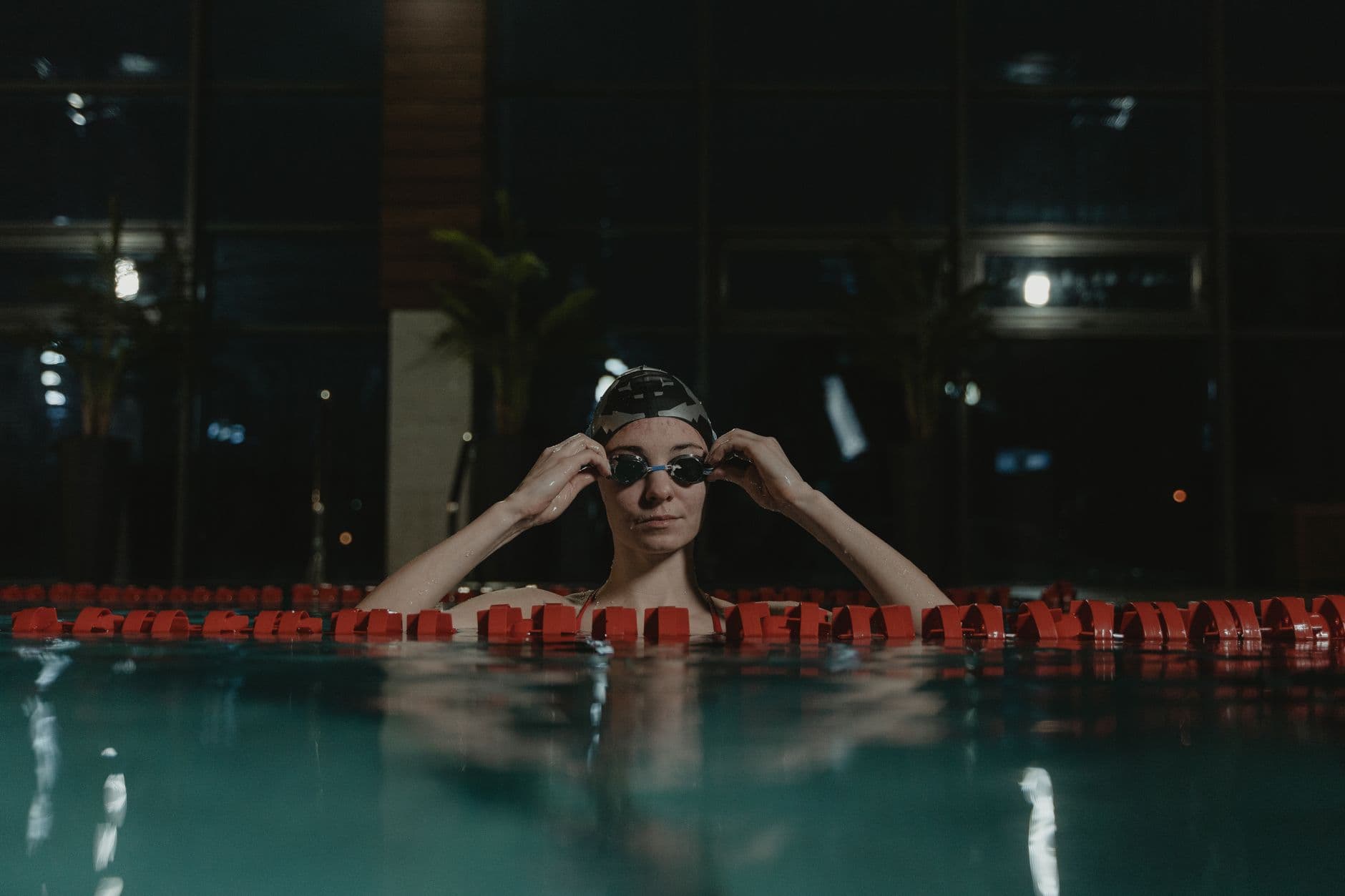
SWOLF is the closest swimming has to a single efficiency number, and it is on the wrist of anyone who bought a swim watch in the last decade. It is a genuinely good idea with one specific failure mode, and knowing that failure mode is what separates using it from being fooled by it.
The definition, which is the whole thing
SWOLF = seconds for the length + strokes taken in that length.
That is it. A 25 m length swum in 22 seconds with 18 strokes gives 40. Lower is better.
The name is a contraction of "swim" and "golf", because like a golf score you are trying to get it down.
What makes it clever is that it closes both loopholes at once. If you try to lower the stroke count by gliding, the time goes up and cancels the gain. If you try to lower the time by spinning your arms, the stroke count goes up and cancels that instead. To lower SWOLF honestly, you have to travel further per stroke without slowing down — which is the definition of swimming better.
Why it works: the identity underneath
Swimming speed is stroke rate multiplied by stroke length, an identity we unpack in stroke rate or stroke length. Any improvement in speed comes from raising one of those two without giving away the other.
SWOLF is a crude but effective way of holding both in view at the same time. The seconds term tracks speed; the stroke term tracks how much you spent to get it.
That is why it is more informative than either number alone. A stroke count with no time attached tells you nothing — 14 strokes a length is excellent if it took 20 seconds and terrible if it took 34. A time with no stroke count tells you how fast you went but nothing about whether it is repeatable.
The glide problem
Here is the failure mode, and it is not hypothetical: it is what happens to most adults who start optimising the number.
Adding a pause at the front of the stroke drops the count immediately. It also slows you down. Whether SWOLF improves depends on which effect is larger, and at slow speeds the count usually wins — so the score improves while the swimmer gets slower.
The mechanism is that a glide is a period with no propulsion while drag keeps acting. Within-stroke speed is not constant, and every deceleration has to be paid for by the next pull. A study of speed fluctuation in age-group swimmers documents exactly this variation within the stroke cycle.
There is also a small study of 12 competitive freestyle swimmers over 25 m that found swimming time negatively correlated with stroke frequency — that is, the faster swimmers in that sample took more strokes per minute, not fewer. It is a small sample over a sprint distance, so treat it as a caution rather than a rule, but the caution is the right one: fewer strokes is not automatically better.
The practical defence is simple. Track SWOLF at a fixed, repeatable pace — say, an easy 100 you can swim identically every week — rather than at whatever speed comes out. Then a falling score means fewer strokes for the same speed, and there is nowhere for a glide to hide.
The comparisons that do not work
SWOLF is only meaningful against itself, and there are more ways to break that than people expect.
Pool length. A 50 m length has roughly double the time and double the strokes of a 25 m length, so the score roughly doubles. There is no conversion worth applying.
Metres and yards. A 25-yard length is about 22.9 m, so both terms shrink. American and international scores are not on the same scale, a point that also distorts time comparisons — see short course vs long course.
Strokes. Breaststroke uses far fewer strokes per length and is slower than freestyle. The totals are not comparable.
Push-off distance. This is the one that quietly corrupts more scores than any other. The rules allow up to 15 m underwater off a wall, and every metre you travel without stroking lowers your count. Push off further one day and your SWOLF improves without your swimming changing at all.
If you are going to track it, standardise the push-off along with the pace. It matters more than it sounds.
Reading a score that moved
The number on its own tells you almost nothing. What it does well is raise a question, and the question has three possible answers.
The time fell and the count held. You swam faster for the same number of strokes. That is fitness, or a better catch, and it is unambiguously good.
The count fell and the time held. Same speed, fewer strokes. That is the efficiency gain everyone is chasing, and it usually comes from body position rather than from the arms.
The count fell and the time rose. This is the ambiguous one and the most common. If the score still improved, you have to decide whether you actually got better. At a controlled pace it is real; at free effort it is very often a glide creeping in.
Which is why recording the two components separately, rather than only the total, is worth the extra column in your notes. A single number that can improve for two opposite reasons is a number you have to interrogate.
The same logic applies to stroke count on its own, and it is the reason we keep coming back to it: counts are only meaningful next to a time.
What your watch is actually doing
Wrist devices do not count strokes. They infer them from accelerometer patterns, and they infer lengths the same way.
That works well for a conventional freestyle in a lane pool, and less well for a swimmer with an unusual recovery, for drills, for breaststroke, and for anyone who stops mid-length. Miscounted lengths are the more damaging error, because they corrupt both terms at once.
The reasonable position is to use watch SWOLF for trends across many sessions, where the errors average out, and to count by hand when you want to know something specific. A hand count for four lengths costs nothing and settles arguments.
What it will not tell you
Three things SWOLF is silent about, all of which matter more than it does.
Whether the effort is sustainable. A brilliant SWOLF over one length says nothing about the tenth length. Repeatability is what a set measures, and the number to watch there is how much the score degrades across a set — a swimmer whose SWOLF climbs steadily over 8 × 50 has a fitness problem the average will not show.
Which stroke fault you have. It reports a symptom. Two swimmers with identical scores can be losing time to entirely different things — one to sinking legs, one to a dropped elbow. The number tells you to look; it does not tell you where.
Anything at all about open water. No walls, no fixed length, no push-off. The measurement does not survive leaving the pool, which is worth knowing if your goal is a triathlon rather than a pool time.
Treat it as a smoke alarm rather than a diagnosis. It is very good at telling you something changed and useless at telling you what.
How to use it well
A protocol that avoids every trap above.
Once a week, at the start of a session and after a proper warm-up, swim 4 × 50 m freestyle at a fixed easy-to-moderate effort, in the same pool, pushing off the same distance each time. Count strokes and record times by hand. Average the four SWOLF scores.
Look at the trend over two months, not week to week. Weekly noise from sleep, fatigue and lane traffic is larger than any real change.
And interpret it alongside the components. If SWOLF falls because the count fell and the time held, that is efficiency. If it falls because the time fell and the count held, that is fitness. Both are good, and they lead to different next sessions.
The calculator that does the arithmetic is in tools, and the pace side of it in the pace calculator. For turning time trials into training paces, CSS pace is the companion number.
The rest of the standards are in times.
This is general information rather than an assessment of your stroke. If your SWOLF and your race times are telling you different stories, believe the race times. Spotted an error? Tell us and we will correct it and date the change.
Frequently asked questions
How is SWOLF calculated?
Time the length in seconds, count the strokes you took, and add the two together. A 25 m length in 22 seconds taking 18 strokes gives a SWOLF of 40. There is no weighting and no adjustment — the simplicity is the point, and it is also the source of every limitation discussed below.
What is a good SWOLF score?
There is no meaningful universal answer, and any article that gives you one is selling certainty it does not have. The number depends on pool length, stroke, your height and how far you push off the wall. The only comparison worth making is with your own score, in the same pool, at the same effort, last month.
Why does my watch give me a different number than my own count?
Watches infer strokes from wrist movement, and they miscount for swimmers with an unusual recovery, during drills, and often on breaststroke. They also measure the length using the same accelerometer data. Use the watch for trends across many sessions and your own count when you actually want to know.
Can I compare SWOLF across strokes?
No. Breaststroke takes far fewer strokes per length than freestyle and is slower, so the two components move in opposite directions and the totals are not on the same scale. Compare freestyle to freestyle. The same applies between a 25 m and a 50 m pool, and between metres and yards.
Should I try to lower my SWOLF?
At a fixed pace, yes: that means the same speed for fewer strokes, which is real efficiency. Lowering it by swimming more slowly is not an improvement, and the formula cannot tell the difference. That is why you track it at a controlled effort rather than freely.
Sources
- Kayapınar E et al. (2025). The relationship between stroke length, stroke frequency, glide time and performance in swimmers. BMC Sports Sci Med Rehabil
- Morais JE et al. Identifying Differences in Swimming Speed Fluctuation in Age-Group Swimmers. J Sports Sci Med
- U.S. Masters Swimming — Freestyle technique guide
- World Aquatics — Competition Regulations (15 m underwater limit)
Read next
Masters swimming age groups: the 5-year bands and where you'd place
Masters age groups run in five-year bands from 25–29 (World Aquatics) or 18–24 (USMS), age usually counted on 31 December, and a 0.6%-a-year decline behind them.
Short course vs long course: why your two times differ
A 25 m pool has twice the walls of a 50 m pool, and walls are free speed. One study of 26,000 swims put the average gap at 4.3%.
How to swim your 100 freestyle faster: where the seconds actually are
In a short course 100 there are four walls and three turns. For most adult swimmers there is more time in those than in the stroke they have been polishing.
SwimFast is an independent publication. We are not a swim school, a coaching service or a governing body, and nothing here is medical advice. Training paces and test protocols are cited from the published research or federation documents linked on each page. Never swim alone, never attempt breath-hold work without supervision, and check with a doctor before starting a new training programme.