How deep is an Olympic pool? The rule book, not the guesses
An Olympic pool must be at least 2.5 m deep. The two metres you keep reading is a different championship. Every figure here is quoted from the World Aquatics rule book.
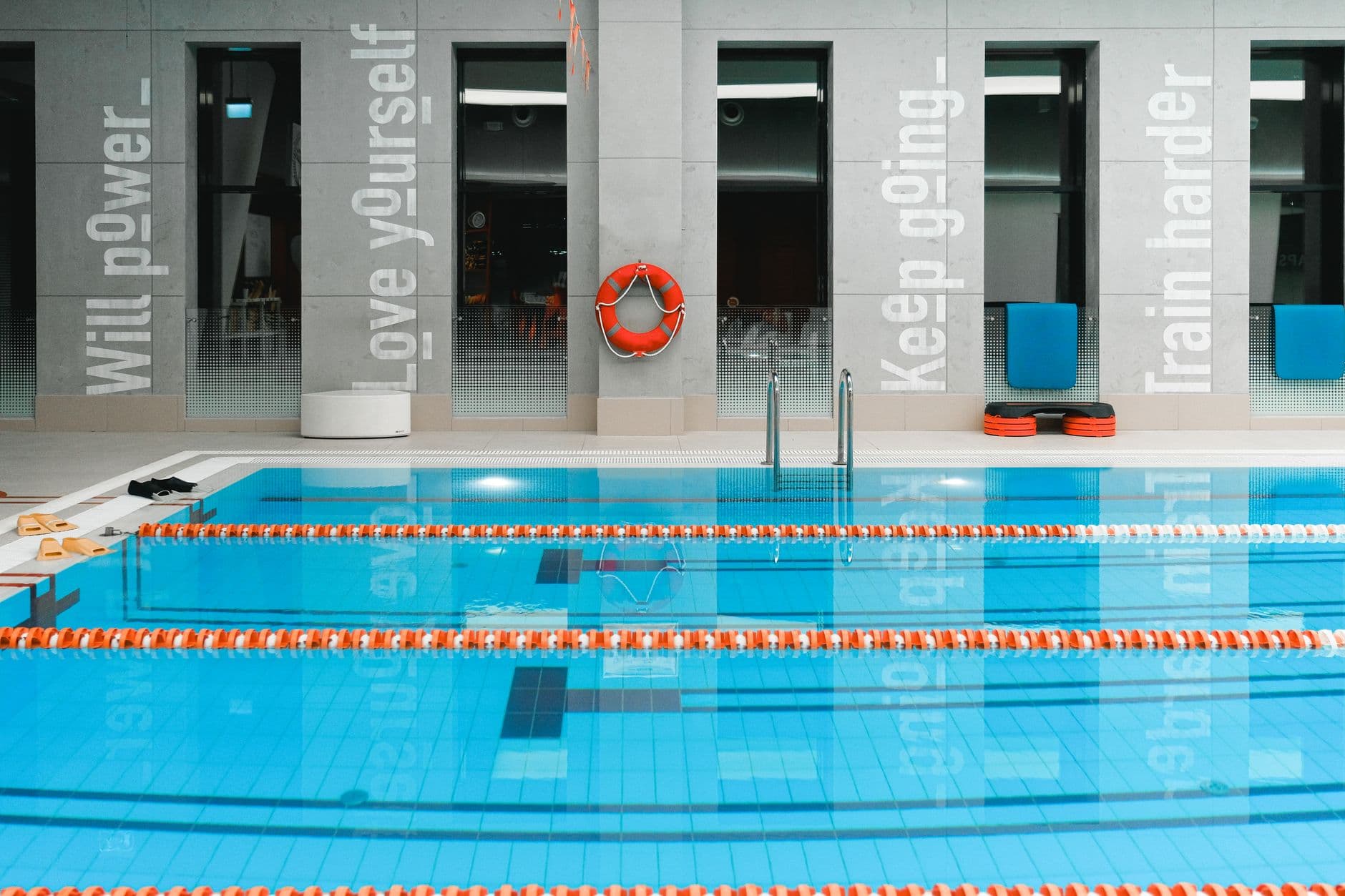
Search for the depth of an Olympic swimming pool and you will be told two metres — confidently, by a dozen pages, several of them template sites that also claim three metres and twelve and a half metres a click away. None cites the document that decides the question.
That document is free and specific to the centimetre. The World Aquatics Competition Regulations, Part Two (Swimming Rules), Article 15, sets the depth, length, width, lane layout, water temperature and lighting of a pool used for its events; the version in force is dated February 2026. Every number below is quoted from it by article number, so you can check any of them yourself.
And two metres is a real figure from that rule book — just not the one people think it is.
How deep is an Olympic pool?
An Olympic swimming pool must be at least 2.5 metres deep — 8 feet 2 inches. Article 15.4.1 of the World Aquatics Competition Regulations states it in one line: “At the Olympic Games and the World Aquatics Championships, the minimum pool depth is 2.5 metres.” It is a floor, not a fixed figure: a venue may be deeper, and nothing caps it.
Note what that one sentence covers: the Games and the long-course World Aquatics Championships are held to the same depth. There is no separate, stricter Olympic standard. If you have read that the Games require more water than the Worlds, it is not in the regulations.
Why every other page says two metres
Because two metres is in the rule book, one clause further down. Article 15.4.2 reads: “At the World Aquatics Swimming Championships (25m), the minimum pool depth is 2.0 metres (although 2.5 metres is recommended).”
That is the short-course World Championships — a 25-metre-pool meet, a different competition from the long-course Worlds and from the Games. Somewhere along the way its depth got copied as the Olympic figure, and because every page copies the one above it, the error is now the consensus answer.
The parenthesis matters too. Even where 2.0 metres is permitted, the governing body says 2.5 metres is preferred. The sport's own regulations treat 2.5 metres as the depth they want wherever they can get it.
Trying to square two conflicting numbers about any swimming rule? Find which competition each one applies to. The regulations are written in tiers, and a figure quoted without its tier is close to meaningless.
The three depths in the rule book
Article 15.4 has exactly three clauses, and between them they cover every pool World Aquatics has anything to say about.
| Article | Applies to | Minimum depth | In feet |
|---|---|---|---|
| 15.4.1 | Olympic Games, World Aquatics Championships (50 m) | 2.5 m | 8 ft 2 in |
| 15.4.2 | World Aquatics Swimming Championships (25 m) | 2.0 m, 2.5 m recommended | 6 ft 7 in |
| 15.4.3 | All other World Aquatics events | 1.0 m, or 1.35 m where starting blocks are used | 3 ft 3 in / 4 ft 5 in |
The third clause describes almost every pool you will ever race in. In full: “At all other World Aquatics Events, the minimum pool depth is 1.0 metres, except that where starting blocks are used, the pool must have a minimum depth of 1.35 metres from between 1.0 metre from the end wall to at least 6.0 metres from the end wall.”
So the 1.35 metres is not a depth for the whole pool. It is a depth for a strip — from one metre off the wall out to six, which is the water a swimmer travels through after a dive. Article 15.8.4 repeats it in the section on starting platforms, in case anyone installing blocks reads only that part. That strip is also exactly where your underwater dolphin kick happens.
How long is an Olympic pool, down to the centimetre
Fifty metres — but the regulations are fussier, and the fussiness is interesting. Article 15.1.1.1 requires that where touch panels are fitted, the pool “must be of such length that ensures the required distance of 50.000 metres between the two panels.” The race is measured panel to panel, not wall to wall.
Which means the concrete has to be longer than the race. Article 15.2.1.2: with touch panels at both ends, the wall-to-wall distance must be between 50.020 and 50.030 metres. The permitted tolerance on the 50.000 m course is +0.010 m and −0.000 m (15.2.1.1): a competition pool may legally be a centimetre long, and may not be a millimetre short. By 15.2.1.3 that length has to hold from 0.300 m above the surface to 0.800 m below it, so a wall leaning in under water fails. A surveyor certifies the measurement (15.2.1.4).
In other units, 50 metres is 164.0 feet, or 54.68 yards. That last figure is why American swimmers end up with three sets of personal bests instead of one, and why a yard time and a metre time are not comparable without arithmetic — the subject of short course versus long course. To move a time between courses, use the course time converter rather than guessing.
How wide, and why the answer is exactly 25 metres
Article 15.3.1: “At the Olympic Games and the World Aquatics Championships, the minimum pool width for a permanent swimming pool is 25.000 metres and the minimum pool width for a temporary swimming pool is 26.000 metres.” At all other competitions there is no minimum width (15.3.2).
Twenty-five metres looks like a round number somebody chose. It is not: it is what the lane layout adds up to. Article 15.6.1 requires eight lanes at the Olympic Games, each 2.5 metres wide, plus a gap of 2.5 metres — a full lane's width of empty water, roped off — outside lane 1 and outside lane 8.
Do the sum: eight lanes at 2.5 m is 20 metres, plus 2.5 m each side is 25 metres exactly. The width minimum is not a guideline. It is the layout, written down as one dimension.
That outer 2.5 metres of unused water is the quietest part of the rule and the most consequential. Waves rolling off lane 1 have somewhere to go and somewhere to die before they come back — which is why a lane-8 swimmer at the Games is not fighting the wall the way a lane-8 swimmer in a club pool is.
Eight lanes at the Games, ten at the World Championships
The Games use eight lanes (15.6.1), with a ninth and tenth permitted “in exceptional circumstances” only with the approval of the Chair of the Technical Swimming Committee. Both World Championships use ten (15.6.2), and the way those ten fit in explains the 26-metre figure for temporary pools.
In a permanent pool (15.6.2.1) the middle eight lanes are 2.5 m, the two outer lanes are shaved to 2.4 m, and the margin outside them drops to at least 0.1 m. Add it up: 20 + 4.8 + 0.2 = 25 metres. Ten lanes squeezed into the same tank as eight. In a temporary pool (15.6.2.2) all ten stay at the full 2.5 m with at least 0.5 m outside them — 25 + 1 = 26 metres, the temporary minimum in 15.3.1 to the centimetre.
Both width minimums, in other words, are their lane plans totalled. Nobody rounded anything.
For every other competition, 15.6.3 sets no minimum number of lanes but keeps the widths: at least 2.5 m, except the first and last at a minimum of 2.4 m with 0.1 m outside. If you have wondered why the outside lane in a club pool feels narrower, it is allowed to be.
The diving pool is a different pool
Much of the confusion around this question is really about diving, which the swimming rules do not cover at all. Diving facilities are Part Four of the same regulations, and the depths there are far greater.
Appendix 2 of Part Four sets the depth at the plummet — the vertical line through the front edge of the board or platform. For a 10 metre platform the minimum is 5.00 metres, which is also the preferred figure. A 7.5 m platform needs 4.00 m, a 5 m platform 3.80 m, a 3 m springboard 3.60 m. For facilities built after 1 January 2025, article 15.1.2.1 says the pool “should if possible” be 5 metres deep throughout the area under the boards and platforms. Article 15.1.3 allows the floor to rise by 2% away from that zone but sets a hard limit: “the depth of water in the Diving pool must not be less than 1.8 metres at any point.”
Diving water is also warmer — not less than 28 °C (15.2.12.1 of Part Four) — and gets the sprinklers you see disturbing the surface, required by 15.2.10 so divers can see where the water is.
Where both pools share a hall, Article 15.15 of Part Two keeps them apart: at least 8 metres, preferably 10, for pools built on or after 1 January 2014, and at least 5.0 metres for older ones. That gap is a rule, not an architect's taste.
How many gallons of water is that?
This is arithmetic rather than a published figure, so treat it as such. At the minimum legal dimensions for the Games — 50 m long, 25 m wide, 2.5 m deep — the tank holds 3,125 cubic metres.
| Measure | At minimum Olympic dimensions |
|---|---|
| Surface area | 1,250 m² |
| Volume | 3,125 m³ |
| Litres | 3,125,000 |
| US gallons | about 825,500 |
| Imperial gallons | about 687,400 |
Treat those as a floor, not a fact about a particular venue. A real pool is deeper than the minimum somewhere, has gutters holding more water, and may be ten lanes rather than eight. Anyone quoting a precise gallon count for a named Olympic pool is doing this same multiplication and presenting it as a measurement.
What the rules fix that you can actually feel
Depth is the question people ask, but it is not the specification that changes the swim most. Two others do.
Water temperature must be between 25.0 and 28.0 °C (15.11.1) — a narrow band, and cooler than most public pools, which are run warm for lessons and for people standing still. If a competition pool feels cold on the first lap, it is supposed to.
Still water. Article 15.11.2.1 requires the surface to be constant “with no appreciable movement” during competition, and fixes the inflow and outflow rates: 220 to 250 m³/h for a 50 m pool, 120 to 150 m³/h for a 25 m pool (15.11.2.2). Then it defines “appreciable” as a test anybody can run. Per 15.11.2.4, an appreciable current is water movement that can carry a floating basketball — filled with six litres of water to get the buoyancy right — more than 1.25 metres in one direction in 60 seconds. The practical version, in 15.11.2.5: rope off a 2.5 m square in a lane, put the ball in the middle, and if it has not touched a rope after a minute the pool passes. Repeat at both ends of lanes 1, 3, 6 and 8, with the ball five metres from the wall (15.11.2.6).
Lighting is at least 1500 lux over the whole pool at the Games and World Aquatics events, measured from the deck, and 600 lux over the blocks and turning ends everywhere else (15.12). Rest ledges on the walls are allowed but must sit at least 1.2 metres below the surface and be 0.1 to 0.15 m wide (15.5.2) — deep enough that nobody can stand on one mid-race.
The marks on the ropes and the floor
Once you know the dimensions, the markings make sense as a measuring system. Lane markings on the floor are dark, 0.2 to 0.3 m wide, and run 46.0 m in a 50 m pool or 21.0 m in a 25 m pool, stopping 2.0 m short of each wall with a 1.0 m cross line at each end (15.13.1 and 15.13.2). Adjacent lane lines sit 2.5 m apart centre to centre — the lane width again.
On the end wall a target line runs from the deck edge down to a maximum of 3 metres, with a 0.5 m cross line 0.3 m below the surface (15.13.3). In any 50 m or 25 m pool not built before 1 January 2006, a 0.5 m cross line marks the 15 metre point from each end, measured to the centre of the cross (15.13.4). On the ropes, red floats cover the last 5.0 metres at each end (15.7.7), the floats at the 15 m mark must differ in colour from their neighbours (15.7.9), and in a 50 m pool the floats must also mark halfway at 25 metres (15.7.10).
Those marks let you pace without a watch: the 15 m float says where the breakout ends, the red floats say the wall is coming. Backstroke flags hang 1.8 m above the water from standards 5.0 m off each wall (15.9.1), which is the whole basis of counting strokes from the flags. To use the 25 m float to check an even split, a pace calculator gives you the halfway number to aim at.
What about the pool in Paris?
This one deserves a straight answer: we are not going to give you a number for that venue, because the two organisations that would know have not published one in the documents we could check.
Here is what is verifiable. The swimming at Paris 2024 was held in a temporary pool. Its builder, Myrtha Pools, says it installed two 50-metre pools inside Paris La Défense Arena in 36 days, one for competition and one for warm-up, and delivered a separate permanent 70 × 25 m pool at the Olympic Aquatic Centre for diving, artistic swimming and water polo. Its project page gives no depth. World Aquatics publishes the regulation — 2.5 metres minimum at the Games — and publishes pool certification requirements, but the certified figure for an individual venue is not in the regulations.
There was real argument in 2024 about whether that pool was slow, and plenty of pages are happy to attach a decimal to it. We could not trace any of those figures to the federation or the builder, so it stays out. A number repeated by ten sites that all read each other is still one number from nowhere.
Does a deeper pool make a swimmer faster?
Probably, a bit — and honestly, this is coaching consensus and physics reasoning rather than a settled result with a figure attached. We are not going to invent one.
The mechanism is not controversial: a swimmer pushes water down and out, that energy reflects off the floor and walls, and it returns as surface turbulence the swimmer then has to swim through. More depth and more side margin mean more room for it to disperse first. The regulations behave as though this is true — recommending 2.5 m even where 2.0 m is allowed, requiring a full lane's width of empty water outside the outside lanes, capping the inflow rate, and testing for current with a basketball.
What nobody can hand you is a conversion. There is no credible “half a second per 100 m per extra metre of depth”, and any page offering one has made it up. Depth is one variable among many at a fast meet, alongside a tapered field and good lane ropes. To compare swims across very different meets, use a basis that does not pretend to control for the pool: World Aquatics points at least put every event on one scale.
How deep is a normal pool, then?
The rules leave enormous room. A pool can host a World Aquatics event at 1.0 metre of depth, and 1.35 metres in the strip off the wall if blocks are in use. That is a long way from 2.5 metres.
In the United States, the practical reference is USA Swimming's own facilities standard. Rule 103.2.1 asks for 2 metres (6 ft 7 in) throughout the course, but marks it /NC/ — mandatory for USA Swimming Championships and international competition, not for your Tuesday night meet. Rule 103.1.3 then lets Local Swimming Committees waive strict compliance when sanctioning local competition, “predicated on facility availability.” That is how a championship-depth rule and a 4-foot community pool coexist in one sport.
So there is no single answer to how deep a normal pool is. There is a posted depth at the end of your pool, and it is the only figure that applies to you. Whether that depth makes a lane comfortable for everyone sharing it is a separate question, and lane etiquette handles it better than any rule book.
The depth that actually matters to you, and how to check it
Everything above is about pools built for racing. The depth that decides something in your week is the one at the end you push off from, and the rule governing it is about your neck, not your speed.
USA Swimming rule 103.2.3 sets the minimum depth for racing starts in practice and competition, measured in the band from 3 ft 3½ in (1.0 m) to 16 ft 5 in (5.0 m) from the end wall — the same strip as the World Aquatics 1.35 m rule. Below 4 feet (1.22 m) at the starting end, the swimmer must start in the water and backstroke ledges are not permitted. Teaching a racing start to someone not yet certified by a coach requires more water, not less: 6 feet (1.84 m) under rule 103.2.2, and before certification all racing starts happen from a position in the water regardless of depth.
The rulebook adds its own warning beneath rule 103.2: local, state and municipal statutes may set depth limits conflicting with the federation's, and clubs are told to check. The sign on the wall outranks the rule book.
Three things to do with that:
- Read the posted depth at the end you dive from, not the deepest number painted on the pool. Many pools slope, and the depth at the blocks is the one that matters.
- If it is under 1.2 metres, get in feet first — no matter how shallow-angled you think your entry is. Diving into a pool covers the depths, the progression and what happens when it goes wrong.
- If you are not sure, ask the facility rather than estimating from the water line against your chest. Depth signs are sometimes wrong and lifeguards usually know.
Head and neck injuries from shallow-water dives are catastrophic and immediate, and they happen to competent swimmers who assumed a depth. If you have any head, neck or back pain after an entry, or any numbness or tingling in your arms or legs, stop swimming and get assessed by a medical professional the same day — do not wait to see whether it settles. Nothing on this page is medical advice.
None of this is a reason to avoid starts. It is a reason to know the number. Once you do, depth goes back to being what it is in the rule book: a dimension, like the 15-metre mark or the flip turn wall, that quietly shapes the swim. For how those dimensions turn into times, the times section is the rest of the story; for the strokes between the walls, technique is.
Frequently asked questions
How deep is an Olympic pool in feet?
At least 8 feet 2 inches. Article 15.4.1 of the World Aquatics Competition Regulations sets a minimum depth of 2.5 metres for the Olympic Games and the long-course World Championships. It is a minimum, so a venue may be deeper, and the rule sets no upper limit on depth.
Is an Olympic pool two metres or two and a half metres deep?
Two and a half. The two-metre figure is article 15.4.2, which applies to the World Aquatics Swimming Championships held in a 25-metre pool, and even there the regulations say 2.5 metres is recommended. The Olympic Games minimum, in 15.4.1, is 2.5 metres.
How deep is the Olympic diving pool?
Five metres under the 10-metre platform, which is both the minimum and the preferred depth in Appendix 2 of Part Four. Shallower stands need less: 4.00 m for a 7.5 m platform, 3.60 m for a 3 m springboard. No point in a diving pool may be under 1.8 metres.
How big is an Olympic pool overall?
Fifty metres between the touch panels, at least 25 metres wide for a permanent pool and 26 for a temporary one, and at least 2.5 metres deep. At those minimum dimensions the tank holds 3,125 cubic metres, which is roughly 825,500 US gallons or 687,400 imperial gallons.
How wide is an Olympic swimming lane?
2.5 metres, with eight lanes at the Olympic Games plus a 2.5-metre gap of empty water outside lanes 1 and 8. That is exactly the 25-metre minimum width. At the ten-lane World Championships the outer two lanes narrow to 2.4 metres in a permanent pool.
How deep does a pool need to be to dive off a block?
World Aquatics requires 1.35 metres in the strip from 1 to 6 metres off the wall wherever starting blocks are used. USA Swimming rule 103.2.3 sets 4 feet, or 1.22 metres, at the starting end; below that the swimmer must start in the water. Local rules can be stricter and override both.
Sources
- Competition Regulations, version February 2026 (updated 18.02.2026) — Part Two, Article 15: depth 15.4.1 to 15.4.3, length 15.1 and 15.2, width 15.3, walls 15.5, lanes 15.6, ropes 15.7, blocks 15.8, flags 15.9, water 15.11, lighting 15.12, markings 15.13, pool separation 15.15 — World Aquatics
- Competition Regulations — Part Four, Diving Rules, Article 15.1 (pool depths) and Appendix 2 (depth of water at plummet), plus 15.2.10 and 15.2.12.1 — World Aquatics
- Rules and regulations index, where the current Competition Regulations are published — World Aquatics
- Facilities rules and pool certification documents — World Aquatics
- 2026 Rules and Regulations, Article 103 (Facilities Standards): definitions 103.1, water depth 103.2, starting platforms 103.14 — USA Swimming
- Paris 2024 Olympic Games project page: two temporary 50 m pools at Paris La Défense Arena, permanent 70 × 25 m pool at the Olympic Aquatic Centre — Myrtha Pools
Read next
How a swim meet works: heats, lanes, seeding and scoring
Heats, lane assignments, circle seeding, scratches, DQs and team points, explained straight from the rulebook that meet officials actually work from.
What is a good 50 freestyle time, by age and by course?
USA Swimming's ladder runs 31.39 to 23.49 for 17-18 girls in yards. The course moves it by 3.8 seconds, and the 50 is the one race that can have no turn.
Masters swimming age groups: the 5-year bands and where you'd place
Masters age groups run in five-year bands from 25–29 (World Aquatics) or 18–24 (USMS), age usually counted on 31 December, and a 0.6%-a-year decline behind them.
SwimFast is an independent publication. We are not a swim school, a coaching service or a governing body, and nothing here is medical advice. Training paces and test protocols are cited from the published research or federation documents linked on each page. Never swim alone, never attempt breath-hold work without supervision, and check with a doctor before starting a new training programme.