Is dry drowning real, and what should you watch for?
Dry and secondary drowning are not medical conditions. What the Red Cross and WHO actually say, the real watch window in hours, and the condition adult swimmers mean instead.
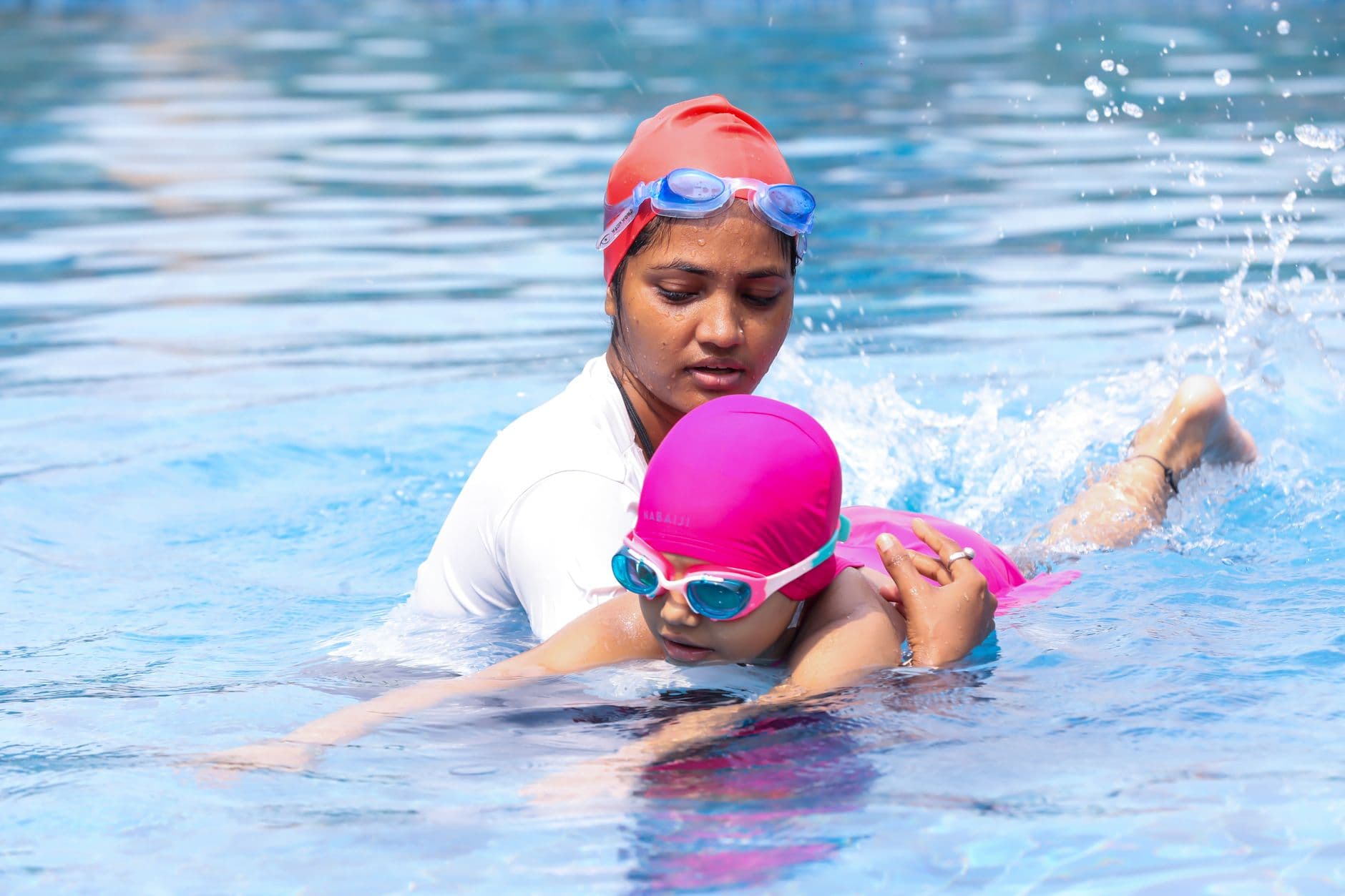
Someone coughs after swallowing water at the pool, and three hours later a parent is awake reading about children who went to bed fine and never woke up. That search has a short answer, and it is not the one the headlines imply.
"Dry drowning" is not a medical condition. Neither is "secondary drowning", "delayed drowning", "wet drowning" or "near-drowning". These are not contested diagnoses or rare diagnoses — they are terms that the organisations that define drowning formally retired, and that no clinician can use to make a diagnosis because there is nothing to diagnose.
That does not mean nothing can go wrong after someone gets into trouble in the water. Something can, and this page is mostly about that: what the real timeline looks like, which symptoms matter, how long the people who write the guidance say to keep watching, and the separate condition that adult swimmers are often actually searching for when they type "dry drowning in adults".
The short answer, and the thing worth knowing instead
Here is the whole position in four lines, and the rest of the page is the evidence for it.
- There is no such thing as dry or secondary drowning. The American Red Cross states plainly that there are no medically accepted conditions by those names, and lists nine bodies — the World Health Organization, the International Liaison Committee on Resuscitation, the International Life Saving Federation, the US Centers for Disease Control and Prevention among them — that discourage using the terms.
- Drowning is not silent and it is not delayed. If someone was in the water and had no trouble breathing, they did not drown. Symptoms start at the time of the event, not the next day.
- Someone who did have trouble can get worse over the following hours. That is the real phenomenon the myth is built on, and it is why "watch them" is genuine advice rather than reassurance.
- Symptoms that appear days later, after a complete return to normal, are not drowning — but they are still a reason to see a doctor, because something else is causing them.
If you arrived here mid-panic and that is all you needed, skip ahead to the section on what to watch for — that is the practical part. If you want to know why the terms were dropped in the first place, read on.
What drowning actually means, and the terms that were retired in 2005
Drowning has had a single agreed definition for twenty years: "the process of experiencing respiratory impairment from submersion/immersion in liquid". It came out of an international consensus process reported in the Bulletin of the World Health Organization in 2005, involving specialists in clinical medicine, injury epidemiology, prevention and rescue, and it is the definition the WHO still uses today.
Two things in that sentence do a lot of work. Process means drowning is something that happens over time and can be interrupted — which is why rescue and resuscitation work at all. Respiratory impairment means the defining event is trouble breathing. No trouble breathing, no drowning.
The same consensus paper settled the vocabulary. Outcomes are classified three ways only: death, morbidity, and no morbidity. And it recorded explicit agreement that the terms wet, dry, active, passive, silent and secondary drowning should no longer be used. That list is worth reading twice, because five of the six still circulate freely in news coverage.
The clean-up was finished in the resuscitation literature. The 2015 revised Utstein-style reporting guidelines, an advisory statement from the International Liaison Committee on Resuscitation, rebuilt the reporting template for drowning research around fatal and non-fatal outcomes. The modern pair of terms is simple: fatal drowning if the person died, non-fatal drowning if they lived.
The Red Cross makes the point about "near-drowning" with an analogy that is hard to argue with: imagine using "near burns", "near cardiac arrest" or "near car collisions". The term described survivors, was used so many different ways that it became meaningless, and was replaced by saying whether the person lived or died.
Why "dry" and "wet" drowning were dropped: the injury is oxygen, not water
This is the part that explains why the myth feels plausible. Most people picture drowning as lungs filling with water, so a child who was underwater for a moment sounds like a child with water in the lungs, quietly waiting to go wrong.
That is not the mechanism. As the Red Cross sets out, drowning injury is caused by lack of oxygen, not by water entering the lungs. Little water actually enters the lungs during drowning, and what does enter is rapidly absorbed once breathing starts again. The amount of water neither determines how much injury there is nor changes the treatment. What determines the injury is how long the person went without oxygen.
The wet/dry distinction came from autopsies, where some people who had died from drowning were found to have very little water in their lungs. It was an attempt to explain a post-mortem finding, decades before the mechanism was understood — and as a 2017 letter in Resuscitation put it in its title, dry drowning is “a distinction without a difference”. The care is identical either way: restore breathing and oxygenation.
The useful consequence: because the injury is oxygen rather than water, you cannot have a dangerous amount of "water in the lungs" sitting in a child who is breathing, talking and playing normally. There is no hidden reservoir. That is the physiological reason the delayed-collapse story does not hold up.
What to watch for after someone has trouble in the water
The Red Cross guidance sorts this into three situations, and the sorting is the useful part — it tells you which one you are in.
- Out of the water completely normal, no symptoms at all. This person did not drown. No watching protocol applies. If concerning symptoms ever appear, they need medical attention — but as a consequence of a drowning event, this would be rare.
- Minimal symptoms that resolve, and resolve quickly. The Red Cross comparison is the sputtering and coughing you get from swallowing water down the wrong pipe at the dinner table. If it clears fast and the person returns immediately to normal with no breathing difficulty, they can be watched by an attentive carer. Their guidance is that these people get better or worse within two to three hours. Coughing, breathing difficulty, sleepiness or confusion appearing in that window means seeking medical attention.
- Excessive or prolonged coughing, fast or hard breathing, not breathing normally, or not acting right. This person needs medical care now, not observation at home. The Red Cross notes that an alert person who had a drowning event can usually be watched in an emergency department for four to six hours and sent home if they are normal.
Water Safety USA, a consortium of national water-safety organisations, gives a compatible list of triggers for medical evaluation after a drowning episode: coughing that does not stop, loss of consciousness even briefly, needing rescue breathing or other breathing support, needing CPR, continued chest pain or shortness of breath despite rest, and confusion, extreme tiredness or behaving unusually.
How long do you watch? The published windows do not quite agree
This is where honesty is more useful than a tidy number, because the two sources we trust most give different windows.
- The Red Cross says a person with minimal, quickly resolving symptoms will get better or worse within two to three hours, and that emergency-department observation of an alert patient is typically four to six hours.
- Water Safety USA says breathing difficulty can progressively worsen over the next few hours, up to five to eight hours after the person had trouble in the water.
Both are organisational guidance rather than a trial result, and neither is sloppy — they are describing slightly different things, one a home-observation rule of thumb and the other the outer edge of reported deterioration. The practical reading is that the window is hours, not days, and that the safe way to use it is to take the longer number seriously and the shorter one as the point by which most things have declared themselves.
What both agree on completely is the shape of the curve: deterioration follows symptoms that were already there. It does not arrive out of a clear sky.
When to stop watching and get help
Watching at home is only appropriate for the mild, fast-resolving case above. If you are in any doubt about which situation you are in, you are not in that one.
This page is general information, not medical advice, and it cannot assess the person in front of you. If you are worried about someone's breathing after an incident in the water, get them assessed. In the UK the NHS advice on shortness of breath is to call 999 or go to A&E immediately if there is severe difficulty breathing — gasping, choking, unable to get words out — chest tightness or heaviness, lips or skin turning very pale, blue or grey, or sudden confusion. For a child, the NHS lists grunting noises or sucking the stomach in under the ribcage, pale, blue or grey lips or skin, sudden confusion or agitation, and being limp, floppy or not responding normally. In the US and Canada the equivalent number is 911; in Australia, 000.
Two details in that NHS list are worth memorising, because they are the ones non-clinicians miss. Grunting and drawing the stomach in under the ribs are signs of work of breathing — a child making more effort than normal to move air — and they can be present before anyone sounds distressed. And on brown or black skin, colour change is easier to see on the palms of the hands than on the face.
Why nobody dies days later with no warning
The single most load-bearing sentence in the Red Cross review is this one: there are no known reported instances of a death from drowning after a person has returned to a period where they were completely normal.
That is a strong claim and it is deliberately narrow. It does not say children never deteriorate after water incidents. It says the specific story the myth tells — symptom-free, apparently well, then sudden death days later from the earlier submersion — has no documented cases behind it.
The Red Cross is direct about the corollary too: deaths from drowning do not occur through unexpected deterioration days or weeks later with no preceding symptoms, and brand-new symptoms days afterwards are extremely unlikely to be related to the water. Water Safety USA says the same thing from the other direction — symptoms of drowning do not go away and then return.
So if a child was in the water, was walking and talking normally, and then becomes ill some days later, the honest answer is both reassuring and not: it is almost certainly not drowning, and they still need to be seen, because something is making them ill. Both sources say explicitly that the person should be evaluated for another cause. Treating the illness as "delayed drowning" risks the real diagnosis being missed.
Why the myth does real harm
It would be easy to file this under harmless folklore. It is not, for three reasons the sources name.
It terrifies families out of proportion to the risk. The Red Cross says directly that the coverage has frightened parents into believing their child could die following any submersion or any exposure to in-water activity, and that emergency departments are seeing families bring in children specifically for evaluation of "dry drowning". Fear of the water is not a neutral outcome either; it is why this site has a whole guide on getting over fear of water as an adult.
It aims attention at the wrong moment. The danger in drowning is concentrated in the minutes it is happening, not in the days afterwards. Energy spent on night-time vigilance is energy not spent on supervision, barriers and swimming lessons.
And the thing it distracts from is big. The American Academy of Pediatrics technical report on drowning prevention, published in Pediatrics in July 2026, records that 981 US children under the age of 20 died from drowning in 2023, with persisting and widening disparities in death rates by race and ethnicity. Globally the WHO counts around 300,000 drowning deaths a year; children under five are nearly a quarter of them, and drowning is the fourth leading cause of death for children aged one to four and the third for those aged five to fourteen.
For context on how non-fatal events compare, the Red Cross cites an estimate that for children there are roughly five non-fatal drownings for every fatal one. Non-fatal drowning is the common outcome, which is exactly why the guidance on what to watch for matters more than the myth does.
If you are an adult searching this, you may be looking for SIPE
Here the swimming angle changes the question. A large share of searches for "dry drowning in adults" are not parents at all — they are adult swimmers, open-water swimmers and triathletes who got out of the water coughing, breathless, maybe coughing up pink froth, and went looking for a name.
There is a name, and it is not dry drowning. It is swimming-induced pulmonary oedema (SIPE), also called immersion pulmonary oedema. It is a real, documented condition, it is not drowning, and it behaves differently from everything above.
SIPE is fluid accumulating in the lungs during immersion, and the current understanding centres on exaggerated pulmonary vascular pressures — immersion and cold shift blood centrally and raise the pressures inside the lung's blood vessels. It affects people with no underlying health problems. The presentation runs along a spectrum from mild breathlessness to severe shortness of breath, coughing blood and low blood oxygen.
If you swim in cold open water, this belongs in the same mental folder as the cold-shock material in your first open water swim and the thermal reasoning behind when you actually need a wetsuit — a wetsuit is warmth, but the tight chest compression of a wetsuit is itself discussed as a contributor in the SIPE literature.
What the SIPE research actually reports
A systematic review in Sports Medicine - Open (2018) pulled together the nine studies that met its criteria. The honest summary is that the evidence is thin and heterogeneous enough that the authors could not pool it — the studies used different case definitions, environments and populations. With that stated, here is what was reported.
The range in that last row is not a typo, and it is the reason the review refused to produce a single number: three studies of male teenage military trainees doing sea time trials reported anywhere from 1.8% to 26.7%. Recreational swimmers are not teenage military trainees, so the low rows are the ones closer to a club swimmer's world.
The rest of what the review found:
- Symptoms usually resolve quickly. Three studies suggested resolution within 24 hours; the review on current perspectives puts rapid resolution within 48 hours of exiting the water in most cases. One small study found a restrictive deficit in lung function still present a week later.
- Recurrence is common. Two studies found around 30% of affected people report it happening again.
- Reported risk factors, from single studies each: hypertension, female sex, fish oil use, long course distance, and lower initial lung volumes and flows. Single-study findings are a lead, not a conclusion.
- The review found no studies reporting deaths from SIPE — which is not the same as saying it is harmless, since the papers on it exist precisely because people needed emergency care.
Where that leaves a swimmer: breathlessness and a cough that start during a swim, especially a cold open-water swim, and especially with pink or bloody sputum, is a get-out-and-get-assessed situation, not a push-through one. It is also a reason not to go back in that day, and a reason to get checked before the next race given the recurrence rate. If you are building open-water volume, the pacing discipline in swim training for triathlon is the right frame — and if you have ever been told breath-holding sets will toughen your lungs, the evidence for what training actually changes is in can swimming increase your lung capacity. It does not justify hypoxic work.
What genuinely prevents drowning
The AAP policy statement frames prevention the way every serious source does: multiple layers, because no single method works on its own. The strategies its technical report calls proven are specific.
- Four-sided isolation pool fencing with functioning self-closing, self-latching gates.
- Close, constant, attentive and competent supervision. All four adjectives are doing work.
- Swimming competency. Lessons, with the caveat that no lesson makes a child drown-proof — our guide to teaching a child to swim covers what that does and does not buy you, including why arm floats work against you.
- Life jacket use when boating.
- Early rescue and resuscitation. Which means someone present who can do it: learn CPR.
The Red Cross adds swimming where there is a lifeguard, and knowing how to perform a safe rescue rather than becoming a second casualty. The WHO adds the environmental layer that matters most worldwide — covering wells, barriers in doorways, controlling access to water.
For a swimmer, the two competencies that convert panic into a manageable problem are both free and both trainable: floating on your back, which is the resting position, and treading water without exhausting yourself. If you are an adult who never learned properly, the sequence in learning to swim as an adult starts where it should rather than with freestyle. More broadly, the rest of the technique guides assume you want to be comfortable in the water before you want to be fast in it, which is the right order.
And the thing not to do, under any circumstances: never practise breath-holding to extend your underwater time, and never swim alone. Hyperventilation and hypoxic sets are the mechanism behind shallow-water blackout, and that is a way of turning a pool into a fatality with nobody noticing.
Frequently asked questions
What are the symptoms of dry drowning?
There are none, because dry drowning is not a medical condition. What does exist is deterioration after a real drowning event, and its signs appear at the time: persistent coughing, fast or laboured breathing, chest pain, extreme tiredness, confusion or behaving oddly. Those symptoms mean medical assessment, not watchful waiting at home.
How long after swimming can delayed drowning happen?
Deterioration after a drowning event happens within hours, not days. The American Red Cross says a person with mild, quickly resolving symptoms gets better or worse within two to three hours; Water Safety USA puts progressive worsening at up to five to eight hours. Neither describes anything beginning after a full return to normal.
My toddler swallowed pool water and is fine. Do I need to watch them?
A child who came out of the water completely normal, with no breathing trouble at all, did not drown, and no observation protocol applies. If they coughed or sputtered briefly and then returned immediately to normal, an attentive adult should keep an eye on them for a few hours. Any coughing, breathing difficulty, sleepiness or confusion means seeking care.
Can dry drowning happen to adults?
The term is not valid for anyone. Adults who get out of the water breathless and coughing may have swimming-induced pulmonary oedema, a documented condition linked to raised pressures in the lung's blood vessels during immersion. It usually settles within 24 to 48 hours, recurs in roughly 30% of people, and needs assessment rather than pushing on.
What is the treatment for secondary drowning?
There is no treatment because there is no such condition. Drowning is treated by restoring breathing and oxygenation, and the care is the same whether or not water reached the lungs. Someone who becomes ill days after a water incident should be assessed for another cause, since labelling it drowning risks missing the real diagnosis.
Sources
- Debunking the Existence of Dry or Delayed/Secondary Drowning (12 Aug 2024) — American Red Cross
- van Beeck E. et al. (2005), A new definition of drowning — Bulletin of the World Health Organization
- Drowning fact sheet — World Health Organization
- Mythical Drowning Terms — Water Safety USA
- Prevention of Drowning: Policy Statement (July 2026) — American Academy of Pediatrics, Pediatrics
- Prevention of Drowning: Technical Report (July 2026) — American Academy of Pediatrics, Pediatrics
- Tobin J. et al. (2017), Dry drowning: a distinction without a difference — Resuscitation
- Idris A. et al. (2017), 2015 Revised Utstein-Style Guidelines for Drowning — ILCOR advisory statement
- Spencer S. et al. (2018), Swimming-Induced Pulmonary Oedema: a Systematic Review — Sports Medicine - Open
- Smith R. et al. (2018), Swimming-induced pulmonary edema: current perspectives — Open Access Journal of Sports Medicine
- Shortness of breath: when to call 999 — NHS
Read next
Why do swimmers wear two caps? To pin the goggle straps down
The second cap covers the goggle straps and stops the first one wrinkling. Two caps is explicitly legal, and two is the written maximum — here is the rule.
What age should a child start swim lessons?
The official answer is the first birthday for lessons, but babies can be in water long before that. Here is where each health body draws the line, and why it matters.
Why swimmers get disqualified: the calls officials make
A disqualification is a procedure, not an opinion. Who is allowed to call one, what goes on the slip, what the code means, and how it can be challenged.
SwimFast is an independent publication. We are not a swim school, a coaching service or a governing body, and nothing here is medical advice. Training paces and test protocols are cited from the published research or federation documents linked on each page. Never swim alone, never attempt breath-hold work without supervision, and check with a doctor before starting a new training programme.