How to dive into a pool, and the depth that decides if you should
The HSE quotes 1.5 metres as the minimum for a poolside dive and USA Swimming draws its line at 4 feet. Here are the published depths, and the four-step progression.
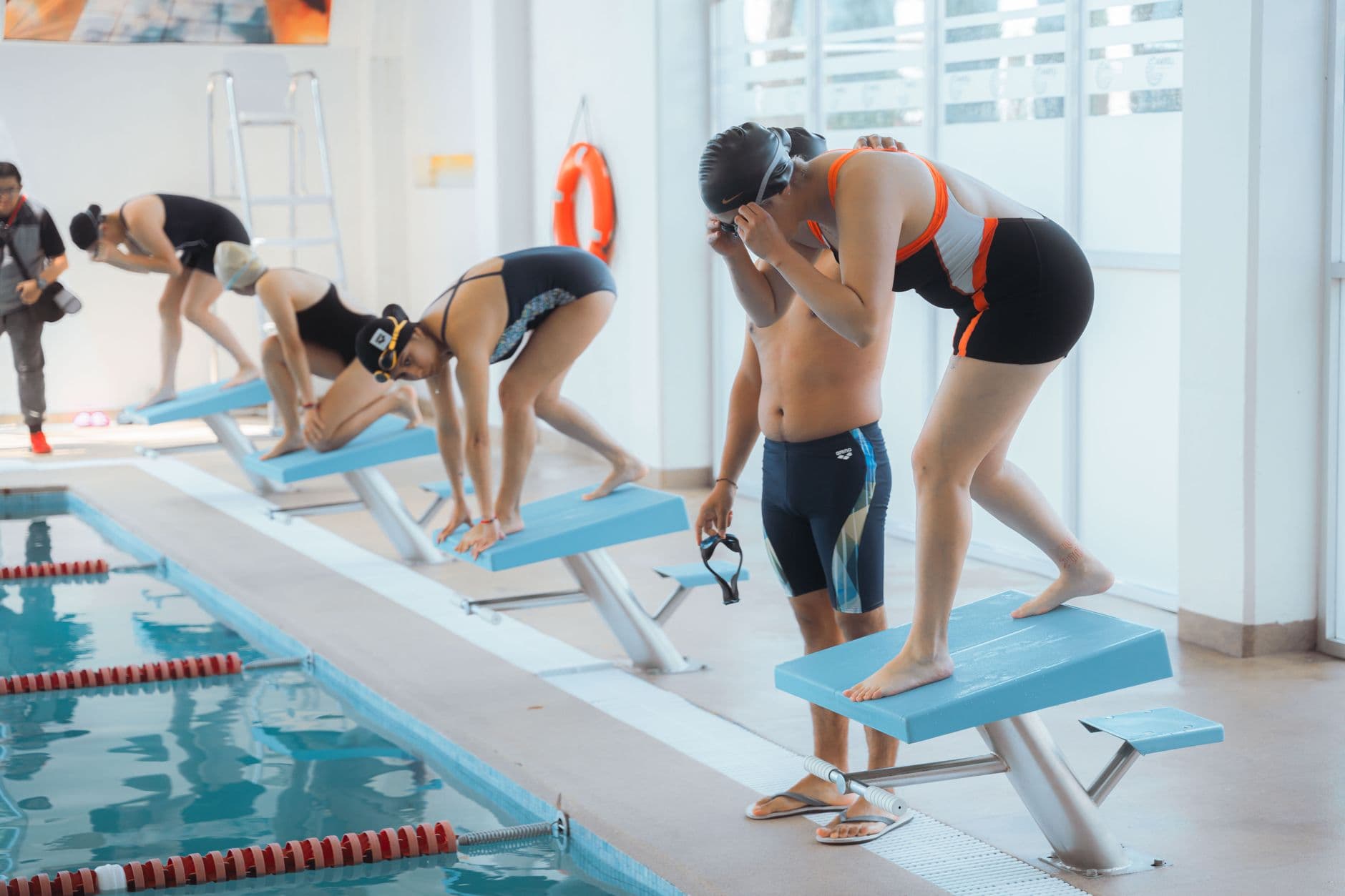
Everything written about diving into a pool — where the hands go, what the head does, how the hips drive — sits on top of one question that almost nobody answers with a number: how deep is the water? Get that wrong and no amount of technique helps, because the floor arrives before the skill does.
So this guide starts with the depths the governing bodies publish, then works through the progression from sitting on the edge to a standing dive. Every figure below is quoted from a rulebook or the regulator’s own guidance, with links, because this is the one subject in swimming where a number copied wrong out of a blog has a permanent cost.
How deep does a pool need to be to dive in?
There is no single worldwide figure, but the most useful one for a dive from the poolside is 1.5 metres, roughly 5 feet. That is the depth the UK’s Health and Safety Executive quotes for “shallow diving” in its pool guidance, attributed to the Amateur Swimming Association, together with at least 7.6 metres of clear water ahead of you.
Competitive swimming draws its lines differently, and lower, because it is describing a trained swimmer under a coach. Here is what each body publishes:
| Who says it | Minimum depth | Measured where | What it covers |
|---|---|---|---|
| HSE, HSG179, citing the ASA | 1.5 m, plus 7.6 m forward clearance and a deck no more than 0.38 m above the water | Not specified; a factor in the operator’s risk assessment | Shallow diving from the poolside at a public pool |
| USA Swimming, rule 103.2.3 | 4 feet (1.22 m). Below that the swimmer must start in the water and backstroke ledges are banned | From 1.0 m to 5.0 m from the end wall | Racing starts in practice and competition |
| USA Swimming, rule 103.2.2 | 6 feet | From 1.0 m to 5.0 m from the end wall | Teaching a racing start, before the swimmer is certified |
| World Aquatics, Part 2 rule 15.4.3 | 1.35 m wherever starting blocks are used (1.0 m elsewhere) | From 1.0 m to at least 6.0 m from the end wall | Pools hosting World Aquatics events |
| World Aquatics, rules 15.4.1 and 15.4.2 | 2.5 m; 2.0 m at the 25 m World Championships, where 2.5 m is recommended | Throughout the course | Olympic and World Championship pools |
Use 1.5 metres for yourself. Anything under 1.2 metres is water you get into feet first.
Why the official numbers disagree with each other
They are not contradicting each other. They are answering different questions, and spotting which question applies to you is most of the safety judgement.
The HSE figure describes a member of the public on a flat deck with no coaching and no certification, diving in a session where other people are swimming. USA Swimming’s 4 feet describes a swimmer already certified as proficient by a member coach, entering from a block of known height into a clear lane.
The giveaway is the pair of USA Swimming rules. The federation requires more water to teach a racing start — 6 feet — than to perform one, which needs 4 feet. That inversion is the whole point: the learner is the one who enters steep, late and out of shape, so the learner gets the deeper water. Rule 103.1.4 also sets the book’s own convention: where two dimensions are given the first governs, so 6 feet is the rule and the bracketed metric figure is reference only.
And the rulebook adds a warning of its own underneath rule 103.2: local, state and municipal statutes may set depth limits that conflict with the federation’s, and clubs are told to check. A pool can legally forbid something USA Swimming permits. The posted sign wins.
How to check the pool you are standing next to
Reading a depth marking is not the same as knowing where you will land. Four things to check in an unfamiliar pool:
- The depth 1 to 5 metres out, not at the wall. Both USA Swimming and World Aquatics measure the start-end depth across a zone that begins about a metre from the wall, because that is where a diver’s hands and head actually arrive. The number painted at the edge tells you about the edge.
- The floor profile. Plenty of pools slope away from the shallow end and towards the deep one, which means a wall marked 1.2 m can be shallower a few metres out. HSE lists floor profile as a reason some pools should not allow poolside diving at all.
- The freeboard — how high the deck sits above the water line. HSE quotes an ASA recommendation of no more than 0.38 m. A high deck adds height, which adds speed, which adds depth of entry.
- The signs. A “no diving” marking is the outcome of the operator’s risk assessment for that specific pool. It is not advice.
If you cannot find a figure, ask the lifeguard rather than estimating from where the water sits on your chest. Standing depth and diving depth are different questions, and the guess runs in the dangerous direction.
How to dive into a pool, step by step
Learn it as four entries rather than one. Each adds height and speed to exactly the same shape — arms locked overhead, head between them — and you move up a step only when the one below has stopped being interesting. This progression is coaching consensus rather than a published standard, but every teaching syllabus uses a version of it.
- Sitting. Sit on the edge with your feet on the wall or in the gutter. Stack your hands overhead, one palm on the back of the other, arms squeezing your ears. Tuck your chin lightly so you are looking at your own hands. Aim your fingertips at a spot about a metre out and let your weight topple forward. The water should meet your hands, never your face.
- Kneeling. One knee on the deck, the toes of the other foot curled over the edge. Same arms, same head. A gentle push from the front foot. This is the step that teaches you to go out rather than down.
- Crouched. Both feet curled over the edge, knees bent deep, hips low, hands overhead. Shift your weight past the edge first and then extend the legs. Most people get their first genuinely clean entry here.
- Standing. Feet shoulder-width or one slightly forward, knees bent, hips high. The weight moves beyond the edge before the legs drive, and the drive goes forward, not up.
Do not move up a step while the step below still surprises you. A dive that goes wrong from a sitting position is a slap; the same mistake from standing, in water that is too shallow, is the injury described further down this page.
What a good entry looks like from the side
The shape is the streamline you already use off every wall, which is why the push-off is the best dry run for a dive. If you have worked on it for flip turns or the underwater kick, you have most of it: one hand over the back of the other with the thumb hooked to lock them, arms pressed against the ears, head neutral with your eyes on your own hands rather than the far wall. The body then follows the hands through a single hole in the water — legs straight, toes pointed, no second splash.
Entry angle is where the internet starts inventing figures. Published angles come from force-plate analysis of competitive block starts and do not transfer to a deck dive, so the honest cue is positional rather than numeric: your hands enter clearly ahead of where your feet left the deck, and everything else follows them through the same gap. If you hear a slap, something arrived flat — usually the thighs or the belly.
Steering out instead of down
In shallow water, the danger is not the entry. It is the two metres after it, and that part is still under your control.
Once your hands are under the surface, press the fingertips upwards and lift the chest very slightly. Because the body follows the hands, a small change at the fingertips becomes a large change in trajectory a body-length later. That is the whole steer, and it is a reflex worth building in deep water, on the sitting dive, until it happens without thinking.
Two things not to do. Do not steer with your head: lifting the chin rolls the shoulders back and arches the lower back. And do not treat a good steer as a substitute for depth — it buys a smoother exit in adequate water, not permission to dive into inadequate water.
The mistakes that make a dive hurt
HSE’s guidance names six actions as dangerous diving and suggests pools post notices about them: running dives, backward dives, dives without the hands in front of the head, indiscriminate diving, somersault entries, and “bombing”. The second and third turn a bad dive into a neck injury, because they put the skull in front of the arms. The ordinary faults are smaller and fixable:
- Head up, eyes forward. The classic belly flop. The fix is a target: stare at the backs of your own hands the whole way in.
- Arms apart, or hands that drift behind the head. Your arms exist to make the hole that your head goes through. Lock them before you move.
- Piking at the waist too early. The hips fold before the legs finish, so the feet come over and slap down behind you.
- Jumping up instead of out. Height converts to a steeper entry, which is exactly what shallow water punishes.
How to dive without losing your goggles
Goggles come off on entry because the water hits the lenses straight on, not because the strap is loose. Fix the entry first and the strap second.
- Sit the strap low, at the base of the skull, not high on the crown where it slides up.
- Run the strap under your cap, or pull a second cap over it. That is what racers do and it is the single most reliable trick.
- Snug, not suctioned. Pressing the lenses onto your face to create suction gives a seal that releases the instant it is hit.
- Enter so the water meets your forearms before your face. If the lenses take the impact square on, nothing holds them.
- Test it from the sitting dive. If goggles survive there but not from standing, your entry is too flat — it is a diving problem wearing a goggle costume.
While you are at it, a strap that is too tight is also the most common cause of fogging and of the red rings around the eyes; there is more on both in the guide to keeping goggles clear.
Why your dive goes too deep — or too flat
Five symptoms and what each one usually means:
- A loud slap and a red belly. Head up, eyes forward. Nothing else needs changing yet.
- Your hands brush the bottom. The entry is too steep. Either you jumped up off the edge, or you never steered after the hands went under. In water under 1.5 m, stop and move to the deep end.
- Your feet slap the water behind you. Piking at the hips before the legs have finished extending.
- You stop dead and pop straight back up. Legs splayed, or the chin lifting immediately so the body opens like a parachute.
- A clean entry and then a long way underwater. Nothing is wrong, but for lap swimming it serves no purpose. There is a measured answer to how far underwater is worth holding in the guide to the underwater dolphin kick, and it is shorter than most people assume. Never build that distance by holding your breath longer or by breathing hard beforehand.
Teaching a child, and why adults need a different order
For a child, the limiting factors are supervision and depth, not nerve. USA Swimming’s teaching rule is the clearest template there is: all racing-start instruction happens under the direct supervision of a member coach, in water 6 feet deep across that 1-to-5 metre zone, and until the swimmer is certified as proficient every start is performed from a position in the water, whatever the depth. Even afterwards, coaching that changes the basic technique goes back under the same rule.
For an adult the limiting factor is almost always fear, and no progression survives it. Head-first entry asks you to give up sight, breath and orientation at the same moment, which is a lot to ask of someone who is still negotiating with the water. The order that works is water confidence first: floating on your back, treading water, breathing out with your face in, and then diving — and the two guides on learning to swim as an adult and on getting past fear of the water cover that ground properly.
If you have neck, back or shoulder problems, a history of disc disease, or any spinal surgery, ask your doctor or physiotherapist before diving at all. Head-first entry loads the cervical spine along its axis, which is precisely the mechanism behind the injuries described below.
Racing starts: what the rules require before you stand on a block
If the reason you are learning this is a masters meet or a triathlon, the rules are specific and worth knowing before someone else tells you on the day.
- Before certification, you start in the water. USA Swimming rule 103.2.2 allows no exception for pool depth, and no use of the backstroke ledge.
- After certification, practising starts needs 4 feet (1.22 m) or more. Under that depth, rule 103.2.3 requires an in-water start and bans ledges outright.
- Block height is fixed. USA Swimming puts the front edge between 0.50 and 0.75 m above the water for metres courses, and no higher than 2 feet 6 inches (0.762 m) for short course yards. World Aquatics uses the same 0.5-to-0.75 m band, with a platform top of at least 0.5 by 0.5 m and a slip-resistant surface.
- Backstroke grips sit between 0.3 and 0.6 m above the water on a compliant platform, which is why a backstroke start feels so different on a deck with no blocks.
Those block heights explain something about short course versus long course racing too: a 25 m or 25 yard pool gives you the same start but twice as many walls, which is why the same swimmer’s times differ between the two. If you want to see the size of that difference for your own times, the course time converter does the arithmetic, and the pace calculator turns whatever you swim into a per-100 pace.
For most people, though, a dive changes nothing about a fitness swim: it is a skill, not a training variable. If you want a faster 100, the gains are in the things that make a 100 freestyle quicker, and almost none of them are the start.
What happens when a dive goes wrong in shallow water
This is the part the rest of the niche skips, and it is why depth comes first on this page rather than last.
A German spinal cord injury centre published a review of 160 consecutive patients treated between 1980 and 2018, all of them with cervical injury and tetraplegia after diving into shallow water. Of those patients, 97.5% were male and the mean age was 24.3. Two thirds arrived with a complete lesion. The mean hospital stay was 202 days, 42.5% developed pneumonia, and by the end of inpatient treatment and rehabilitation 17% of the whole group could walk.
Two details from that series matter for where you dive. Most of the accidents — 56.2% — happened in inland waters rather than pools, and 90.6% of them happened between May and August. A smaller Turkish series of 39 patients found the same injury levels, concentrated at C5 and C6, and a Korean series of 34 patients on Jeju Island reported a median time from injury to surgery of just over a day. C4 to C6 is the segment that runs the diaphragm and the arms.
What these studies are: case series from trauma centres. They cannot tell you how likely any of this is, because they only count the people it happened to. What they describe reliably is the shape of the outcome, and that shape is permanent. HSE, for its part, lists “diving into an insufficient depth of water” among the factors in past deaths and serious injuries at UK pools.
If someone is hurt after a dive and cannot move, or reports numbness, tingling or neck pain, call emergency services immediately and do not move their head or neck. Keep them still, supported and with their airway clear, and let the lifeguards or paramedics handle getting them out of the water.
Open water, lakes and breaking waves: don’t
Never dive into water whose bottom you have not seen and stood on. That covers lakes, rivers, quarries, the sea, and the shallow end of a pool you have not read the markings on.
The beach deserves its own warning, because the numbers there are counterintuitive. A Queensland study linking hospital, ambulance and surf lifesaving records found 79 of 574 confirmed cervical spine injuries happened at the beach, clustered on below-average wave heights of 0.75 to 1.25 m and on the second half of the outgoing tide — the conditions that look harmless. A Long Island trauma centre review, pooling its own 19 patients with seven studies covering 534, found 94.2% of reported cases involved spinal cord injury, an estimated 64.8% permanent neurological injury and 12.5% permanent quadriplegia; diving into a wave predicted significant disability or death at twelve months.
This is also why open-water races start with a wade or a shallow run-in rather than a dive. If a sea or lake swim is coming up, the guides to your first open water swim and to sighting are more use than any entry technique.
When a dive is not worth it, and what to do instead
You can train for years, improve steadily and never dive once. If the pool is shallow, the deck is high, the session is busy or your neck is sore, there are two better entries.
Step in and push off the wall in streamline. It is the better drill anyway: identical body line, identical head position, identical steer, and it works in 1.2 m where a dive would not. Do it at the start of every warm-up and the dive improves without you practising the dive.
Enter feet first. Arms crossed over the chest, legs together, eyes forward — the only correct entry into water you cannot see the bottom of.
Three situations where the answer is no regardless of ability: a posted “no diving” sign, water whose depth you cannot confirm, and a lane with other swimmers in it — which is also the lane etiquette answer. Everything else is a four-step skill that rests on reading one number off the wall first. The strokes those entries lead into are in the technique guides.
Frequently asked questions
How deep does a pool need to be to dive in?
Use 1.5 metres, about 5 feet, as your own minimum for a dive from the poolside. That is the figure the UK's Health and Safety Executive quotes for shallow diving, with at least 7.6 metres of clear water ahead. Competition rules permit less for certified swimmers from fixed blocks, and local pool rules can be stricter still.
Is it safe to dive into 4 feet of water?
Four feet (1.22 m) is the floor USA Swimming sets for racing starts by swimmers a coach has already certified, entering from a block of known height into a clear lane. It is not a recreational figure: the same federation requires 6 feet to teach the skill, and the UK guidance for public diving is 1.5 metres.
How do you dive into a pool for the first time?
Sit on the edge with your feet against the wall, stack your hands overhead with your arms squeezing your ears, tuck your chin so you are looking at your hands, aim your fingertips about a metre out and let your weight topple in. The water should meet your hands first. Repeat until it is dull, then move to one knee.
How do you dive without losing your goggles?
Sit the strap low at the base of your skull, run it under your swim cap, and keep it snug rather than suctioned to your face. Then fix the entry: the water should hit your forearms before your lenses. Goggles that survive a sitting dive but not a standing one are telling you the entry is too flat.
Can you dive into the shallow end if you know what you are doing?
No. Skill reduces how steeply you enter, but it does not change where the floor is, and a dive that goes wrong in shallow water loads the neck along its axis. Published case series of shallow-water diving injuries are dominated by young, fit, confident people. Enter feet first and push off the wall instead.
Sources
- 2026 Rules & Regulations, Article 103 (Facilities Standards): water depth 103.2, starting platforms 103.14 — USA Swimming
- Swimming Pool Certification: Part 2 rules 15.4 (pool depth) and 15.8 (starting platforms), 11 March 2026 — World Aquatics
- Facilities rules and pool certification documents — World Aquatics
- Health and safety in swimming pools, HSG179 (4th edition, 2018): paragraphs 153-157, diving from the poolside — Health and Safety Executive (UK)
- Stuhr M. et al. (2023). Demographics and functional outcome of shallow water diving spinal injuries in northern Germany: 160 consecutive cases — Injury 54(6):1608-1616
- Yilmaz M. et al. (2021). An overview of spinal injuries due to dive or fall into shallow water: a long-term, double-centre experience — Emergency Medicine International
- Park K. et al. (2025). Cervical spine injuries caused by diving into shallow water on Jeju Island: a 9-year retrospective study — Korean Journal of Neurotrauma 21(2):79-92
- Thom O. et al. (2022). Cervical spine injuries occurring at the beach: epidemiology, mechanism of injury and risk factors — BMC Public Health 22:1404
- Griepp D.W. et al. (2022). Beach breaking waves and related cervical spine injuries: a level one trauma centre experience and systematic review — World Neurosurgery 160:e471-e480
Read next
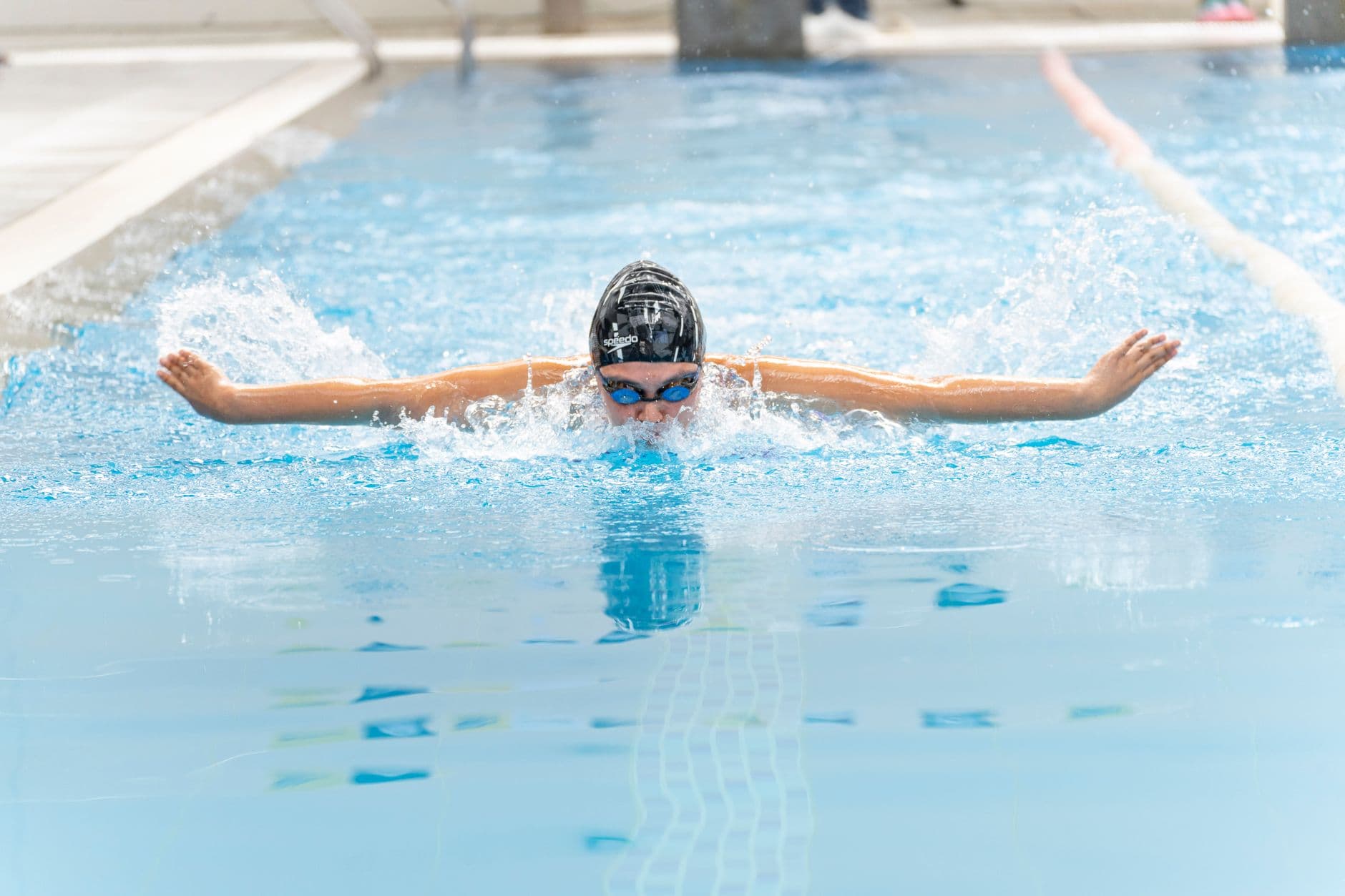
Underwater dolphin kick: how far off the wall is it worth going?
World-class 100 freestyle finalists use about nine metres of the fifteen allowed. Here is what decides your own number, how to measure it, and where the rules stop you.
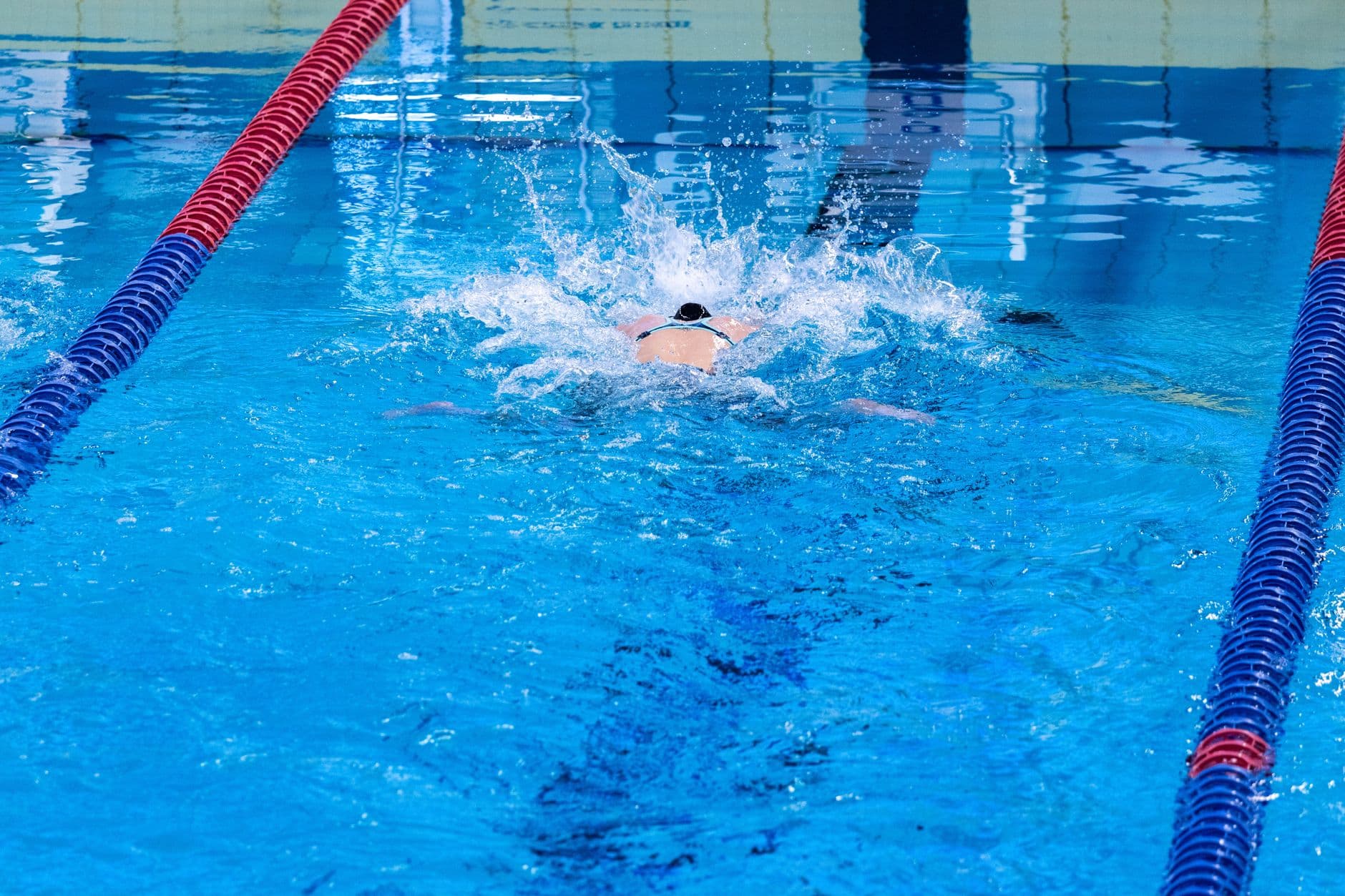
How to float on your back when your legs keep sinking
Floating is decided by lung volume and balance, not effort. The arithmetic behind a full breath, why your legs rotate down, and how to build a one-minute float.
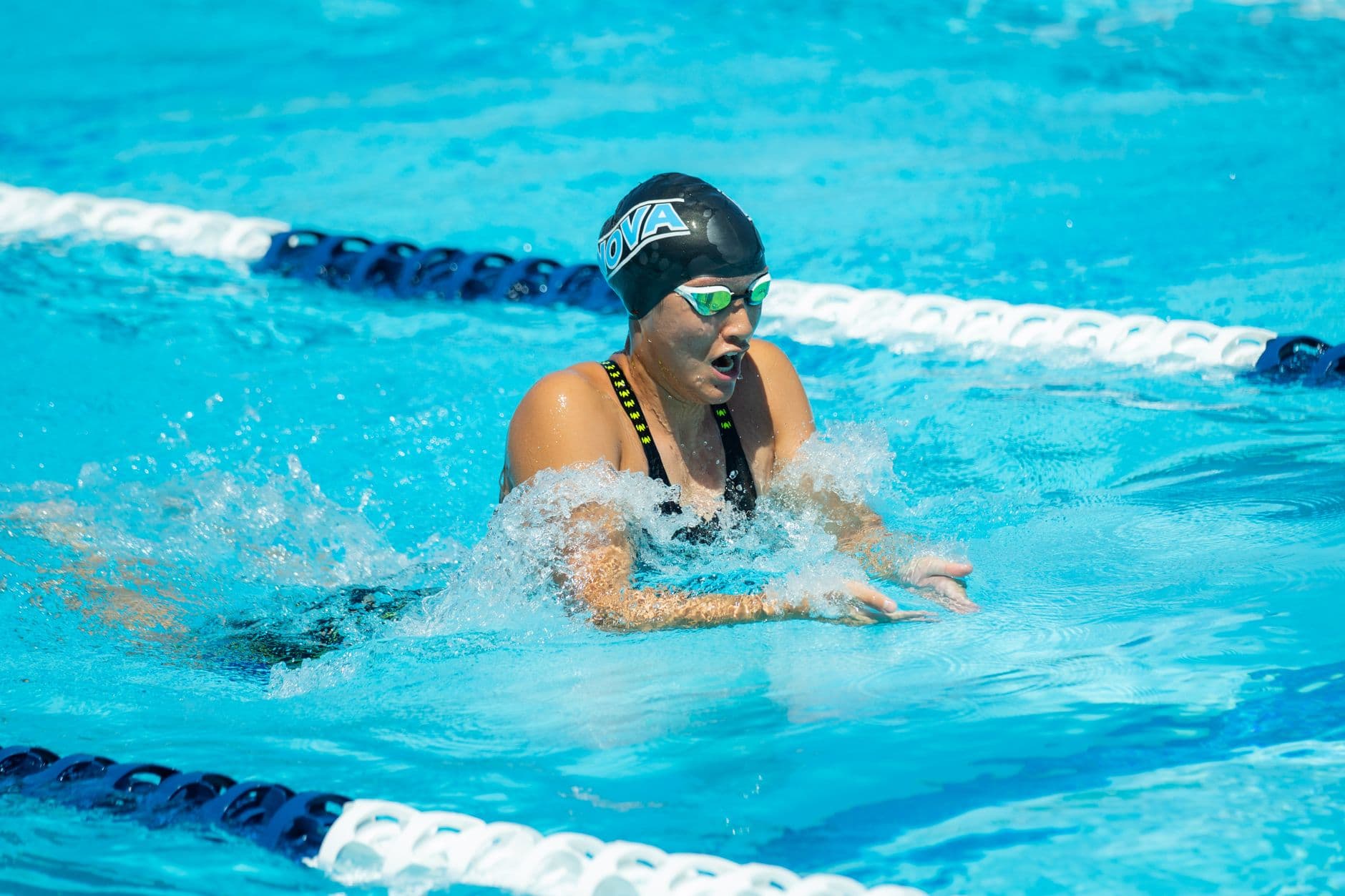
The breaststroke pullout: the legal sequence, in order
One arm stroke, one dolphin kick, one breaststroke kick — and a rule that ends the pullout with a stroke, not a 15 metre mark. The sequence, and what gets called.
SwimFast is an independent publication. We are not a swim school, a coaching service or a governing body, and nothing here is medical advice. Training paces and test protocols are cited from the published research or federation documents linked on each page. Never swim alone, never attempt breath-hold work without supervision, and check with a doctor before starting a new training programme.