How to breathe while swimming freestyle without running out of air
Running out of air at 25 m is a timing problem, not a fitness one. What to change, why it works, and how to tell which fault is yours.
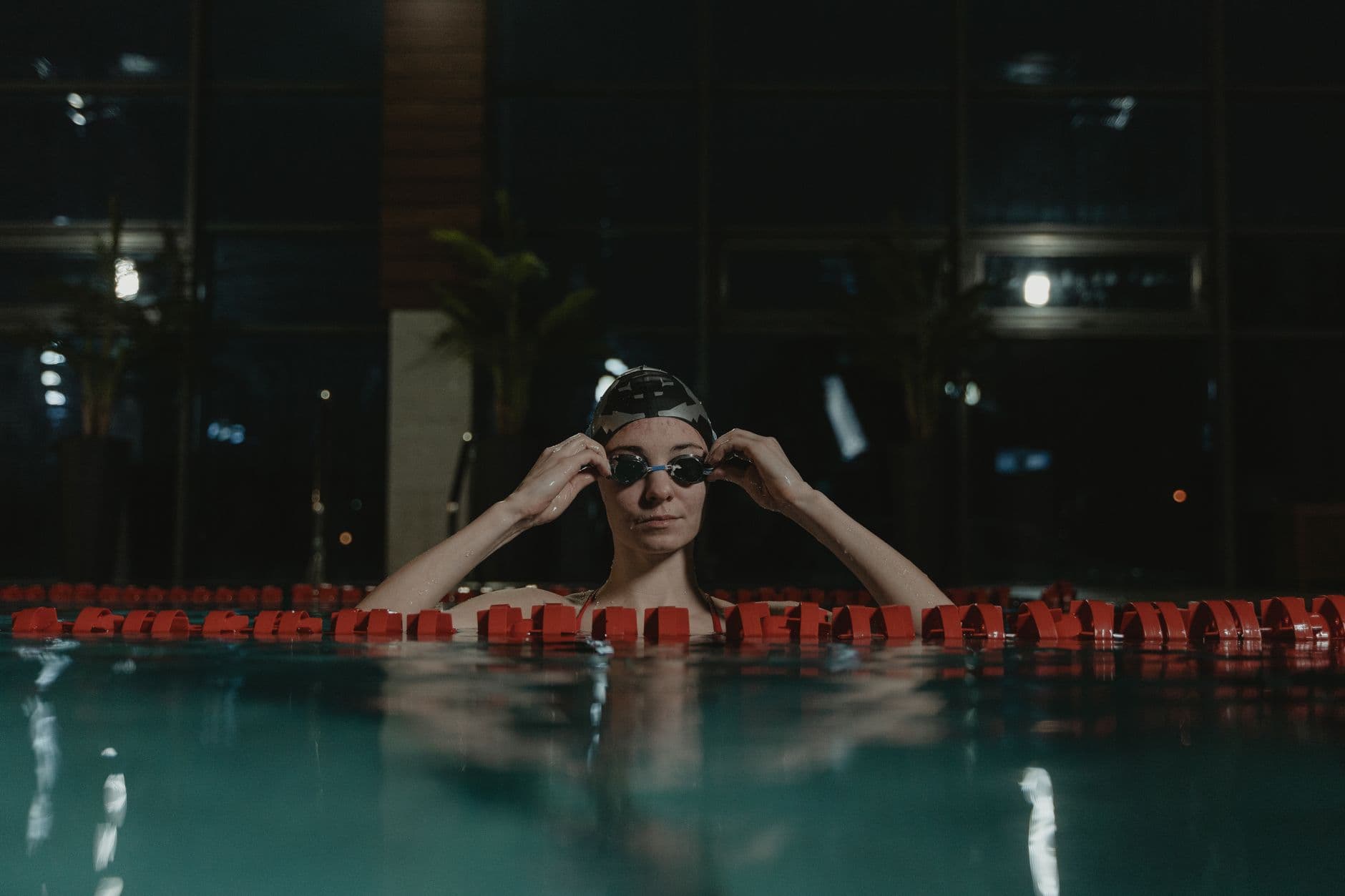
If you run out of air 25 metres into a length, the problem is almost never your lungs. It is that you are holding your breath without realising it, and then trying to do a full exhale and a full inhale in the fraction of a second your mouth is out of the water. No lung capacity survives that. Fix the timing and the panic disappears — usually within one session.
Why you struggle to breathe while swimming
On land, breathing is passive. You inhale, you exhale, and the exhale takes care of itself. In the water it does not, because your face is submerged for most of the stroke cycle and exhaling underwater feels wrong to a nervous system that spent its whole life associating water in the nose with danger.
So most adult beginners do this without deciding to: they hold the air in while their face is down, turn to breathe, and then have to blow out and suck in during a window that lasts maybe half a second. The exhale eats the window, there is no time left to inhale, and by the third breath they are in oxygen debt. It feels like being unfit. It is not.
There is a second layer to it. Carbon dioxide, not lack of oxygen, is what triggers the urge to breathe. Holding air in means holding CO₂ in, so the panic signal fires long before you are actually short of oxygen. That is why the feeling is so disproportionate to the effort: you are not suffocating, you are being told you are.
The one change that fixes most of it: exhale underwater
Continuous, unhurried exhale the entire time your face is in the water. Through the nose, the mouth, or both — it genuinely does not matter much, and anyone who tells you there is one correct answer is over-specifying. What matters is that the air is leaving.
Nose-only has one practical advantage: it stops water going up your nose, which is the other thing that makes beginners flinch. Mouth-only moves more air, which helps at higher effort. Most swimmers end up doing a bit of both without thinking about it. Pick whichever stops you tensing up.
The test is simple. If, at the moment you turn your head, you still have air to blow out, you are not exhaling enough underwater. When it is right, you turn and simply inhale, with nothing to get rid of first.
The common mistake in freestyle breathing
Lifting the head instead of rotating it. It is the single most common fault, and it is expensive twice over.
Lifting the head pushes the hips and legs down, because the body is a lever pivoting around your centre of buoyancy. That kills the body line, adds drag, and makes the next stroke harder — the same mechanism behind sinking legs, the other complaint every adult swimmer has, which the technique guide covers stroke by stroke. Worse, it takes longer: the head has to travel up and back down, so the window is shorter, not longer.
The correction is to breathe as part of the body roll you are already doing. Your torso rotates to each side on every stroke. Turn the head with that rotation, keeping one goggle in the water. You breathe into the trough your own head makes as it moves through the water, the bow wave, and there is far more air space there than beginners expect.
How to breathe in freestyle, step by step
- Exhale continuously from the moment your face enters the water. Slow and steady, not a forced blast.
- Let the rotation start as your leading arm extends and your other arm begins to recover.
- Turn the head with the shoulder, not independently of it. Chin stays near the shoulder, one goggle stays under.
- Inhale, quick and full. There is nothing to blow out first, so the whole window is available.
- Return the head before the recovering arm enters. If the head is still up when the hand lands, you are late and the stroke will stall.
The order matters more than the effort. Every part of that sequence is something the stroke already does; you are attaching the breath to it rather than interrupting it.
Every two, every three, or every four?
Breathing every three strokes, bilaterally, keeps the stroke symmetrical and stops you developing a one-sided pull. It is worth learning, and worth doing in warm-ups and easy sets for the rest of your swimming life.
It is not a rule for racing. Above easy aerobic effort you need the oxygen, and most trained swimmers race breathing every two. The pattern you choose is one of the smaller levers in swimming a faster 100 freestyle, and it is the wrong place to be principled. The sensible position is to learn both sides properly so you have the choice, then breathe as often as the effort demands. A swimmer who insists on every-three during a hard set and finishes it gasping has optimised for symmetry over the actual point of the set.
Breathing every four or more is a training tool for specific sessions, not a virtue. And it should never be pushed into genuine breath-holding, for reasons in the safety note below that matter more than anything else on this page.
Diagnosing your own breathing by symptom
| What you feel | What is usually happening | What to change |
|---|---|---|
| Out of breath by 25 m | Holding air in, so CO₂ builds and triggers panic | Continuous exhale underwater. Nothing else, for a whole session. |
| Legs sink every time you breathe | Lifting the head instead of rotating | Keep one goggle under. Breathe into the bow wave. |
| Swallowing water on the breath | Head turning too late, so the bow wave has passed | Start the turn earlier, with the rotation rather than after it. |
| Fine on one side, hopeless on the other | Asymmetric rotation, not a breathing problem | Single-arm drill on the weak side to rebuild the roll. |
| Stroke stalls on every breath | Head still up when the recovering hand enters | Return the head sooner. Count it: turn, inhale, back. |
Three drills that actually help
Drills work when they make one element impossible to ignore, and they only stick if you follow each one with normal swimming while the feeling is fresh. Fifty metres of drill, fifty metres of swimming, repeated. Not four hundred metres of drills and then a hard set that erases all of it.
- Bubble breathing at the wall. Hold the edge, face down, exhale slowly and completely, lift to inhale, repeat. Twenty times. It sounds trivial and it retrains the thing that is actually broken.
- Six-three-six. Six kicks on your side with the lower arm extended, three strokes, six kicks on the other side. It forces you to find the rotated position where breathing is easy, and to hold it.
- Single-arm freestyle. One arm swims, the other stays extended in front. Breathe to the swimming side. It isolates the rotation on each side separately, which is exactly what an asymmetric breather needs.
What changes when the effort goes up
Breathing that works at an easy pace can fall apart in a hard set, and the reason is usually stroke rate rather than fitness. As you speed up, the stroke cycle shortens, so the breathing window shortens with it. If your exhale was only just fitting before, it now does not fit at all.
This is where having an actual training pace pays off, because you can tell the difference between a set that is too hard for you and breathing that falls apart above a certain pace. Run the CSS test to get your threshold pace, then swim a set at that pace and see whether the breathing holds. If it survives at threshold and collapses at VO₂max pace, that is normal. If it collapses at easy pace, the problem is technique and no amount of training will fix it.
How long it takes to fix
Faster than people expect. Exhaling underwater is a decision, not a skill, and most swimmers feel the difference in a single session. What takes longer is the rotation: turning the head with the body instead of independently of it is a coordination change, and coordination changes take weeks of short, frequent practice rather than a few long sessions.
The practical version is to swim more often for less time. Three sessions of forty minutes will fix your breathing considerably faster than two of ninety, because the skill decays between sessions and frequency is what stops the decay. How far that logic runs — whether daily swimming keeps paying or just accumulates fatigue — is the subject of should you swim every day. The workouts guide covers how to structure them, and if you want to check the improvement is real rather than imagined, stroke count and SWOLF will show it before your times do — what the SWOLF number actually means, if it is new to you.
Safety, and this is not a formality. Never practise breath-holding or hypoxic sets without direct supervision, and never swim alone. Shallow-water blackout comes with no warning at all, and it has killed strong, experienced swimmers who were deliberately extending their breath-hold. Nothing on this page is an argument for breathing less. If you feel dizzy, get out of the water.
Frequently asked questions
How do you breathe while swimming freestyle for beginners?
Exhale slowly and continuously the whole time your face is in the water, then turn your head with your body roll and simply inhale. Keep one goggle in the water. The mistake beginners make is holding the air in and then trying to exhale and inhale in the same short window.
Is it better to exhale through the nose or the mouth when swimming?
Either works, and most swimmers use both without thinking about it. Nose-only stops water going up your nose, which helps if that makes you flinch. Mouth-only moves more air at higher effort. What matters is that you exhale continuously underwater, not which opening you use.
Why do I struggle to breathe while swimming?
Usually because you are holding your breath rather than exhaling underwater. Carbon dioxide builds up, and it is CO2 that triggers the urge to breathe, so panic arrives long before you are genuinely short of oxygen. It feels like poor fitness and is almost always a timing habit.
What is a common mistake in freestyle breathing?
Lifting the head instead of rotating it. It pushes the hips and legs down, which adds drag, and it takes longer than a rotation because the head has to travel up and back. Breathe as part of the body roll you are already doing, keeping one goggle submerged.
Should I breathe every two or every three strokes?
Learn every three so both sides work and your stroke stays symmetrical, but do not treat it as a racing rule. Above easy aerobic pace you need the oxygen, and most trained swimmers race breathing every two. Learn both, then breathe as often as the effort demands.
Sources
- Freestyle technique and breathing articles — U.S. Masters Swimming
- Swimming rules: legal stroke and body position definitions — World Aquatics
- Water safety guidance on breath-holding and shallow water blackout — American Red Cross
Read next
The breaststroke pullout: the legal sequence, in order
One arm stroke, one dolphin kick, one breaststroke kick — and a rule that ends the pullout with a stroke, not a 15 metre mark. The sequence, and what gets called.
How to tread water without getting tired
Treading water has a measured energy cost, and the technique everyone recommends is the one that tires beginners fastest. What the research actually found.
Chlorine, hair and skin: what it does and what actually helps
What chlorinated pool water really does to hair and skin, why the green tint is copper rather than chlorine, and which protective steps have evidence behind them.
SwimFast is an independent publication. We are not a swim school, a coaching service or a governing body, and nothing here is medical advice. Training paces and test protocols are cited from the published research or federation documents linked on each page. Never swim alone, never attempt breath-hold work without supervision, and check with a doctor before starting a new training programme.