Swim interval calculator
A pace is not a set until it is on the clock. This turns your threshold pace into send-off intervals — the “on 1:40” part of a workout — for any rep distance, any rest, across all five training zones.
Send-off interval calculator
Your threshold pace, a rep distance and the rest you want. Out comes the send-off the pace clock can actually run, for every training zone.
Swim 1:45.00, leave on the 2:00 — that is 15 s of actual rest once the send-off is rounded up to the clock. At this send-off, 5 reps fit in a 10-minute block.
| Zone | Pace / 100 | Swim time (100) | Send-off | Real rest |
|---|---|---|---|---|
| Endurance 1 | 2:11.25 | 2:11.25 | 2:30 | 19 s |
| Endurance 2 | 2:00.00 | 2:00.00 | 2:15 | 15 s |
| Threshold | 1:50.53 | 1:50.53 | 2:10 | 19 s |
| VO₂max | 1:40.00 | 1:40.00 | 1:55 | 15 s |
Zone paces are the CSS percentages from the CSS calculator, with your chosen rest added and each send-off rounded up to the 5-second mark a pace clock can show. Recovery is not in the table because recovery swimming is continuous — putting it on a send-off defeats its purpose.
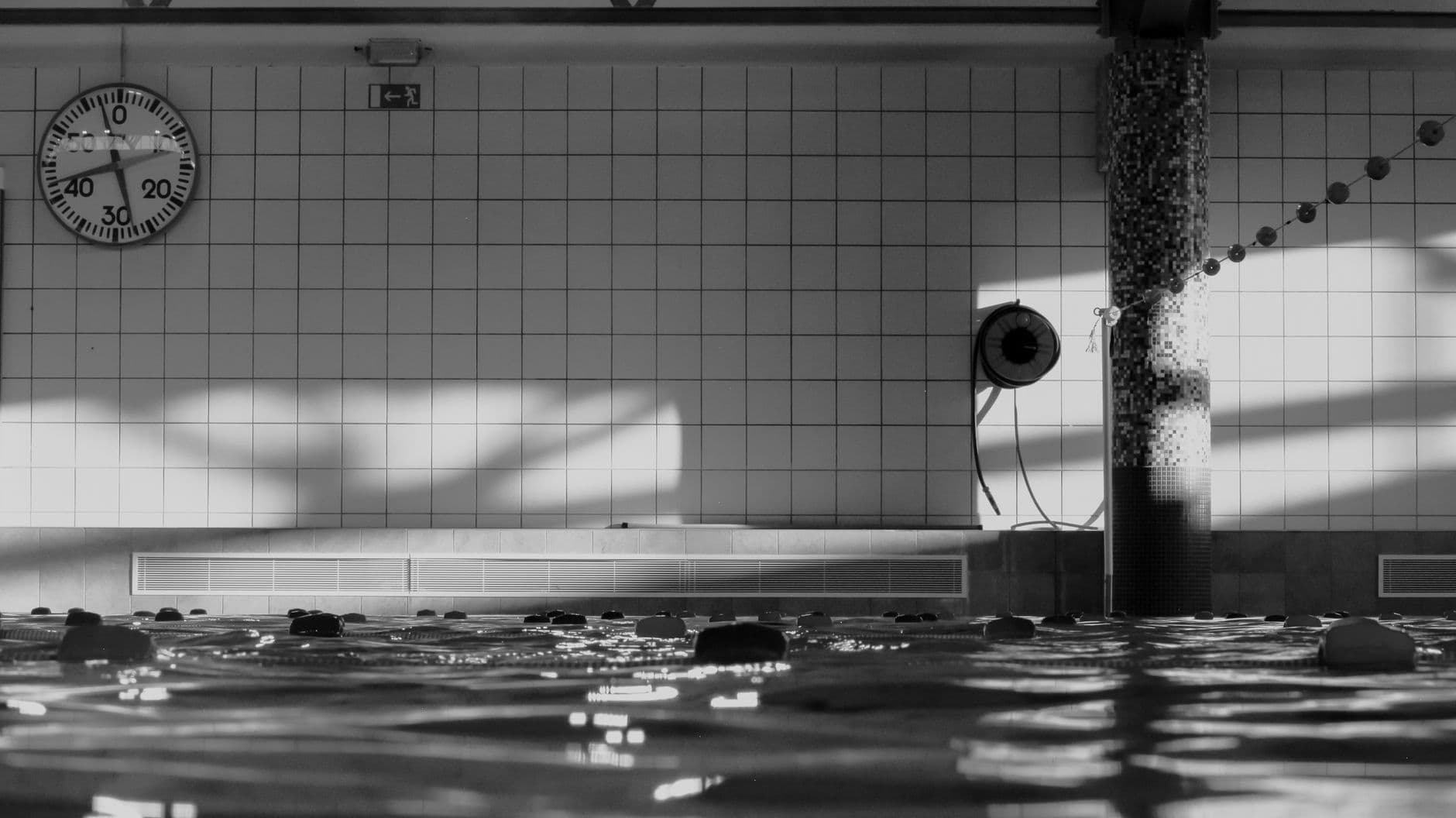
What a send-off actually is
A send-off is the total time allotted per repetition: swim plus rest, measured from push-off to push-off. “8 x 100 on 1:45” means you leave the wall every 1:45 regardless of how the previous rep went. It is the oldest piece of training technology in swimming, and it survives because it does two jobs at once — it controls the work density of the set, and it makes the rest self-adjusting: swim faster, rest more.
That second property is why coaches write sets as send-offs rather than as “rest 15 seconds.” Fixed rest rewards slowing down; a send-off rewards holding pace. It also keeps a lane of six people leaving in order instead of piling up on the wall.
The arithmetic, in the open
Send-off = (pace per 100 ÷ 100) × rep distance + rest, rounded up to the next 5-second mark.
The pace comes from your Critical Swim Speed — the threshold pace two time trials give you — and the zone paces are the same CSS percentages that calculator uses, so the two tools always agree. The rest is yours to choose, because it is the one input that is genuinely a coaching decision rather than a formula. If you have a recent race or time-trial result instead of a CSS test, the pace calculator turns it into a per-100 pace you can feed in here.
Why send-offs land on 5-second marks
Pure convention, and worth being honest about: there is nothing physiological about a multiple of five. Pool pace clocks — the four-handed analogue ones and most digital ones — are read in 5-second steps, and a lane cannot organise itself around a send-off of 1:38. So every real set rounds, and the only question is which way.
This calculator rounds up, and shows you the rest you actually end up with. Rounding to the nearest mark can silently cut your rest to almost nothing on a bad day; rounding up means the set is never harder than the one you designed. If the rounded rest comes out longer than you wanted, shorten the requested rest a notch rather than accepting a soft set.
How much rest, for what
The rest decides what the set trains, and here the evidence is thinner than the formulas suggest — most of what follows is long-standing coaching consensus, not controlled trials. The pattern behind it is simple: short rest keeps the aerobic system loaded, long rest lets each rep be fast.
| Set purpose | Typical rest | Why |
|---|---|---|
| Threshold | 10–15 s per 100 | Enough to keep form, not enough to recover. This is the zone that moves CSS. |
| Aerobic endurance | 15–30 s per 200–400 | Long reps, modest rest — steady work you can hold technique through. |
| Speed / VO₂max | 30 s or more per 50 | The rep only trains speed if it is actually fast, and fast needs recovery. |
| Technique | As much as you need | Drills done tired rehearse the fault. The clock is not the point here. |
If most of your training happens in one of these rows, the workouts section has full sessions written around each — and the CSS pace guide explains why the threshold row earns most of the attention.
Turning the table into a set
Take the send-off from the zone you are training, pick a total distance, and divide. Three worked examples at a CSS of 1:45 per 100:
- Threshold: 10 x 100 on 2:00 — swim about 1:45, leave every 2:00, roughly 15 seconds of rest that shrinks if you fade. About 20 minutes of work.
- Endurance: 5 x 200 on 4:10 at Endurance 2 pace — the longer rep teaches pacing in a way 100s never do.
- Speed: 8 x 50 on 1:20 at VO₂max pace — the generous send-off is the point; if you cut it, the last reps stop being fast and start being survival.
The calculator’s “reps per 10 minutes” figure is there for exactly this: most quality blocks in a masters or club session are 10 to 20 minutes, so it tells you at a glance whether the set you are sketching fits the time you have. If you are still deciding how much total volume a session should carry, how many laps make a good workout covers that side — and the workout generator does the sketching for you, fitting the warm-up, the drills and this main set into the minutes you actually have.
When the interval is wrong
A send-off is a hypothesis about your fitness, and some days the hypothesis fails. The useful failure signals: missing the send-off three reps in a row, rest shrinking below 5 seconds while pace holds, or pace collapsing while the rest stays intact. The first two mean the interval is too tight today — move to the next 5-second mark. The third means the pace target is wrong, which is a different problem: retest your CSS rather than bargaining with the clock.
And check the course. A pace measured in a 25-yard pool fed into a metres set — or the reverse — is off by roughly 9 % before you have swum a stroke. The course converter exists for exactly this hand-off.
What this calculator will not tell you
It cannot tell you whether the pace you gave it is true — that is what the CSS test is for — and it cannot tell you whether you should be doing threshold work at all today. Send-off training is demanding by design; if you are new to structured swimming, the beginner workouts guide builds up to it rather than starting there. And no interval fixes a stroke that is fighting the water: if your rest keeps vanishing at every send-off you try, the technique section is usually the better investment than a slower clock.
Frequently asked questions
What does swimming '10 x 100 on 1:40' actually mean?
You push off every 1 minute 40 seconds, ten times. The send-off includes both the swim and the rest: if the 100 takes you 1:25, you get 15 seconds on the wall; if it takes 1:35, you get 5. That is the point of a send-off — the faster you swim, the more rest you earn, and the clock keeps the whole lane honest.
How much rest should I take between reps?
It depends on what the set is for, and the numbers are coaching convention rather than lab science. The convention: threshold work uses short rest, around 10 to 15 seconds per 100, so the aerobic system never fully recovers; sprint work uses long rest, 30 seconds or more per 50, so each rep can be genuinely fast. If you are unsure, start at 15 seconds and adjust by feel over a few sessions.
Why can't I hold the send-off the calculator gives me?
Almost always because the pace you fed it is not really your current threshold. A CSS test done months ago, or with a soft 400, gives a pace a few seconds per 100 too fast — and on a send-off those seconds come straight out of your rest. Retest your CSS, and until then add 5 seconds to the send-off rather than abandoning the set.
Do send-offs change between a yards pool and a metres pool?
Yes, meaningfully. A 100 yards is about 9 % shorter than 100 metres, so the same swimmer holds roughly 5 to 10 seconds less per 100. Feed the calculator a pace measured in the pool you are training in, and if your only pace is from the other course, run it through the course converter first.
What if the send-off leaves me chasing the clock every rep?
One missed send-off is a bad rep; three in a row means the interval is wrong for today. Move to the next 5-second mark and finish the set there. Fitness varies day to day and the set only works if you complete it — a shorter, held send-off trains more than a heroic one you fall off halfway through.
Sources
- Wakayoshi K. et al. — Determination and validity of critical velocity as an index of swimming performance in the competitive swimmer — European Journal of Applied Physiology (1992)
- Ginn E. — The application of the critical power test to swimming — Australian Sports Commission (1993), protocol summary
Zone percentages are the same ones used by the CSS calculator, derived from the work above. Rest recommendations and the 5-second rounding are coaching convention, and are labelled as such where they appear.
SwimFast is an independent publication. We are not a swim school, a coaching service or a governing body, and nothing here is medical advice. Training paces and test protocols are cited from the published research or federation documents linked on each page. Never swim alone, never attempt breath-hold work without supervision, and check with a doctor before starting a new training programme.