Swim technique: what actually makes each stroke work
Technique advice drowns in slogans. “Swim tall.” “Catch the water.” Useful only if you already know what to move. What follows is the mechanics of each stroke, the fault each cue is there to fix, and the drill that fixes it — plus the honest answer to which one is costing you the most time.
The one thing that outranks everything else
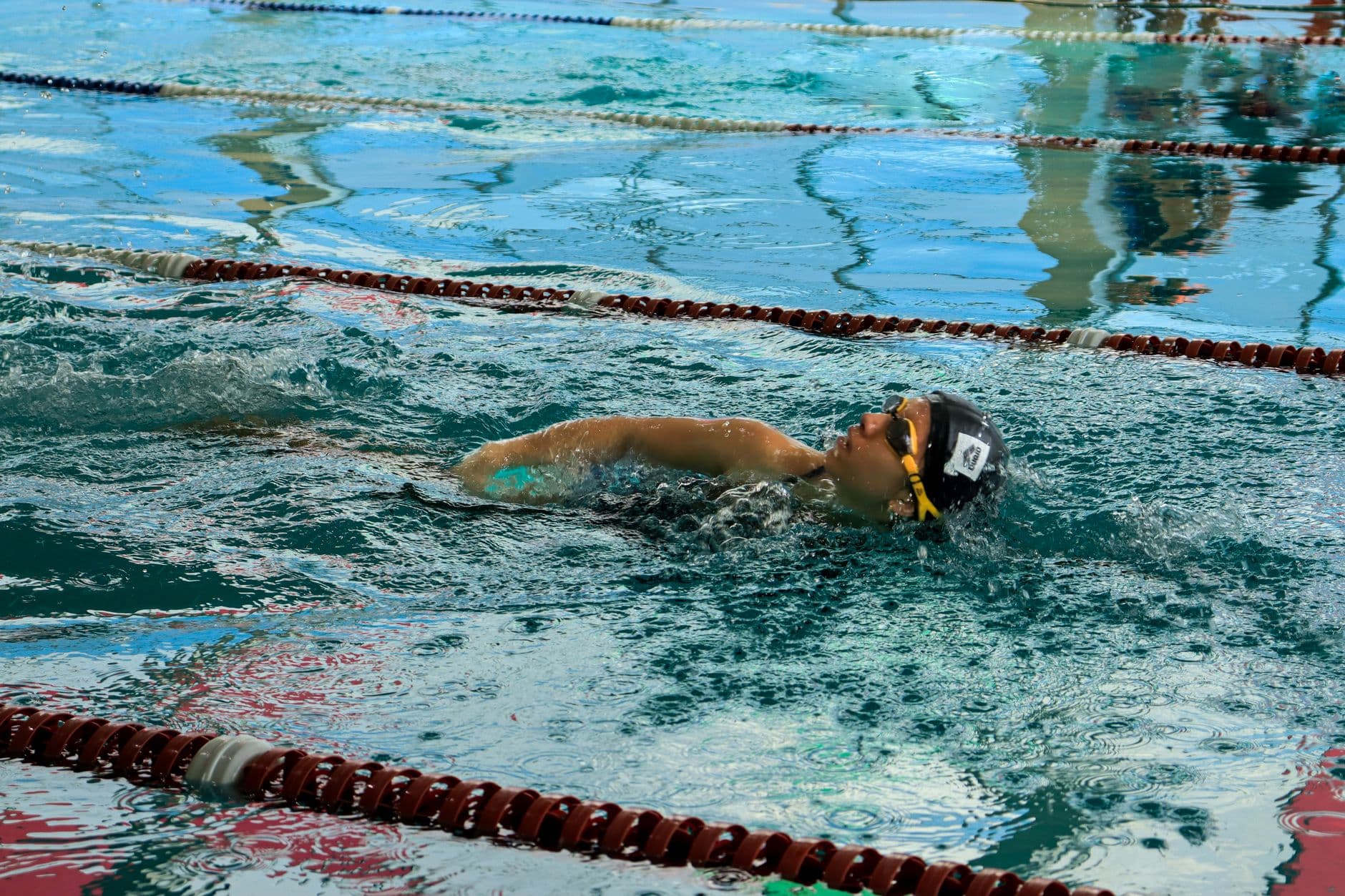
Before stroke-specific anything, there is body position. A swimmer with a good line and a mediocre pull is faster and far less tired than a swimmer with a strong pull dragging their hips through the water. Drag rises with roughly the square of speed, so every centimetre the hips sit below the surface is paid for again and again on every length.
This is why almost every beginner problem — sinking legs, running out of breath at 25 m, a kick that seems to do nothing — traces back to the same cause and has the same fix. Get the line right and the rest of the stroke has something to work against.
The four strokes
Freestyle
The fastest, most efficient stroke — and the one worth fixing first. Front crawl rewards a long, balanced body line and a relaxed high-elbow catch. Get rotation and breathing timing right and everything downstream — pace, stroke count, how far you can go before your legs sink — gets easier on its own.
The cues that matter
- Body line. Press the chest lightly and the hips rise. Head neutral, eyes down and slightly forward — lifting the head is what drops the legs.
- Rotate from the hips. Turn to each side rather than swimming flat. The core drives the arm; the arm does not drive the body.
- High-elbow catch. Reach, then set the forearm early so it faces backwards. A straight arm pushes water down, which lifts you instead of moving you.
- Breathe in the pocket. Turn with the body roll, not independently of it. One goggle stays in the water — if both come out, the head has left the line.
Drills, and the fault each one is for
| Drill | How | What it fixes |
|---|---|---|
| 6-3-6 | Six kicks on one side, three strokes, six on the other. | Side-lying balance and the habit of finishing rotation. |
| Catch-up freestyle | One hand waits at full extension for the other. | A rushed, short stroke with no front-quadrant timing. |
| High-elbow scull | Scull with the forearm vertical, chest down. | A dropped elbow that slips through the water. |
| Single-arm freestyle | One arm swims, the other stays extended. | An asymmetric pull you cannot feel while swimming normally. |
What usually goes wrong
- Sinking legs. You will notice it because legs feel heavy after 50 m and kicking harder does not help. Not a kick problem. Press the chest and lower the head — the hips follow.
- Lifting the head to breathe. You will notice it because both goggles clear the water; the stroke stalls on the breathing side. Rotate to breathe. Keep one goggle under and breathe into the bow wave.
- Crossing the midline. You will notice it because you snake down the lane and the catch feels slippery. Enter the hand in line with the shoulder, not in front of the nose.
Breaststroke
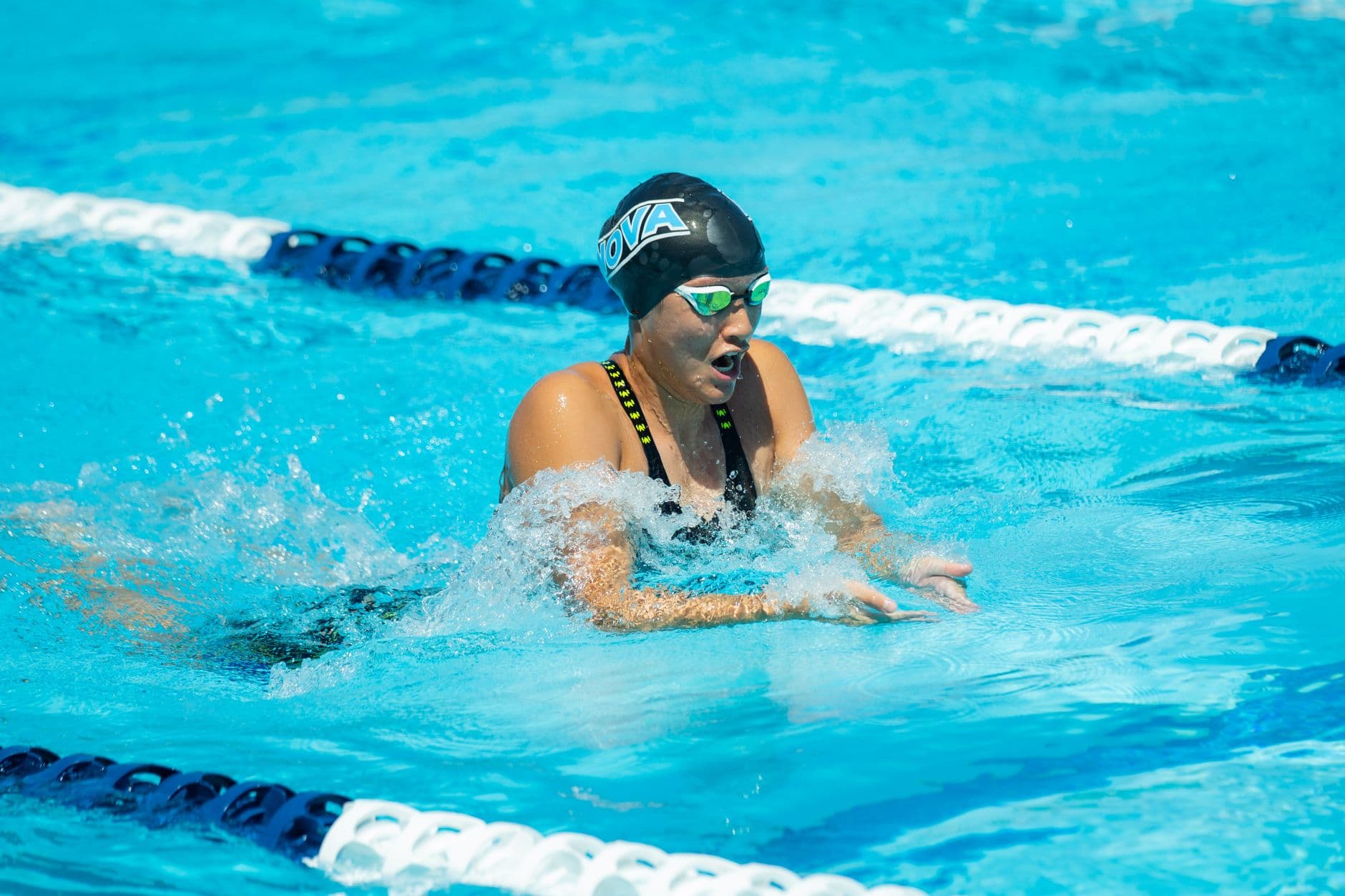
Timing over power — glide long and whip fast. Breaststroke is rhythm: pull, breathe, kick, glide. The speed is not in the pull, it is in the streamline you hold after every kick, and in how little you disturb the water getting there.
The cues that matter
- Pull, breathe, kick, glide. One continuous wave. If two phases overlap, they cancel each other out.
- Narrow, fast whip kick. Heels to the hips, turn the feet out, snap them together. Width comes from the feet, not the knees.
- Shoot and hide. Drive the hands forward and get the head behind the arms every single cycle.
- Flat hips. Keep the kick behind you. Piking the hips down turns the kick into a brake.
Drills, and the fault each one is for
| Drill | How | What it fixes |
|---|---|---|
| 2 kicks + 1 pull | Two kicks for every arm cycle. | A glide that has quietly disappeared. |
| Kick on the back | Breaststroke kick, hands at the sides. | Knees dropping too wide, which you cannot see face-down. |
| Three strokes underwater | Push off and take three full cycles under. | A pull that finishes too far back. |
What usually goes wrong
- Knees too wide. You will notice it because you feel the kick in the knees and go nowhere. Heels wide, knees inside shoulder width. The feet do the work.
- No glide. You will notice it because stroke count is high and the stroke feels frantic. Count a full beat with the arms extended before the next pull.
- Lifting the whole chest to breathe. You will notice it because big up-and-down motion, hips dropping each cycle. Let the pull lift you. The head comes up last and goes down first.
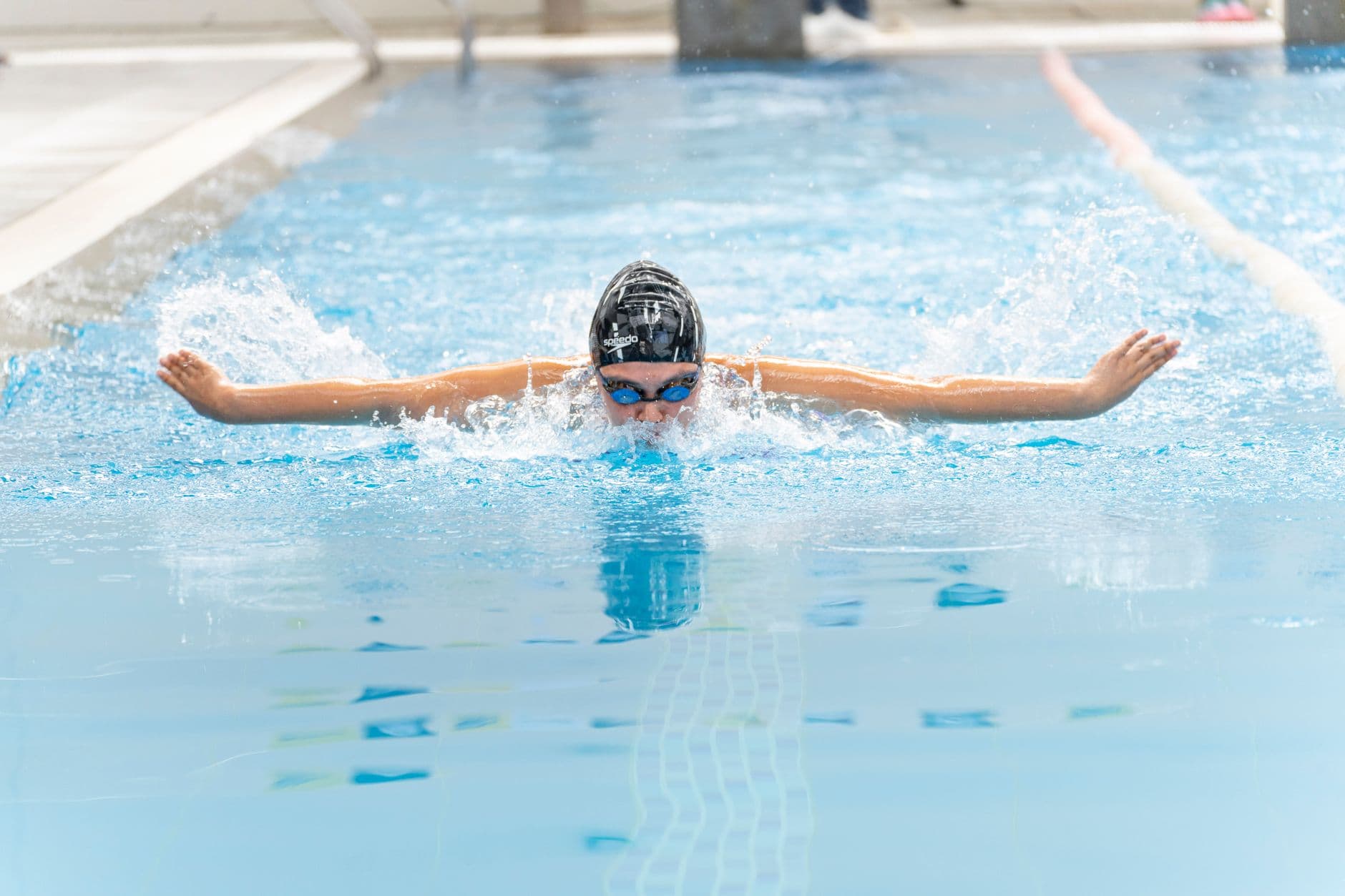
Butterfly
Rhythm and undulation — power that comes from the core. Fly looks brutal but rides on rhythm. Connected two-kick timing and a forward-driving press make it flow instead of fight. Swimmers who find it impossible are almost always fighting their own timing, not their fitness.
The cues that matter
- Press the chest. Undulate from the chest, not the head. The hips follow the chest, and the legs follow the hips.
- Two kicks per stroke. Kick in as the hands enter, kick out as the hands exit. Miss the second kick and the recovery dies.
- Low, forward recovery. Sweep the arms wide and relaxed, thumbs down on entry. Height in the recovery is wasted energy.
- Sneak the breath. Chin low and forward. Up early, back down fast — a late breath drops the hips.
Drills, and the fault each one is for
| Drill | How | What it fixes |
|---|---|---|
| Single-arm butterfly | One arm at a time, the other extended. | Timing, without the fatigue that hides it. |
| 3 kicks + 1 stroke | Three dolphin kicks, then one full stroke. | Undulation that has flattened out. |
| Body dolphin | No arms, undulate from chest to toes. | Kicking from the knees instead of the core. |
What usually goes wrong
- Lifting the head first. You will notice it because the hips sink on every breath and the recovery stalls. Chest presses first; the head rides the wave up.
- One big kick instead of two. You will notice it because the arms cannot clear the water on the recovery. Kick the hands in, kick the hands out. Count it out loud on deck.
Backstroke
Stay long, rotate, and let the water hold you up. Backstroke is freestyle upside down: the same rotation and long body line, but with a steady head and a continuous, opposing arm rhythm. The advantage is that you are always breathing; the difficulty is that you cannot see where the wall is.
The cues that matter
- Still head. Hold the head as if balancing a glass of water, eyes up. Every head movement costs you the body line.
- Rotate the hips. Drive rotation from the core so each stroke starts longer than the last one finished.
- Pinky-first entry. Enter little finger first, straight above the shoulder. A thumb-first entry rolls the shoulder in and kills the catch.
- Deep, bent-elbow catch. Catch under the water. Pushing water towards the surface lifts you, it does not move you.
Drills, and the fault each one is for
| Drill | How | What it fixes |
|---|---|---|
| 6-kick switch | Six kicks on the side, then rotate. | Rotation that has collapsed into swimming flat. |
| Double-arm backstroke | Both arms recover together. | A weak, shallow catch. |
| Cup on the forehead | Swim with a cup of water balanced on the forehead. | A head that bobs with every stroke. |
What usually goes wrong
- Sitting in the water. You will notice it because hips low, feet churning at the surface, going nowhere. Lead with the chest and keep the hips at the surface, not the head.
- Thumb-first entry. You will notice it because the shoulder aches and the catch feels like nothing. Little finger first, arm brushing past the ear.
How to tell which fault is costing you the most
Guessing is expensive. Two numbers, both measurable in ten minutes at your own pool, narrow it down fast:
- Stroke count per length. Count it at an easy pace and again at a hard pace. If the count barely changes when you go harder, you are spinning your arms faster without holding more water — the catch is the problem. Feed both numbers into the SWOLF calculator to see the trade-off between count and speed rather than chasing one of them alone.
- The gap between your 100 pace and your 400 pace. A big gap points at a pacing and aerobic problem; a small gap with slow times overall points at technique. The CSS test turns that into an actual threshold pace you can train against.
Both of those beat any amount of self-diagnosis in front of a mirror, and both give you a number to re-test in six weeks. If you have never set a training pace before, the workouts section explains how the zones fit together.
Drills only work under two conditions
A drill is a temporary distortion of the stroke that makes one element impossible to ignore. That means two things. First, a drill you do badly is worse than no drill, because it teaches the distortion instead of the correction. Second, a drill has to be followed by normal swimming while the feeling is still fresh — otherwise the pool has taught your body a movement it will never use.
The pattern that works: 50 m drill, 50 m normal swimming trying to keep the same feeling, repeated. Not 400 m of drills followed by a hard set that erases all of it.
Guides in this section
The breaststroke pullout: the legal sequence, in order
One arm stroke, one dolphin kick, one breaststroke kick — and a rule that ends the pullout with a stroke, not a 15 metre mark. The sequence, and what gets called.
How to tread water without getting tired
Treading water has a measured energy cost, and the technique everyone recommends is the one that tires beginners fastest. What the research actually found.
Chlorine, hair and skin: what it does and what actually helps
What chlorinated pool water really does to hair and skin, why the green tint is copper rather than chlorine, and which protective steps have evidence behind them.
Swimmer's ear: what prevents it and what is folklore
What causes swimmer's ear, which prevention advice has clinical backing, which has never been tested, and the point at which it stops being an article's problem.
Swim goggles that fog: what works and what is folklore
Fog is condensation on a lens colder than the air inside it. Which remedies have a mechanism, which are harmless folklore, and which one ends the goggles.
Afraid of the water as an adult: the seven documented steps
The seven-step progression U.S. Masters Swimming gives its own volunteers for teaching fearful adults — starting on dry land, reaching a float only at step seven.
Breaststroke kick: why yours goes nowhere
In breaststroke the legs do most of the work, so a kick that does not propel is not a small problem. Four faults account for almost all of it.
Butterfly for mortals: the two-kick timing that makes it possible
Butterfly turns on where the two kicks land in the arm cycle. The published standards put the cost at 7 to 9 per cent over freestyle — a third of what breaststroke costs.
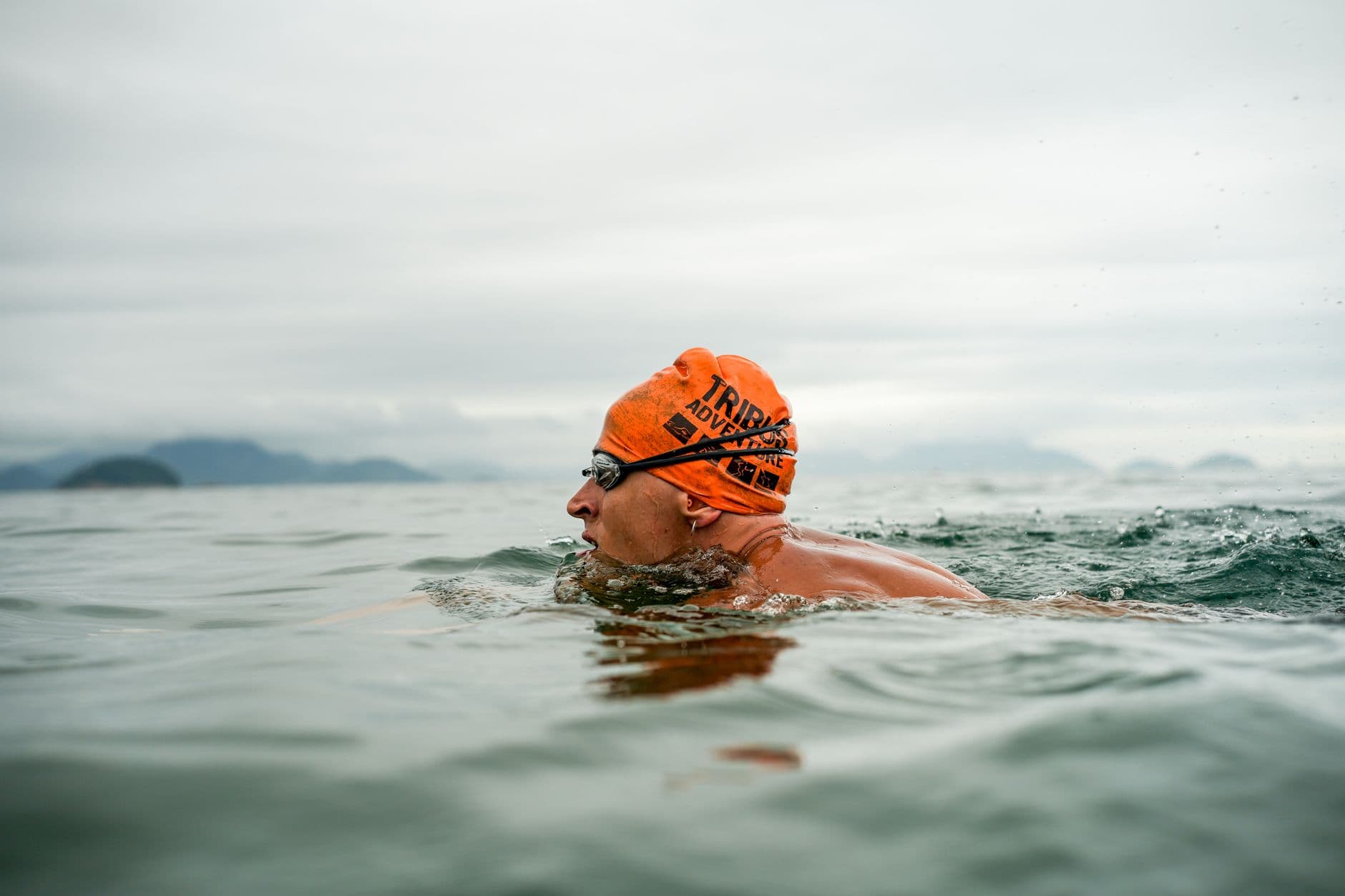
Sighting: how to swim straight without wrecking your stroke
Without a line on the floor most swimmers curve and add distance. Lifting the head fixes the steering and sinks the legs, so the trick is doing it briefly and often.
Stroke rate or stroke length: which one to change first
Speed is rate multiplied by length, so you can raise either one. Which lever to pull depends on the distance you are swimming and on which one you are currently wasting.
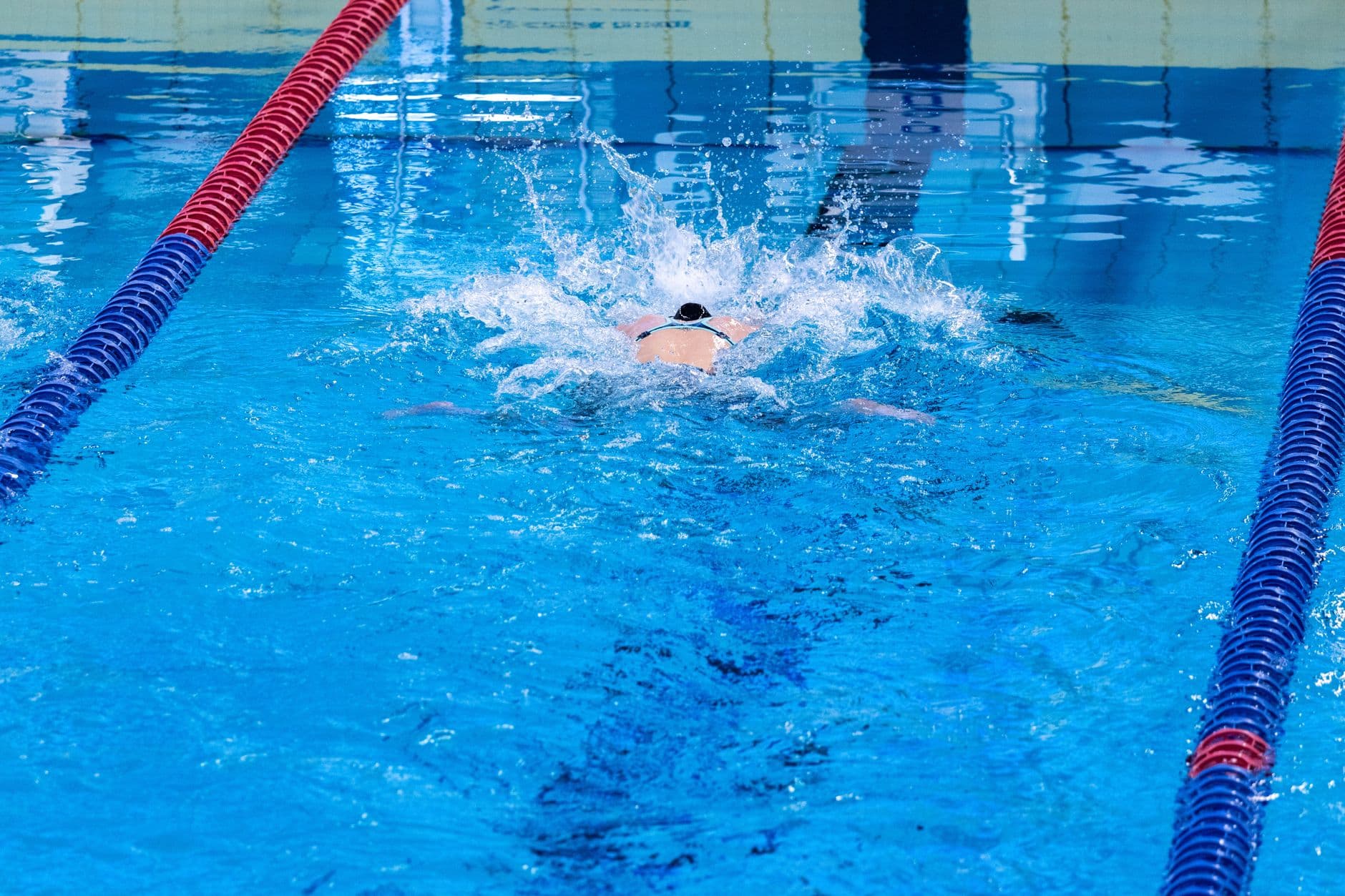
How to swim backstroke straight without hitting the lane rope
You cannot see where you are going. Straightness comes from a symmetrical stroke plus the markings the pool already carries: colour-coded ropes, flags and a stroke count.
Swimmer's shoulder: the stroke faults that load the cuff
What causes swimmer's shoulder, what the research actually supports, the four freestyle faults worth fixing, and how to tell which one is yours.
Bilateral breathing: worth learning, not worth racing with
The research says alternating sides evens out your stroke. It does not say it makes you faster. What to train, what to race with, and how to test your own.
How to do a flip turn: the six steps, and the two everyone rushes
The flip turn broken into six steps, with the race data on what each one is worth. The two that decide your speed are not the somersault.
Learning to swim as an adult: the order that actually works
The nine-step order that adult learn-to-swim instructors actually teach, why freestyle comes eighth, and what to do when fear of the water is the real obstacle.
How to breathe while swimming freestyle without running out of air
Running out of air at 25 m is a timing problem, not a fitness one. What to change, why it works, and how to tell which fault is yours.
Why your legs sink when you swim (and why kicking harder fails)
Sinking legs are a position problem, not a fitness one. The physics, the two-length test that proves it, and the fix that has nothing to do with your kick.
Frequently asked questions
Why do my legs sink when I swim freestyle?
Almost always because the head is too high, not because the kick is too weak. Water supports the body evenly; when you lift the head, the other end of the lever goes down. Press the chest slightly, look down and slightly forward instead of ahead, and the hips come up without any extra effort from the legs. Kicking harder to fix sinking legs is the single most common wasted effort in adult swimming.
How long does it take to learn to swim freestyle properly as an adult?
Getting comfortable enough to swim a continuous 200 m typically takes a few weeks of two or three sessions. Getting a technically sound stroke takes months, and it is not a fitness problem — it is a coordination one. The fastest route is fewer metres and more drills early on, because repeating a broken stroke for an hour just makes the broken stroke more automatic.
Should I breathe every two, three or four strokes?
Breathing every three keeps the stroke symmetrical and is worth learning, but it is a drill, not a rule. In any effort above easy aerobic pace you need the oxygen, so most trained swimmers race breathing every two. Learn bilateral so both sides work, then breathe as often as the effort demands.
Which stroke should a beginner learn first?
Backstroke is the easiest to breathe in and the fastest way to get comfortable, but freestyle is the one worth investing in, because it is the most efficient and the one every training set is built around. A common and sensible order is backstroke to build water confidence, then freestyle for everything after that.
Sources
- Technique articles and video library — U.S. Masters Swimming
- Swimming rules — stroke definitions and legal movements — World Aquatics
- Wakayoshi K. et al. (1992) — critical velocity as an index of swimming performance — European Journal of Applied Physiology
SwimFast is an independent publication. We are not a swim school, a coaching service or a governing body, and nothing here is medical advice. Training paces and test protocols are cited from the published research or federation documents linked on each page. Never swim alone, never attempt breath-hold work without supervision, and check with a doctor before starting a new training programme.