Bilateral breathing: worth learning, not worth racing with
The research says alternating sides evens out your stroke. It does not say it makes you faster. What to train, what to race with, and how to test your own.
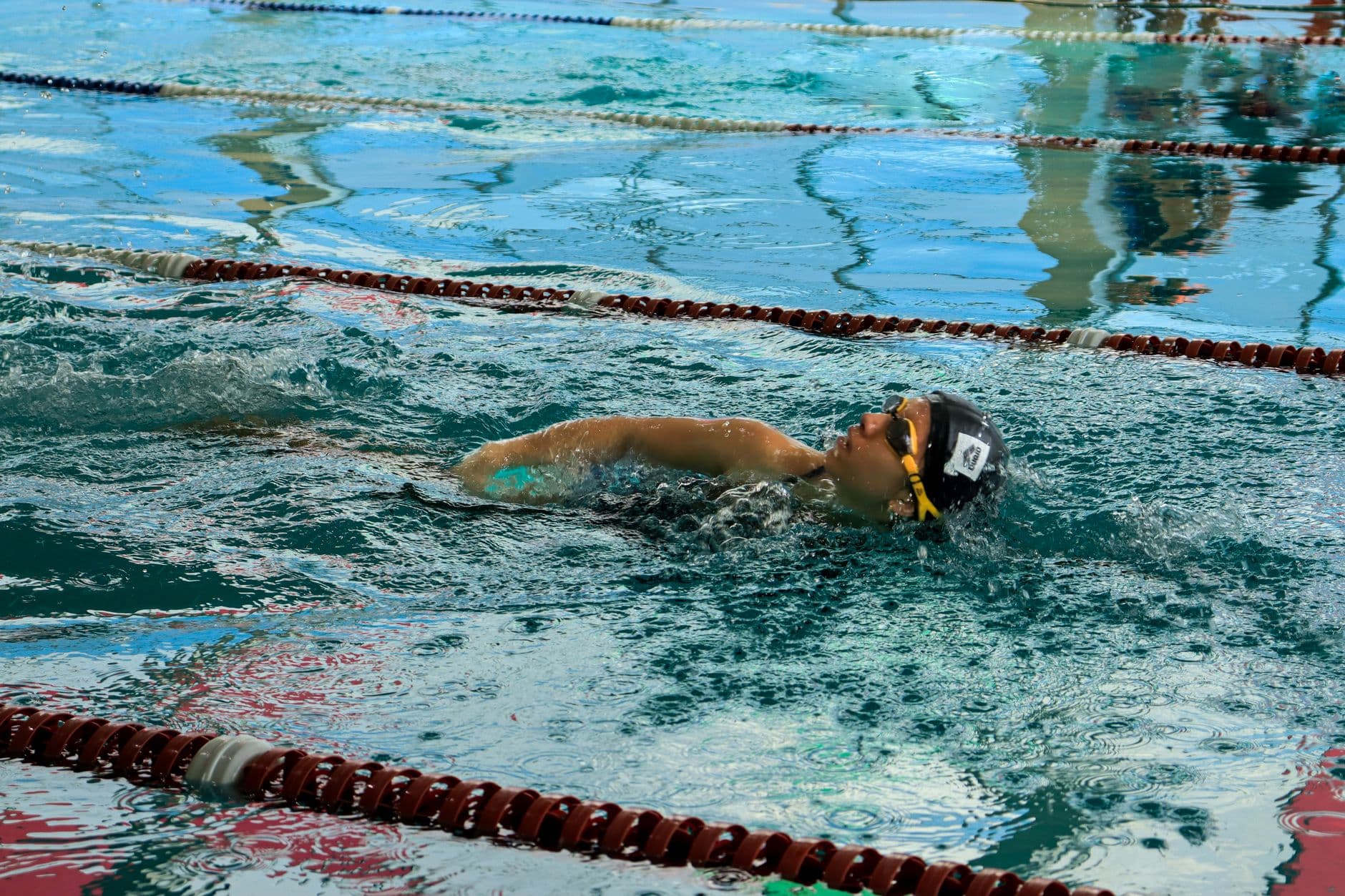
Somewhere in the last thirty years, "breathe every three strokes" stopped being a drill and became a commandment. Swimmers who breathe to one side get told they are doing it wrong, and swimmers who cannot manage the other side quietly assume they will never be proper swimmers. Both conclusions are wrong, and the research is a lot more specific than the slogan.
Here is the short version. Bilateral breathing measurably reduces one thing: the left-right asymmetry that your breathing side builds into your stroke. That is a real finding, repeated in more than one laboratory, and it is a good reason to train it. What no study has shown is that it makes you faster over a race, and the pattern that fixes the asymmetry best is not bilateral breathing at all. So: learn it, use it for most of your training, and stop treating race day as a test of your virtue.
What bilateral breathing actually means
Bilateral breathing means alternating the side you breathe to, rather than always turning to the same one. In practice that usually means breathing every three strokes, because an odd number puts each breath on the opposite side from the last. Any odd interval does the same job: every five, every seven, or a mixed pattern such as three-three-two-two that alternates over a full length.
The confusion is that "every three" describes a frequency and "bilateral" describes a direction, and people use them as if they were the same word. They are not. You can breathe every two strokes and still be bilateral if you swap sides at the turn. You can breathe every three and be effectively unilateral if the length is short enough that the pattern never gets to alternate. What matters for the research below is the alternation, not the number.
If your problem is that you cannot get enough air on any pattern, this is the wrong article and you want the one on how to breathe in freestyle without running out of air first. Almost every adult who feels short of air is holding their breath rather than exhaling into the water, and no breathing pattern survives that.
The case for it is about symmetry, not speed
This is where the evidence is genuinely good, and it is worth knowing what it says before you argue about it.
Seifert, Chollet and Allard, studying 28 swimmers across three skill levels over 100 m of front crawl, found that most swimmers show asymmetric arm coordination — one arm sits in a slight catch-up pattern while the other overlaps — and that the asymmetry was most often related to which side they breathed to, not to whether they were right or left handed. Three years later Seifert's group put 11 expert male swimmers through seven different breathing patterns at 100 m race pace. Breathing to the preferred side produced coordination asymmetry. Breathing to the non-preferred side produced more of it. Coordination came out symmetric in three conditions only: bilateral breathing, breathing through a front-mounted snorkel, and not breathing at all.
Barden and Barber put numbers on the same effect at the hips. Eighteen provincial-standard swimmers swam 100 m repeats at 70% of their season best under three conditions, with an inertial sensor measuring how far the hips rolled to each side.
Barden & Barber (2022), Sensors 22(6):2324. The 9.6° gap under unilateral breathing was statistically significant; the 4.7° gap under bilateral breathing and the 2.3° gap on the snorkel were not.
Read the pairs, not the individual bars. Breathing always to one side left a 9.6° difference between how far the hips rolled each way. Alternating cut that gap to 4.7°, small enough that it stopped being statistically detectable. That is the strongest practical argument for bilateral breathing anyone has: it makes your stroke more even, and it does so in the direction everybody claims it does.
What the asymmetry costs, and what nobody has measured
Now the part the coaching slogan skips. Every one of those studies measured shape, not time. They report degrees of hip roll and milliseconds of arm overlap. None of them reports that the symmetric swimmers went faster.
The one study that looked directly at what a breath costs mechanically found the cost is real but oddly hard to see in the clock. Vezos and colleagues filmed ten trained female swimmers over 25 m at about 80% of their best 100 m pace, breathing to the preferred side versus holding the breath. Turning to breathe stretched the underwater pull by 8%, the glide phase by 11% and the initial downsweep by 27.5%, and made the pull about 7% shallower. Swimming velocity was 1.25 m/s breathing and 1.30 m/s not breathing — a difference the study could not call significant with ten swimmers.
So the honest summary is: a breath changes the geometry of your stroke, alternating sides evens that change out across both arms, and whether any of it shows up in your finishing time has not been demonstrated. Anyone who tells you bilateral breathing is worth a specific number of seconds is quoting a figure that does not exist in the literature. If you want to know what your own stroke costs you, that is what the SWOLF calculator is for, and there is a protocol for it further down.
Why "always breathe every three" falls apart at race pace
Bilateral breathing is not necessary for fast swimming, and it is not a rule. Breathing every third stroke at an easy aerobic pace costs you almost nothing. Breathing every third stroke at threshold or above means taking roughly a third fewer breaths per minute at the precise moment your oxygen demand is highest, and there is no evidence that the symmetry you buy is worth the air you give up.
U.S. Masters Swimming makes the same point without hedging: Grant Hackett set world records and won seven Olympic medals in freestyle while breathing largely to one side, and elite swimmers who train bilaterally and revert to their preferred side in a race are doing something USMS calls perfectly fine.
The training literature backs the general shape of this. Burtch and colleagues took twenty college swimmers through five to six weeks of controlled-frequency breathing — one group breathing every seven to ten strokes, a control group every three to four. The restricted group did stop showing the usual drop in inspiratory muscle strength after a 200-yard race. Swimming performance did not improve in either group. An earlier trial by Lavin and colleagues on less experienced swimmers found a 6% improvement in running economy and an 11% rise in maximal expiratory pressure after twelve sessions of restricted breathing. Between the two, the picture is that breathing less trains your breathing muscles and does not reliably make you swim faster.
Which lands on a simple division of labour. Train bilaterally because it evens out your stroke and gives you a second usable side. Race on whatever pattern gets you the air. Those two are not in conflict unless someone has told you they are, and over a short race the pattern is one of the smaller decisions — the larger ones are in how to swim a faster 100 freestyle.
The snorkel result almost nobody mentions
Look at the bottom pair of bars again. The snorkel produced the smallest asymmetry of the three conditions — 2.3°, against bilateral breathing at 4.7° — and Barden and Barber concluded outright that the most effective way to balance hip roll is to use a swim snorkel, not to alternate sides. Seifert's coordination study found the same thing from a different angle: the snorkel condition came out symmetric alongside bilateral breathing.
That makes sense once you say it plainly. Bilateral breathing does not remove the head rotation that causes the asymmetry; it just applies it evenly to both sides. A centre-mount snorkel removes the rotation altogether, which is why it is the cleanest way to work on body position, catch and the roll itself without the breath dragging your head around.
The practical version: use a snorkel for technique sets where you are trying to fix the roll or the catch, and use bilateral breathing for the swimming in between. A snorkel is not a substitute for learning to breathe on both sides, because you cannot race in one, but it is the better tool for the specific job of making your two sides match. It also pairs well with the drills in the guide on sinking legs, where head position is usually the whole problem.
Where bilateral breathing genuinely wins: open water
In a pool, breathing to one side means occasionally looking at a lane rope. In open water it means being unable to see half of your world.
A chop coming from your breathing side puts water in your mouth on every breath, and the only fix is to breathe the other way. Low sun on one side does the same to your vision. In a mass start you want to be able to see the swimmer beside you on either flank, and when you are following a course you want to be able to check the buoy line without rolling onto your back. U.S. Masters Swimming's open water guidance recommends practising bilateral breathing in the pool precisely so that you can hold a straight line outside it. It pairs with the other open-water skill nobody practises indoors: sighting, which is what actually keeps you on the buoy line.
This part is coaching consensus rather than measured evidence, and it deserves that label. Nobody has run a trial on navigation error by breathing pattern. But the reasoning is mechanical rather than theoretical, and the cost of having a second side available is close to zero.
How to learn the other side without hating it
The reason the weak side feels impossible is rarely the breathing. It is that you have thousands of repetitions of body roll in one direction and almost none in the other, so the timing on the new side is genuinely unfamiliar and your head lifts to compensate. The fix is volume at low intensity, not willpower at race pace.
- Start where the effort is lowest. Warm-up and cool-down only, for the first two weeks. USMS suggests exactly this: try a few breaths to the weaker side when you are not working hard. Under pressure you will revert, and that is fine.
- Use side-lying kick with a single stroke. Six kicks on your side, one stroke, six kicks on the other side. It teaches the roll without asking you to breathe on a schedule.
- Go to three-three-two-two before you go to pure threes. Two breaths one side, two the other, alternating within a length. You get the alternation and you keep the air.
- Watch for the lift. On the new side almost everyone lifts the head instead of rotating it. One goggle stays in the water on both sides or the drill is not working.
- Count breaths, not lengths. Aim for a fixed number of good breaths on the weak side per session and let the distance take care of itself.
Give it four to six weeks of consistent low-intensity exposure before you judge it. The four beginner sessions have obvious places to drop this in, and if you are still building the aerobic base underneath it, the endurance guide covers the sets that go around the drill.
How to test whether your pattern costs you anything
You do not have to take anyone's word for this, including ours. The test takes fifteen minutes and needs a pace clock.
- Warm up properly. Ten minutes, easy, mixed.
- Swim 4 × 50 at a firm but repeatable pace, breathing every two to your preferred side. Send off on a generous interval so fatigue is not the variable. Count your strokes on the second length of each 50 and note the time.
- Rest two minutes. Repeat the same 4 × 50 at the same target pace, breathing every three.
- Feed both sets into the SWOLF calculator: length time plus stroke count. Compare the averages.
If your SWOLF is materially worse on threes, you are paying for the pattern at that intensity and you should race on twos. If it is the same, you have a free option and you should use it. Two cautions that the calculator page repeats because they matter: SWOLF is only comparable against yourself, in the same pool length and the same stroke, and a single set is noisy — run the test three times across a fortnight before you believe it.
Do the same comparison at your threshold pace and it gets more informative still. Work out your critical swim speed first, then run the test at CSS pace rather than at a guess, and use the pace calculator to translate the target into a per-50 send-off you can actually hold. Most swimmers find the two patterns are indistinguishable at aerobic pace and diverge somewhere above threshold, which is exactly the boundary this article is about.
Short course, long course, and the arithmetic of the pattern
Pool length changes the pattern more than people expect. In a 25 m pool a moderately efficient adult takes something like 18 to 22 strokes per length, so breathing every three gives you six or seven breaths and then a turn resets everything. In a 50 m pool the same swimmer gets twelve to fourteen breaths in one uninterrupted run, and the difference between every two and every three becomes something you feel in the last ten metres rather than something you notice.
There is a second effect. Turns interrupt breathing, and a short course has twice as many of them per 100. If you are working on flip turns at the same time as bilateral breathing, expect the two projects to interfere for a few weeks; the breath before the wall is the one that disappears first.
This is also why comparing your times across course types needs care rather than arithmetic instinct. The course converter handles the turn count explicitly instead of applying a single blanket factor, which is the usual reason two conversions of the same swim disagree.
Adults and age-group swimmers are not solving the same problem
A ten-year-old learning bilateral breathing is building a habit into a stroke that does not exist yet. It costs almost nothing and it is why age-group programmes teach it early. An adult who has swum on one side for fifteen years is doing something different: overwriting a motor pattern, with a shoulder that has already adapted to the load.
That second case is worth more patience and less zeal. If you are a masters swimmer with a functioning stroke, the argument for bilateral breathing is the load-sharing one — USMS frames it as preventing or correcting imbalances from repeating the same motion to one side — not a promise of speed. Treat it as a durability project, run it at easy pace, and do not let it wreck the swimming you already do well. If your target is a time rather than a habit, the numbers in what an average 100 m actually looks like will tell you more about where your minutes are hiding.
Breathing less is not the same as holding your breath
Do not turn a breathing pattern into a breath-holding set. The American Red Cross, USA Swimming and the YMCA of the USA issued a joint statement in November 2022 stating that hyperventilating before underwater swimming and extended breath-holding in the water are dangerous and potentially deadly, because they can drive the body into hypoxia and unconsciousness — what those organisations call hypoxic blackout. Lifeguards and coaches are trained to stop it. Never swim alone, and never practise breath restriction without qualified supervision on deck.
This matters here because the research on restricted breathing is regularly quoted as a training recommendation, and it should not be. Burtch's protocol had swimmers breathing every seven to ten strokes; Lavin's had them taking two breaths per 25 m length. Those are supervised laboratory interventions with competitive swimmers and coaches present, and neither of them produced a swimming performance benefit worth chasing. Extending your breathing pattern to five or seven strokes on your own, in a lane, because it sounds like tough training, is the exact behaviour the joint statement exists to prevent.
The same caution applies to pain. If breathing to one side hurts your neck or shoulder, or if the weak side produces a pinch at the top of the stroke, stop changing your technique on the internet's advice and see a physiotherapist or sports physician who can watch you swim. Shoulder pain in swimmers has several distinct causes and the treatment differs by cause; a breathing drill is not a diagnosis.
What to actually do
Four weeks, and then a decision based on your own numbers rather than a slogan.
- Weeks 1 and 2: weak-side breaths in warm-up and cool-down only. Side-lying kick with a single stroke, twice a week. No pressure, no threshold work with it.
- Weeks 3 and 4: three-three-two-two through the aerobic portion of your main set. Keep the hard repeats on your preferred side.
- End of week 4: run the SWOLF comparison above at aerobic pace and again at CSS pace. Write both numbers down.
- Then decide. Bilateral for the aerobic majority of your training, a snorkel for the technique sets, and whatever gets you the air on race day.
That is a defensible position with evidence under each half of it, and it costs you nothing you were not already going to spend. The rest of the technique section covers the strokes on either side of the breath.
Where these numbers come from
The hip roll angles are from Barden and Barber (2022), a study of eighteen provincial-standard swimmers using inertial sensors. The arm coordination findings are from two studies by Seifert and colleagues (2005 and 2008), the second with eleven expert male swimmers across seven breathing patterns. The stroke-phase percentages are from Vezos and colleagues (2007), ten female competitive swimmers over 25 m; the sample is small and the velocity difference in that study was not statistically significant, which is stated above rather than buried. The restricted-breathing training results are from Burtch and colleagues (2017) and Lavin and colleagues (2015). The safety guidance is quoted from the November 2022 joint statement of the American Red Cross, USA Swimming and the YMCA of the USA. The stroke counts per length, the open water reasoning and the learning progression are coaching consensus, not measured evidence, and are labelled that way in the text.
Frequently asked questions
Is bilateral breathing better when swimming?
It is better for stroke symmetry and worse for air supply, so it depends on the pace. Alternating sides cut the left-right difference in hip roll from 9.6 degrees to 4.7 in one study of elite swimmers. No study has shown it produces a faster time, so train it and race on whatever gets you the air.
Is bilateral breathing necessary for swimming?
No. It is a useful habit, not a requirement. Grant Hackett set freestyle world records breathing largely to one side, and U.S. Masters Swimming explicitly says that training bilaterally and racing on your preferred side is fine. What is genuinely worth having is a usable second side, particularly in open water.
Should I breathe every 2 or 3 strokes?
Breathe every three at easy aerobic pace, where the extra stroke costs you nothing, and every two above threshold, where oxygen demand is the limiting factor. There is no evidence that the symmetry gained on threes outweighs the air lost at hard efforts. Test both patterns yourself with the SWOLF calculator.
Is bilateral breathing faster?
No published study shows that it is. The research measures shape rather than speed: degrees of hip roll, milliseconds of arm overlap, and the length of the underwater pull. The one trial that compared breathing with breath-holding found a velocity difference too small to be statistically significant in ten swimmers.
How long does it take to learn bilateral breathing as an adult?
Expect four to six weeks of consistent low-intensity exposure before the weak side stops feeling foreign. The limiting factor is body roll on the unfamiliar side, not lung capacity, so the progression is volume at easy pace rather than effort. Start with warm-up and cool-down breaths only.
Sources
- Barden JM, Barber MV (2022). The Effect of Breathing Laterality on Hip Roll Kinematics in Submaximal Front Crawl Swimming — Sensors 22(6):2324
- Seifert L, Chehensse A, Tourny-Chollet C, Lemaitre F, Chollet D (2008). Effect of breathing pattern on arm coordination symmetry in front crawl — J Strength Cond Res 22(6):1670-1676
- Seifert L, Chollet D, Allard P (2005). Arm coordination symmetry and breathing effect in front crawl — Human Movement Science 24:234-256
- Vezos N et al. (2007). Underwater Stroke Kinematics During Breathing and Breath-holding Front Crawl Swimming — J Sports Sci Med 6(1):58-62
- Burtch AR, Ogle BT, Sims PA, Harms CA, Symons TB, Folz RJ, Zavorsky GS (2017). Controlled Frequency Breathing Reduces Inspiratory Muscle Fatigue — J Strength Cond Res 31(5):1273-1281
- Lavin KM, Guenette JA, Smoliga JM, Zavorsky GS (2015). Controlled-frequency breath swimming improves swimming performance and running economy — Scand J Med Sci Sports 25:16-24
- Should You Breathe to Both Sides in Freestyle? (Scott Bay, 5 May 2021) — U.S. Masters Swimming
- Freestyle Differences Between the Pool and Open Water — U.S. Masters Swimming
- Joint Statement on Hypoxic Blackout (November 2022) — American Red Cross, USA Swimming and YMCA of the USA
Read next
The breaststroke pullout: the legal sequence, in order
One arm stroke, one dolphin kick, one breaststroke kick — and a rule that ends the pullout with a stroke, not a 15 metre mark. The sequence, and what gets called.
How to tread water without getting tired
Treading water has a measured energy cost, and the technique everyone recommends is the one that tires beginners fastest. What the research actually found.
Chlorine, hair and skin: what it does and what actually helps
What chlorinated pool water really does to hair and skin, why the green tint is copper rather than chlorine, and which protective steps have evidence behind them.
SwimFast is an independent publication. We are not a swim school, a coaching service or a governing body, and nothing here is medical advice. Training paces and test protocols are cited from the published research or federation documents linked on each page. Never swim alone, never attempt breath-hold work without supervision, and check with a doctor before starting a new training programme.