Swim paddles and fins: what they train and when they cost you
Paddles lower your training load at steady speed and a four-week block changed nothing; fins raise energy cost. What the measurements say and how to use both.
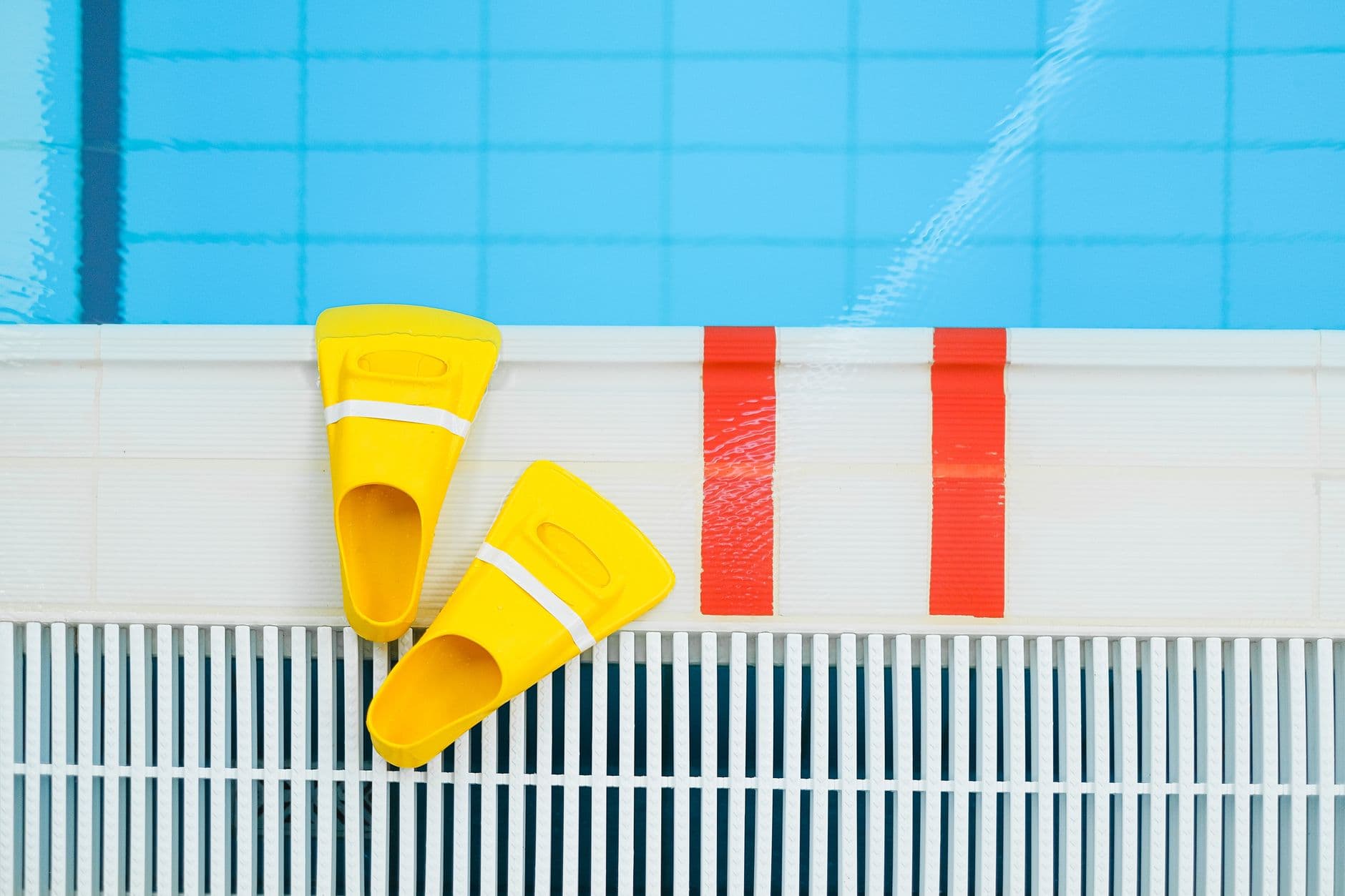
Paddles and fins are the two pieces of equipment an adult swimmer buys first, usually on the same trip, usually on the advice of someone in the next lane. The pitch is simple and it is mostly wrong: paddles make your pull stronger, fins make your kick stronger. What the measurement literature says is stranger and more useful. Paddles, used the way most people use them, reduce the load on your arms. Fins, which feel like cheating, cost more energy than swimming without them.
This page works through what each tool measurably does to your stroke, what a four-week paddle block did to a group of trained swimmers, where the shoulder risk actually sits, and how to stop your equipment sets from quietly corrupting the numbers you train by. It is the companion piece to what a kick set is really training, which asks the same question of the board.
The one line that matters before any of the rest. If a paddle or a fin produces pain — in the shoulder, the front of the ankle, anywhere — the set is over. Not "swim it out", not "push through the first hundred". Pain under added load is the specific signal this equipment exists to give you, and ignoring it is the only way to turn a cheap piece of plastic into a months-long problem. Persistent shoulder pain belongs with a physiotherapist or a doctor who can watch you move, not with an article. And never use equipment as a reason to swim alone or to extend a session past the point where a lifeguard is on duty.
What paddles do to the force on your hand
Start with the measurement that supports the usual sales pitch, because it is real. Barbosa and colleagues put fourteen trained male sprinters (100 m best around 53.7 s) through tethered swimming and 25 m maximal swims in five conditions: bare hands, then paddles of 280, 352, 462 and 552 cm². Every effort was all-out.
At maximal effort, the bigger the paddle, the bigger the force. Peak force rose 11.5% with the 352 cm² paddle and 21.7% with the 552 cm², and the impulse — force multiplied by the time it acts, which is the number that actually moves you — rose 15.2% and 30.9% respectively. Stroke length went up 9–14.8%, stroke rate fell 5.5–9.5%, and swimming velocity improved by a modest 2.2–3.7%.
Note what the smallest paddle did: nothing measurable to peak force. A 280 cm² paddle is not a small paddle by shop standards, and it still failed to move the force needle at maximal effort. That is your first hint that "paddle equals resistance training" is a sloppy description.
The result that reframes everything: at the same speed, paddles unload you
Here is the finding almost nobody in the swimming press repeats. Tsunokawa and colleagues used pressure sensors on the hand together with underwater motion capture while eight male swimmers covered 16 m repeatedly, with and without paddles, across a range of deliberately different speeds.
At the same swimming velocity, propulsive force and the mechanical power needed to overcome drag were no different with paddles than without. What changed was that the paddles lowered stroke rate and hand velocity, so the mechanical power the swimmer put into pushing water fell, and Froude efficiency rose. The authors state the practical consequence plainly: training load goes down when a swimmer wears paddles at the same speed they would have swum anyway.
That resolves the apparent contradiction with the force study. Paddles load you only when they let you go faster than you otherwise would — which is what happens in an all-out sprint and almost never in the third 200 of a cruisy aerobic set. Most people wear paddles for exactly that cruisy set, at exactly their usual speed, and come out having done an easier swim than if they had left the paddles in the bag.
Four weeks of paddle sprints changed nothing
If paddles built the pull, a training block should show it. Barbosa and colleagues ran that test: twenty swimmers, ten men and ten women, matched by performance and randomly assigned. Both groups did identical training for four weeks except for one sprint set three times a week — ten repeats of ten all-out strokes with a minute's rest — which one group did wearing 320 cm² paddles and the other did bare-handed. Then both tapered for two weeks.
Performance, clean swimming speed, stroke rate, stroke length and tethered force were measured before, after the block, and after each taper week. Nothing moved. No difference between groups at any point, and perceived exertion and internal training load were the same too. The conclusion in the paper is blunter than anything a manufacturer will print: over such a period, the use of hand paddles remains unsupported.
One study is one study, the sample was twenty people, and four weeks is short. But it is the only direct test of the claim, and it points the opposite way from the claim. Treat "paddles make your pull stronger over a training block" as a coaching hypothesis with no supporting trial behind it, not as a fact.
So what are paddles genuinely good for?
Feedback. This is the use that survives every one of the studies above, and it is the one U.S. Masters Swimming coach Scott Bay puts first: a paddle enlarges the leading surface of your hand, so any error in where that surface is pointing gets amplified until you can feel it. If your hand slips through the catch, if your entry crosses the midline, if your wrist collapses at the front of the stroke, the paddle tells you in a way no coach on the deck can.
Fingertip paddles — the small ones that stop before the palm — do that job with the least joint load, work in all four strokes, and are the sensible first purchase for an adult. They are not a compromise version of a real paddle. For the feedback use, which is the well-supported use, they are the better tool.
The strap test, which is the only paddle drill worth learning
Paddles are normally sold with a wrist strap and a finger strap. Both should be loose enough that water pressure, not elastic, is what holds the paddle against your palm. If the paddle slides around or peels off your hand, the instinct is to tighten the strap; the correct response is to fix the hand position that let it peel off.
Once the paddle stops shifting, take the wrist strap off entirely and swim with only the finger loops. Now the paddle stays on solely because you are pressing water backwards with a flat, well-oriented hand. The moment your catch slips, it flaps. It is the cheapest technique diagnostic in the sport and it costs you nothing but the willingness to lose a paddle at the far end occasionally. If you are working on the catch, pair it with what stroke rate and stroke length tell you about the same problem.
The shoulder question, answered honestly
The received wisdom is that paddles cause swimmer's shoulder. The best direct evidence is more careful than that. Yanai and Hay filmed front-crawl swimmers in three dimensions and identified the moments at which each shoulder was in an impinging position. On average, impingement occupied 24.8% of stroke time — in swimmers who were simply swimming. They found no significant difference in that figure between trials with and without hand paddles, and none between slow and fast stroking.
What did separate the high-risk swimmers was technique: a large amount of internal rotation of the arm during the pull, a late start to external rotation during the recovery, and a small body tilt angle. Unilateral breathing was often associated with less tilt on the breathing side, and more impingement on that same side.
So the defensible statement is not "paddles injure shoulders". It is this: the position that irritates the shoulder is created by your stroke, and a paddle raises the force acting on whatever position your stroke is already in. That is why USMS's guidance is to start small, ask a coach why a given size suits your stroke rather than copying the fastest person in the lane, and stop immediately if there is pain. The separate question of how much swimming volume the tissue can carry is covered in the stroke faults that load the cuff, which is where the evidence on shoulder pain in swimmers actually lives.
Fins do not make swimming easier
Now the tool with the opposite reputation. De Matos and colleagues had eleven regional-to-national male swimmers perform all-out front crawl with paddles, with fins, and with no equipment, filmed from both sides of the pool.
Fins produced the highest velocity and the longest stroke length, as expected. They also cut kick amplitude, shortened the propulsive phase of the arm stroke, and pushed the index of coordination below −1%, which is a catch-up pattern: the arms spend measurably more time with neither one propelling. And the estimated energy cost was significantly higher with fins than either with paddles or with nothing at all.
| Versus no equipment | With paddles | With fins |
|---|---|---|
| Swimming velocity | Slightly higher (2.2–3.7% all-out) | Higher |
| Stroke length | Higher (9–14.8%) | Higher |
| Stroke rate | Lower (5.5–9.5%) | — |
| Arm-stroke efficiency | Higher | Higher |
| Arm coordination | Longer propulsive phase | Shifts to catch-up |
| Kick amplitude | — | Lower |
| Estimated energy cost | Not raised | Significantly raised |
The practical reading: fins are not an assist that lets you do more swimming for less. They are a device that changes the structure of the stroke — upper limbs and lower limbs both — and charges you more energy per metre while doing it. Use them when you want that altered stroke (body position high enough to work on the pull, underwater dolphin work, ankle range under gentle water pressure). Do not use them because the set felt too hard, because the metabolic cost says the set did not get easier.
Of those three, the dolphin one is worth naming. Butterfly turns on when the kick happens, not how hard it is, and the two-kick timing of butterfly sets out which kick goes with the hands entering and which with them leaving. Fins slow the leg enough to feel that sequence — coaching rationale, not a measured result.
Blade length, and the mistake people from running make
USMS's advice for a new swimmer choosing fins is specific and runs against instinct. Adults arriving from running or cycling assume strong legs mean a long blade; the limiting factor is usually ankle and hip range, not leg strength, and a long blade on a stiff ankle is how you end up with a sore foot instead of a better kick. Medium blade first, move up later if you want to. Very short fins have a role — tempo and speed work — but they serve a beginner poorly.
Fit matters as much as length. Poorly fitted fins cause sore spots on the instep and the back of the heel; socks or neoprene booties help, but there is no substitute for the right size, and finding it is trial and error. And the kick itself has to start at the hip and travel down the leg. Kicking from the knee with fins on pushes water with the top of the blade and can leave you going backwards — which, if your legs already sit low, is the same underlying problem described in why your legs sink.
Never let an equipment set into your numbers
This is where equipment does quiet, lasting damage, and it has nothing to do with shoulders.
Every pacing number you train by assumes a fixed relationship between effort and speed. Paddles lengthen your stroke by up to 15% and lower your stroke rate; fins raise your speed and change your coordination pattern. Both break that relationship. A 400 m done in fins is not a 400 m, and logging it as one inflates your sense of your own fitness for weeks.
- The critical swim speed test must be bare-handed and bare-footed. The 400/200 protocol behind the CSS calculator derives a threshold pace from two maximal swims; do either of them with equipment and every training zone it hands you is wrong. If you have never run it, what CSS pace is and how the test works covers the protocol.
- SWOLF is meaningless with paddles on. The score adds your time to your stroke count, and paddles cut stroke count while barely changing time — so the number drops and none of the drop is technique. Score your SWOLF equipment-free or do not compare it to anything.
- Keep equipment splits in a separate column. When you put a set into the pace calculator to see what per-100 it represents, tag whether it was assisted. Two months of fin splits mixed into a training log is how a swimmer arrives at a race convinced of a pace they have never held.
The rule that keeps it clean: test naked, train mixed. All your benchmarking swims — the CSS test, the timed 500, the stroke count over 25 — come off with no equipment, always, so that they stay comparable to each other over years.
A dose that survives a real training week
There is no trial establishing an optimal amount of paddle or fin volume, so what follows is coaching consensus and is labelled as such rather than dressed up as evidence.
- Keep the large majority of your weekly distance equipment-free. The stroke you race is the stroke you should mostly practise.
- Never two hard paddle sessions back to back. Put a day of easy swimming or a kick-focused day between them.
- Paddles go on the short, fast, well-rested repeats — that is the only condition under which the force data shows them adding anything. Wearing them through a long aerobic set is where the unloading effect bites.
- Fins go where you need the body position, not where you need the rest: pull-focused drills, underwater kick, backstroke straightness work.
- Take them off for the last part of the session, so the last thing your nervous system rehearses is your own stroke.
If you want the sets themselves built around your current threshold, the workout generator will lay out a session from your CSS pace; add the equipment yourself, to the short repeats, and leave the rest alone. A structured week that already balances hard and easy is described in how to build swimming endurance.
The adult swimmer's version of this problem
An age-group swimmer arrives at their first pair of paddles after several thousand hours of stroke work and with shoulders that have been loading progressively since childhood. An adult who started at 40 has neither. The tissue tolerance is different, the stroke faults are less ground in but more numerous, and — the part that actually causes trouble — the adult usually swims without a coach watching, so the first feedback about a bad position is pain rather than a correction.
The adjustment is not complicated. Smaller paddles than you think you need, for shorter sets than you think you need, added months after you started swimming rather than in the first week. If you are still building the basic aerobic base, beginner swim workouts is a better use of the next eight weeks than any tool. Equipment does not accelerate the part of the process you are currently in.
Triathletes, open water and the paddle habit
One specific case worth flagging. Triathletes often swim a large fraction of their pool volume in paddles and pull buoys, because the combination keeps the legs quiet and feels like swim-specific strength for a discipline they are short on time for. Both effects work against the actual race: the pull buoy supplies the body position the wetsuit will supply anyway, and the paddles, at steady aerobic speed, are doing less for the arms than swimming would. Triathlon swim training goes through what the limited pool time is best spent on, and it is mostly not equipment.
When to stop and ask someone
Equipment adds load, and added load turns small problems into visible ones. Stop the set and get a professional opinion — a physiotherapist, a sports doctor, or your own doctor — if any of this appears:
- Shoulder pain that starts during a paddle set and is still there the next morning.
- Pain at the front or top of the shoulder during the recovery phase, rather than fatigue in the muscle bellies.
- Numbness, tingling or weakness in the arm or hand.
- Pain at the front of the ankle or the arch of the foot in fins that does not settle within a day.
- Any pain that makes you change your stroke to avoid it. A stroke altered around pain builds the next problem.
None of that is a reason to avoid equipment. It is the reason to introduce it slowly enough that you can tell which change produced which sensation.
Where to start this week
If you own neither: buy fingertip paddles and medium-blade fins, and nothing else. If you own trashcan lids because someone told you bigger was better: put them away for now and get something barely larger than your hand.
Then run one honest test. Swim a bare-handed 100 at a controlled effort, count your strokes, and record the time. Repeat it in paddles at the same effort. Your stroke count will drop and your time probably will not improve much — that is the unloading effect made visible, in your own pool, in four minutes. Once you have seen it, you will stop expecting paddles to do the work, and start using them for the thing they are genuinely good at: telling you where your hand is. The rest of the workouts section covers what to do with the sets themselves, and the technique section covers the stroke the equipment is supposed to be serving.
Where these numbers come from
The force and stroke-parameter figures by paddle size are from Barbosa and colleagues (2013), fourteen male sprinters in tethered swimming and 25 m maximal swims. The finding that propulsive force is unchanged at matched velocity, with lower hand velocity and higher Froude efficiency, is from Tsunokawa and colleagues (2019), eight male swimmers with hand pressure sensors and underwater motion capture — a small sample, stated here rather than buried. The four-week training result is from Barbosa and colleagues (2020), twenty swimmers randomised to a paddle or non-paddle sprint set. The paddles-versus-fins comparison of kinematics, efficiency, coordination and estimated energy cost is from De Matos and colleagues (2023), eleven male swimmers. The shoulder impingement figures, including the absence of a significant paddle effect, are from Yanai and Hay (2000). Practical guidance on paddle size, straps, fingertip paddles and fin blade length is from U.S. Masters Swimming coach Scott Bay. Where this page gives a weekly dose, that is coaching consensus and no trial supports a specific number.
Frequently asked questions
Are swim paddles worth it for beginners?
For feedback, yes; for strength, not yet. Small fingertip paddles tell a new swimmer where the hand is pointing, which is hard to learn any other way. Large paddles add force to a stroke that is still changing, and the only training trial on paddles found no performance gain over four weeks. Start small, months after you start swimming.
Do swim paddles make you faster?
They make you faster while you wear them, by about 2–4% in all-out sprints, mostly through a longer stroke. Whether they make you faster afterwards is unproven: a randomised four-week block of paddle sprint sets produced no change in performance, speed, stroke rate, stroke length or tethered force compared with the same set bare-handed.
Do swim paddles build muscle?
Only at maximal effort. Measured at matched swimming speed, paddles leave propulsive force unchanged while lowering hand velocity and the mechanical power you put into the water, so the arms work less than without them. Force rises 11–22% only in all-out efforts with medium to extra-large paddles, so short sprint repeats are the only setting that loads anything.
Should beginner swimmers use fins?
Yes, with a medium blade, for specific jobs rather than for general swimming. Fins hold the hips high enough to work on the pull and let you practise underwater kick, and gentle water pressure helps ankle range. Avoid long blades if your ankles are stiff and avoid very short ones as a first pair. Stop if the front of the ankle hurts.
Is it easier to swim with fins?
It feels easier and it is not. Fins raise your speed and lengthen your stroke, but measured estimated energy cost was significantly higher with fins than with paddles or with no equipment at all. They also shorten the propulsive phase of the arm stroke and shift coordination towards a catch-up pattern, so the stroke you rehearse is not the one you race.
Do paddles cause swimmer's shoulder?
Not on their own. Three-dimensional analysis found shoulders spend about a quarter of stroke time in an impinging position while simply swimming, with no significant difference between trials with and without paddles. Risk tracked technique instead: heavy internal rotation during the pull, late external rotation in recovery, and too little body tilt. A paddle raises the force on whatever position your stroke already has.
Sources
- Barbosa AC et al. (2013). Acute responses of biomechanical parameters to different sizes of hand paddles in front-crawl stroke — Journal of Sports Sciences
- Tsunokawa T et al. (2019). The effect of using paddles on hand propulsive forces and Froude efficiency in arm-stroke-only front-crawl swimming at various velocities — Human Movement Science
- Barbosa AC et al. (2020). Does a 4-week training period with hand paddles affect front-crawl swimming performance? — Journal of Sports Sciences
- De Matos CC et al. (2023). Effects of paddles and fins on front crawl kinematics, arm stroke efficiency, coordination, and estimated energy cost — Frontiers in Physiology
- Yanai T, Hay JG (2000). Shoulder impingement in front-crawl swimming: II. Analysis of stroking technique — Medicine & Science in Sports & Exercise
- Gourgoulis V et al. (2006). Effect of two different sized hand paddles on the front crawl stroke kinematics — Journal of Sports Medicine and Physical Fitness
- Bay S. What Swimmers Need to Know About Paddles — U.S. Masters Swimming
- Bay S. Why You Need a Pair of Fingertip Paddles — U.S. Masters Swimming
- Bay S. How to Use Fins as a New Swimmer — U.S. Masters Swimming
Read next
Lane etiquette: how to share a crowded lane without being the problem
Which way to circle in the US, Britain and Australia, picking a lane by seconds per length, the 5-second gap, passing and resting — and where the published rules disagree.
Wetsuit for open water swimming: when you actually need one
The water temperatures at which World Aquatics, U.S. Masters Swimming and USA Triathlon require or ban wetsuits, what a suit does to your body, and how to measure it.
Your first open water swim: what nobody warns you about
The cold-water gasp, the fact that you cannot judge your own condition once acclimatised, and why a strong pool swimmer can be in trouble in twenty minutes.
SwimFast is an independent publication. We are not a swim school, a coaching service or a governing body, and nothing here is medical advice. Training paces and test protocols are cited from the published research or federation documents linked on each page. Never swim alone, never attempt breath-hold work without supervision, and check with a doctor before starting a new training programme.