Why your legs sink when you swim (and why kicking harder fails)
Sinking legs are a position problem, not a fitness one. The physics, the two-length test that proves it, and the fix that has nothing to do with your kick.
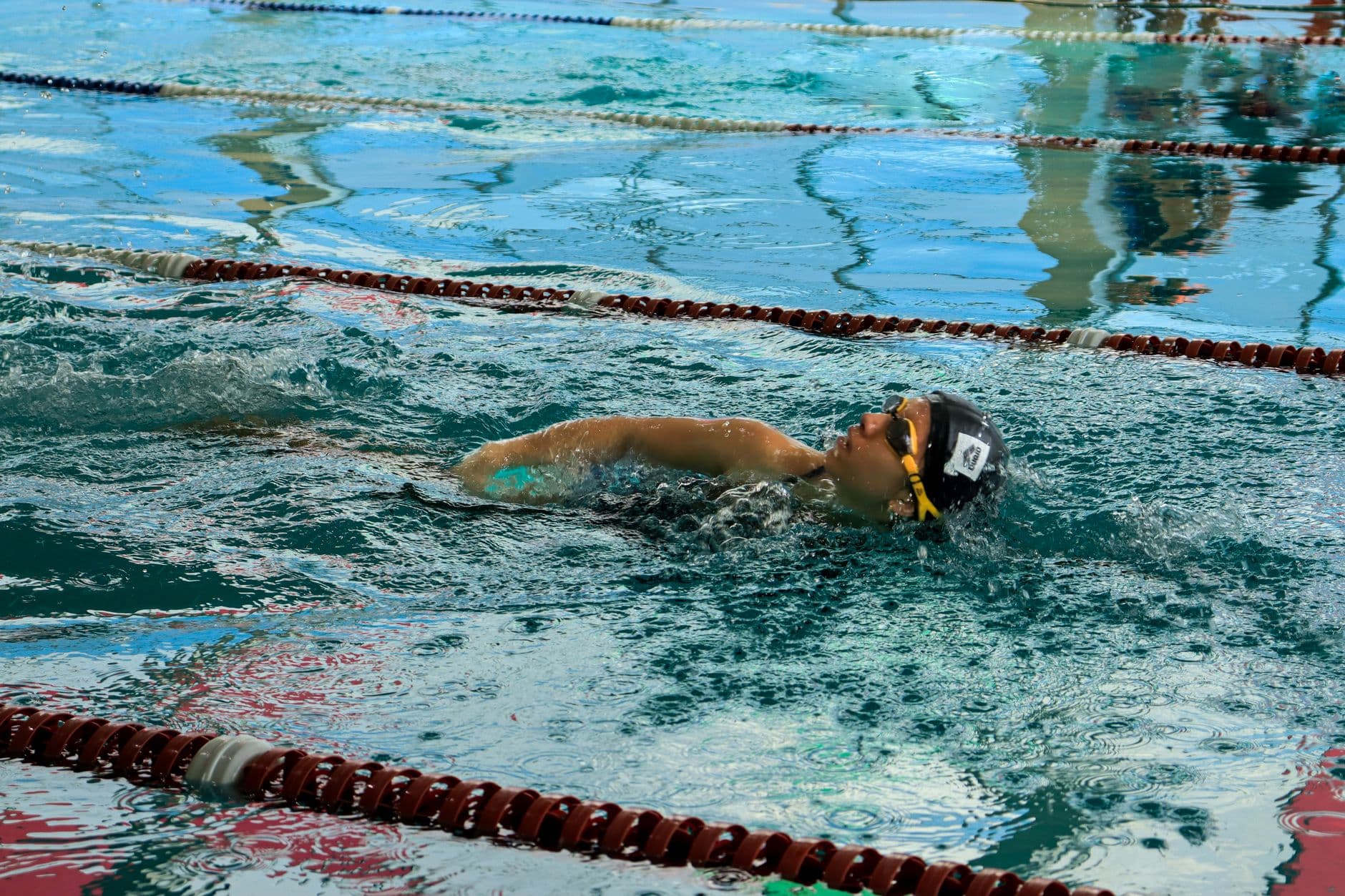
Your legs sink because your head is too high. Not because your kick is weak, not because you have heavy bones, and not because you need to work harder. The body in water is a lever, and if one end goes up the other end goes down. Almost every adult swimmer who has ever been told to “kick harder” was given advice that made the problem worse.
Why does my body sink instead of float?
Most people float, but not evenly. Your lungs are a large air-filled cavity in your chest, and your legs are dense muscle and bone with very little air in them. So the upper body is buoyant and the lower body is not, and the two are joined by a hinge at the hips. Left alone, the chest floats and the legs hang down.
That is the starting condition for everyone, including good swimmers. The difference is not that fast swimmers have floaty legs. It is that they have learned to press the buoyant end down slightly so the sinking end comes up, and to hold that position while everything else happens.
Body composition shifts the starting point. More muscle and less body fat means less natural buoyancy, which is why lean, strong athletes coming from other sports often find swimming disproportionately frustrating. It does not change the fix, only how much attention the fix needs.
How do I stop my legs sinking when swimming?
Three changes, in this order. The first one does most of the work.
- Lower the head. Look down and very slightly forward, not ahead. The waterline should sit around the crown of your head. If you can see the far wall clearly while swimming, your head is too high and your hips are paying for it.
- Press the chest. A gentle downward pressure through the sternum, as if leaning on the water. It feels like almost nothing and it rotates the whole body around the hinge. This is the single most effective thing in this article.
- Reach long. Extend the leading arm properly on each stroke. Length moves your centre of mass forward, which shortens the lever the legs are hanging off.
Do all three and the legs come up without doing anything different with the legs. That is the part people find hard to accept, so it is worth testing rather than believing.
The test that proves it in two lengths
Push off the wall in a streamline, face down, arms extended, and do not kick at all. Hold it and count how far you glide before your feet drop.
Now do it again, and this time press the chest gently downward and let the head hang so you are looking straight at the bottom. Same push, no kick.
The second glide will be noticeably longer and flatter. Nothing changed except head position and chest pressure. No fitness was gained between the two attempts. If your legs sank in the first and stayed up in the second, you have just proved that your sinking legs are a position problem, and you can stop looking for a fitness answer.
Why kicking harder makes it worse
This is the trap, and it is worth understanding rather than just being told.
Kicking harder from a bad position costs an enormous amount of energy for almost no propulsion. In freestyle the kick contributes a relatively small share of forward movement in distance swimming — its main job is to hold the body line and stabilise the rotation. That is also the honest answer to whether kickboard sets are worth the time: they train something real, but not the thing most adult swimmers believe they train. Legs are large muscles with a huge oxygen demand, so thrashing them buys you fatigue at a rate nothing else in swimming can match.
Worse, a hard kick from dropped hips tends to be a knee-driven bicycle kick, which pushes water downward and backward at the wrong angle. A knee-driven kick is not wrong everywhere — it is exactly what the breaststroke kick is built on — but in freestyle it costs you twice. That adds drag rather than removing it. So you get more tired, and slower, and the hips still hang.
And there is a feedback loop: being out of breath makes people lift their head to breathe more easily, which drops the hips further. The fix for that half of the problem is in the guide on breathing in freestyle without running out of air, and the two problems are worth fixing together because they feed each other.
Drag is why this matters so much
In water, drag rises steeply with speed — roughly with its square — so small increases in frontal area are expensive, and they get more expensive the faster you go. A swimmer whose hips sit twenty centimetres below the surface is dragging a much larger cross-section through the water than one who is flat.
That is the whole reason body position outranks everything else in swimming. In running, poor form costs you some efficiency. In water, poor position changes the size of the object you are pushing through a medium eight hundred times denser than air.
It is also why the fix feels so dramatic. Going from sinking hips to a flat line is not a five per cent improvement; swimmers routinely find whole seconds per hundred, without getting any fitter.
Four drills that build the position
| Drill | How | What it teaches |
|---|---|---|
| Streamline glides | Push off, no kick, hold the line as long as possible. | What a flat body actually feels like, with nothing else to think about. |
| Superman float | Face down, arms forward, completely relaxed, hold for ten seconds. | Where your legs go when you stop fighting, and how much the chest press changes it. |
| 6-3-6 | Six kicks on one side, three strokes, six on the other. | Holding the line while rotating, which is where most people lose it. |
| Kick on the side | One arm extended, on your side, head down, gentle kick. | That the kick works from the hip, not the knee — obvious once the head is down. |
Fifty metres of drill, fifty metres of normal swimming holding the same feeling, repeated. A drill you do and then immediately abandon has taught your body nothing it will use.
The same lever governs backstroke. Hips drop there for the identical reason, and a head that is doing something other than lying still is also why the line wanders, which is where swimming backstroke straight has to start.
What about a pull buoy?
A pull buoy lifts your hips artificially, so the swimming feels wonderful. That is exactly the problem: it removes the sensation you are trying to learn, and it lets you avoid ever finding the position for yourself.
Used occasionally to isolate the catch, it is fine. Used every session because swimming feels better with it, it is a crutch that will quietly stop you improving. The tell is simple: if you cannot swim a comfortable 200 without it, the buoy is doing the work your body position should be doing.
It does make a good diagnostic, though, and that is the one use worth keeping. Swim a length counting your strokes, then swim it again with the buoy and count again. If the buoy version is markedly faster or takes markedly fewer strokes, your kick is being spent holding your hips up rather than moving you forward, which is exactly the problem this article is about.
Fins are the more useful tool for this specific problem. They let you hold a good line long enough to learn what it feels like, which is the thing you are actually short of. How to use them without coming to depend on them is in the guide to paddles and fins.
How to tell whether it is working
Feel is a poor judge, because a new position feels wrong before it feels right. Two numbers are not:
- Stroke count per length. Better position means less drag means more distance per stroke. Count it before you start working on this and again in three weeks. The SWOLF calculator combines count and time so you can see whether the improvement is genuine or just slower swimming; if the number means nothing to you yet, what SWOLF measures explains what a decent score looks like.
- Your threshold pace. Position improvements usually show up here before they show up anywhere else, because you are getting more speed for the same effort. The CSS test gives you a number to retest in six weeks.
Both beat the mirror, and both beat asking someone in the next lane.
Why do my legs sink in freestyle specifically?
Because freestyle asks you to breathe by rotating, and rotating badly is the fastest way to lose the line. On every breath there is a chance to lift the head, and on every breath a swimmer with a shaky position takes it. That is why the sinking usually gets worse as the length goes on and worse again as the set gets harder.
Backstroke tends to be easier for exactly the opposite reason: your face is already out of the water, so nothing tempts you to lift. If you can float flat on your back and not on your front, the problem is not buoyancy. It is what your head does when you need air.
The rest of the stroke-by-stroke picture, including what each drill is for, is in the technique guide, and the sets to practise it in are in the workouts guide.
How long it takes
The position itself you can find in one session — the streamline test above usually does it. Making it automatic under fatigue takes weeks, and it takes frequent short sessions rather than occasional long ones, because it is a coordination habit and coordination decays between visits.
The practical version: three sessions of forty minutes will fix this faster than two of ninety. And spend the early part of each session on it, while you are fresh. Practising body position at the end of a hard set is practising it badly.
Safety. Never practise floats, glides or breath-holding alone. Do this work in a supervised pool, and get out if you feel dizzy. Extended breath-holding causes shallow-water blackout with no warning, and it has killed strong swimmers.
Frequently asked questions
How do I stop my legs sinking when swimming?
Lower your head so you are looking down rather than ahead, press gently through the chest, and reach long on each stroke. The body pivots around the hips, so lowering the buoyant end raises the sinking one. The fix has nothing to do with your kick.
Why does my body sink instead of float?
Your lungs are full of air and your legs are dense muscle and bone, so the upper body floats and the lower body does not. Everybody starts that way, including fast swimmers. They have simply learned to press the buoyant end down so the other end comes up.
Why do my legs sink in freestyle specifically?
Because freestyle makes you breathe by rotating, and every breath is a chance to lift the head instead. That is why the sinking gets worse as the length goes on. If you can float flat on your back but not on your front, the problem is what your head does when you need air.
Will a stronger kick fix sinking legs?
No, and it usually makes things worse. Kicking hard from dropped hips tends to become a knee-driven bicycle kick that pushes water down rather than back, which adds drag. Legs are also large oxygen consumers, so you buy fatigue quickly and get very little speed for it.
Should I use a pull buoy if my legs sink?
Sparingly. A pull buoy lifts your hips artificially, which removes the exact sensation you are trying to learn and lets you avoid ever finding the position yourself. Fins are more useful here: they let you hold a good line long enough to learn what it feels like.
Sources
- Freestyle Body Position and Rotation — U.S. Masters Swimming
- How to Tell If Your Feet and Hips Are Sinking While You're Swimming and How to Fix It (Scott Bay, 2023) — U.S. Masters Swimming
- Freestyle Kick: The Complete Guide — U.S. Masters Swimming
- Shallow Water Blackout (StatPearls) — NCBI Bookshelf, National Library of Medicine
Read next
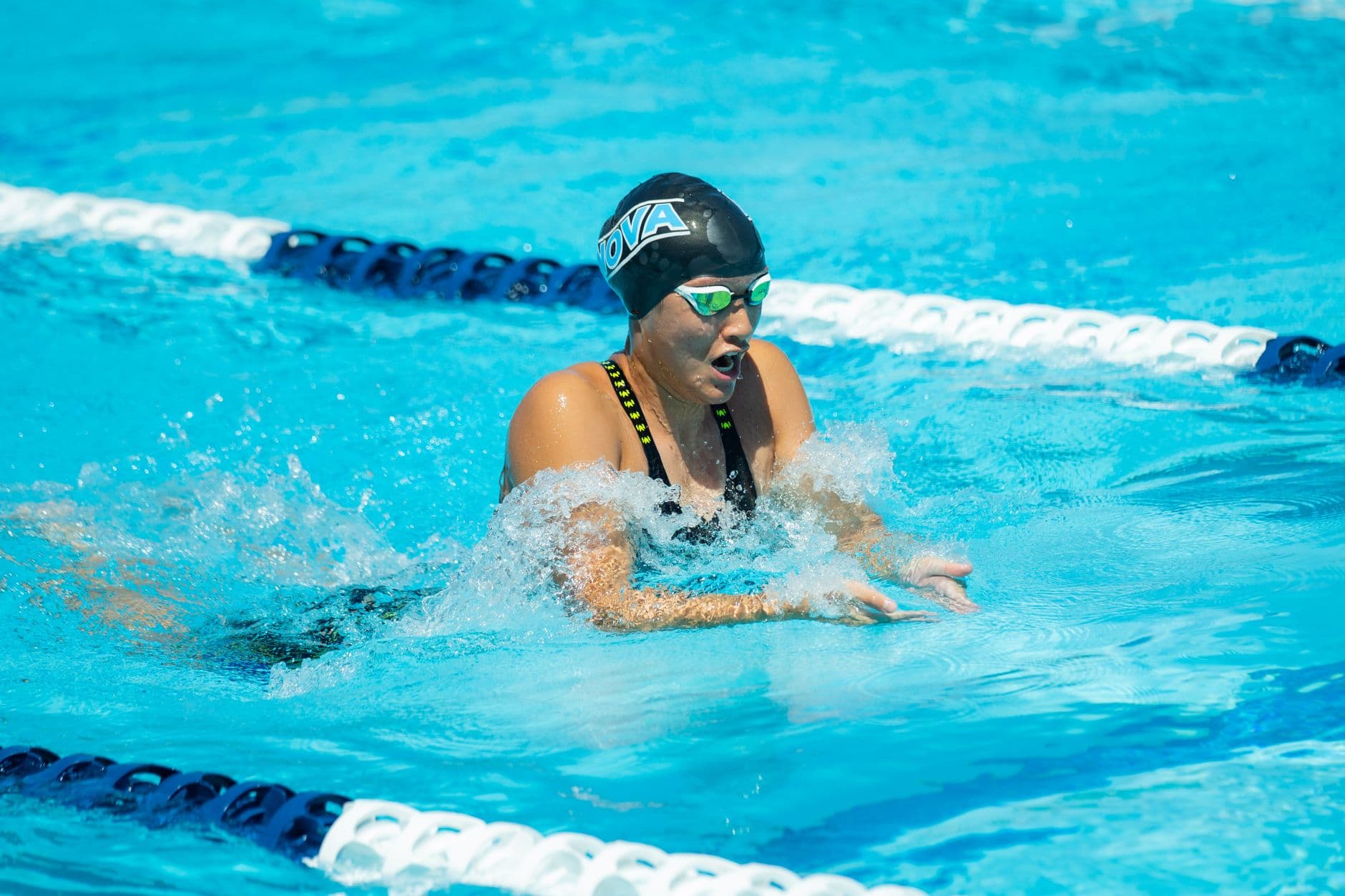
The breaststroke pullout: the legal sequence, in order
One arm stroke, one dolphin kick, one breaststroke kick — and a rule that ends the pullout with a stroke, not a 15 metre mark. The sequence, and what gets called.
How to tread water without getting tired
Treading water has a measured energy cost, and the technique everyone recommends is the one that tires beginners fastest. What the research actually found.
Chlorine, hair and skin: what it does and what actually helps
What chlorinated pool water really does to hair and skin, why the green tint is copper rather than chlorine, and which protective steps have evidence behind them.
SwimFast is an independent publication. We are not a swim school, a coaching service or a governing body, and nothing here is medical advice. Training paces and test protocols are cited from the published research or federation documents linked on each page. Never swim alone, never attempt breath-hold work without supervision, and check with a doctor before starting a new training programme.