Should you swim every day? What frequency actually does
Swimming is a skill sport with no impact, which changes the usual answer. Frequency helps the skill; the limit is your shoulders, not your legs.
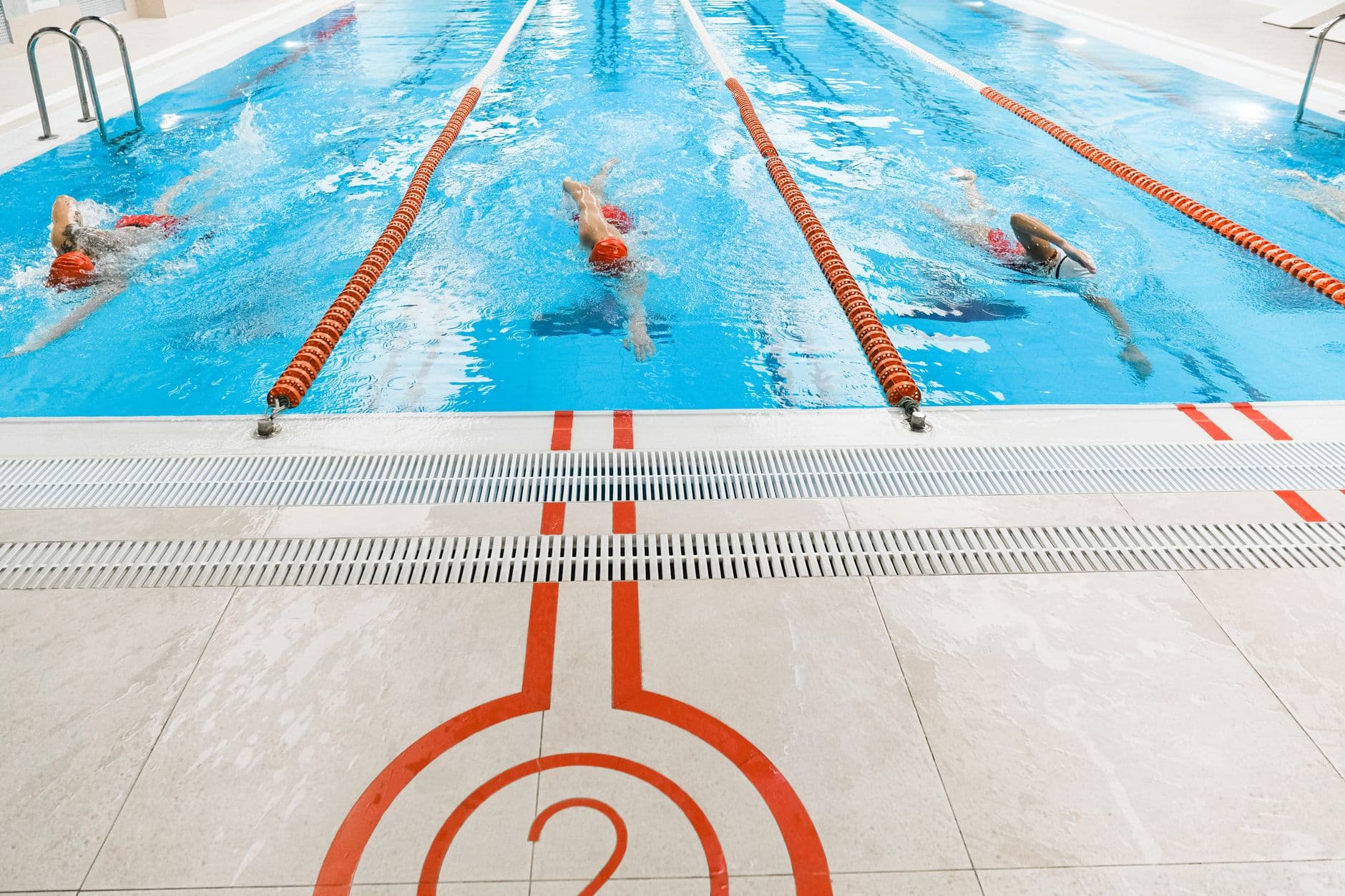
The question usually arrives from running, where the answer is a firm no and the reason is obvious: your joints need a day off. Swimming does not work like that, which is why the honest answer here is more interesting.
What makes swimming different
Two features change the arithmetic.
There is no impact. Nothing lands. There is no ground reaction force travelling up through the skeleton, none of the eccentric loading that produces the deep muscle soreness runners know. The tissue damage that forces recovery days in most endurance sports largely does not happen here.
That is also why masters swimming has meaningful competition into the nineties, and why the longitudinal work on champion masters swimmers finds a decline of only about 0.6% per year up to age 70–75. It is a sport bodies tolerate for a long time.
It is a skill sport. A large share of swimming speed comes from managing drag, and managing drag is technique rather than fitness. That matters for frequency because skills behave differently from fitness: they consolidate with frequent, shorter exposure, and they fade during long gaps.
Anyone who has come back after three weeks away knows this. Your fitness is broadly intact and the water feels like a stranger.
So what actually limits you
Not your legs, and usually not your general fatigue. The shoulder.
In tethered front crawl, one study estimated the arms contribute around 70% of propulsive force for men and 67% for women. That is the same joint, doing the same rotation, several thousand times per session.
Shoulder problems in swimming accumulate from repetition and from stroke faults, not from a single heavy effort. Which produces an asymmetry worth understanding: you can be nowhere near systemically tired and still be well past what your shoulder should be doing this week.
That is the real reason to be careful about daily swimming, and it is why the warning signs are local rather than general. The mechanics of how it goes wrong are in swimmer's shoulder, and it is worth reading before you need it rather than after.
The frequency that works for most adults
Two sessions a week maintains. You will not go backwards, and technique work will progress slowly, because each session spends part of its time recovering feel that was lost since the last one.
Three is where most adults start genuinely improving. It is enough that technique changes stick between sessions, and enough to build endurance if one of the three is longer.
Four is comfortable and productive, and it allows real variation: one technique-focused, one threshold, one long, one easy.
Five or six is where it depends entirely on what the sessions are. Six varied sessions with two easy ones is sustainable for many people. Six identical hard sessions is a shoulder injury with a date on it.
Notice that the advice above is about variation more than about number. That is deliberate, and it is the part most people skip.
If you want to swim daily
It is a reasonable goal, particularly for people who use swimming for mental health rather than performance. Three rules make it survivable.
Vary the intensity, hard. Not "most days moderate". Some days genuinely easy — 20 or 30 minutes of relaxed swimming that never gets close to breathless. Those days are not filler; they are what makes the hard days possible.
Vary the stroke. Freestyle every day is the same shoulder rotation every day. Backstroke uses a different range, breaststroke uses the legs as the primary engine, and even a few hundred metres of variation spreads the load. The stroke-specific work is in breaststroke kick and elsewhere in technique.
Vary the volume. A 2,500 m session and a 900 m session in the same week are a plan; two 1,700 m sessions are a habit. The short days are where technique work belongs, because you are fresh.
And deal with the exposure, not only the training load. Six or seven sessions a week is six or seven times in chlorinated water, and the complaints that quietly end daily habits tend to be skin and hair rather than shoulders. What helps, and what is sold as helping without doing much, is in chlorine, skin and hair.
Add one more, which is not about the shoulder: keep one day a week where you do not have to go. The people who swim daily for years are the ones for whom missing a day is not a failure.
The case for swimming most days anyway
Everything above is about training. For a lot of adults that is not the reason they are in the water, and the calculus changes.
Swimming is unusually good at the non-training jobs. It is one of the few activities where you cannot look at a phone, which for many people is the entire benefit. It is low-impact enough to be available on days when running is not. And the breathing pattern is externally imposed, which is closer to a meditation practice than most exercise gets.
If that is what you want from it, then daily is fine and the guidance simplifies: keep most of it easy, vary the stroke, and stop if the shoulder complains. Ears are the other thing daily swimming can wear down, because the canal rarely gets time to dry out; swimmer's ear covers what prevents it. You are not trying to improve a time, so there is no need for the hard sessions that create most of the risk.
What is worth avoiding even then is the same 1,500 m at the same pace every single day. Not because it is dangerous but because it is the fastest route to boredom, and the swimmers who keep going for decades are the ones who stayed interested.
What frequency does not fix
Swimming more often will not, on its own, make you faster.
If your stroke has a fault, more sessions means more repetitions of the fault. This is the specific failure mode of the enthusiastic adult swimmer: six months of daily swimming, considerably fitter, almost exactly the same pace, because nothing about the way they move through the water changed.
Frequency helps the skill only if some of it is spent on the skill. That means drills, stroke counts and a plan, not just lengths. The measurements that tell you whether anything is changing are in stroke rate or stroke length, and the pace anchor for structured sets is in CSS pace.
Similarly, frequency does not substitute for intensity. Six easy swims a week will make you a person who swims a lot; they will not raise the pace you can hold. That requires sets that are uncomfortable, which requires being recovered enough to swim them.
Two sessions a week, done well
Most advice assumes you can find four slots. Plenty of people cannot, and the honest question is what two sessions should look like when two is what you have.
The instinct is to make both of them count by swimming hard in both. That is the wrong call, because with two sessions the gap between them is long enough that technique degrades, and hard swimming with a degrading stroke reinforces the degradation.
A better split: one session with a technique focus and a moderate main set, one longer steady session. The first keeps the skill alive across the gap; the second builds the aerobic base that makes everything else easier.
And with only two, the warm-up matters more rather than less, because you are asking a body that has not swum for three or four days to produce good technique immediately. Ten minutes of building into it is not a luxury at that frequency.
Two sessions a week will progress you. It will progress you more slowly than four, and that is a perfectly reasonable trade to make.
A defensible week
For an adult with three or four available slots and general improvement as the goal:
Session one: technique. Shorter, drills, stroke counts, plenty of rest. Fresh legs and a fresh head.
Session two: threshold. The one that is meant to be hard. Repeats around your CSS pace with short rest — the interval calculator turns that pace into the send-off to leave on.
Session three: long and steady. Continuous or long repeats, comfortably aerobic. This is where endurance is built, and the progression is in how to build swim endurance.
Optional fourth: easy. Whatever you feel like. Mixed strokes, no clock.
Every one of them starts with a proper warm-up, which is the cheapest injury prevention available and takes ten minutes.
The rest of the sessions are in workouts.
This is general training information rather than a plan for your body or your medical history. Shoulder pain that persists is a reason to see a professional, not a reason to swim more carefully. Spotted an error? Tell us and we will correct it and date the change.
Frequently asked questions
Is swimming every day bad for you?
Not inherently, and it is far more sustainable than running every day because there is no impact loading. The risk is not systemic fatigue, it is localised: the shoulder does the majority of the propulsive work in freestyle and accumulates repetitions faster than the rest of you accumulates tiredness.
How many sessions a week do I actually need?
For an adult improving general fitness and technique, three is enough to progress and four is comfortable. Below two, technique gains fade between sessions and each swim starts from further back. Above four, the returns depend heavily on whether you are varying what you do.
Is it better to swim three long sessions or six short ones?
For technique, more frequent and shorter wins, because motor skills consolidate with repeated exposure rather than with duration. For endurance, longer sessions matter more. Most adults improving both should lean towards frequency, since technique is usually the larger limitation.
How do I know I am doing too much?
The reliable early signal is not tiredness — it is the shoulder. Aching that persists into the next day, discomfort at the start of a swim rather than at the end, or a change in how the catch feels are all worth acting on immediately rather than swimming through.
Do rest days matter in swimming?
They matter less than in impact sports and they still matter. A day off is when adaptation happens, and for adults juggling work and sleep it is often the difference between a training week and a survival week. A gentle technique swim can substitute for a full rest day, but not indefinitely.
Sources
- U.S. Masters Swimming — Six-week swim training plans
- U.S. Masters Swimming — Freestyle technique guide
- Rubin RT, Rahe RH. Declines in swimming performance with age: a longitudinal study of Masters swimming champions. Open Access J Sports Med
- Morais JE et al. Relative Contribution of Arms and Legs in 30 s Fully Tethered Front Crawl Swimming. Biomed Res Int
Read next
Lane etiquette: how to share a crowded lane without being the problem
Which way to circle in the US, Britain and Australia, picking a lane by seconds per length, the 5-second gap, passing and resting — and where the published rules disagree.
Swim paddles and fins: what they train and when they cost you
Paddles lower your training load at steady speed and a four-week block changed nothing; fins raise energy cost. What the measurements say and how to use both.
Wetsuit for open water swimming: when you actually need one
The water temperatures at which World Aquatics, U.S. Masters Swimming and USA Triathlon require or ban wetsuits, what a suit does to your body, and how to measure it.
SwimFast is an independent publication. We are not a swim school, a coaching service or a governing body, and nothing here is medical advice. Training paces and test protocols are cited from the published research or federation documents linked on each page. Never swim alone, never attempt breath-hold work without supervision, and check with a doctor before starting a new training programme.