Your first open water swim: what nobody warns you about
The cold-water gasp, the fact that you cannot judge your own condition once acclimatised, and why a strong pool swimmer can be in trouble in twenty minutes.
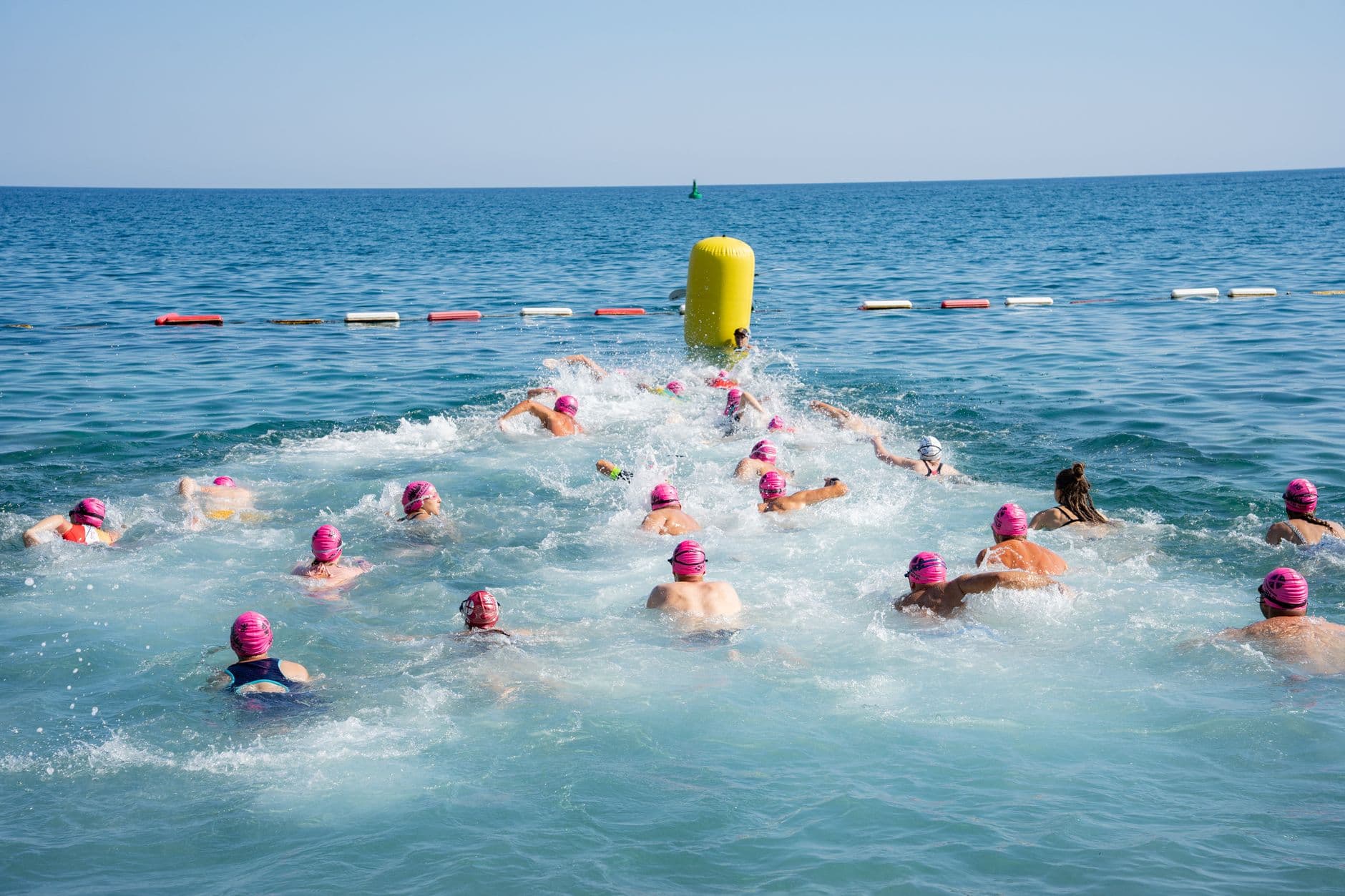
Open water is not a bigger pool. It is a different activity that happens to use the same stroke, and the gap between the two is where confident pool swimmers get into trouble.
This article is mostly about safety, because that is the part that cannot wait. The technique will come.
The first thirty seconds
Everyone is told open water is cold. Almost nobody is told what cold water actually does to you in the first moments.
Sudden immersion produces an involuntary gasp followed by rapid, uncontrollable breathing. It is a reflex. It is not a failure of nerve, it does not respond to determination, and it happens to experienced swimmers as well as beginners.
The danger is obvious once stated: a gasp with your face in the water is how people inhale water, and that is why cold water incidents happen in the first minute rather than after an hour of swimming.
What to do about it is simple and non-negotiable. Enter slowly, in shallow water, and stay there. Splash water on your face and neck. Keep your face out. Wait, breathing deliberately, until your breathing settles — usually one to two minutes. Only then start swimming.
Do this every single time, including on the tenth outing of the summer. The response diminishes with habituation but it does not vanish, and the day you skip it is the day the water is colder than you expected.
Worth separating two things that feel identical while they are happening. The gasp is a cold reflex and it arrives whether or not you are nervous. A fear of deep or dark water is a different problem with a different fix, and it does not improve by being pushed through on a lake shore in front of people. If that is the part holding you back, it is work to do in a pool first — how adults get past a fear of water sets out the progression.
The thing that makes open water genuinely different
Here is the finding that should change how you plan a swim, from a review of open water physiology published in Extreme Physiology & Medicine.
The paper notes that because of factors such as acclimatisation, thermal sensation and comfort become dissociated from actual thermal state — and concludes explicitly that individuals cannot be left to monitor their own physical condition during swims.
Read that twice. It means the internal signal you would normally rely on — feeling cold — stops being a reliable indicator of how cold you actually are. The more acclimatised you become, the less your comfort tells you.
The same review notes that deaths have occurred during open water swimming, attributed not only to thermal responses but also to cardiac problems, and that there is little evidence on which to base high and low water temperature limits.
That is the honest state of the knowledge, and it leads directly to the rule that matters more than any other in this article: somebody else has to be able to see you. Not as a formality. Because you are not a reliable judge of your own condition.
What a strong pool swimmer loses
Four things disappear the moment you leave the pool, and they are all things you have been unconsciously relying on.
The walls. Every 25 or 50 m you have been getting a push-off, a moment of streamline and, if you needed it, somewhere to stop. In open water there is nothing to stop at. This is the single biggest reason pool distances do not transfer. What it adds up to over a real distance is set out in what counts as a good mile swim time: the same swimmer's open water mile usually comes out several minutes slower than their pool 1,650, and that page explains why no single conversion number covers the gap.
The line on the floor. You have never had to steer. Without it, most swimmers curve — usually consistently towards their breathing side — and swim substantially further than the course. That is what sighting solves, covered in sighting.
Clear, still, warm water. Chop breaks your breathing rhythm. Reduced visibility is disorienting for some people in a way that has nothing to do with fitness.
Other swimmers staying in their lane. In a mass start, people swim over each other. It is normal and it is unpleasant the first time.
The practical implication: plan a small first swim. Somebody comfortable with 1,500 m in a pool should do a few hundred metres parallel to the shore, in their depth, and call it a session. There is no benefit to finding your limit on day one, and there is a real cost to discovering it four hundred metres from shore.
Lake, sea or river: what actually changes
The advice above applies everywhere. What changes between a lake, the sea and a river is the list of things that can go wrong, and it is worth knowing which list you are standing in front of.
The sea: waves, tides and rip currents
Salt water is denser than fresh, so you float a little higher and your legs sink a little less. That is the only part of the sea that is easier. Against it: waves break your breathing rhythm, tides change the depth and the direction of the water during a single session, and rip currents move water away from the beach.
The U.S. National Weather Service is specific about rips. They do not pull you under; they pull you out, and they have been measured faster than 5 mph, which is quicker than any swimmer. If you are caught in one, do not swim against it: swim parallel to the shore until you are out of the pull, then swim in. If you cannot, float or tread water and signal for help. You can often spot a rip from the beach as a channel of choppy water, a patch of different colour, or a line of foam or debris moving steadily out to sea. The same agency puts the chance of drowning at a beach protected by USLA-affiliated lifeguards at 1 in 18 million, which is the strongest argument there is for swimming between the flags.
Lakes and reservoirs: cold layers and algae
Lakes are calm, which is why most people start there, and deceptive for the same reason. The surface can be pleasant while the water a metre down is much colder, and a reservoir with steep sides may have no shallow edge to stand on. Check where you can get out before you get in.
The lake-specific hazard is algal blooms. The CDC describes harmful blooms as foam, scum, mats or what looks like paint on the surface, and water turned green, blue, brown or red. Its advice is short: stay out if the water looks discoloured, has scum or smells bad, and keep dogs out too. Some blooms are invisible, so a posted warning counts even if the water looks fine to you.
Rivers: the current does not stop
A river moves all the time, usually faster than it looks from the bank. Swimming upstream first means the current helps you home when you are tired; the reverse leaves the hard part for the end. Weirs, bridges and anything the water flows through or under are places to stay well away from. Rivers are also where water quality changes fastest after rain.
After heavy rain, anywhere
Rain washes runoff and, in some places, sewage overflow into rivers and onto beaches. The U.S. EPA advises avoiding urban beaches after heavy rainfall and any beach where you can see discharge pipes, and notes that when germs are present, most swimmers are exposed by swallowing the water. Some local health departments post automatic advisories for a day or two after heavy rain; check the local bathing water or beach advisory before you go, because it is the only source that has actually tested the water. If you feel unwell after a swim, tell a doctor where you swam.
None of these environments changes your pace as much as the lack of walls does. To estimate what a lake or sea mile will take, run your pool time through the pace calculator and then plan for it to be slower, not faster, until you have a real open water time of your own.
The non-negotiables
Five rules. They are boring and they are the article.
Never swim alone. Not in a lake you know, not for ten minutes. If you cannot judge your own condition, you need someone who can.
Swim somewhere supervised, or somewhere with people. A lifeguarded beach or an organised open water session is a different level of risk from an empty reservoir.
Swim parallel to the shore, not away from it. The whole swim should be within a short distance of somewhere you can stand or get out. This one change removes most of the danger from most swims.
Wear a bright cap and a tow float. You are small, low in the water and hard to see. Both cost very little.
Get warm quickly afterwards. Dry clothes ready before you get in, not after. Body temperature can continue to drop after you leave the water, which is why the shivering often starts in the car park rather than in the lake.
None of this is about being timid. It is that the failure modes here are fast and unforgiving in a way pool swimming's are not.
What to take, and what it is for
Short list. Each item earns its place.
A bright cap. Not because it keeps you warm — it barely does — but because your head is the only part of you above the surface and it needs to be a colour that does not exist in nature. Orange, pink, yellow.
A tow float. A brightly coloured inflatable on a waist belt that trails behind you. It makes you visible to boats and to whoever is watching, and gives you something to hold if you need to stop and breathe. It does not slow you down noticeably.
Goggles you can see out of. Tinted for bright water, clear for overcast. A pool swimmer's dark goggles in a grey lake makes sighting far harder than it needs to be. Deal with fogging before you get in rather than in deep water; the goggle fogging guide covers which fixes actually work.
Earplugs, if your ears have given you trouble before. A lake keeps the ear canal wet and cold for longer than a pool session does. The evidence for plugs is thinner than most swimmers assume, and the swimmer's ear guide sets out what they do and do not prevent, and when ear pain means seeing a clinician rather than trying another fix.
Dry clothes, laid out before you get in. Including something for your head and hands, which is where you will feel it. Fumbling with a zip while shivering is a well-known experience and an avoidable one.
A warm drink in a flask. Sounds indulgent. It is the fastest way to feel human again and it makes people much more willing to come back.
What is not on the list: anything that promises to make cold water safe. There is no such item.
Heat is a risk too
Cold gets all the attention, and warm water has its own problem.
In water warm enough that you cannot shed heat effectively, a long hard swim can push core temperature up rather than down. The literature on endurance events documents hyperthermia and exertional heat illness across running, cycling, open water swimming and triathlon.
The practical version: on a hot day in warm water, a long swim in a wetsuit is a genuinely different proposition from the same swim in cool water, and "I was fine last month" is not evidence about today. Water temperature, air temperature, sun, wetsuit thickness and how hard you are swimming all move at once. Race organisers set wetsuit rules partly for this reason. The opposite case, water cold enough that a suit stops being optional, is in the open water wetsuit guide.
The same review that documents the cold-water responses also notes that little evidence is available on which to base high and low water temperature limits. That is worth sitting with: the boundaries are not as well established as the confident advice online suggests, in either direction.
Building towards it in the pool
Two things you can prepare before you ever get in a lake.
Continuous swimming without walls. Do part of your pool session as a long continuous swim, and practise not stopping. If your endurance is the limit rather than your technique, how to build swim endurance is the sequence.
Bilateral breathing. Being able to breathe to both sides is close to essential when chop or sun is on one side. It is worth learning even if you race breathing to one side, for the reasons set out in bilateral breathing.
If the open water swim is part of a triathlon, the specific adjustments are in swim training for triathlon, and the triathlon swim calculator will tell you roughly what the swim leg is going to cost you before you enter. The rest of the sets are in workouts.
This is general information and it is not a safety qualification. Open water swimming carries real risk, the published guidance is explicit that swimmers cannot self-monitor, and nothing here replaces local knowledge, supervision or medical advice. Spotted an error? Tell us and we will correct it and date the change.
Frequently asked questions
Why can I not breathe when I first get in?
It is a reflex, not a fitness problem. Sudden immersion in cold water triggers an involuntary gasp followed by rapid, uncontrollable breathing. You cannot train it away by being brave. What works is entering gradually, staying shallow, keeping your face out and waiting for the response to settle before you start swimming — usually a minute or two.
How do I know if I am getting too cold?
This is the uncomfortable part: reliably, you do not. The published review of open water physiology notes that factors such as acclimatisation dissociate thermal sensation and comfort from actual thermal state, and concludes that individuals cannot be left to monitor their own physical condition during swims. That is the reason for swimming with others and for having someone watching from land or a boat.
Is a wetsuit necessary?
It depends on the water temperature, the duration and you. What a wetsuit reliably does is add buoyancy, which lifts the legs and makes most people faster, and add insulation, which extends how long you can stay in. It does not remove the cold shock response on entry, and it is not a substitute for a safety plan.
Can I just swim my normal pool distance?
Plan for considerably less on your first outing. There are no walls to rest on, no line on the floor, the water may be choppy, and you will be spending energy on sighting and on staying calm. A swimmer comfortable with 1,500 m in a pool should treat a few hundred metres near the shore as a full first session.
What is a tow float for?
Visibility, mainly. It is a brightly coloured inflatable that trails behind you on a waist belt so boats and lifeguards can see you, and it gives you something to hold if you need to stop. It does not slow you down meaningfully and it is not a buoyancy aid in the lifejacket sense, but it is the cheapest safety improvement available.
Is it easier to swim in the sea or in a lake?
A calm lake is easier for most first-timers. Salt water makes you float slightly higher, but waves, tides and rip currents more than cancel that out. Start in a calm, supervised lake or a lifeguarded beach on a flat day, and swim parallel to the shore within reach of somewhere you can stand.
What should I do if I get caught in a rip current?
Do not swim against it. The U.S. National Weather Service advice is to swim parallel to the shore until you are out of the pull, then swim back in. A rip pulls you out, not under. If you cannot escape, float or tread water and wave for help, and choose lifeguarded beaches in the first place.
Sources
- Tipton M, Bradford C (2014). Moving in extreme environments: open water swimming in cold and warm water. Extrem Physiol Med
- U.S. Masters Swimming — Open water swimming 101
- U.S. Masters Swimming — Triathlon guide
- Roberts WO et al. Hyperthermia and Exertional Heatstroke During Running, Cycling, Open Water Swimming, and Triathlon Events. Open Access J Sports Med
- U.S. National Weather Service — Rip current questions and answers
- CDC — About harmful algal blooms
- U.S. EPA — What affects human health at the beach
Read next
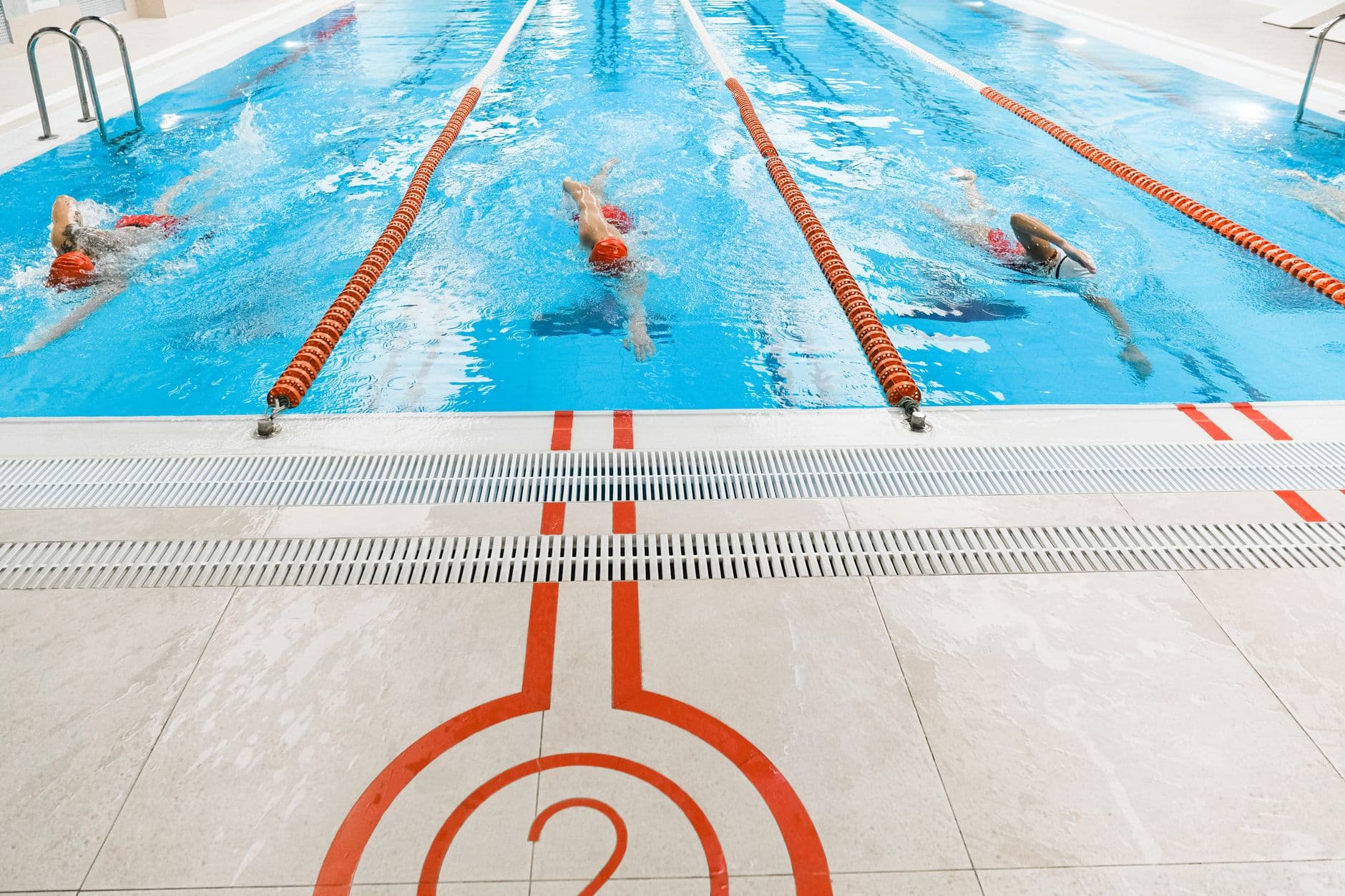
Lane etiquette: how to share a crowded lane without being the problem
Which way to circle in the US, Britain and Australia, picking a lane by seconds per length, the 5-second gap, passing and resting — and where the published rules disagree.
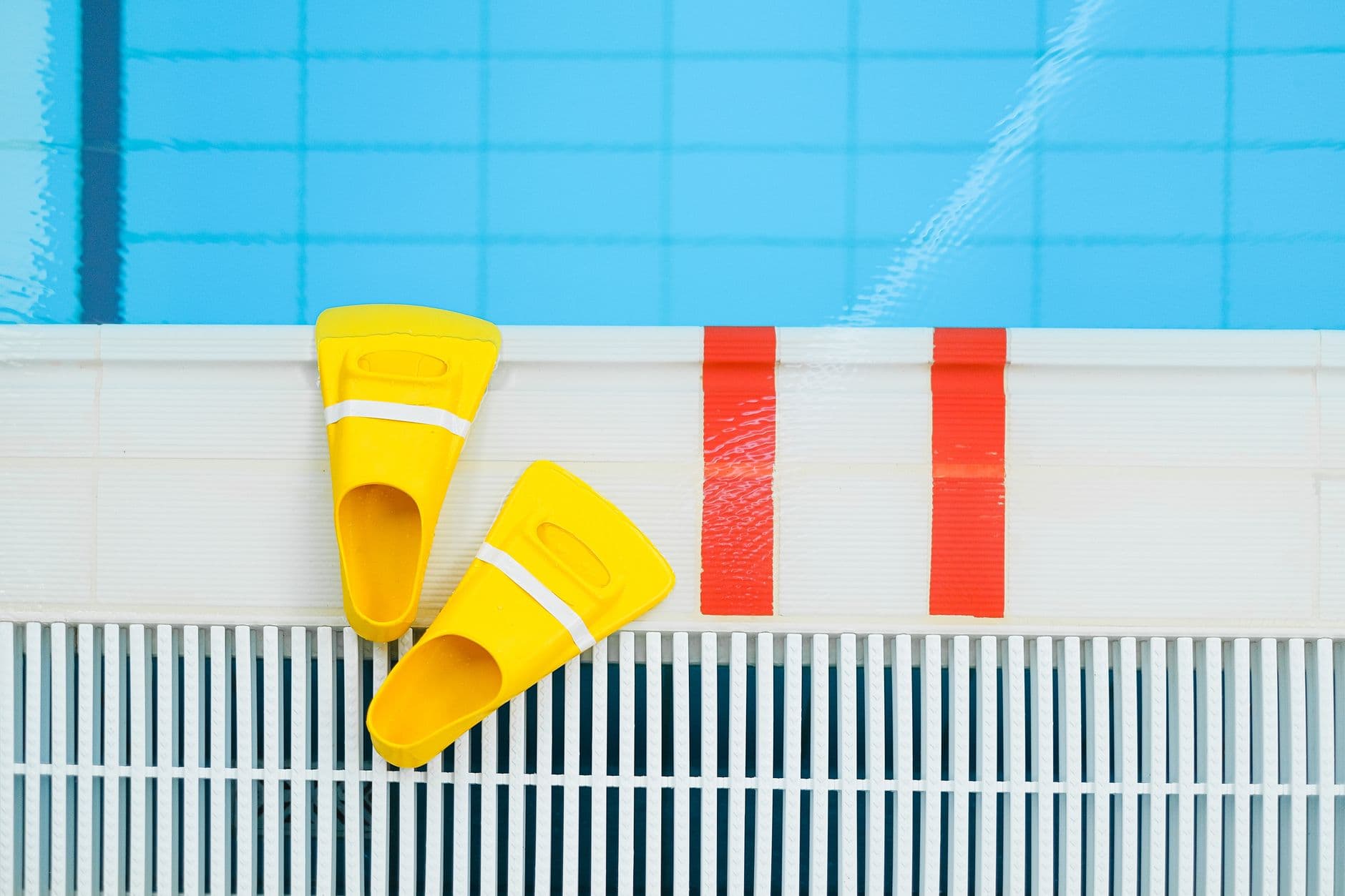
Swim paddles and fins: what they train and when they cost you
Paddles lower your training load at steady speed and a four-week block changed nothing; fins raise energy cost. What the measurements say and how to use both.
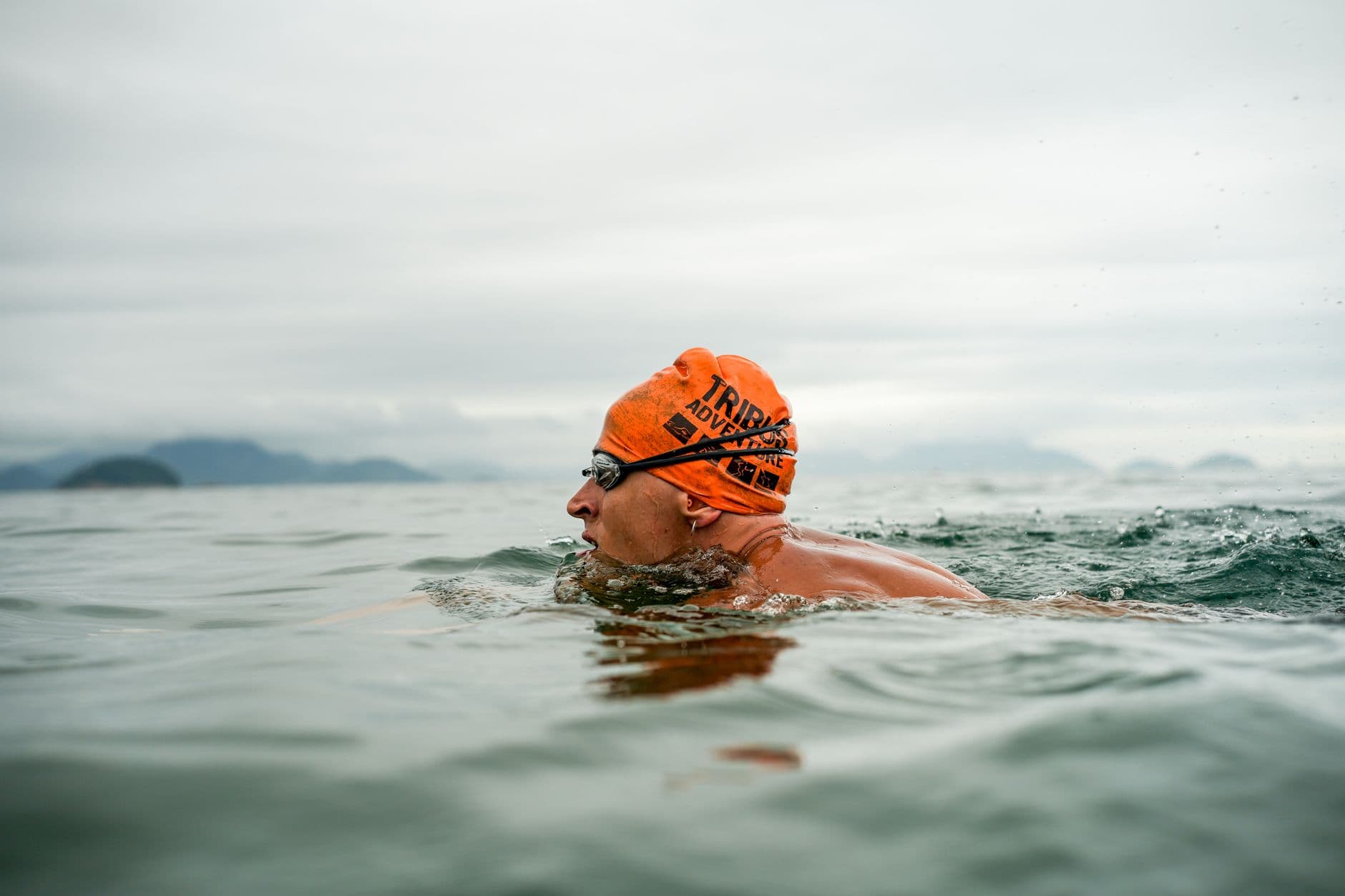
Wetsuit for open water swimming: when you actually need one
The water temperatures at which World Aquatics, U.S. Masters Swimming and USA Triathlon require or ban wetsuits, what a suit does to your body, and how to measure it.
SwimFast is an independent publication. We are not a swim school, a coaching service or a governing body, and nothing here is medical advice. Training paces and test protocols are cited from the published research or federation documents linked on each page. Never swim alone, never attempt breath-hold work without supervision, and check with a doctor before starting a new training programme.