Leg cramps while swimming: what to do in the water
Why swimmers cramp in the calf and the sole of the foot, how to break a cramp without panicking mid-pool, and what the research says about the potassium story.
A cramp in the middle of a lane is a specific kind of unpleasant. It is not an injury and it is not dangerous in the shallow end, but it arrives without warning, it hurts enough to stop you mid-stroke, and it happens in a place where stopping mid-stroke means you start sinking. Most swimmers handle their first one badly — grab the foot, forget to breathe, flail toward the lane rope — and then spend months wondering whether a banana would have prevented it.
This guide covers three things: why the calf and the sole of your foot are the muscles that go, exactly what to do in the water in the first ten seconds, and what the evidence actually says about the fixes you have been told about. Some of that evidence is less settled than the internet suggests, and where it runs out, this page says so.
A cramp in deep water is a water-safety problem before it is a muscle problem. If you are out of your depth, in open water, or alone, deal with staying afloat first and the muscle second — the order matters, and the rest of this page assumes it.
Why the calf and the sole of the foot, and almost never the arms
Ask a pool deck full of masters swimmers where they cramp and you will hear the same two answers. U.S. Masters Swimming's own guidance puts it plainly: cramping most commonly involves the feet or calves, with the quadriceps and hamstrings affected less often. Your arms do far more propulsive work in freestyle and they rarely cramp at all.
The reason is not that your legs are weaker. It is the position they work in. A flutter kick holds your ankle in sustained plantar flexion — toes pointed away from your shin — for the length of the set. That keeps the calf and the small muscles in the sole of the foot shortened while they keep firing. Lab work on cramping has found that this shortened-and-working state is close to a precondition. In a classic electrophysiological study, no cramps appeared during maximal voluntary contraction without muscle shortening, while seven of ten subjects cramped after maximal effort with the muscle shortened.
That is the whole explanation for why swimming produces a cramp profile unlike running or cycling. On land your heel strikes the ground and the calf gets lengthened a few hundred times a minute. In the water nothing lengthens it until you stop and stand up.
What to do in the water, in the first ten seconds
The sequence that works is short, and it is worth rehearsing before you need it.
- Stop kicking. Continuing to kick is continuing to contract the muscle that is already locked.
- Roll onto your back. You get your face out of the water, your breathing back, and both hands free. If you cannot do that calmly, that skill is worth more than anything else on this page — see our guide to floating on your back.
- Pull your toes toward your shin. Reach down and hook your fingers over your toes, or push the ball of your foot against the wall. Dorsiflexion is the direction that lengthens both the calf and the sole.
- Hold it until the muscle lets go, then get to the wall or the shore before you decide whether to keep swimming.
In a pool, raising a hand and calling the lifeguard is not an overreaction. In open water the first move changes: float first. The RNLI's Float to Live advice is five steps — tilt your head back and submerge your ears, relax and control your breathing, move your hands and legs to help you stay afloat, expect your legs to sink, and practise somewhere supervised. A cramped calf is exactly the situation that advice exists for, and it is the reason we tell every open-water beginner to make treading water boring before they make it long.
Why stretching works when almost nothing else does
Stretching into a cramp is the one intervention with a clean mechanism behind it. The same study that found cramps need a shortened muscle also found that muscle stretching caused a sudden interruption of cramps, whether the cramp came from voluntary effort or from electrical stimulation — and it kept working after a nerve block, which points to a local mechanism rather than something you talk your brain out of.
That is why the 2022 evidence-based review in the Journal of Athletic Training still lists gentle static stretching until symptoms abate as the treatment for an acute exercise-associated muscle cramp, after decades of looking for something better. The NHS adds the land version of the same idea: stretching and massaging the muscle may ease the pain, and standing up and putting your weight on the cramping leg may also help. It also notes that paracetamol or ibuprofen will not help during a cramp, because they take too long to work — useful for the soreness afterwards, useless in the moment.
The potassium story, and what the research actually found
Almost every cramp conversation ends at electrolytes. It is worth knowing how thin that ground is. A review in the British Journal of Sports Medicine went through the evidence for the dehydration and electrolyte-depletion hypotheses and found it came mainly from anecdotal clinical observation, case series totalling 18 cases and one case-control study with ten participants — while four prospective cohort studies did not support those hypotheses at all.
Magnesium, the other supplement aisle favourite, has been tested properly. A Cochrane review pooled 11 trials and 735 participants. For idiopathic cramps in older adults it found a difference of −0.18 cramps per week at four weeks (95% CI −0.84 to 0.49), and the proportion of people getting at least a 25% reduction was no different from placebo (RR 1.04, 95% CI 0.84 to 1.29, rated high-certainty evidence). No athlete trials carried that question.
One related piece of folklore is worth retiring at the same time: eating before you swim does not cause the cramp that drowns you. No safety organisation recommends waiting after a meal, and what to eat before swimming goes through the Red Cross review and what it actually rests on.
None of that means your diet is irrelevant, and it does not mean a salty drink never helps anyone. It means the single-cause story is wrong. The 2022 review's conclusion is that cramps come from a confluence of intrinsic and extrinsic factors rather than a singular cause, and that individualised prevention will probably beat generic advice such as drink more fluids. A 2019 review in Sports Med reaches the same uncomfortable place: there are likely several different types of cramp with different mechanisms, so the search for one prevention strategy is unlikely to succeed.
You do sweat in the pool — but less than you have been told
The standard rebuttal is that swimmers sweat without noticing and dehydrate anyway. That is half true, and the numbers are specific. Researchers measured 17 nationally ranked swimmers across two 105-minute sessions with air at 36 °C and water at 27.4 °C. Mean sweat loss was 548 ± 243 ml, a sweat rate of 0.31 ± 0.1 L/h. So yes, you sweat.
But the same swimmers drank an average of 489 ml and finished the session at 0.1% ± 0.7% body-mass loss. In the authors' words, the average swimmer remained hydrated. Sweat sodium averaged 43 ± 14 mmol/L and potassium just 4 ± 1 mmol/L — the potassium leaving in your sweat over an hour and a half of hard swimming is a rounding error next to what is in a normal day's food.
Keep a bottle on the blocks anyway — it costs nothing and the federation advice to drink before, during and after a session is sound for reasons beyond cramping, including how wrecked you feel afterwards. We go through that separately in why you are so tired after swimming.
Fins, kickboards and the cramp they bring with them
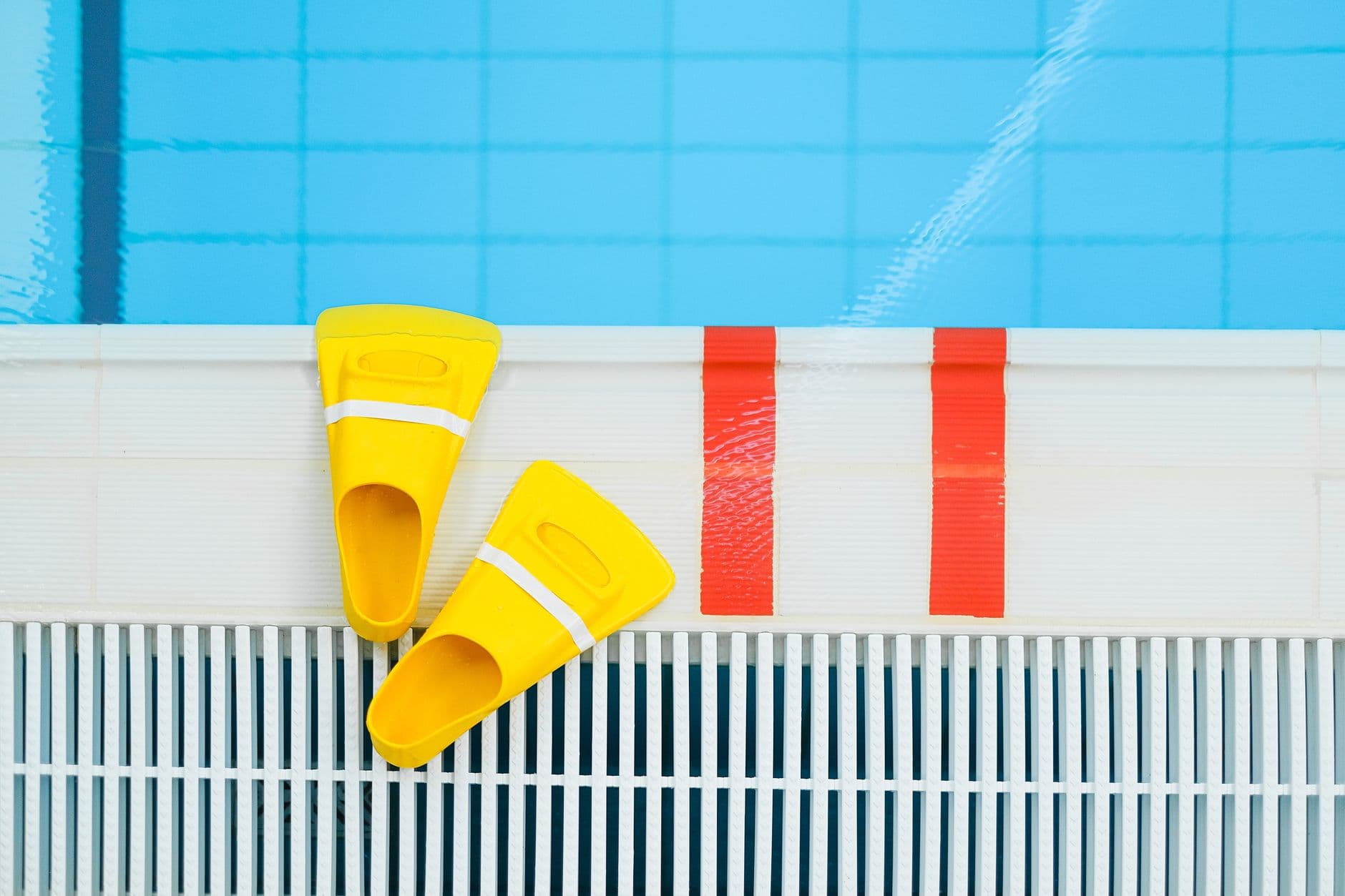
If you search for foot cramps while swimming, Google will finish the phrase for you with fins. There is a mechanical reason. A fin extends the lever at the end of your leg, which means the muscles holding your ankle pointed are holding against far more water load, for the entire set, in exactly the shortened position the cramp literature flags. Kickboard sets do something similar by keeping you kicking continuously with no stroke to break it up.
That is not a reason to bin either tool. It is a reason to introduce them the way you would introduce any load: short sets first, more rest between them, and stop the set at the first twitch rather than the first cramp. Our guides to paddles and fins and whether kickboard work is worth it cover what each one is actually for. Two practical details that come up again and again on pool decks: fins that are too tight make it worse, and a stiff, long blade is harder on a new kicker's calves than a short soft one. Both are coaching consensus rather than tested findings, and they are cheap to try.
Cold water, and the cramp that only shows up in April
USMS's sports-medicine guidance lists cold water as a less common but real trigger — some people are sensitive to it and find it makes them cramp — and suggests a more thorough dry-land warm-up and letting yourself acclimatise at a steady pace before sprinting. The same source makes an observation that matches what any coach sees: cramps are more common in people getting back into shape, which is why the swimmers standing on the deck clutching a foot cluster in the early season.
In open water the stakes are different, because cold does more than cramp you. The RNLI treats anything below 15 °C as cold enough to cause cold water shock, which takes your breathing and movement away at the worst moment. If that is your environment, read our guide to your first open-water swim and the one on whether you need a wetsuit before you worry about your calves.
What lowers your cramping over weeks, not seconds
Here is the distinction almost every article misses: stretching stops a cramp, but a stretch before you swim does not seem to stop the next one. When researchers measured cramp threshold frequency — the stimulation frequency needed to trigger a cramp, so higher means harder to cramp — acute passive static stretching did not increase it.
What did move that threshold was repeated exposure. In a small randomised trial, calves stimulated into cramping twice a week for six weeks saw cramp threshold frequency rise from 23.3 ± 5.7 Hz to 33.3 ± 6.9 Hz after three weeks, while the same person's other leg, held in a neutral position so it could not cramp, did not change. Fifteen men, ten of them in the intervention group: a mechanism worth knowing, not a protocol to copy.
Translated into training, and labelled honestly as inference plus coaching consensus: the thing that reduces cramping is consistent, progressive exposure to the kicking you want to do, not a dramatic stretch beforehand. Build it like any other load — our notes on how often to swim and on warming up apply unchanged. A warm-up earns its place for other reasons; expecting it to cramp-proof you is asking too much of it.
Pickle juice: a real finding with narrow edges
The strangest line in the cramp literature is a good example of how to read a single study. Researchers induced cramps in the flexor hallucis brevis — a muscle in the sole of the foot, which is the swimmer's cramp muscle — in hypohydrated men, then gave them either water or about 74 ml of pickle juice. Cramp duration was 84.6 ± 18.5 s after pickle juice versus 133.7 ± 15.9 s after water, roughly 49 seconds shorter, and plasma composition had barely moved five minutes after drinking. Whatever happened, it was not electrolyte replacement: the authors suspect a reflex starting in the mouth and throat that quiets the motor neurons driving the cramp.
Read the edges, though. These were electrically induced cramps in a laboratory, in deliberately dehydrated male subjects, in one small study. It is evidence that the mouth can interrupt a cramp faster than digestion can explain, and that is genuinely interesting. It is not a protocol, and a bottle of brine on the blocks is not a substitute for reaching down and pulling your toes up.
After the cramp: the rest of the session and the next day
Expect the muscle to feel sore. The NHS puts the normal range at a few seconds to ten minutes for the cramp itself, with soreness for up to 24 hours afterwards. A calf that has just cramped hard is a calf that will cramp again if you drop straight back into the fast kick set that caused it.
A reasonable way to finish the session: swap the rest of the kick work for pull or easy swimming, drop the intensity a step, and keep the total short. If you train by numbers, this is the day to deliberately swim above your target pace rather than at it — a sensible use of our pace calculator is to pick an easy number before you push off instead of negotiating with yourself at the wall. If you run interval sets, lengthen the send-off with the interval calculator so the extra rest is decided in advance.
When a cramp is not just a cramp
Most cramps are, in the NHS's words, common, usually harmless and short-lived. A few are a signal. See a doctor if your leg cramps are disturbing your sleep, if you also have numbness or swelling in your legs, or if a cramp lasts longer than ten minutes. USMS's guidance says the same thing in sharper terms: if leg cramps persist, see a medical doctor, because vascular disorders and other underlying problems can present this way.
Two more worth knowing. Some common medicines list cramps among their effects — the NHS names statins and diuretics specifically — which is a conversation with whoever prescribed them, not a reason to stop taking anything. And pain that is sharp, localised and does not behave like a cramp is a different problem: a calf that hurts on one spot, or swells, or is warm to the touch, needs a clinician the same day. If the ache is in your shoulder rather than your leg, start with swimmer's shoulder instead, and take the same advice about getting it looked at.
This page is general information about a common and usually benign problem. It is not a diagnosis, and nothing here replaces being examined by a doctor or physiotherapist who can see your leg.
Find your own trigger: the two-line log
If the honest state of the science is that cramping is individual, the useful response is to stop looking for the universal cause and start finding yours. Write two lines in your phone after any session where you cramp: what you were doing when it hit — which set, how far into the session, fins or no fins, kick or swim — and the conditions, meaning water temperature, time of day, and when you last ate.
Four or five entries is usually enough to see a pattern, and the patterns tend to be mundane: the third 50 of every fast kick set, always with the long fins, always in the cold pool, always on the mornings you skipped breakfast. That is a problem you can actually solve. It is also the only approach the 2022 review endorses — identify the individual's risk factors rather than hand out generic advice. If you want a number to track alongside it, your critical swim speed tells you whether the sessions you are cramping in are genuinely harder than the ones you are not, and reading the pace clock properly is what makes the log comparable week to week.
A session that cramps less
Putting it together, for the swimmer whose calves go every time they kick:
- Warm up with your ankles moving through range, not held pointed. Easy swimming with a relaxed kick does this; a 200 of hard pointed-toe kicking does the opposite.
- Break up kick work. Eight 25s with rest beats a continuous 200, for the same distance, because the muscle gets out of the shortened position eight times.
- Earn the fins. Add them to short repeats first, on the least-fast part of the session, and keep the straps comfortable.
- Respect the early season. The first three weeks back are when cramps cluster. Plan them smaller than you want to.
- Keep the bottle on the blocks — not as cramp insurance, but because 0.31 L/h adds up over a long session and you will not feel it going.
- Never push through a cramp in deep water, and never swim alone. A manageable cramp and an unmanageable situation are two different things, and the second one is what the water-safety advice is about.
Cramping is annoying, mostly harmless, and poorly understood by the people who have studied it most — which is exactly why the advice you have been given is so confident and so contradictory. The parts that hold up are small: lengthen the muscle, get safe first, build the kicking you want gradually, and find your own trigger instead of someone else's. For everything else in the water, our technique guides and workout guides start from the same place.
Frequently asked questions
What should I do if I get a leg cramp while swimming?
Stop kicking, roll onto your back so your face is clear and both hands are free, and pull your toes toward your shin — reach down and hook your fingers over them, or press the ball of your foot against the wall. Hold until the muscle releases, then get to the wall before deciding whether to carry on.
Why do my calves and feet cramp when I swim but not when I run?
A flutter kick holds your ankle pointed for the whole set, so the calf and the muscles in the sole of your foot stay contracted in a shortened position. Lab studies show cramps are far easier to trigger in a shortened muscle. Running lengthens the calf on every step, which is the opposite situation.
Will eating bananas or taking magnesium stop swimming cramps?
Probably not on its own. A Cochrane review of 11 trials and 735 people found magnesium no better than placebo for idiopathic cramps, and reviews of exercise-associated cramps found the dehydration and electrolyte explanations rested mostly on case series. Current advice is to look for your own triggers rather than apply a generic fix.
Do swimmers get dehydrated in the pool?
You sweat more than you notice but usually less than you fear. In 17 nationally ranked swimmers, a 105-minute session produced about 548 ml of sweat, a rate of 0.31 L/h, and the average swimmer finished at 0.1% body-mass loss. Keep a bottle on the blocks, but do not expect it to be your cramp cure-all.
When should I see a doctor about leg cramps?
The NHS advises seeing a GP if leg cramps disturb your sleep, if a cramp lasts longer than ten minutes, or if you also have numbness or swelling in your legs. U.S. Masters Swimming adds that persistent cramps deserve a medical opinion because vascular and other underlying conditions can present this way.
Sources
- Miller KC, McDermott BP, Yeargin SW, Fiol A, Schwellnus MP (2022). An Evidence-Based Review of the Pathophysiology, Treatment, and Prevention of Exercise-Associated Muscle Cramps — Journal of Athletic Training 57(1):5-15
- Schwellnus MP (2009). Cause of exercise associated muscle cramps (EAMC) — altered neuromuscular control, dehydration or electrolyte depletion? — British Journal of Sports Medicine 43(6):401-408
- Maughan RJ, Shirreffs SM (2019). Muscle Cramping During Exercise: Causes, Solutions, and Questions Remaining — Sports Medicine 49(Suppl 2):115-124
- Bertolasi L, De Grandis D, Bongiovanni LG, Zanette GP, Gasperini M (1993). The influence of muscular lengthening on cramps — Annals of Neurology 33(2):176-180
- Maughan RJ, Dargavel LA, Hares R, Shirreffs SM (2009). Water and salt balance of well-trained swimmers in training — International Journal of Sport Nutrition and Exercise Metabolism 19(6):598-606
- Garrison SR, Korownyk CS, Kolber MR, Allan GM, Musini VM, Sekhon RK, Dugré N (2020). Magnesium for skeletal muscle cramps — Cochrane Database of Systematic Reviews 9:CD009402
- Panza G, Stadler J, Murray D, Lerma N, Barrett T, Pettit-Mee R, Edwards JE (2017). Acute Passive Static Stretching and Cramp Threshold Frequency — Journal of Athletic Training 52(10):918-924
- Behringer M, Moser M, McCourt M, Montag J, Mester J (2014). A promising approach to effectively reduce cramp susceptibility in human muscles: a randomized, controlled clinical trial — PLoS One 9(4):e94910
- Miller KC, Mack GW, Knight KL, Hopkins JT, Draper DO, Fields PJ, Hunter I (2010). Reflex inhibition of electrically induced muscle cramps in hypohydrated humans — Medicine & Science in Sports & Exercise 42(5):953-961
- Seaton J. Stop That Cramp! — four causes and solutions for muscle cramps during exercise — U.S. Masters Swimming (Sports Medicine Committee)
- Howley EK (2024). How Swimmers Can Cope With Cramps — U.S. Masters Swimming
- Leg cramps — symptoms, self-care, and when to see a GP (page last reviewed 1 December 2023) — NHS
- Float to Live — the five steps — Royal National Lifeboat Institution (RNLI)
- Cold water shock — RNLI
Read next
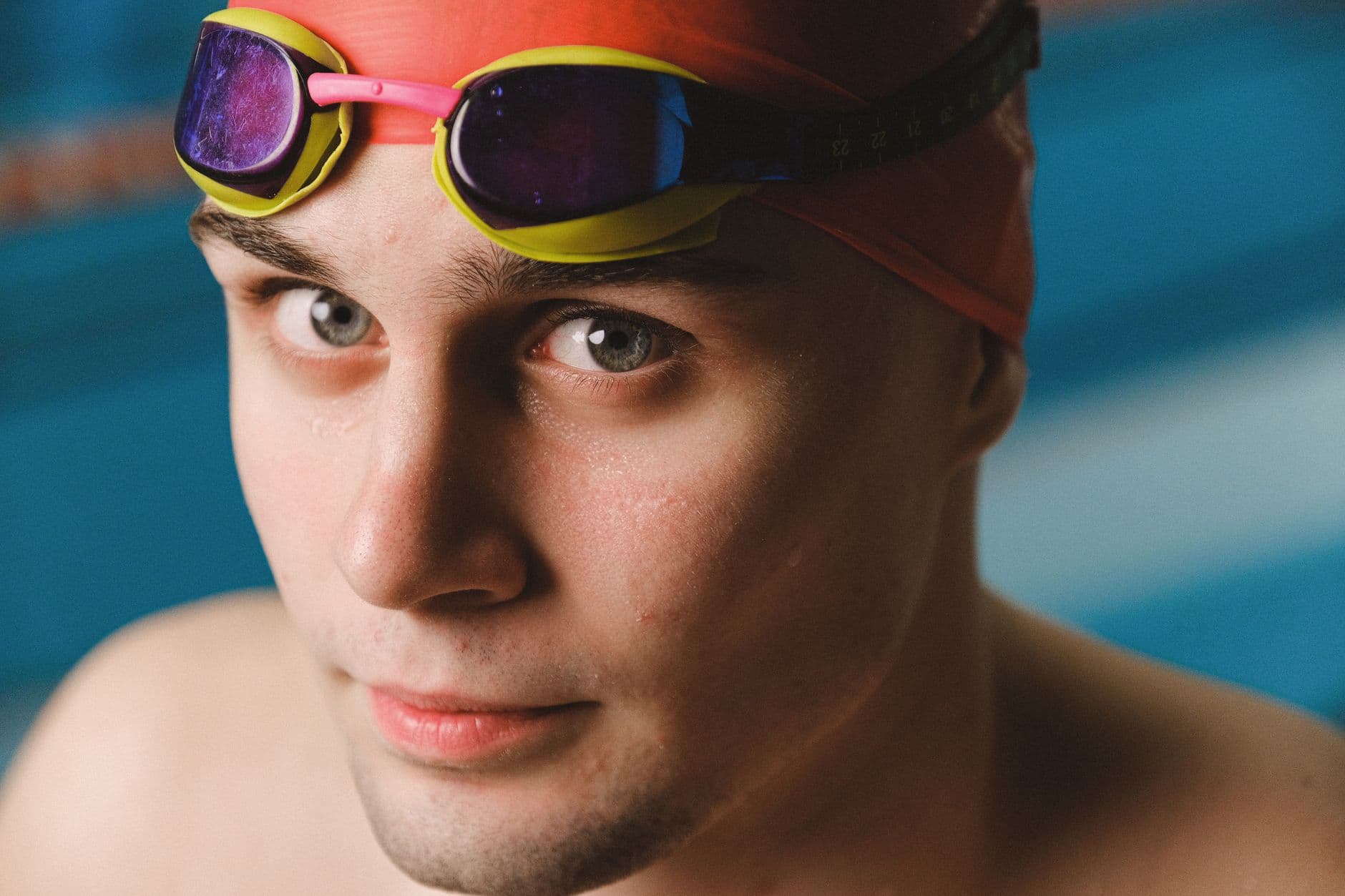
Why do swimmers wear two caps? To pin the goggle straps down
The second cap covers the goggle straps and stops the first one wrinkling. Two caps is explicitly legal, and two is the written maximum — here is the rule.
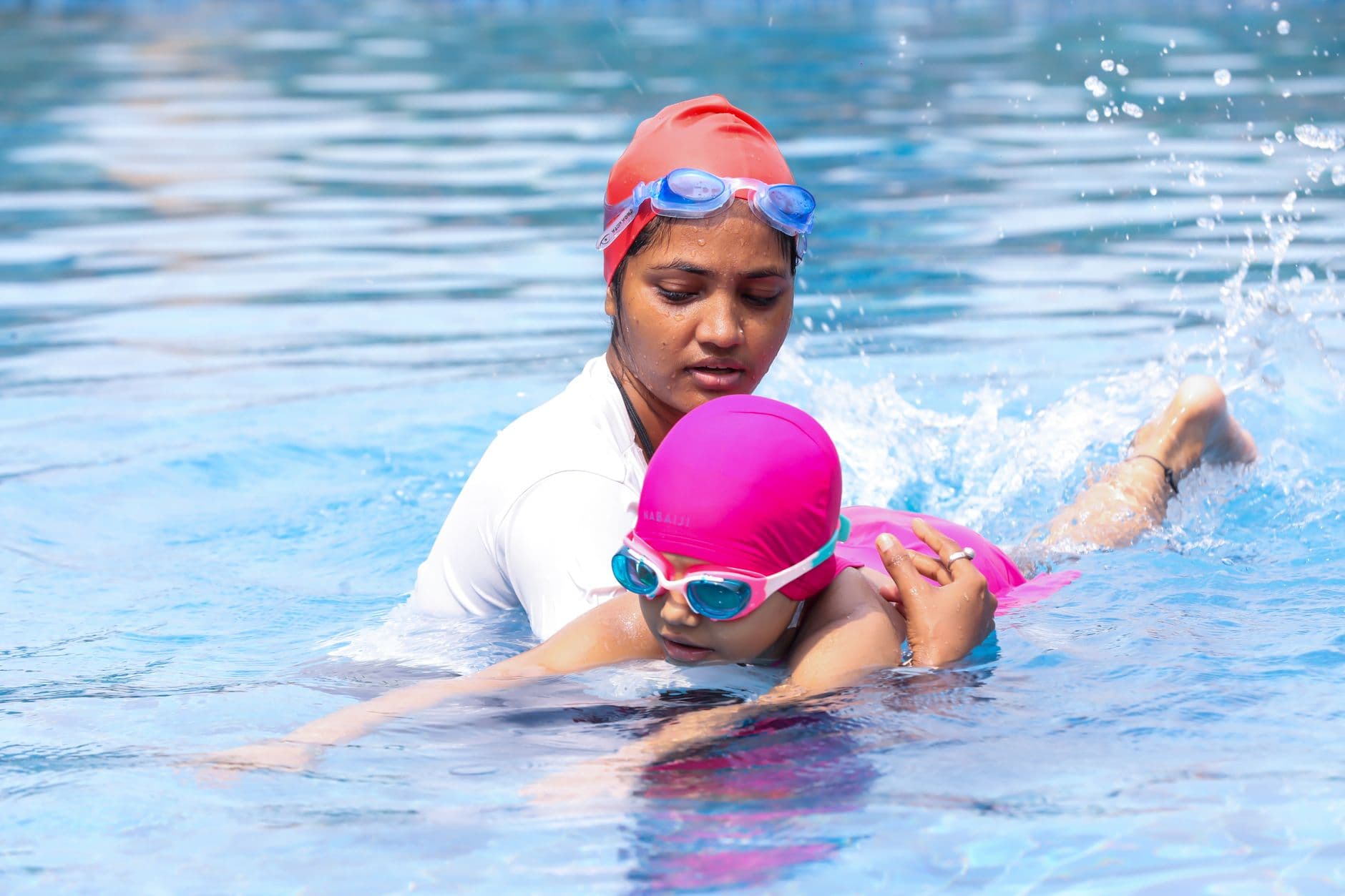
What age should a child start swim lessons?
The official answer is the first birthday for lessons, but babies can be in water long before that. Here is where each health body draws the line, and why it matters.
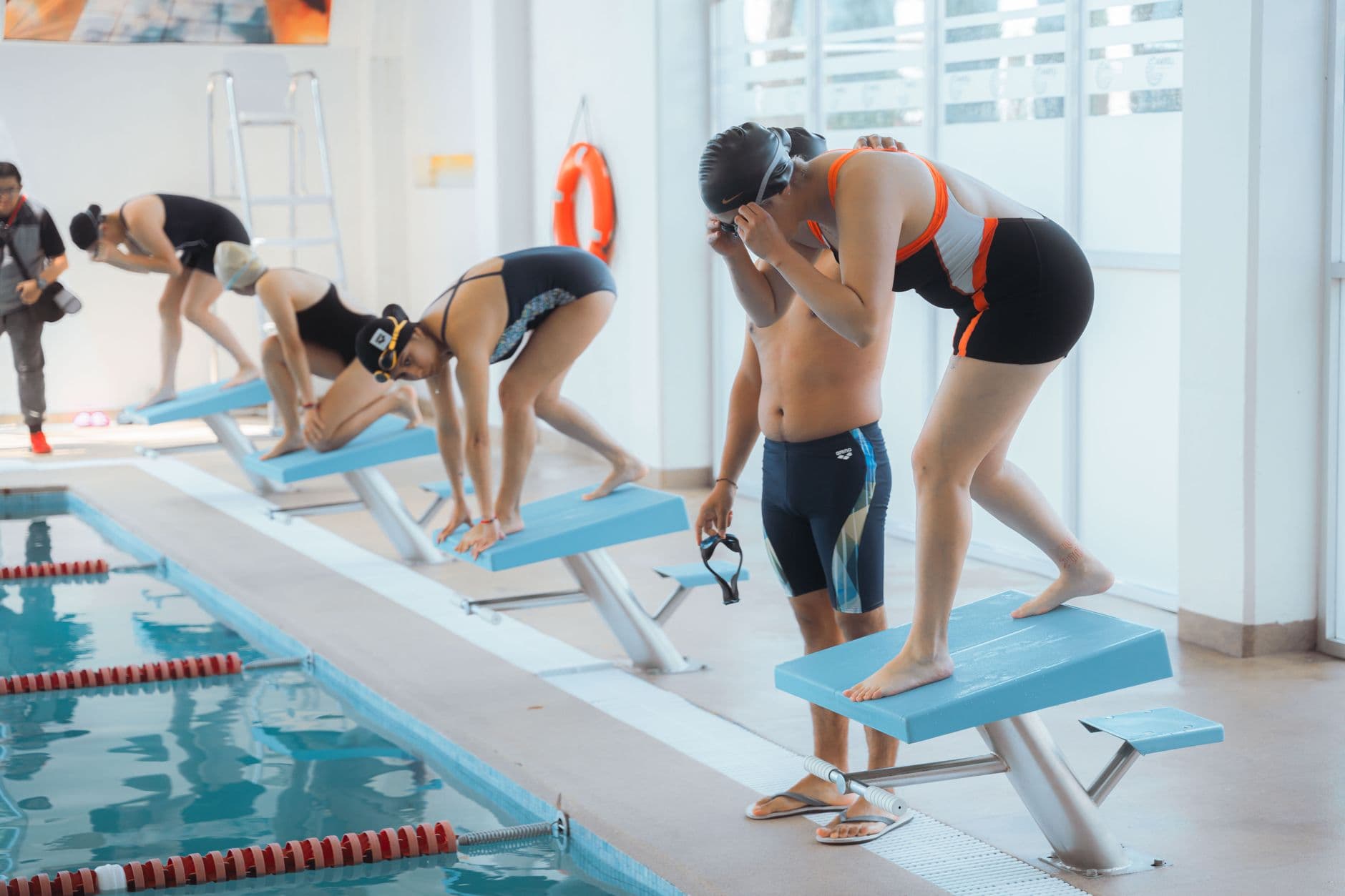
Why swimmers get disqualified: the calls officials make
A disqualification is a procedure, not an opinion. Who is allowed to call one, what goes on the slip, what the code means, and how it can be challenged.
SwimFast is an independent publication. We are not a swim school, a coaching service or a governing body, and nothing here is medical advice. Training paces and test protocols are cited from the published research or federation documents linked on each page. Never swim alone, never attempt breath-hold work without supervision, and check with a doctor before starting a new training programme.