How to teach a child to swim, and what the floaties cost you
Where to start, the order the skills go in, what the evidence really says about lessons, and why every drowning-prevention body counts armbands as toys.
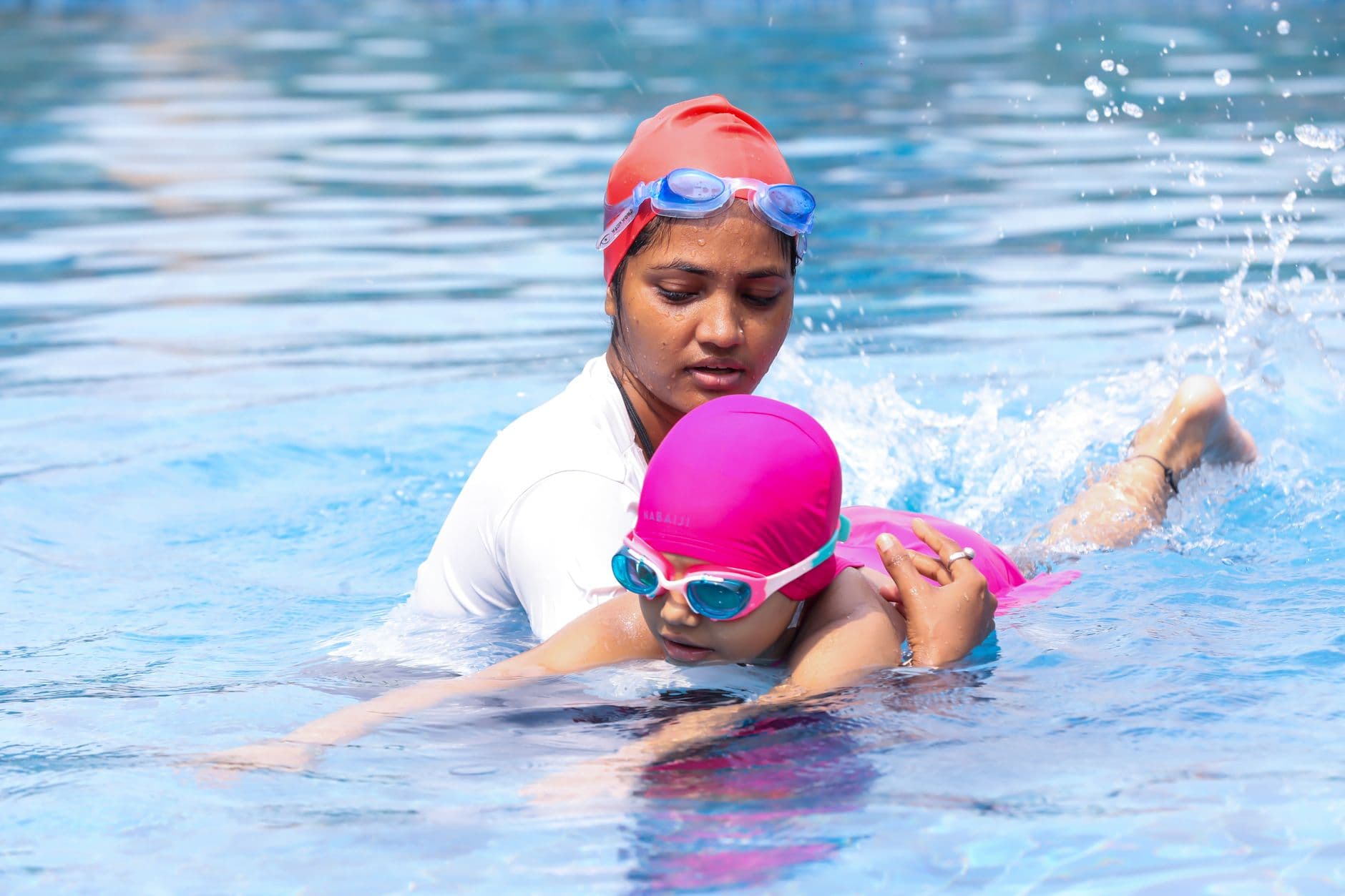
Teaching a child to swim is not the same job as learning to swim yourself. You are not trying to fix your own catch or your own breathing; you are trying to move another person, who may be two years old and may not want to get their face wet, from the step of the pool to the point where they could get themselves out of it. The order you do things in matters more than any single drill.
This page is the order, plus the two things most guides to the subject skip: what the evidence actually shows about swimming lessons, and why the inflatable armbands you bought are counted as toys by every organisation that works on drowning prevention. Everything here that is a number is linked to the body that published it.
First, the part no lesson can give you
Start with the sentence that shapes everything else. Water Safety USA — the consortium that includes the American Academy of Pediatrics, the American Red Cross, the CDC, the US Coast Guard and the Consumer Product Safety Commission — puts it in the criteria it publishes for swim schools: a good programme teaches water skills “while acknowledging that no child, or person, is ever water-safe or drown-proofed”.
That is not a disclaimer. It is the finding. The American Academy of Pediatrics restated its drowning policy in July 2026, and the technical report behind it opens by saying that multiple layers of prevention are necessary because no single method is effective. The layers it lists as proven are four-sided isolation pool fencing with self-closing and self-latching gates; close, constant, attentive supervision; swimming competency; life jackets when boating; and early rescue and resuscitation. In 2023, 981 US children under 20 died from drowning.
Teaching your child to swim is one of those five layers. It is a good one. It is not a substitute for the other four, and the rest of this page assumes you are adding it to them rather than replacing them.
What “can swim” actually means: the five-skill finish line
Before you plan a single session, decide what you are aiming at, because “can swim” is the vaguest phrase in the sport. The Red Cross defines the target as water competency, and the swimming part of it is five specific skills, to be performed in every type of water the person will actually be in.
- Enter water over your head. Step or jump in where the feet do not touch — without a run-up, and without being caught.
- Return to the surface and stay there for one minute. Float or tread for a full timed minute, not a panicked ten seconds.
- Turn around and find the exit. A full circle in the water, then orientation towards the wall or the bank.
- Swim 25 yards. About 23 metres, unbroken, any stroke, no stopping at the halfway rope.
- Get out. Out of a pool without using the ladder.
Note the fourth one is written in yards because it comes from a US standard; in a 25 m pool in the UK or Australia that is one length and a bit of slack. If you ever need to move between the two, our course and distance converter does it without arithmetic.
Worth knowing how rare the full set is. In a Red Cross survey of 1,028 American adults in February 2020, 85% said they could swim and only 56% could perform all five skills. Most adults teaching a child have not themselves finished the syllabus.
Do lessons work? What the one good study found
The honest answer has a shape that neither the swim schools nor the sceptics like. The study everyone cites is a case-control study by Brenner and colleagues, published in 2009, which interviewed the families of 88 children aged 1 to 19 who died of unintentional drowning and compared them with 213 matched controls.
Among the 1- to 4-year-olds, 2 of 61 children who drowned had taken formal swimming lessons, against 35 of 134 controls. That is an adjusted odds ratio of 0.12 — the 88% risk reduction you see quoted everywhere, including on Water Safety USA's own learn-to-swim page. What almost never gets quoted alongside it is the confidence interval: 0.01 to 0.97, which the authors themselves describe as imprecise, consistent with a reduction anywhere between 3% and 99%. For the 5- to 19-year-olds the association was not statistically significant at all.
And the finding that matters most for anyone reading a page like this one: in the adjusted analysis, informal instruction showed no statistically significant association with drowning risk. Informal instruction is what a parent does at the pool on holiday. It is 88 drowning deaths across a handful of US states, so it is not the last word on anything. But it is the best evidence there is, and it points one way: teach your child in the water by all means, and do not let that teaching stand in for the fence, the life jacket or your eyes.
Before the first session: where you stand
Pick water you can stand up in comfortably and the child cannot, warm if you have the choice, with a wall or steps within a few strokes. The rule for where you are is not a preference, it is the published standard: Water Safety USA calls it touch supervision — close enough to reach the child at all times — and applies it to any child who is a non-swimmer or lacks water competency, with life jackets recommended for preschool children around five and under whenever touch supervision is not in place.
Keep the first sessions short. The swim-school criteria note that young children and beginners may need shorter lessons to avoid becoming cold and tired, and that lessons should happen at least once a week to build anything. Ten or fifteen good minutes beat forty that end in shivering.
One more thing to be straight about: if you are not comfortable in water yourself, a child reads that instantly. There is no shame in fixing your own end first — we have a guide to learning to swim as an adult that starts from the same place.
The order the skills actually go in
This progression is the consensus of learn-to-swim programmes rather than an experimental result, and it is worth saying so. What makes it trustworthy is the destination: every step is a piece of the five-skill list above.
- Getting wet on purpose. Pouring water over the head and shoulders from a cup. For children under one, the stated goal of a water session is only water acclimation and parent bonding — not swimming.
- Blowing bubbles. Mouth at the surface, then mouth and nose under. This is breath control, and it is the foundation of everything that follows.
- Face in, eyes open. Goggles make this much easier and remove the one sensation most children object to. If they keep steaming up, that is a solved problem: see why goggles fog and what actually stops it.
- Back float with support. Your hand under the head, ears in the water, hips up. The mechanics are in how to float on your back, and they are the same for a child.
- Front float, and the recovery. Face down, then back to standing under their own power. Teach the recovery in the same session as the float. A float a child cannot get out of is not a skill.
- Kicking with support. Hands on the wall or on your forearms, legs long, small fast kicks from the hip. Legs that sink are usually a head-and-hip problem rather than a kicking one — the same one adults have, explained in why your legs sink.
- The glide. Push from the wall to your hands, two metres, face in. Then three. This is the first time the child moves without being held.
- Turn, and swim back. Roll from front to back and back again, turn a full circle, find the wall, swim to it, and climb out without the ladder.
Stroke comes after all of that. A child who can float, turn, propel and exit has the survival skeleton; arms that look like freestyle are a later and much easier job.
Why the armbands are working against you
Here is the position, stated plainly by the group whose membership includes the Coast Guard and the CPSC: “toys, such as water wings, and inflatable water wings and rings, are toys. They may provide some buoyancy in the water, but they do not prevent drowning.”
Two separate problems follow from that. The first is the one the quote is about: an armband can deflate, slip off a thin arm, or be taken off by the child, and none of those failures announce themselves. The second is a teaching problem and belongs in the honest-consensus column rather than the evidence column — arm floats hold a child upright with the head high, which is the opposite of the long, flat, face-down position every one of the eight steps above is building towards. Children who have spent a summer vertical generally need to unlearn it.
If you want flotation, the layer that the organisations actually recommend is a US Coast Guard-approved life jacket. The Coast Guard's own guidance is worth reading before you buy: inflatable life jackets are made in adult sizes only and are not recommended for weak or non-swimmers, so a child's jacket means the inherent-foam kind, sized by weight — the “child” category starts at 33 lb, with infant sizes below that. On a boat it is not optional: federal law requires children under 13 to wear an approved life jacket whenever the vessel is underway.
The child who is frightened of the water
Fear is a reason to slow the progression down, not to push through it. The published criteria for a good programme are explicit that participants should never be placed under toxic stress during a lesson, and that beginners are reassured and gently introduced to new skills as confidence builds. Throwing a frightened child in is not a short cut; it is the thing that produces an adult who avoids water.
What works is shrinking the step until it is boring. If the face will not go in, the task becomes chin on the surface. If the back float is terrifying, it becomes the back of the head in your palm for three seconds with the child looking at you. You are not negotiating — you are picking a step small enough to succeed, then doing it enough times that it stops being interesting.
It also helps to know that the fear is extremely common and survivable at any age. Much of what we wrote about getting over a fear of water as an adult is the same ladder, just with an adult choosing their own rungs.
Teaching at home: what your pool allows
The honest limits first. The WHO's guidance on teaching children to swim is explicit that it should be done with safety-tested curricula, a safe training area, and student-instructor ratios established for safety — and it frames the intervention around school-age children. Combine that with the Brenner finding on informal instruction and you get a sensible split: home practice is excellent for comfort, repetition and water time, and formal instruction is what has the evidence behind it for the skill ladder itself.
Practically, a home pool needs water shallow enough for you to stand with your shoulders out, a defined exit the child can reach and use, and nothing else going on — no phone, no second child doing something unsupervised at the other end. Garden paddling pools and bathtubs are not teaching venues; they are drowning venues for the under-fives, which is why the standard home advice is to empty tubs, buckets and wading pools immediately after use.
And if your plan is a holiday fortnight of daily sessions, adjust the expectation rather than the intensity. Skills built in two weeks and then not touched for ten months mostly do not survive the gap.
When progress stops
Plateaus in this are almost always one of four things, and three of them are not about the child's ability.
- Cold. A shivering child learns nothing and remembers the shivering. Shorter sessions in cooler water, longer ones in warm.
- Frequency. Once a week is the floor named in the swim-school criteria. Once a month is a series of first lessons.
- Too few repetitions. The same criteria stress maximum “time on task” — children need to repeat a skill many times to keep it. Queuing is not practice.
- A genuinely hard rung. Rhythmic breathing while swimming is the usual one, and it stalls adults for months too. The mechanism is the same at any age: see breathing in freestyle without running out of air.
Resist promoting a child to deeper water because the group moved on. The programme criteria say the opposite — classes should group participants of roughly the same skill level, and promotion should weigh socio-emotional readiness, not the calendar.
How to choose a programme, if you go that way
The published checklist runs to fourteen points. These are the ones you can check from the viewing gallery in ten minutes:
- A lifeguard who is not the instructor. Patron surveillance is supposed to be someone's only job, in addition to the teacher.
- Ratios. Best practice for young or beginner swimmers without a caregiver in the water is 1:4 or fewer, and no more than one instructor to six students.
- Child protection policies. Criminal background checks for staff and volunteers over 18, mandatory abuse-prevention training, and reporting policies.
- A written progression. The programme should be able to hand you its levels and skills sequence, and explain where your child sits in it.
- Parents allowed to watch. Best practice is that the caregiver can always see the lesson.
- They teach you too. A good programme educates parents on water safety, and tells them plainly that supervision — not the lessons — is the most important factor in drowning prevention.
If a school will not explain its ratios or discourages you from watching, that is enough information. There is more of this kind of thing, written for the swimmer rather than the parent, across our technique guides.
The rules that do not bend
No breath-holding games. Water Safety USA's standing advice for pools is to avoid underwater breath-holding activities and games, and the Red Cross asks swimmers to understand the dangers of hyperventilation and hypoxic blackout. Going briefly under as part of a lesson is normal. Competitions to see who can stay down longest are the thing that kills competent swimmers.
Three more that carry numbers. A four-sided isolation fence — one that separates the pool from the house and the garden, not just from the street — reduces a child's drowning risk by 83% compared with three-sided property-line fencing, with a self-closing, self-latching gate out of a child's reach.
A designated water watcher should be at least 16, undistracted, able to recognise trouble, carrying a working phone and a reaching or floating object, and doing nothing else at all — not reading, not on the phone, not supervising the barbecue. Most fatal drownings happen where supervision was poor or absent, and most young children who drowned in pools had been out of sight for less than five minutes, in the care of one or both parents.
And the one that should end any sense that the job is finished: among 10- to 17-year-olds who fatally drowned, almost half could swim. Competence lowers the risk. It does not remove it, in the pool or in open water, where the hazards are different again.
If something goes wrong in the water
This section exists because the internet is full of a specific piece of misinformation that frightens parents and points them in the wrong direction. “Dry drowning”, “secondary drowning” and “delayed drowning” are not medically accepted terms, and the WHO has said they should not be used. No one who has drowned is completely fine for days and then develops symptoms out of nowhere; symptoms do not go away and then return.
What is true is that the signs appear straight away — difficulty breathing, excessive coughing, foam at the mouth — and that in some people breathing difficulty gets progressively worse over the next few hours, up to five to eight hours after the trouble in the water.
So the practical rule is not to watch the clock for days. It is to get a child assessed by a medical professional, promptly, if after any incident in the water they have coughing that will not stop, lost consciousness even briefly, needed rescue breaths or CPR, have chest pain or shortness of breath that does not settle, or are confused, unusually exhausted or simply not behaving like themselves. That is a doctor's call, not a swimming teacher's, and nothing on this page replaces one.
Every figure on this page is linked to the organisation or study that published it. Where the practice is coaching consensus rather than measured evidence — the order of the progression, the posture argument against armbands — it is labelled as such in the text.
Frequently asked questions
How do you teach a child to swim without floaties?
Replace the buoyancy with your hands and the wall. Work through getting wet, blowing bubbles, face in, a supported back float, a front float with a recovery to standing, kicking on the wall, then short glides to your hands. Water Safety USA classes water wings and inflatable rings as toys: they add buoyancy but do not prevent drowning, and they hold a child upright.
Can I teach my child to swim without lessons?
You can teach comfort, breath control and water time, and that is worth doing. But in the main case-control study on this, formal swimming lessons were associated with a large reduction in drowning risk among 1- to 4-year-olds, while informal instruction showed no statistically significant association. Treat home practice as a supplement to lessons rather than a replacement for them.
At what age can a child learn to swim?
It depends on the programme and the child, and the organisations differ. The Red Cross runs classes from six months, but the stated goal for a child under one year old is water acclimation and parent bonding rather than swimming. The WHO frames its teaching guidance around school-age children. Ask any programme what it is actually trying to achieve at your child's age.
Should I teach my child to swim underwater?
Going briefly under as part of learning breath control is a normal step and most programmes include it. What every drowning-prevention body warns against is underwater breath-holding games and competitions, because hyperventilation and hypoxic blackout kill competent swimmers. Keep submersions short and incidental, and never make staying down a contest.
How long does it take a child to learn to swim?
There is no honest average, because it depends on starting age, water temperature, how often you get in and whether the child is anxious. A better measure than weeks is the five-skill list: entering deep water, a one-minute float or tread, turning, 25 yards, and exiting. Lessons attended at least once a week are what build skills that stick.
Sources
- Prevention of Drowning: Technical Report (2026) — American Academy of Pediatrics, Pediatrics
- Prevention of Drowning: Policy Statement (2026) — American Academy of Pediatrics, Pediatrics
- Brenner RA et al. (2009) — Association between swimming lessons and drowning in childhood — Archives of Pediatrics & Adolescent Medicine
- Drowning — fact sheet — World Health Organization
- Water safety and water competency — American Red Cross
- Home pool and hot tub safety — American Red Cross
- 5 Skills to Save Your Life in the Water (PDF) — American Red Cross
- What to Look for in a Learn-to-Swim Program — Water Safety USA
- Learn to Swim — Water Safety USA
- Life Jackets Save Lives — Water Safety USA
- Designate a Water Watcher — Water Safety USA
- Mythical Drowning Terms — Water Safety USA
- Life Jacket Wear / Wearing your Life Jacket — U.S. Coast Guard
Read next
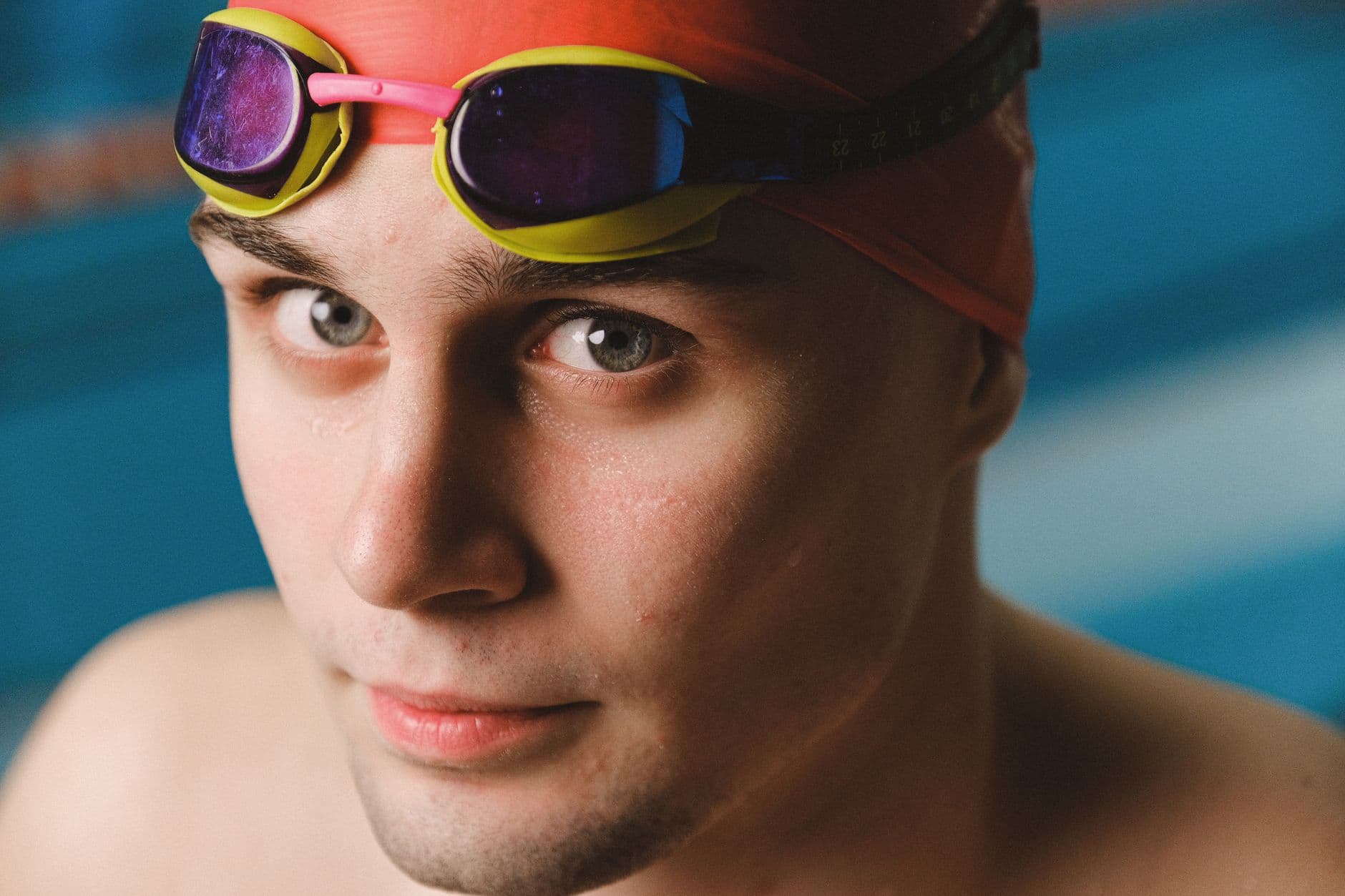
Why do swimmers wear two caps? To pin the goggle straps down
The second cap covers the goggle straps and stops the first one wrinkling. Two caps is explicitly legal, and two is the written maximum — here is the rule.
What age should a child start swim lessons?
The official answer is the first birthday for lessons, but babies can be in water long before that. Here is where each health body draws the line, and why it matters.
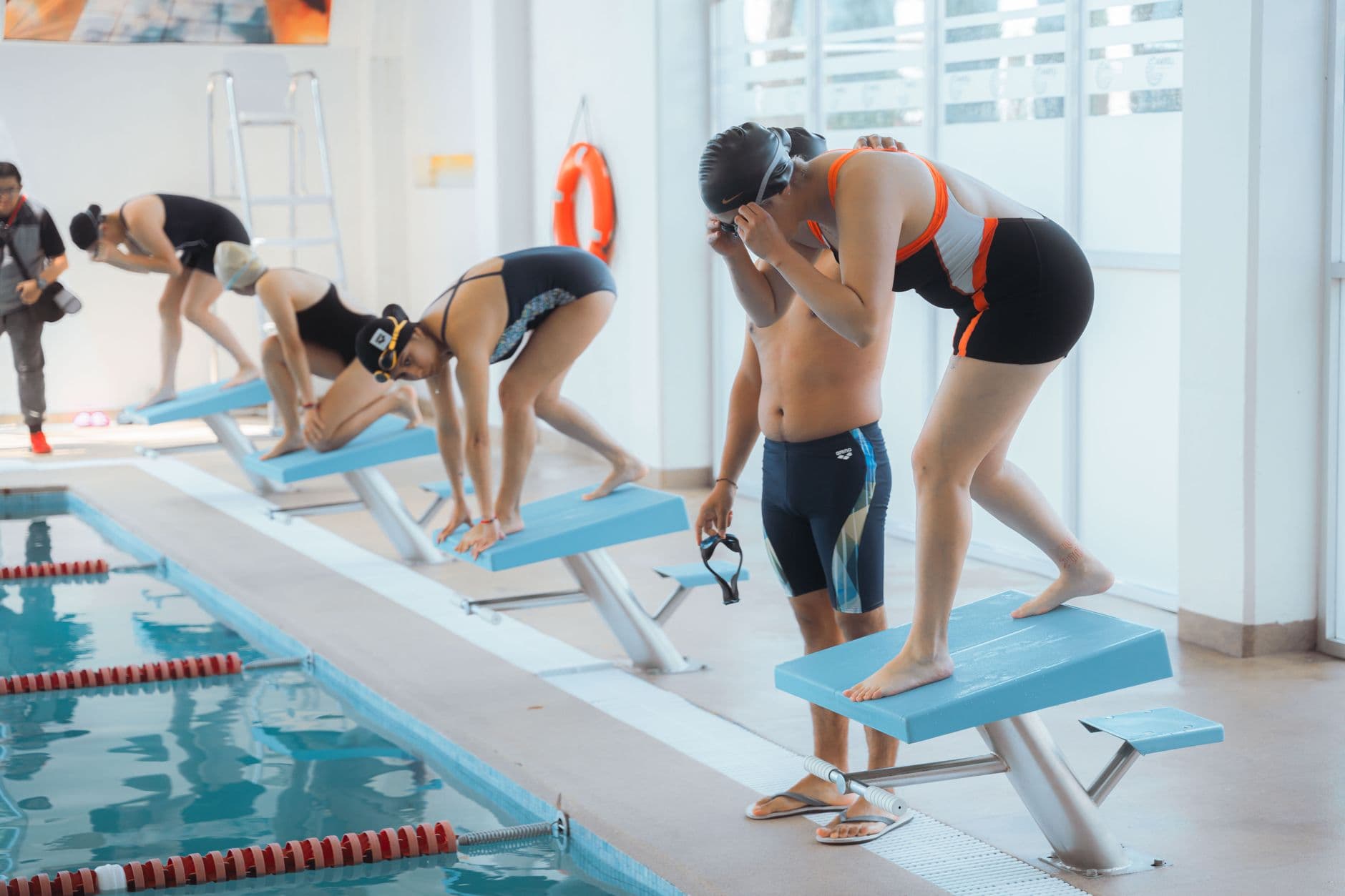
Why swimmers get disqualified: the calls officials make
A disqualification is a procedure, not an opinion. Who is allowed to call one, what goes on the slip, what the code means, and how it can be challenged.
SwimFast is an independent publication. We are not a swim school, a coaching service or a governing body, and nothing here is medical advice. Training paces and test protocols are cited from the published research or federation documents linked on each page. Never swim alone, never attempt breath-hold work without supervision, and check with a doctor before starting a new training programme.