Can swimming increase your lung capacity? What actually changes
Swimmers measure about 9 % above predicted lung volume, and the breathing devices do not move it at all. What training really changes, with the studies linked.
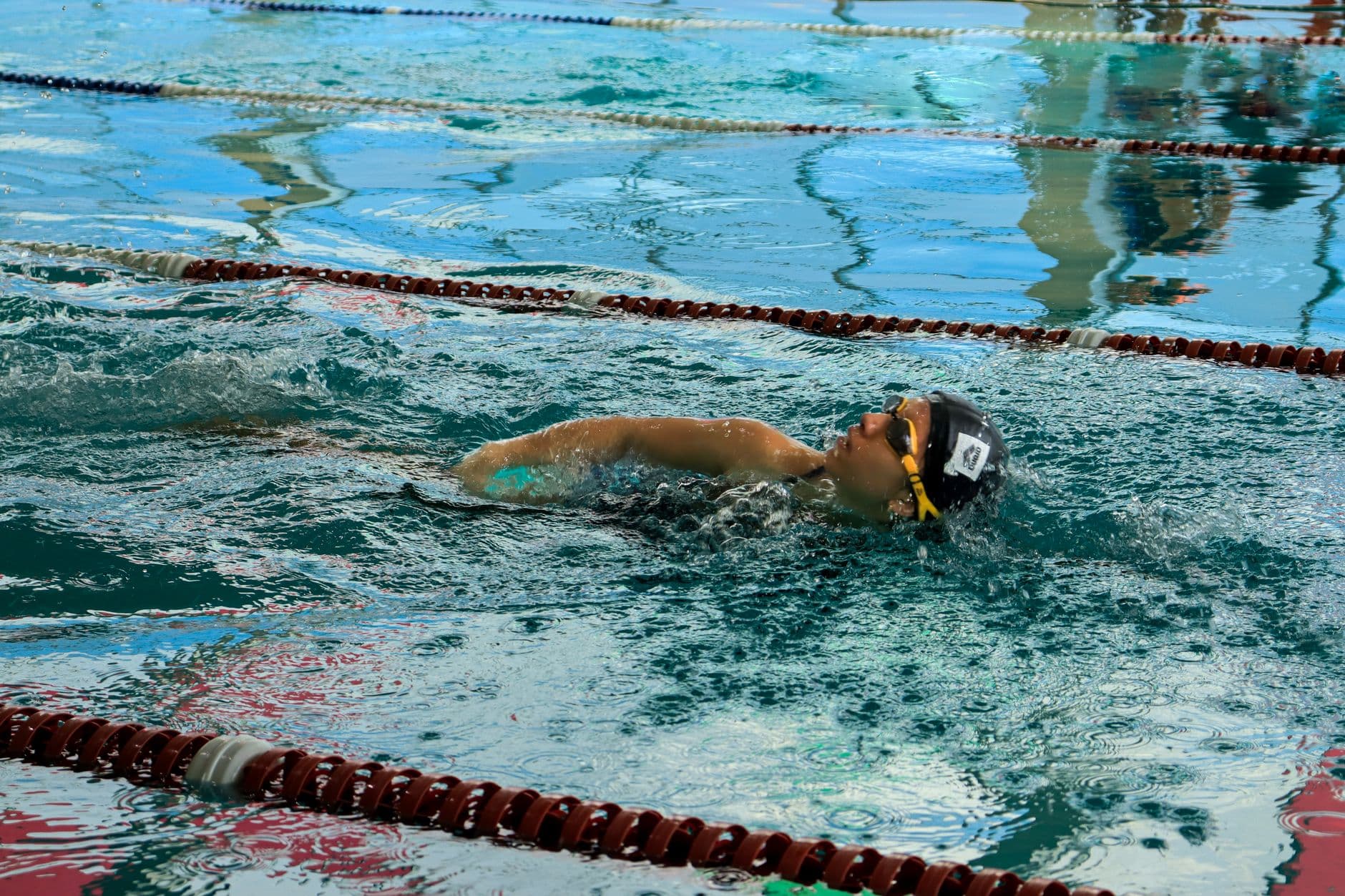
“How do I increase my lung capacity for swimming?” is one of the steadiest questions in the sport. Google’s own suggestion list runs to ten separate versions of it — increase lung capacity, lung size, lung volume, lung function, strengthen lungs, expand lungs — and almost every answer on offer promises that enough laps will make your lungs bigger.
The honest answer is more useful than that, and it comes in two halves. Most of your lung capacity was settled before you ever got in a pool, by your height, your age and your sex. What swimming changes is how much of that capacity you can actually use, how long you can tolerate the carbon dioxide building up between breaths, and how much air the swim costs you in the first place. This page separates the number that barely moves from the ones that move a lot, and every figure below is linked to the study or the governing body it came from.
Before anything else: do not practise hyperventilating before going underwater, and do not do repeated or extended breath-holds to “build capacity”. The American Red Cross, USA Swimming and the YMCA of the USA call those practices “dangerous and potentially deadly” in a joint statement. They can cause you to lose consciousness without warning, in any depth of water. The reasoning is set out later on this page, and it is the most important thing here.
Can swimming increase your lung capacity?
Slightly, and far less than the question implies. Swimmers measured against matched non-swimmers do have a larger forced vital capacity — 6.2 litres against 5.5 in one controlled comparison — but that is roughly 9 % above the volume predicted for their height, age and sex. Training changes how you use your lungs much more than it changes their size.
And the part nobody mentions: the same study found no difference at all in how fast the swimmers could empty their lungs, or in the most air they could move in a minute. The headline number moved a little. The performance numbers built on it did not move.
What “lung capacity” actually means
Half the confusion here is vocabulary. “Lung capacity” is not one measurement, and the ones people mean when they ask the question are not the ones that respond to training.
| Measurement | What it is | Does swimming move it? |
|---|---|---|
| Forced vital capacity (FVC) | All the air you can blow out after the deepest breath you can take | A little, and mostly it reflects who you already were |
| Total lung capacity | FVC plus the air that stays behind after a full breath out | Essentially fixed in a healthy adult |
| Tidal volume | The air in one ordinary breath, resting or swimming | Yes — this is the one that changes with how you breathe |
| FEV1 | How much you can blow out in the first second: an airway measurement, not a size one | Sometimes, with specific breathing-muscle work |
| Maximal voluntary ventilation | The most air you can move in a minute, flat out | Trained swimmers are no better than other trained athletes |
| Maximal inspiratory pressure | How hard your breathing muscles can pull | Yes, and reliably so |
Notice the split. The two measurements that describe the size of the container are the two that barely budge. The ones that describe what you do with it are the ones that train. That distinction also explains something that catches adult beginners out: a bigger chest full of air floats better, which is why floating on your back is partly a matter of how much air you are holding and not of effort.
What decides how big your lungs are
When a clinic measures your spirometry, it does not judge the litres on their own. It compares them against a predicted value for someone of your height, age, sex and ethnic background. The standard set of equations, published by the European Respiratory Society’s Global Lung Function Initiative in 2012, was built from 97,759 records of healthy non-smokers aged 2.5 to 95, gathered at 72 centres in 33 countries. Their reference calculator is public, which is how you can see for yourself what moves the predicted value.
Height is the dominant term by a long way: tall people have large lungs, and that is most of the story. Age is the second: lung function climbs through adolescence, peaks somewhere in the twenties, and declines gently from there. Sex accounts for much of the rest.
None of those four things is on a training plan. This is why a swimmer who takes up the sport at 45 and wants “the lungs of a swimmer” is chasing the wrong target — and why the right target, described in learning to swim as an adult, is efficiency instead. It is also why the only meaningful way to read your own number is as a percentage of predicted, never as raw litres against someone else’s raw litres.
What the studies of swimmers actually found
Two pieces of research are worth quoting properly, because they are the ones doing the work behind every claim on this subject.
The first, from Cardiff Metropolitan University in 2019, recruited three groups of 15 adult men matched for body size: daily swimmers, daily field-sport athletes (rugby and football), and recreationally active men. The swimmers had a larger FVC — 6.2 litres, about 109 % of predicted — against 5.6 litres for the field-sport group and 5.5 for the recreational group. FEV1 and maximal voluntary ventilation were no different between groups.
Read that chart carefully. Against people who do no sport, the swimmers were ten points of predicted ahead. Against people who train hard at a different sport, they were three. Most of the gap belongs to training, not to swimming.
The second study, from the Norwegian School of Sport Sciences, measured 129 national-team athletes across six sports against the same Global Lung Function Initiative reference. The 30 swimmers had the highest mean FVC of any group, about 1.2 standard deviations above predicted — but athletes in every sport measured came out close to or above the reference. Being an elite endurance athlete at all is most of the effect.
There is one genuinely swimming-specific finding in the Cardiff work, and it is not about size. At peak effort every group hit the same ventilatory reserve of around 20 %, but the swimmers moved more air per minute than the recreational group and did it by breathing deeper and slower. That is a trained pattern, not a bigger container.
Why those numbers do not prove swimming grew anyone’s lungs
Every study above is cross-sectional: it photographs swimmers and non-swimmers at one moment and compares them. It cannot tell you which came first. Tall people with long torsos and big chests are good at swimming, enjoy it more, get picked for squads and stay in the sport. A sport that selects for large chests will always be full of people with large chests.
The size of the reported effect is the giveaway. A 1989 study of 45 swimmers covering 2 to 5 km a day reported FVC 37.4 % higher than matched controls and FEV1 30.1 % higher — roughly three times the gap the Cardiff group found thirty years later. When two studies of the same question disagree by a factor of three, you are not looking at a stable, repeatable training effect. You are looking at different groups of people.
The 1989 authors were candid about it, closing with the line that “further longitudinal studies are needed to confirm these observations”. That was 1989. The field has still not produced the controlled trial that would settle it, and anyone telling you a precise percentage by which swimming will grow your lungs is quoting a number nobody has measured.
What training really changes: your tolerance for carbon dioxide
Here is the mechanism the lung-capacity framing hides. The urge to breathe is not triggered by running out of oxygen. It is triggered by carbon dioxide building up in your blood, and that alarm goes off long before your oxygen is in any trouble.
Which means the panic you feel halfway down a length is a CO2 signal, and the single biggest thing that worsens it is holding air in. A swimmer who takes a breath and then grips it is sitting on a lungful of carbon dioxide with nowhere to go, so the next breath has to do two jobs at once and never quite manages. A swimmer who breathes out steadily into the water the whole time their face is down arrives at the next breath needing only to inhale. Getting that right, covered step by step in how to breathe while swimming freestyle, changes how a length feels more than any number on a spirometer.
Worth labelling honestly: that CO2 tolerance improves with aerobic training is well established, but exactly how much of a swimmer’s comfort comes from tolerance and how much from simply being more efficient is coaching consensus rather than settled science.
What breathing-muscle training does, and what it does not
The handheld resistance devices sold for “lung training” have now been through a proper systematic review. Published in 2026, it pooled 14 studies covering 375 competitive swimmers who did at least four weeks of respiratory muscle training against sham or standard training.
What improved: inspiratory muscle strength, solidly (standardised mean difference 0.65, confidence interval 0.29 to 1.01). FEV1 improved too (0.45, CI 0.19 to 0.72), as did forced inspiratory volume. Aerobic swimming performance improved, though with a confidence interval running from 0.03 to 2.00 — which is another way of saying the effect might be enormous or might be nothing.
What did not improve: expiratory muscle strength, maximal voluntary ventilation, forced vital capacity, and 50, 100 and 200 m freestyle times. The devices make your breathing muscles stronger. They do not make your lungs bigger, and in these trials they did not make anyone faster over a sprint. The reviewers also flagged high variation between studies and asked for load-matched trials, so treat even the positive findings as provisional.
Why you still run out of air after one length
If you are gasping after 25 metres, your lung capacity is almost certainly not the problem. Four things usually are, in roughly this order of frequency.
- You are swimming faster than your aerobic base allows. Most adults push off at a pace they could hold for 30 seconds and then wonder why minute two hurts. Critical swim speed gives you an actual number for the pace you can sustain; the CSS calculator works it out from two time trials.
- You are storing air instead of exhaling it. See the section above. This one is free to fix and fixes fast.
- You are lifting your head to breathe. Lifting drops the hips, drag climbs, and the extra work arrives as breathlessness — the same chain described in why your legs sink.
- You are breathing to one side only, under tension. Practising bilateral breathing is less about symmetry than about having a second option when the first one is blocked by chop, a wall or another swimmer.
One structural detail that catches people out: in a 50 m pool you get half as many walls as in a 25 m pool, and every wall is a short break from stroking. The same pace genuinely is harder over long course, which is why the two sets of times are not comparable. Feeling more breathless in a 50 is not a fitness regression.
The one thing you should never do to build lung capacity
In a joint statement issued in November 2022, the American Red Cross, USA Swimming and the YMCA of the USA state that “the practices of hyperventilation preceding underwater swimming and extended breath-holding in the water are dangerous and potentially deadly activities”, because they can deprive the body of oxygen and lead to unconsciousness without warning.
The mechanism follows directly from the carbon dioxide story above. Hyperventilating flushes CO2 out of your blood, which silences the alarm that would normally send you to the surface. Your oxygen keeps falling anyway. The alarm is gone, so you black out with no sensation that anything is wrong, face down, and nobody nearby sees a struggle because there isn’t one.
That same statement corrects a term this whole corner of the internet gets wrong. The three organisations do not use or endorse the phrase “shallow water blackout” for this, because water depth is not a factor in how the body responds to hyperventilation and breath-holding. They call it hypoxic blackout. Shallow water blackout is a different and specific condition, in water typically less than 15 feet (5 metres) deep, arising from diving equipment failure or as a breath-hold diver returns to the surface.
In practice, for anyone training in a lane: no hyperventilating, no sets of repeated breath-holds, no underwater laps for distance, and never any of it alone. The joint statement notes that swim instructors are taught to limit participants to a single inhalation whenever they ask someone to hold their breath and submerge. Legitimate underwater work exists and is short and supervised — the underwater dolphin kick off a wall is measured in seconds, not in how long you can last.
The breathing work that is actually worth doing
Nothing on this list involves restricting your air. All of it is better supported than breath-hold drills, and all of it is safe to do in a public lane.
- Exhale continuously, face down. Steady out through nose or mouth the entire time your face is in the water. This is the highest-return change available and it costs nothing.
- Breathe every two or three strokes, and train both sides. Breathing less often is not a training stimulus, it is just a slower swim with more panic in it.
- Build an aerobic base at a pace you can hold. Longer intervals at or just under CSS, as laid out in building swimming endurance, do more for your breathing than any device.
- Extend continuous swimming gradually. The structured build in swimming 500 yards without stopping is the practical version of all of the above.
- If you want respiratory muscle work, do it on dry land. The evidence says it builds inspiratory strength. It does not say it builds capacity or sprint speed, and it has no business happening underwater.
How to tell whether it is working
Here is the practical consequence of everything above: if you go and get spirometry done after a season of training, the number will probably look much as it did before. That is not failure. You were never training the number. These are the measurements that will actually move, and each has a tool on this site.
- Strokes per length. Fewer strokes at the same pace means less work per metre, so less air needed — the trade-off is explained in stroke rate against stroke length.
- SWOLF. One score combining time and stroke count. Read what SWOLF is, then track it with the SWOLF calculator.
- Your CSS pace, retested. Repeat the two time trials every six to eight weeks in the CSS calculator. A faster sustainable pace is aerobic improvement, stated plainly.
- Heart rate at a fixed pace. The same 100s at the same send-off, at a lower heart rate, is the clearest evidence you have — see swimming heart rate zones.
- How well you hold pace across a set. Plan the splits in the pace calculator; a set that no longer falls apart in the back half is a breathing win.
- What the swim costs you. Efficiency shows up in energy too, which is the quiet subject of calories burned swimming.
When breathlessness is a medical question, not a fitness one
This matters more in swimming than in most sports. In that Norwegian study of national-team athletes, bronchial hyperresponsiveness — airways that narrow too readily — was found in between 50 % and 87 % of the swimmers depending on the threshold used, the highest of any sport measured, and 83 % of the swimmers reported exercise-induced respiratory symptoms. Whatever is going on in an indoor pool environment, breathlessness in swimmers is not always a training problem.
See a doctor, rather than adding sets, if you get breathlessness out of all proportion to the effort, coughing or wheezing during or after sessions, chest tightness, or light-headedness in the water. Those are airway symptoms and they have a diagnosis and a treatment; they do not have a drill. The test is spirometry, and the reference equations described earlier are what a clinician will compare your result against.
Two things that are never a plan: self-diagnosing from a website, this one included, and swimming alone to work on your breathing. If something goes wrong with your breathing in the water, the only thing that reliably helps is another person being there.
Frequently asked questions
Does swimming increase lung capacity?
Only slightly. Swimmers matched to non-swimmers for body size measured 6.2 litres of forced vital capacity against 5.5, which is about 9 % above the volume predicted for their height, age and sex. Because those studies compare existing swimmers with non-swimmers, they cannot show whether swimming caused the difference or whether larger-chested people simply stay in the sport.
Does swimming increase lung size?
The air-holding size of an adult lung is close to fixed, and training does not meaningfully change total lung capacity. In the trials of respiratory muscle training, forced vital capacity did not improve at all, while inspiratory muscle strength did. What swimming changes is how much of your existing capacity you use per breath, not how much there is.
What exercises increase lung capacity for swimming?
None reliably increase capacity, but several improve breathing. Exhale continuously whenever your face is down, breathe every two or three strokes to both sides, and build aerobic fitness with longer intervals at your critical swim speed. Handheld inspiratory trainers build breathing-muscle strength on dry land, though the reviewed trials found no gain in vital capacity or in 50 to 200 m freestyle times.
Does swimming underwater increase lung capacity?
No, and training this way is dangerous. The American Red Cross, USA Swimming and the YMCA of the USA describe hyperventilation before underwater swimming and extended breath-holding as potentially deadly, because they can cause unconsciousness without any warning sensation. They call this hypoxic blackout and stress that water depth is irrelevant to it. Underwater work in training is short, supervised and never about duration.
How do I stop getting out of breath when swimming?
Slow down to a pace you can genuinely sustain, and stop holding air in. Most breathlessness after one length comes from starting at sprint pace, storing carbon dioxide instead of exhaling, or lifting the head to breathe and dropping the hips. Fix those three before you consider any breathing device. If breathlessness is out of proportion to the effort, see a doctor.
Sources
- Joint Statement on Hypoxic Blackout and Inaccurate Use of the Terminology Shallow Water Blackout (November 2022) — American Red Cross, USA Swimming and YMCA of the USA
- Rosser-Stanford B. et al. (2019). Static and Dynamic Lung Volumes in Swimmers and Their Ventilatory Response to Maximal Exercise — Lung 197(1):15-19
- Bernhardsen G.P. et al. (2023). Differences in lung function, bronchial hyperresponsiveness and respiratory health between elite athletes competing in different sports — European Journal of Sport Science 23(8):1480-1489
- Chen Y. et al. (2026). Effects of respiratory muscle training on swimming performance, respiratory muscle function, and pulmonary function of competitive swimmers: a systematic review and meta-analysis — Frontiers in Physiology 17:1770925
- Quanjer P.H. et al. (2012). Multi-ethnic reference values for spirometry for the 3-95-yr age range: the global lung function 2012 equations — European Respiratory Journal 40(6):1324-1343
- GLI spirometry reference value calculator — European Respiratory Society, Global Lung Function Initiative
- Pherwani A.V. et al. (1989). A study of pulmonary function of competitive swimmers — Indian Journal of Physiology and Pharmacology 33(4):228-232
Read next
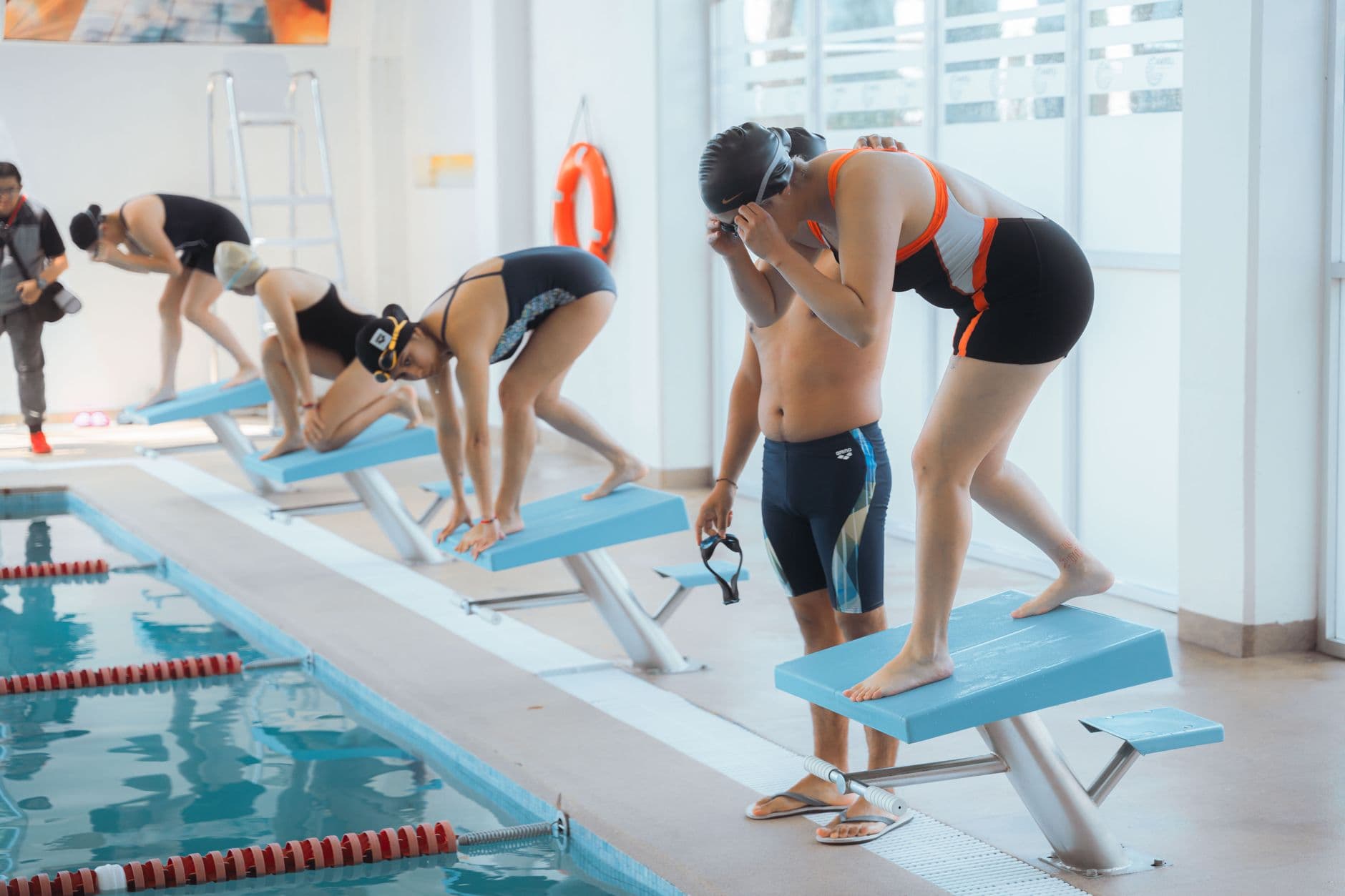
How to dive into a pool, and the depth that decides if you should
The HSE quotes 1.5 metres as the minimum for a poolside dive and USA Swimming draws its line at 4 feet. Here are the published depths, and the four-step progression.
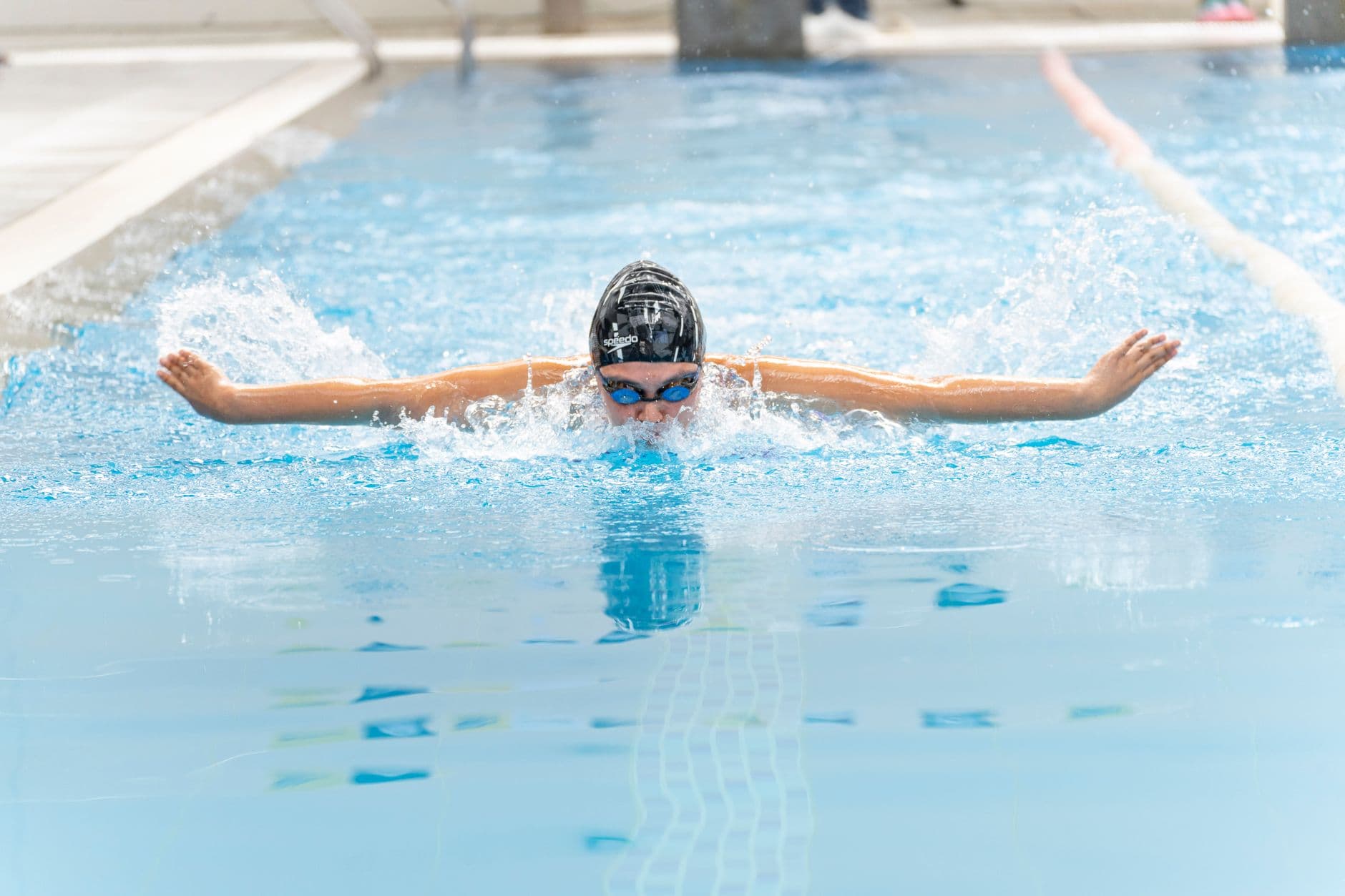
Underwater dolphin kick: how far off the wall is it worth going?
World-class 100 freestyle finalists use about nine metres of the fifteen allowed. Here is what decides your own number, how to measure it, and where the rules stop you.
How to float on your back when your legs keep sinking
Floating is decided by lung volume and balance, not effort. The arithmetic behind a full breath, why your legs rotate down, and how to build a one-minute float.
SwimFast is an independent publication. We are not a swim school, a coaching service or a governing body, and nothing here is medical advice. Training paces and test protocols are cited from the published research or federation documents linked on each page. Never swim alone, never attempt breath-hold work without supervision, and check with a doctor before starting a new training programme.