Swim goggles that fog: what works and what is folklore
Fog is condensation on a lens colder than the air inside it. Which remedies have a mechanism, which are harmless folklore, and which one ends the goggles.
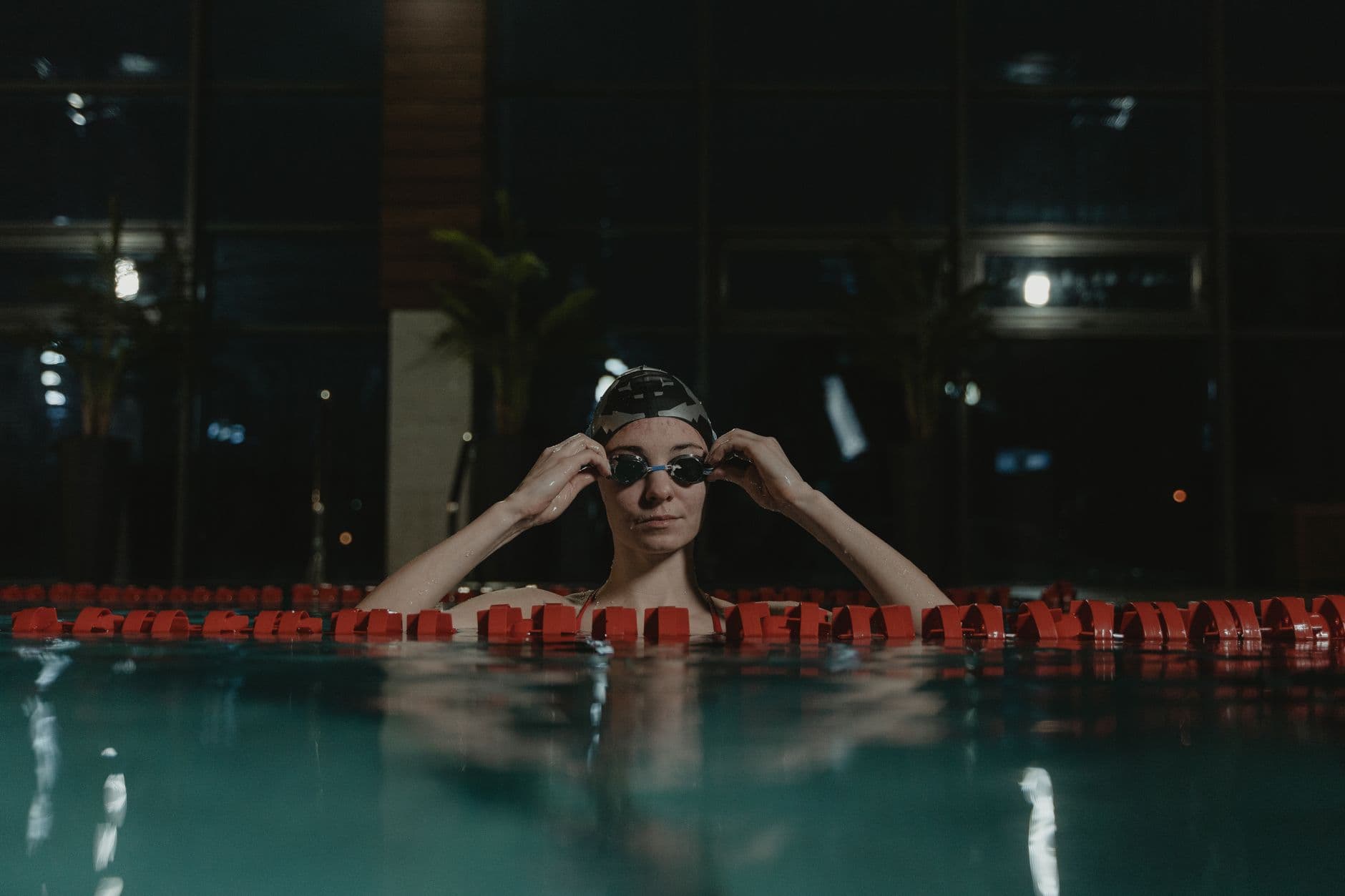
Fogged goggles are the most common complaint at any lap pool, and the advice you get for them is remarkably consistent: spit in them, rub in a drop of baby shampoo, smear on some toothpaste. Every one of those instructions has the same two problems. Nobody explains why it should work, and all three require you to rub the inside of the lens — which is the one action that reliably ruins the goggles for good.
This page starts from the physics, because once you know what fog is, the remedies sort themselves into three piles on their own: the ones that work by a mechanism you can name, the ones that are harmless folklore, and the ones that cost you the goggles. It also covers the part nobody writes down: what to do once the anti-fog is gone, which is where most swimmers actually are.
Two things this page will not tell you to do. Never swim alone, and never treat fogged goggles as a reason to push through a length with your eyes shut — in open water, blind swimming is a safety problem rather than an annoyance. If your eyes are painful, red or blurred after you take the goggles off, and it does not settle within an hour or so, that is a matter for an optometrist or a doctor, not for a swimming article.
What fog actually is
Fog is condensation. Air holds water vapour up to a temperature limit called the dew point; below it, vapour condenses faster than it evaporates. When a surface is cold enough to push the air touching it below that limit, water accumulates on the surface as a mass of separate droplets. Those droplets scatter the light passing through, and scattered light is what you see as a white blur.
That description comes from the materials-science literature on antifogging rather than from swimming, and it matters because it tells you exactly which levers exist. Fog is driven by three things: the temperature difference across the lens, the humidity of the air trapped inside, and airflow. A swim goggle removes airflow by design, seals humid air against warm skin, and then dips the outside of the lens into cold water. It is close to a purpose-built fogging device.
Why swimming pools are worse than anywhere else
World Aquatics sets competition pool water at 25–28 °C (77–82 °F), and most training pools sit in or near that band. Your face is warmer than that, and it gets warmer as the set goes on. U.S. Masters Swimming describes the cause the same way: perspiration and water vapour collect inside the lens, the warm face meets cool water, and exertion makes it worse.
Two details follow that people usually miss. First, fogging that arrives halfway through a hard set and not during warm-up is not the goggles failing — it is you producing more heat and more sweat. Second, an indoor pool is the harder case, because the air you sealed inside the goggle on deck was already close to saturated.
What the factory coating does, and why it is a countdown
New goggles are not fog-proof plastic. They carry a thin hydrophilic film on the inner surface, and its whole job is to change the shape of the water. Coatings with a water contact angle below roughly 40° make droplets spread into a continuous transparent sheet instead of beading up, and a sheet scatters far less light than a field of droplets. The water is still there. You just see through it.
The catch is durability. Most commercial anti-fog formulations are surfactant-based, and the review literature is blunt about the consequence: surfactant layers dissolve in the water that condenses on them, so they lose effectiveness and have to be reapplied. Abrasion resistance depends on how heavily the top of the layer is cross-linked, which is exactly the property a swimmer cannot inspect at the shop. U.S. Masters Swimming puts the practical version plainly — the coating will wear off and the goggles will start to fog, and how long that takes depends on use and care.
So the honest framing is not "how do I stop my goggles fogging" but "how do I make the coating last, and what do I do afterwards". Those are two different questions with two different answers.
The single action that ruins goggles
Do not wipe the inside of the lens. That is the whole rule, and it is the reason the popular remedies backfire. Speedo's own care guidance says to keep any touching of the lenses to a minimum and never to use soap or detergent, which it calls a natural enemy of the anti-fog coating. U.S. Masters Swimming makes the same point about the folk remedies: spit, toothpaste and baby shampoo are stop-gaps, and all of them involve touching the interior, which damages what is left of the coating.
The coating is softest when wet, which is when you are most tempted to clear it with a thumb. A swimmer who wipes fogged goggles at every wall has usually destroyed the film within a couple of sessions and then concludes the goggles were badly made.
The remedies, graded honestly
| Remedy | Plausible mechanism? | What it costs you | Verdict |
|---|---|---|---|
| Commercial anti-fog spray or wipes | Yes — it reapplies the surfactant layer that has washed off | Money, and it needs redoing | The one remedy with a named mechanism and coaching support |
| Dunking goggles in pool water before wearing | Partly — it narrows the temperature gap and pre-wets the lens | Nothing | Free, harmless, worth doing; evidence is coaching consensus |
| Baby shampoo, rubbed in and rinsed | Yes in principle — it is a surfactant, like the coating | Requires touching the lens; the manufacturer says detergent degrades the coating | Works on goggles whose coating is already gone; not on new ones |
| Spit | Weak — no published support | Requires touching the lens | Folklore. Harmless to you, not to the coating |
| Toothpaste | No — it is an abrasive by design | Physically abrades the film and can scratch the lens | Do not. This is the one that ends the goggles |
| Replacing the goggles | Yes — a fresh coating | Money, on a cycle of weeks to months | The eventual answer for everyone |
The toothpaste line deserves a sentence of its own, because it is presented everywhere as a clever fix. Toothpaste contains abrasive agents on purpose: the American Dental Association lists silica gels, calcium carbonate, aluminium oxides and phosphate salts among them, and their function is to physically remove material from a surface. Products carrying the ADA Seal may be abrasive up to 250 RDA. Rubbing a designed abrasive across a coated polycarbonate lens does exactly what you would expect it to do.
Baby shampoo is the interesting case, because the mechanism is real — it is a surfactant, so it does what the factory coating does. It is just an argument for using it on goggles that have already lost their coating, not on new ones. On the eye-safety question, the American Academy of Ophthalmology takes a calm line about soap in the eye: these products are heavily tested and contain no toxic ingredients, and flushing with water is the response. It stings, which is why gentler formulations exist for children, but a rinsed shampoo residue is an irritation issue rather than a hazard.
What to do, in order
- Stop wiping the inside. Everything else is secondary to this.
- Rinse in cool fresh water after every swim and let the goggles air-dry flat, out of a wet kit bag. Speedo also advises keeping them out of sunlight, since UV degrades the lens over time.
- Store them in the pouch they came in rather than loose in the bag with a kickboard and a pair of fins.
- Dunk them in the pool and splash your face before the first length, so the lens starts at water temperature rather than at skin temperature.
- When the coating dies, switch to an anti-fog product and accept that it is now a per-session ritual, because the surfactant washes off.
- Replace them when the anti-fog no longer takes. There is no evidence-based interval here; treat any specific number you read as a guess.
Fogging and leaking are different failures
Before you spend money on anti-fog, work out which problem you have. Fog is a haze on the inside that clears when you rinse the lens with pool water and comes back within a length or two. A leak is a puddle sitting in the bottom of the eye cup, and it means the seal or the strap tension is wrong, or the gasket has hardened with age. Anti-fog spray does nothing whatsoever for a leak, and tightening the strap to fix a leak makes fogging worse, because a harder-pressed gasket traps more heat around the eye.
The other confounder is your own breathing pattern. If you only ever breathe to one side and finish sets gasping, you are working harder than the pace suggests, and the heat and sweat that follow show up as fog. That is worth fixing for its own sake — see breathing in freestyle and bilateral breathing.
What fogging actually costs you in a set
This is where fog stops being cosmetic. Clearing goggles at the wall takes a few seconds, and on an interval set those seconds come out of your rest, not out of thin air. A swimmer holding 1:28 per 100 on a 1:40 send-off has 12 seconds of rest. One stop to rinse the lens and reseat the strap eats most of it; two stops and the set has quietly turned into something else.
If you are guessing at your send-off rather than setting it, the interval calculator works out the send-off your current pace supports and shows how much rest is actually in it — which is the number a goggle stop is spending. To convert those seconds into pace per 100 in either yards or metres, use the pace calculator. And if you cannot read the pace clock through the haze, you are not training to a pace at all; you are just swimming.
Open water changes the stakes
In a pool, a fogged lens is irritating. In open water it is a navigation failure: you cannot see the buoy, you cannot see the boat, and you cannot see the swimmer you are about to swim into. Everything above still applies, plus two things specific to outdoors. Tinted or mirrored lenses cut glare but make a fogged lens darker still, and a cold lake widens the temperature difference across the lens, so goggles that behave indoors will fog outdoors.
Treat clear goggles as part of the navigation plan rather than as comfort. Our guides to sighting in open water and to your first open water swim both assume you can see, and the second one covers swimming with company, which is not optional.
Beginners, children, and why this is not a trivial topic
For a confident swimmer, fog is a nuisance. For a nervous adult beginner it is often the thing that ends the session: you cannot see the bottom, you cannot see the wall coming, and the anxiety that took weeks to settle comes straight back. If that is you, deal with the goggles before you deal with the swimming — it is the cheapest problem on the list. Our guides to learning to swim as an adult and to fear of the water both assume you are not fighting your equipment at the same time.
Children's goggles have a specific failure mode worth naming: a child who cannot see clearly will pull the goggles off mid-length and rub their eyes with wet hands, which is both a fogging problem and a hygiene one. The realistic answer for a child is a spare pair in the bag, not a repair at the wall.
The stinging that has nothing to do with fog
Plenty of swimmers describe fogged goggles and burning eyes as one problem. They are not. Red, itchy eyes at an indoor pool are usually chloramines — compounds formed when chlorine reacts with the sweat, urine, skin cells, deodorant and make-up that swimmers bring in with them. The Centers for Disease Control and Prevention makes the point that the smell people call "chlorine" is largely chloramines, and that showering before you get in is one of the few things a swimmer can do about it. What the water does to skin and hair, and why the green tint in blonde hair is copper rather than chlorine, is covered in the guide to chlorine, skin and hair.
Which means well-sealed goggles help with the symptom, but the cause is pool chemistry and swimmer hygiene. If your eyes are still painful, red or blurred well after a swim, or if it recurs at every session, get an eye examination rather than a stronger pair of goggles.
How often you actually need new goggles
Nobody publishes a tested figure, and any article that gives you a confident number is inventing it. What is documented is the direction: the coating is consumable, it wears off with use, and care extends it rather than saving it. The practical test is simple — when a fresh application of anti-fog no longer clears them for a whole session, the film is gone and the goggles are now a leak-check away from retirement.
Budget for goggles the way you budget for running shoes: a recurring cost, not a one-off purchase. A swimmer training three or four times a week will get through several pairs a year, and keeping a retired pair in the bag as a spare is worth more than the money it saves. If you want to know where the rest of your session is going, start with the warm-up guide, and browse the rest of the technique guides when the equipment side is settled.
Where these claims come from. The condensation and coating physics are from a 2023 open-access review in the Journal of Materials Research and Technology and a 2024 antifog coatings paper; the contact-angle threshold and the fact that surfactant layers dissolve and need reapplying are both from that literature. The care instructions are Speedo's own. The grading of spit, toothpaste and baby shampoo as stop-gaps that damage the coating is U.S. Masters Swimming's. Pool temperature is World Aquatics Facilities Rule FR 2.1.13.1. Toothpaste abrasivity is the American Dental Association's. The eye-safety line on soap is the American Academy of Ophthalmology's, and the chloramine explanation is the CDC's. Where the answer is coaching consensus rather than evidence — dunking goggles before a swim, replacement intervals — this page says so.
Frequently asked questions
How do you stop swim goggles from fogging up?
Stop wiping the inside of the lens, which is what destroys the anti-fog film. Rinse the goggles in cool fresh water after every swim, air-dry them flat and store them in their pouch. Dunk them in the pool before the first length so the lens starts at water temperature. Once the coating is gone, use an anti-fog spray or wipe each session.
Why do my goggles fog up when I swim?
Because the lens is colder than the humid air sealed against your face. Competition pools are held at 25-28 C, your skin is warmer, and exertion adds sweat and water vapour inside the eye cup. When the trapped air is pushed below its dew point, it condenses into droplets that scatter light and read as a white haze.
Does spit actually stop goggles fogging?
There is no published support for it, and U.S. Masters Swimming classes it as a stop-gap alongside toothpaste and baby shampoo. The bigger objection is that using it means rubbing the inside of the lens, which damages whatever anti-fog coating remains. It is harmless to you and unhelpful to the goggles.
Does toothpaste work on swim goggles?
No, and it is the remedy most likely to end the goggles. Toothpaste contains abrasives on purpose - the American Dental Association lists silicas, calcium carbonate and aluminium oxides among them, permitted up to 250 RDA. Rubbing an abrasive across a coated lens removes the anti-fog film and can scratch the plastic underneath.
Does baby shampoo work on swimming goggles?
The mechanism is real: baby shampoo is a surfactant, so it makes water spread into a sheet the way the factory coating does. But applying it means touching the lens, and Speedo says detergent degrades that coating. Use it on goggles whose anti-fog has already gone, not on new ones, and rinse thoroughly.
How long does the anti-fog coating on goggles last?
There is no tested figure, and any specific number you read is a guess. What is documented is that the coating is consumable: surfactant layers dissolve in the water that condenses on them, and U.S. Masters Swimming says the film wears off with use regardless of care. Rinsing and dry storage extend it rather than save it.
Sources
- Fundamentals of antifogging strategies, coating techniques and properties of inorganic materials (Wahab et al., 2023) — Journal of Materials Research and Technology
- Synthesis and Characterization of Durable Antifog Silane-Pyrrolidone Thin Coatings onto Polymeric Films (2024) — PubMed Central
- 4 Easy Ways To Care For Your Swimming Goggles — Speedo
- How Can I Keep My Goggles from Fogging? — U.S. Masters Swimming
- Facilities Rules FR 2.1.13.1 - water temperature 25-28 C — World Aquatics
- Toothpastes - abrasive agents and the 250 RDA limit — American Dental Association
- Should I Worry About Getting Soap in My Eyes? — American Academy of Ophthalmology
- Preventing Eye Irritation from Pool Chemicals — Centers for Disease Control and Prevention
Read next
Chlorine, hair and skin: what it does and what actually helps
What chlorinated pool water really does to hair and skin, why the green tint is copper rather than chlorine, and which protective steps have evidence behind them.
Swimmer's ear: what prevents it and what is folklore
What causes swimmer's ear, which prevention advice has clinical backing, which has never been tested, and the point at which it stops being an article's problem.
Afraid of the water as an adult: the seven documented steps
The seven-step progression U.S. Masters Swimming gives its own volunteers for teaching fearful adults — starting on dry land, reaching a float only at step seven.
SwimFast is an independent publication. We are not a swim school, a coaching service or a governing body, and nothing here is medical advice. Training paces and test protocols are cited from the published research or federation documents linked on each page. Never swim alone, never attempt breath-hold work without supervision, and check with a doctor before starting a new training programme.