Freestyle drills that are worth the length, and the ones that are not
A freestyle drill only earns its place if it fixes a fault you have. Organised by symptom, with how long to spend on each and which popular drills have little behind them.
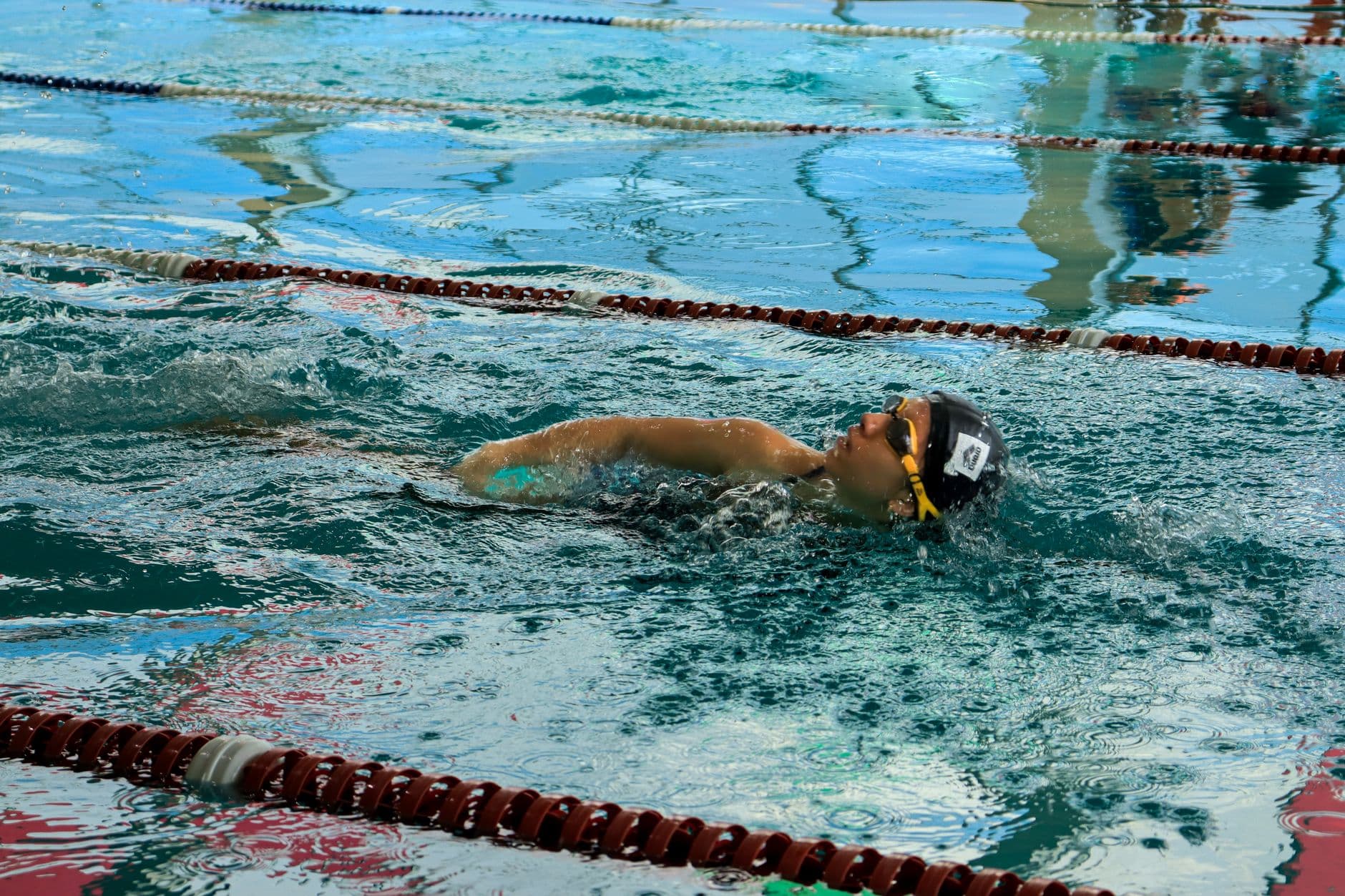
Most swimmers meet drills the same way. A coach calls a name across the pool, you copy whoever is in the next lane, and you spend four lengths doing something peculiar with one arm without being told what it was meant to repair. Then the drill goes in the warm-up forever, because that is where drills go to live.
This page is built the other way round. It starts from the thing that is actually wrong — legs dragging, a hand that slips, a breath that stops the stroke dead — names the drill that addresses it, and says how long to spend before you swim whole again. It also says which popular drills have little behind them, the part most drill lists leave out.
One rule covers everything below: a drill you cannot name a fault for is just a slow length. If you cannot finish the sentence "I am doing this because my ___ does ___", swim instead. You will get more out of it.
What the research supports, and what it does not
Start with the honest position, because it changes how much weight any of this should carry. When researchers interviewed twenty elite swimming coaches about how they develop skill, the clearest theme was that the most common practice approach was task decomposition, or part-task technique — drills, in other words — within a traditional model aimed at reinforcing "perfect" technique and mechanical consistency.
The same study records a tension nobody resolves out loud: those coaches also believed practice should be specific and representative of the performance being trained for. Drills, by definition, are not that — they are the stroke with something removed.
What does not exist, as far as a search of the peer-reviewed literature goes, is a controlled trial showing that a given freestyle drill transfers to a faster full stroke. So the right label for most of what follows is coaching consensus with a plausible mechanism, not proven effect: keep drills short, keep them attached to a fault, and judge them by what happens to your swimming rather than by how the drill itself felt.
If your legs sink: the balance drills
Sinking legs is the most common complaint in adult freestyle and almost never a kicking problem. It is a seesaw problem: your lungs hold the front of you up, there is more mass behind them than in front, and the back end drops. We go through the mechanism in why your legs sink when you swim; the drills that attack it are the quietest ones in the pool.
U.S. Masters Swimming's freestyle guide builds its body-position progression from floats rather than from swimming at all. Ball float: big breath, knees hugged to the chest, wait until you settle, feel your lungs hold you up without effort. Passive jellyfish: big breath, then let go of all tension and let the legs hang. Active jellyfish: the same, but press head and chest down to lift the hips — the exact movement you will use while swimming. Letter floats: hold an X, Y, T or I at the surface and minimise how far your legs drop.
That last instruction is the one worth copying. The guide is explicit that the goal is improving your body position rather than your final body position, because bone length, body composition and lung size all change where a swimmer settles. Chasing someone else's float wastes a month.
The bridge back to swimming is elevator swim: start a length with your head as high as it will go and lower it gradually until it is well under the surface, watching what your hips do. It is the fastest way to learn that your head is the lever and your legs are the consequence.
If your hand slips: the catch and pull drills
A slipping catch feels like swimming in a stairwell — you pull, something gives way, the stroke goes nowhere. The fault is usually a dropped elbow: the hand pushes water down rather than straight back.
The USMS order here is deliberate and worth following in sequence. Wall pull comes first and is not even swimming: standing in the water, put hands and forearms on the pool deck at roughly the width of your pull and press down with the whole arm until your body lifts. It teaches you what your forearm is for in about thirty seconds. Power pulls with a buoy move that feeling into the water with both arms at once. Human paddle does it one arm at a time, recovering underwater. Only then does an over-water recovery come back, as power catch-up.
Two cheap modifiers sharpen all of them. Closed fist removes your hand, so the forearm has to compensate, and the water feels startlingly thick when you open up again. Upside-down paddles — gripping the top of the paddle so it rests against the inside of your forearm — lock the wrist so hand and forearm move as one unit. Both are in the pull section of the same guide. What paddles do not do is further down this page.
If breathing wrecks the stroke: the head drills
The telltale sign is a stroke that is fine for two strokes and collapses on the third: both goggles leave the water, the head lifts instead of rotating, the hips drop at the same moment. The underlying skill is covered in how to breathe while swimming freestyle. These drills are blunt instruments for specific symptoms.
Bobs take the swimming out of it: push off the bottom so your head just clears the surface, grab a breath, sink back down, blow out on the way. If your breathing rhythm falls apart the moment you have to think about your arms, start here — it is why most adult programmes open with it. See learning to swim as an adult for the full order.
Stroke and roll is for a head that pulls sideways instead of rotating: swim normally, and every time you would breathe, roll all the way onto your back, take two or three patient breaths, and roll back. You cannot do it with your head leading, so the fault corrects itself. Paddle cap freestyle — a paddle balanced flat on the crown of your head — gives feedback within one stroke: if the breath is too long, too high or off to one side, the paddle leaves. Cheat breathing practises the opposite extreme, a breathing motion so small it gets no air, and most swimmers are surprised how little head movement a real breath needs.
A snorkel genuinely helps here, because it shows you what the stroke feels like with no breathing disruption, and that becomes the target you aim at without it. But the USMS breathing guide is candid that many swimmers use a snorkel to avoid improving their breathing. Alternate lengths with it and without, or it becomes a way of never practising the thing you are bad at. If both sides are the project, bilateral breathing has its own trade-offs.
If you snake down the lane: the timing drills
Wandering across the lane and bumping the rope on alternate lengths are the same family of fault: a hand entering across the midline, a recovery swinging wide, arms that are not properly opposed.
Two drills from one progression handle it. Underwater recovery is freestyle with both arms recovering under the water. Because the recovering hand has to push through water, the only way to get it forward is to rotate, and the only way to rotate is to pull the other arm back at the same moment — so your arms become mechanically linked in opposition, which is the timing you are missing. Over-under freestyle then recovers one arm over the surface and keeps the other underneath, bridging back to normal swimming without losing that timing.
Single-arm freestyle belongs here for a different reason: it exposes an asymmetric pull you cannot feel while swimming normally, usually the one that only shows up on your non-breathing side.
If your kick does nothing: put the board down
A kick that goes nowhere is nearly always a knee kick. The giveaway is knees breaking the surface, a big splash and no forward movement — and the standard response, more kickboard sets, tends to reinforce it, because a board holds you in a position you never swim in. We go through what a kick set is really training in is kickboard work worth it.
The USMS kick progression is built around escaping that position. Vertical kicking makes it almost impossible to kick from the knee, so you feel what kicking from the hip is. Kicking on your side carries that into forward movement and doubles as body-position work. Snorkel kicking puts your head where it actually goes when you swim, forcing a tighter, lower-drag kick. Wall kick is the no-cost way to feel pressure on your feet, which is harder to learn than pressure on your hands because of the shape of a foot.
Fins belong here, with a caveat. They let you feel a hip-driven kick you cannot yet produce, which is a real teaching effect, but they also load ankles and calves heavily and are a common trigger for cramp mid-set. Short repeats first. Paddles and fins covers when each one costs you.
How many lengths of drill before you swim whole again
This is the question nobody answers, and the answer in the USMS sets is strikingly short. Their body-position set pairs ten seconds of a float drill with a 25 of freestyle, four times through, then a 50 free. Ten seconds of drill, then immediately the real thing. The pull set does the same with a ten-second wall pull before every repetition, and the note underneath explains why: each series of drills is followed by a freestyle repetition, to practise the skill during the goal movement.
The second instruction is more counter-intuitive. Rather than repeating one drill, the guide tells you to constantly rotate between drills, and says outright that this may compromise performance in the short term while increasing learning in the long term. If you have ever got good at a drill and no better at swimming, that is the mechanism.
A workable default, consensus rather than tested protocol: no more than 10 to 15 minutes of drill in a session, never more than 25 m of a drill without a whole-stroke swim behind it, and 10 to 15 seconds of rest between repetitions, so you are practising a skill rather than practising being tired. Our interval calculator gives a send-off that leaves that rest in place, and the swim warm-up is usually the right slot for the block.
Catch-up: the drill that teaches you what you already do
Catch-up — one hand waiting at full extension for the other to arrive — is probably the most prescribed freestyle drill in the world, and the coordination research puts it in an awkward light.
Researchers measured arm coordination in fourteen elite male swimmers over eight trials, from their usual 3,000 m pace up to maximal speed, using an index based on the lag between the propulsive phase of each arm. At distance pace the swimmers were already in a catch-up pattern: an index of −8.43%, a real gap between the two arm propulsions. The pattern changed abruptly at a critical velocity of 1.8 m/s — 100 m race pace — to relative opposition at +0.89%, where one arm's propulsion ends as the other's begins.
A larger follow-up with 42 swimmers — elite men, mid-level men and elite women — found the same transition at around 200 m pace, with a stroke rate near 40 strokes per minute, in all three groups. Its conclusion is the line worth keeping: catch-up coordination, often considered a mistake, was an adaptation to a constraint, not an error.
So practising catch-up at easy pace rehearses a pattern you already use at easy pace. It is still a reasonable way to lengthen a short, rushed stroke, but it is not teaching you how your arms should work when you race. For that, where the seconds actually are in a 100 freestyle is a better place to look, and stroke rate or stroke length covers which of the two to change first.
Paddles are not a timing drill, and the study says so
The other widely repeated claim is that paddles retime your stroke — that they teach your arms to work in better sequence. That one has been tested directly, and it did not hold.
Ten female front-crawl swimmers swam maximal 25 m efforts with no paddles, small paddles and large paddles, filmed underwater from four cameras. Paddles significantly raised velocity and stroke length and lowered stroke rate, exactly as a bigger surface should. But the index of coordination was unchanged across all three conditions, p = 0.895, and the authors concluded that paddled swimming should not be used as a tool to alter the time sequence of propulsive force between the two arms.
A second study, on eleven male sprinters swimming with paddles, a parachute, or both, reported no significant differences in the index of coordination or in relative stroke phase duration, raising greater propulsive continuity only as a possible chronic effect. Read together: paddles are a load, and a good one. They are not a timing drill, and buying bigger ones will not make them into one — but they will load a shoulder that is already irritated, which is the first thing to rule out if swimmer's shoulder sounds familiar.
The drills that involve not breathing, and the line not to cross
Several standard freestyle drills restrict your breathing on purpose — breathing every fifth or seventh stroke, blowing your air out at the wall before pushing off, swimming lengths underwater. The milder versions have a defensible reason: a clean breath taken while you want air is a more durable skill than one taken comfortably.
There is also a hard limit, and it is not a matter of toughness. The American Red Cross, USA Swimming and the YMCA of the USA issued a joint statement on hypoxic blackout because competent, fit swimmers have drowned doing prolonged breath-holding and repeated underwater swims. Water depth is not a protective factor. Never hyperventilate before going under, never hold your breath to see how far you can get, never make underwater distance a competition, and tell the lifeguard before any set that keeps your head down.
In practice: a stroke or two longer than your normal pattern, inside a stroke you are swimming, never a static hold, never alone. The same caution applies to the long underwater push-offs people practise after reading about flip turns. If a drill makes you light-headed, that is the end of the drill, not a sign it is working.
Adults, children, and the 25 against the 50
A child in a squad has years of pool time ahead and can afford a season on technique that pays off later. An adult swimming three times a week has a smaller budget and a different problem: an adult stroke is usually limited by one specific thing rather than by general rawness. Pick that fault, attack it for a few weeks with two or three drills, and leave the rest of the menu alone. Be honest about ankle flexibility too — a stiff adult ankle will not produce a child's kick however many vertical kick sets you do.
The pool matters as well. In a 25 m or 25 y pool a drill length is short enough that you are never far from the wall, which is why nearly every drill set is written in 25s. In a 50 m pool the same drill runs twice as long and quality falls off halfway, so drill the first 25 and swim the rest. If you move between the two and your times stop making sense, short course versus long course explains why one swimmer posts two different numbers.
How to know whether a drill worked
A drill that feels good and changes nothing is the standard outcome, so it is worth having a number. Three cheap ones, in order of how quickly they respond:
- Stroke count per length. Fewer strokes for the same length means more water moved per pull. Count a 50 before the drill block and the same 50 after, at the same effort. USMS builds this in deliberately — swim a 100 counting strokes, then a second 100 taking fewer.
- SWOLF. Strokes plus seconds for a length, which catches the swimmer who cuts stroke count by gliding to a halt. What SWOLF means and when to ignore it covers the trap; the SWOLF calculator does the arithmetic.
- Critical swim speed. Slowest to move and the one that cannot be faked: if six weeks of body-position work made you more efficient, your sustainable pace improves. Our CSS calculator works it out from a 400 and a 200, and what CSS pace is explains the number.
Test on the same day of the week, at the same point in the session, in the same pool. A block that improves your stroke count by one and your SWOLF by two is a real result, and that is the size to expect — anything dramatic is usually a measurement artefact. If you would rather watch pace, the pace calculator converts between the splits you can see on the clock.
A thirty-minute session built from this page
For an adult swimmer with one obvious fault and half an hour in a 25 m pool. Swap the drill pair for whichever symptom is yours.
- 300 easy freestyle, counting strokes on the last 50 and writing the number down.
- 4 × (10 seconds of drill A + 25 freestyle), 15 seconds rest. Ten seconds is not a typo — that is the dose in the USMS sets.
- 50 freestyle at the same easy effort, thinking about the thing the drill was for.
- 4 × (25 drill B + 25 freestyle), 15 seconds rest, alternating rather than repeating.
- 6 × 50 freestyle on a comfortable send-off, counting strokes on every one. This is where the session is actually judged.
- 200 easy, and compare the stroke count against step one.
That is roughly 1,200 m with about eight minutes of actual drill in it. If the proportion looks low, that is the point: a drill changes what you do during the swimming, and the swimming is where the change has to show up. The rest of the stroke has a guide each in our technique section, and the sets are in workouts.
Frequently asked questions
What are the best freestyle drills for beginners?
Start with the floats rather than with arm drills. Ball float, passive jellyfish and active jellyfish teach you that your lungs hold you up and that pressing your chest down lifts your hips, which is the fault behind most beginner freestyle. Add bobs for breathing rhythm. Arm drills are worth very little until your body line is stable.
Do swimming drills actually make you faster?
Probably, but the evidence is weaker than the confidence around it. Interviews with twenty elite coaches found part-task drilling is the dominant practice method in swimming, yet no controlled trial shows a particular freestyle drill transfers to a faster full stroke. Treat drills as coaching consensus with a plausible mechanism, keep them short, and judge them by your stroke count.
How many drills should I do in one workout?
Two, alternated, rather than six repeated. U.S. Masters Swimming's freestyle sets pair about ten seconds of drill with an immediate 25 of freestyle and tell you to rotate between drills rather than repeat one. A reasonable ceiling is 10 to 15 minutes of drill in a session, always with whole-stroke swimming directly after each piece.
Are freestyle drills with fins worth it?
For kicking faults, yes, within limits. Fins let you feel a hip-driven kick you cannot yet produce, which is a real teaching effect. They also load your ankles and calves heavily and are a common cramp trigger, so introduce them on short repeats. They will not fix a dropped elbow or a lifted head, which are not kicking problems.
Is the catch-up drill good for freestyle?
It is useful for lengthening a short, rushed stroke, and misleading beyond that. Video analysis of elite swimmers found they already use a catch-up coordination pattern at distance pace and only switch to continuous propulsion above about 1.8 metres per second, which is 100 m race pace. The drill rehearses what you already do when swimming easy.
Sources
- Brackley V, Barris S, Tor E, Farrow D (2020). Coaches' perspective towards skill acquisition in swimming: What practice approaches are typically applied in training? — Journal of Sports Sciences 38(22):2532-2542
- Seifert L, Chollet D, Bardy BG (2004). Effect of swimming velocity on arm coordination in the front crawl: a dynamic analysis — Journal of Sports Sciences 22(7):651-660
- Seifert L, Chollet D, Rouard A (2007). Swimming constraints and arm coordination — Human Movement Science 26(1):68-86
- Gourgoulis V, Aggeloussis N, Kasimatis P, Vezos N, Antoniou P, Mavromatis G (2009). The influence of hand paddles on the arm coordination in female front crawl swimmers — Journal of Strength and Conditioning Research 23(3):735-740
- Telles T, Barbosa AC, Campos MH, Junior OA (2011). Effect of hand paddles and parachute on the index of coordination of competitive crawl-strokers — Journal of Sports Sciences 29(4):431-438
- Sheaff A. Freestyle Guide — Body Position and Rotation (drills and sets) — U.S. Masters Swimming
- Sheaff A. Freestyle Guide — Pull (drills and sets) — U.S. Masters Swimming
- Sheaff A. Freestyle Guide — Kick (drills and sets) — U.S. Masters Swimming
- Sheaff A. Freestyle Guide — Breathing (drills and sets) — U.S. Masters Swimming
- Joint Statement on Hypoxic Blackout and Inaccurate Use of the Terminology Shallow Water Blackout (November 2022) — American Red Cross, USA Swimming and YMCA of the USA
Read next
Why do swimmers wear two caps? To pin the goggle straps down
The second cap covers the goggle straps and stops the first one wrinkling. Two caps is explicitly legal, and two is the written maximum — here is the rule.
What age should a child start swim lessons?
The official answer is the first birthday for lessons, but babies can be in water long before that. Here is where each health body draws the line, and why it matters.
Why swimmers get disqualified: the calls officials make
A disqualification is a procedure, not an opinion. Who is allowed to call one, what goes on the slip, what the code means, and how it can be challenged.
SwimFast is an independent publication. We are not a swim school, a coaching service or a governing body, and nothing here is medical advice. Training paces and test protocols are cited from the published research or federation documents linked on each page. Never swim alone, never attempt breath-hold work without supervision, and check with a doctor before starting a new training programme.