Lane etiquette: how to share a crowded lane without being the problem
Which way to circle in the US, Britain and Australia, picking a lane by seconds per length, the 5-second gap, passing and resting — and where the published rules disagree.
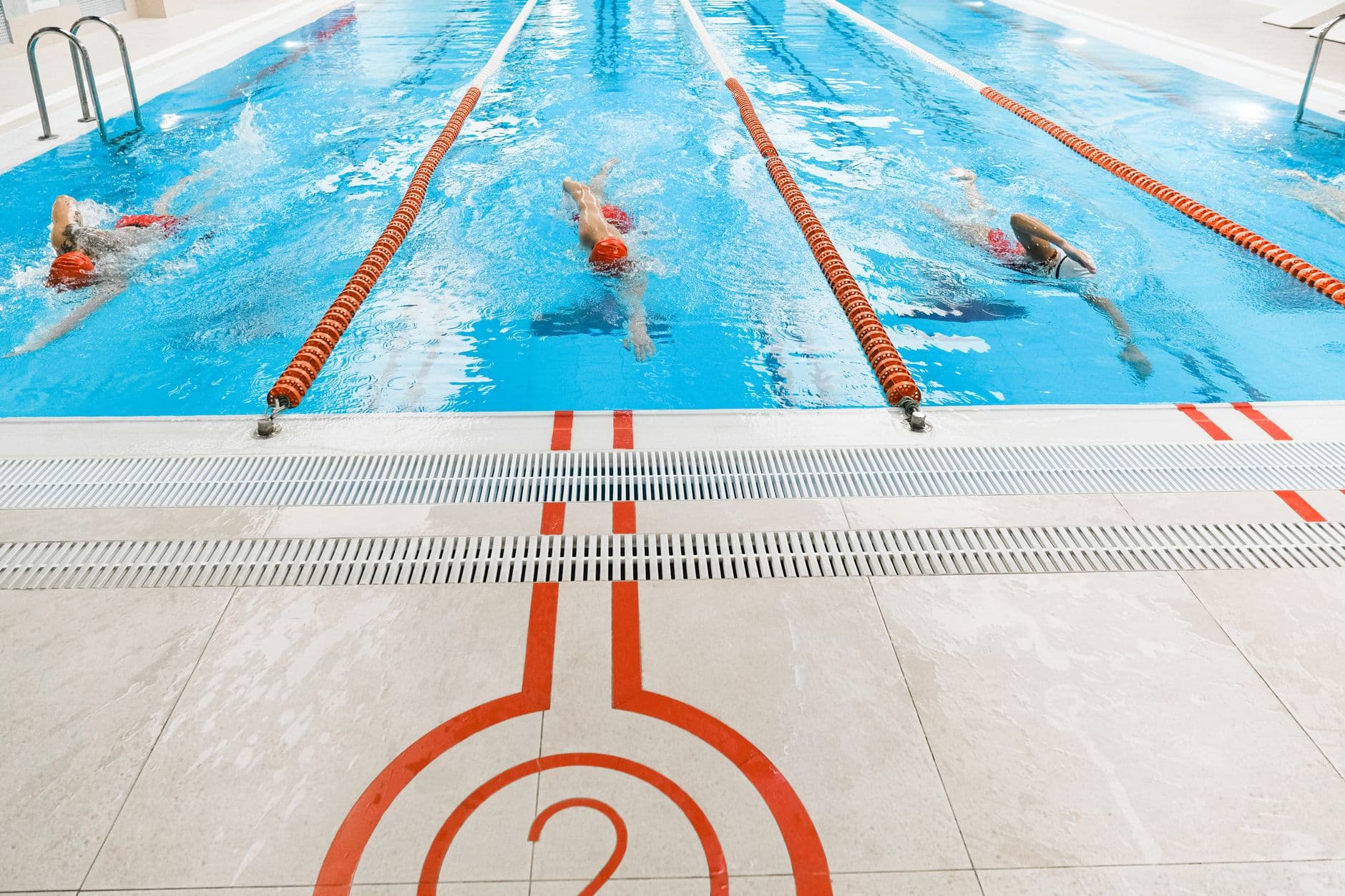
Swim England, the body that governs swimming in England, put it plainly in the guidance it gives to pool operators: customers can find unspoken pool etiquette confusing and intimidating. That matches what most adults feel the first time they stand at the end of a busy lane, trying to work out which way everyone is going and whether it is their turn to push off.
It is not your fault: the written rules disagree with each other. This page sets out what pools, clubs and national bodies in the United States, Britain and Australia actually say, which parts are universal, which depend on where you swim, and the numbers that settle the rest: how fast your lane is, and how quickly a slightly faster swimmer ends up on your feet.
The rules are not written down in one place, and the versions disagree
There is no international lane etiquette standard. Competition rules cover races, not a lunchtime lane swim. What exists is a patchwork of pool signs, club documents and articles. Put six side by side and the core agrees while the details split.
| Source | Direction | How to ask to pass | Gap when leaving the wall |
|---|---|---|---|
| U.S. Masters Swimming article | Two swimmers split the lane; with three, circle counter-clockwise | Not specified; slower swimmers yield at the wall | Not set as a rule |
| Swim England guidance for pools | Follow the lane boards | Faster swimmers pass at the end of each length | Not specified |
| Sydney Olympic Park Aquatic Centre | Keep to the left of the lane | Pass on the right, above the lane line on the floor | Not specified |
| West London Penguin (club sheet, 2025) | Adjacent lanes alternate clockwise and counter-clockwise | Toe touching is not acceptable | 5 seconds |
| Out To Swim (UK club) | Refers to both directions | Tap the swimmer in front on the foot | At least 5 seconds, 10 if the lane is quiet |
| Oswestry Otters (UK club) | Anti-clockwise in lanes 2, 4, 6; clockwise in 1, 3, 5 | Touch the foot, overtake at the turn | 5, 7 or 10 seconds, set by the coach |
| North Sydney Masters (Australian club) | Lanes 1 and 3 clockwise, lane 2 counter-clockwise | Tap the feet, then wait to be let past | Not a figure; never push off in front of someone turning |
| Swimming World commentary (2023) | Stay on one side of the lane | Let someone go if they touch your feet | 5 seconds |
Read that table the other way round and it becomes useful. Everyone agrees on four things: swim in a lane that matches your speed, leave a gap when you push off, let faster swimmers go first, and do not block the wall. The things that vary are the direction and the passing signal, and for those the only reliable guide is the pool you are standing in.
Choose a lane by a number, not by who looks friendly
The fairest way to pick a lane is by speed, and speed in a pool has a natural unit: the time it takes you to swim one length. Swim England's template for pool signs literally leaves blanks for it: fast lane under a set number of seconds per length, medium lane within a range, slow lane over it. Each pool fills in its own numbers, so there is no universal figure for a fast lane.
To find your own, swim four easy lengths continuously and read the pool clock. Divide by four. That figure includes your push-offs and turns, which is exactly what matters for sharing a lane. If you know your pace per 100, the pace calculator will give it to you, and the conversion to lengths is plain arithmetic:
| Pace per 100 | Seconds per length, 25 m or 25 yd pool | Seconds per length, 50 m pool | A 5-second gap is roughly |
|---|---|---|---|
| 1:20 | 20 | 40 | 6.3 m of water |
| 1:40 | 25 | 50 | 5.0 m |
| 2:00 | 30 | 60 | 4.2 m |
| 2:30 | 37.5 | 75 | 3.3 m |
| 3:00 | 45 | 90 | 2.8 m |
The last column, in metres, shows why a five-second gap feels roomy for a quick swimmer and tight for a slow one: at 3:00 per 100 it is less than half the distance it is at 1:20. A 25-yard length is shorter than 25 metres, so yard pools give lower seconds per length; the course converter explains the difference.
One more rule comes before any of this. The U.S. Masters Swimming article is blunt: if there is an empty lane, take it rather than joining someone in a lane you happen to prefer.
Why a small speed difference turns into a traffic jam
Most lane friction is not rudeness. It is arithmetic. If two people leave the wall five seconds apart and the second is slightly faster, the gap closes by the difference in their times on every length. Divide the gap by that difference and you have the number of lengths before the faster swimmer is on the slower one's feet.
Two seconds per length sounds like nothing. At around 2:00 per 100 it closes a five-second gap inside three lengths. That is why every club document in the table puts swimmers in order, fastest first, and why Out To Swim asks swimmers to drop back when people bunch up behind them.
The order is not a ranking. It changes with the set, and the Oswestry Otters rules say so directly: you will not be the fastest at everything.
Getting into a lane without cutting anyone off
Getting in is where collisions start: the person entering watches the water, the swimmer arriving watches the floor. The West London Penguin sheet puts the responsibility on the person entering: get in feet first, make sure the people already swimming know you are there and which way the lane is going, and if someone is approaching the wall, wait until they have turned and gone.
In a quiet lane, the U.S. Masters Swimming article adds a courtesy that saves a lot of awkwardness: if one person is already swimming, wait until they stop at your end and ask if you can share. With two people, it suggests letting the first swimmer choose a side. When a third joins, the lane switches to circle swimming.
That is the difference between splitting and circle swimming. Splitting means each person swims up and back on their own half; it works for two. Circle swimming means everyone goes up one side and back down the other, like traffic, and it is the only arrangement that works for three or more.
Circle swimming, and which way round
This is the rule that varies most. The U.S. Masters Swimming article says counter-clockwise. Seen from above, counter-clockwise means you swim on the right-hand side of the lane, the same side you drive on in the United States. Clockwise means keeping to the left.
Some British clubs use both, alternating by lane. The Oswestry Otters rules state anti-clockwise in lanes 2, 4 and 6 and clockwise in 1, 3 and 5. West London Penguin also alternates adjacent lanes. The geometry explains why: when neighbouring lanes circle in opposite directions, the swimmers on either side of each lane rope travel the same way, so nobody is swimming head-on past a stranger a metre away.
Swim England's guidance for public sessions avoids the question entirely: follow the direction on the lane boards and swim in single file. That is the right habit anywhere. With no board, watch one full length to see which side people go out on, and never assume the next lane goes the same way.
Backstroke in a circle lane. You cannot see oncoming swimmers, so drifting across the middle is how backstroke collisions happen. Swim it in a quieter lane until you can hold a line; the guide to swimming backstroke straight covers the references to use.
Australia keeps left, and puts the numbers on the board
If you learned to share a lane in the United States, Australia runs the other way round, and its public-pool guidance is consistent in a way the British and American versions are not. The Sydney Olympic Park Aquatic Centre, the 2000 Olympic venue, tells lap swimmers to keep to the left of the lane and, to pass, to swim past on the right, above the lane line painted on the floor. Inner West Council, which runs public pools in inner Sydney, publishes those two rules in almost the same words.
Keeping left means the lane circles clockwise seen from above: the mirror image of the counter-clockwise pattern the U.S. Masters Swimming article describes. In both countries it matches the side you drive on, which is the easiest way to remember which one you are in.
Club squads are the exception, and they are the exception everywhere. North Sydney Masters alternates exactly as the British clubs do — lanes 1 and 3 clockwise, lane 2 counter-clockwise — for the same reason: it stops swimmers in neighbouring lanes banging hands and wrists across the rope. Its first instruction is the one that travels anywhere: check your lane's direction before you get in, and ask if you are not sure.
The second Australian habit is worth copying wherever you swim: both centres post lane speeds as seconds per lap, the thing Swim England asks pools to do and many never fill in.
| Centre | Slow lane | Medium | Fast lane |
|---|---|---|---|
| Sydney Olympic Park Aquatic Centre | Laps slower than 60 s | Slower than 45 s, plus a medium fast lane slower than 40 s | Laps faster than 40 s |
| Inner West Council centres | Laps slower than 90 s | Laps faster than 90 s | Laps faster than 50 s |
Do not carry those figures to another pool. Neither centre states the lap length its numbers refer to, and they plainly do not mean the same thing: a fast lap is under 40 seconds at one and under 50 at the other. Sydney Olympic Park says outright that the times are a guide and that pool attendants sort the lanes by the abilities in the water on the day. What travels is the method: time four lengths, divide by four, and compare the answer with the board in front of you. The pace calculator turns that into a pace per 100 if you want to track it.
One line on those boards rarely appears anywhere else: both centres warn that some lanes do not permit breaststroke for safety reasons, and Sydney Olympic Park runs a breaststroke lane with no time limit at all. Neither says why; the obvious explanation is the width of the kick, the one stroke that uses the whole lane (the breaststroke kick guide covers how wide is too wide). Narrow it when someone is coming past.
Leaving the wall: the five-second gap and when not to push off
Five seconds is the figure that turns up most often. West London Penguin asks for a five-second gap from the time the swimmer ahead started, and Swimming World calls it the first rule every swimmer learns. Out To Swim asks for at least five, ten if the lane is not crowded, and three only when a coach specifically asks. Oswestry Otters uses five, seven or ten seconds, decided by the coach. So five seconds is the default and the lane can agree on more.
Use the pace clock: if the person in front leaves on the top, you leave on the five. For sets with send-offs, the interval calculator works out the times and the gap sits on top.
The second half of this rule matters more for safety: do not push off just as someone arrives at the wall to turn. Swimming World says to let the swimmer already moving go first, and Out To Swim says to wait for a large enough space. Push off in front of someone mid-turn and you either get swum over or force them to stop.
Passing and being passed
The foot-tap convention. Out To Swim, Oswestry Otters and Swimming World all describe it: the swimmer behind touches the foot of the swimmer in front, and at the next wall the swimmer in front lets them go. Out To Swim adds a useful caveat: make the tap deliberate, because the swimmer in front may reasonably assume you just got too close.
The no-touch convention. West London Penguin states that passing is permitted but toe touching is not, noting that it is standard practice in triathlon clubs but not acceptable in masters swim clubs. Its argument is that if faster swimmers go first and the five-second gap is kept, the situation should be extremely rare.
Swim England's public guidance avoids the signal question and fixes the place instead: faster swimmers pass at the end of each length, which reduces the chance of collisions from overtaking mid-length. In a public lane swim with strangers, that is the safest default. Do not tap anyone's feet unless you know the lane uses that convention.
If you are the one being caught, the job is simple. Finish the length, move into the corner on the side you arrived on — Out To Swim is specific about staying on the side you came from, because the turn happens on the other side — and wait until the faster swimmer has pushed off. If you are passing mid-length, which some clubs allow when the lane is clear, West London Penguin's rule is to finish the pass well before the wall, never alongside someone at the turn.
Resting at the wall without blocking it
Everyone agrees on the first rule: stop only at the wall, never halfway down the lane. Standing up mid-length puts you directly in the path of a swimmer who is looking at the floor. West London Penguin asks swimmers to swim complete lengths for exactly that reason.
The second rule is where to stand. The same sheet says to leave the middle third of the wall clear so others can turn, and the U.S. Masters Swimming article says to stay as close to the lane line as possible rather than in the middle. The habit that follows: arrive, slide into the corner on your side, back against the lane rope, and watch for the next swimmer before you leave.
If you do flip turns, the same article has a tip that helps everyone: angle towards the other side of the lane as you approach the wall and push off on the return side, instead of turning dead centre and cutting across. The flip turn guide covers the turn itself.
Kickboards, pull buoys, fins and changing stroke
Equipment changes your speed, which means it changes where you belong in the lane. Swim England suggests that anyone using a kickboard or pull buoy consider moving to a slower lane temporarily, and West London Penguin asks anyone kicking to stay aware of others who need to pass.
Kick sets are the classic lane jam, because most adults kick far slower than they swim (the guide to kickboard work covers what the set is for). Fins go the other way and can make a slow swimmer suddenly quick; see the guide to paddles and fins. Either way, re-order the lane when the equipment comes out.
Changing stroke needs the same thought. Out To Swim warns butterfly swimmers to watch for people coming the other way. The U.S. Masters Swimming article notes that a faster swimmer stuck behind you may switch to breaststroke to slow down; if you see that, let them past at the next wall. And do not borrow someone's fins, board or pull buoy without asking.
When someone is in the wrong lane, or you are
Eventually someone much slower will be in the fast lane, or someone much faster will be tailgating you in the slow one. No guidance recommends sorting it out in the water. Swim England's template points at the lifeguards, who are there for everyone's safety. Oswestry Otters puts it more directly for club sessions: do not argue, fight or be rude, and if there is a problem, talk to the coach.
If you raise it yourself, do it at the wall, once, and make it about the lane rather than the person: I think we are quite different speeds — do you want to go first, or shall I move over? If that does not work, tell the lifeguard.
The harder question is whether the person in the wrong lane is you. Three signs: you are passed on most lengths, people bunch up behind you at the wall, or you catch the person in front within a couple of lengths every time you leave. Swim England says the same thing plainly: if you are being passed again and again, consider a slower lane. Check your seconds per length against the board and move.
Club sessions work differently from public lane swims
In a public session the pool sets the rules. In a club or masters session the coach does, and that overrides everything above: Out To Swim's first rule is to do what the coach says, including moving lanes when asked. The whole lane swims the same set, leaving in order at the gap the coach decides, and newcomers are told to start at the back of the lane and work their way up.
If you are coming from a triathlon club, remember the foot tap that is normal there can be unwelcome in a masters lane. For what happens in a masters club beyond the lane itself, the guide to masters swimming explains how the age groups and sessions work, and the triathlon swim training guide covers the gap between pool habits and race habits.
The etiquette that is really a health rule
Some pool manners exist to protect other people's health. The CDC's advice on preventing swimming-related illness lists them:
- Stay out if you have diarrhoea. The CDC notes that diarrhoea is the most common cause of swimming-related outbreaks, and that one germ, Cryptosporidium, can survive for more than 7 days in properly chlorinated water. If you have been diagnosed with it, the CDC says not to swim until two weeks after the diarrhoea has completely stopped.
- Shower before you get in. The CDC says a one-minute shower removes most of the dirt, sweat and oils that use up the chemicals needed to kill germs. The guide to chlorine, skin and hair explains why that same shower also reduces the smell people blame on chlorine.
- Cover or wait out open wounds. The CDC advises staying out with an open cut or wound, especially after surgery or a piercing, or covering it completely with a waterproof dressing.
- Do not swallow the water, and do not pee in it. Clean-looking water can still carry germs.
Collisions, and the safety rule underneath all of this
Most collisions are a hand clipping a shoulder. Occasionally two heads meet. The NHS says to call emergency services if someone who has hit their head has been knocked out and not woken up, has a seizure, has problems with vision, hearing, speaking or balance, or has new numbness or weakness, and to contact NHS 111 straight away if they are vomiting or feel dizzy. In a pool, the first step is always to get out and tell the lifeguard.
Lane etiquette assumes a supervised pool. The American Red Cross advises swimming in designated areas supervised by lifeguards and always with a buddy, and the CDC gives the same buddy-system advice, especially for people with seizure disorders or other conditions that raise drowning risk. Never do breath-holding lengths or underwater swims, and never swim alone to avoid the crowds. If you feel unwell, dizzy or short of breath, stop at the wall, get out and tell a lifeguard; chest pain or breathlessness that does not settle needs medical help.
Your first busy session, step by step
If lane swimming makes you nervous, the answer is a plan, not more rules. This works in any pool:
- Before you go, pick a quieter session from the timetable.
- On arrival, shower, then read the lane boards: direction and speed.
- Watch one length of your chosen lane: which side do people go out on, and are they roughly your speed?
- Pick the slower lane if in doubt. Moving up later is easy; being passed on every length is not.
- Get in feet first in the corner, wait for the arriving swimmer to turn, then leave five seconds behind the next person.
- Swim whole lengths only, rest in your corner, and let anyone who catches you go first at the wall.
- Afterwards, time four lengths once, so next session you know your seconds per length.
For what to actually swim once you are in the lane, the beginner swim workouts are built from short pieces with rest, which suits a shared lane well, and how many laps make a good workout puts the distance in context. If the water itself is the problem rather than the crowd, start with overcoming a fear of water as an adult or learning to swim as an adult. More sessions and plans are in the workouts section.
Where this comes from
No official international code exists, so this page compares published guidance from Swim England, U.S. Masters Swimming, two Australian pool operators (Sydney Olympic Park Aquatic Centre and Inner West Council), four clubs in Britain and Australia, and Swimming World, giving both versions where they disagree. Health and safety points come from the CDC, the NHS and the American Red Cross. Seconds-per-length and catch-up figures are arithmetic, not measurements.
Frequently asked questions
What is the etiquette for lap swimming?
Choose a lane that matches your speed, follow the direction on the lane board, and leave about five seconds behind the swimmer in front. Let faster swimmers go first at the wall, never push off in front of someone arriving, and only stop at the wall, in a corner, leaving the middle clear for people turning.
Which way do you swim in a pool lane?
Whichever way the lane board says. There is no universal direction. Australian pools tell lap swimmers to keep left, which circles clockwise; a U.S. Masters Swimming article describes counter-clockwise, which means keeping right. British and Australian clubs often alternate lane by lane. With no sign, watch one full length before getting in and copy the swimmers already there.
Do you tap someone's feet to pass in swimming?
Only if the lane uses that convention. Many clubs do: a deliberate tap means let me past at the next wall. Others ban it, and one London club's rules call it standard in triathlon clubs but not acceptable in masters swim clubs. In a public lane with strangers, wait and pass at the end of the length instead.
What is the difference between circle swimming and splitting a lane?
Splitting a lane means two swimmers each keep to one half and swim up and back on their own side, so nobody needs to pass. Circle swimming means everyone goes up one side and back down the other in single file. Splitting works for two people; once a third person joins, the lane should switch to circle swimming.
Which lane is the fast lane in swimming?
There is no fixed position. Pools label lanes on boards at the end, and Swim England's guidance asks pools to set each lane's speed in seconds per length, so the numbers differ from pool to pool. Time four lengths, divide by four, and compare that figure with the board rather than guessing from how fast people look.
Sources
- Pool etiquette – thought starters (guidance for pool operators) — Swim England
- Grant S. (2005). Lane Etiquette — U.S. Masters Swimming
- Lap swimming: lap lane etiquette and lane designations — Sydney Olympic Park Authority (NSW Government)
- Swim: lap lane etiquette — Inner West Council, NSW
- Squad etiquette — North Sydney Masters Swimming Club
- Lane Swimming Etiquette (January 2025) — West London Penguin
- Lane Etiquette — Out To Swim
- 10 Rules of Lane Etiquette — Oswestry Otters
- Vasilakis E. (2023). Do The Right Thing: The Unspoken Rules of Lane Etiquette — Swimming World
- Preventing Swimming-related Illnesses — Centers for Disease Control and Prevention
- Preventing Drowning — Centers for Disease Control and Prevention
- Swimming Safety — American Red Cross
- Head injury and concussion — NHS
Read next
Swim paddles and fins: what they train and when they cost you
Paddles lower your training load at steady speed and a four-week block changed nothing; fins raise energy cost. What the measurements say and how to use both.
Wetsuit for open water swimming: when you actually need one
The water temperatures at which World Aquatics, U.S. Masters Swimming and USA Triathlon require or ban wetsuits, what a suit does to your body, and how to measure it.
Your first open water swim: what nobody warns you about
The cold-water gasp, the fact that you cannot judge your own condition once acclimatised, and why a strong pool swimmer can be in trouble in twenty minutes.
SwimFast is an independent publication. We are not a swim school, a coaching service or a governing body, and nothing here is medical advice. Training paces and test protocols are cited from the published research or federation documents linked on each page. Never swim alone, never attempt breath-hold work without supervision, and check with a doctor before starting a new training programme.