How many laps is a good swim workout? 40 to 80 lengths
Roughly 40 to 80 lengths of a 25-yard pool, or 20 to 45 minutes of actual swimming. The arithmetic by pace, the 30-lap case, and why a lap is not a length.
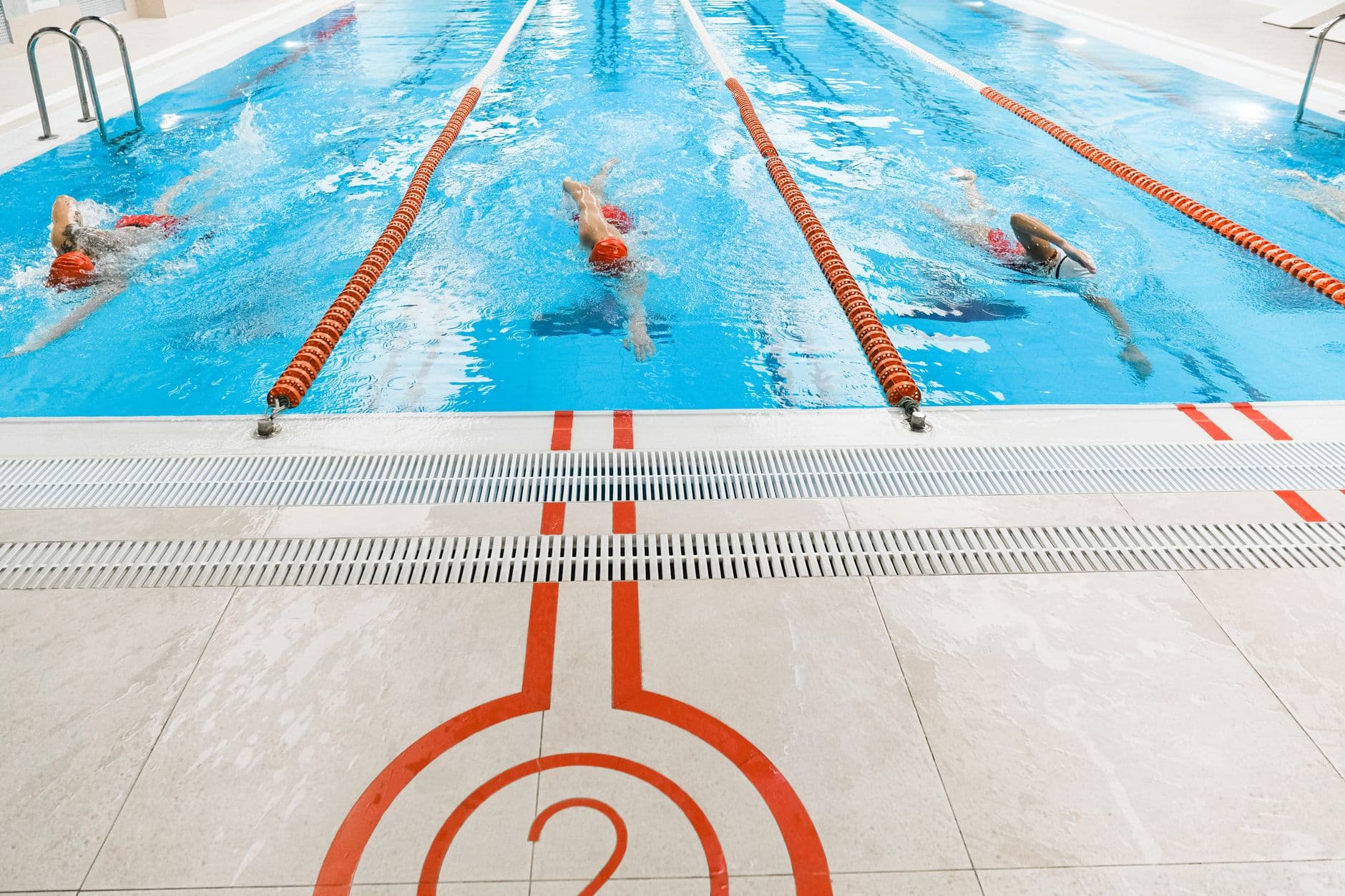
A good swim workout is 20 to 45 minutes of actual swimming, which in a 25-yard pool comes to roughly 40 to 80 lengths. That is the number, and the rest of this guide is why it arrives as a range instead of a single figure: the question has two loose parts in it. Nobody agrees on what a lap is, and the lap is not the thing that decides whether a swim did you any good.
Neither of those is a dodge. Below, the count is broken down by level and by pool size, with the arithmetic shown so you can redo it at your own pace instead of borrowing someone else's. But it comes in the right order: settle the unit, settle what the workout is supposed to achieve, and the lap count falls out of those two on its own.
How many laps is a good swim workout?
For most fitness swimmers, a good workout is 20 to 45 minutes of actual swimming, which in a 25-yard pool works out to roughly 40 to 80 lengths. At a comfortable 2:30 per 100 yards that is 48 lengths in half an hour; at 2:00 it is 60. The range is wide because the minutes are the target and the lengths are just what they add up to.
Two things move that number more than fitness does: how fast you swim, and whether the person telling you is counting lengths or round trips. Both are worth sorting out before you count anything.
First, settle what a lap actually means
A length is one trip from one wall to the other. A lap is the word people fight about. U.S. Masters Swimming's own glossary of pool vocabulary puts it plainly: coaches prefer to speak in yardage or in lengths, and although an outdated meaning of lap is two lengths, today it can be treated as a synonym of length — one lap equals one length, not two.
Then, in a different USMS article, the 1650-yard freestyle is described as 66 lengths, or 33 laps, of a 25-yard pool. Both statements come from the same governing body, and they use the word in opposite ways. That is not sloppiness so much as an accurate reflection of how the word is used in practice: the old racing sense survives alongside the newer fitness sense, and neither is going away.
The practical rule: count lengths and say so. If you write 40 in your logbook, write 40 × 25 yd next to it. That removes a factor-of-two error from every training note you will ever make, and lengths are the unit every written workout you are ever handed already uses.
Everything below counts lengths. Where a source says laps, the conversion is stated.
Why the lap is the wrong unit anyway
A length is a distance, and distance on its own tells you almost nothing about what a swim did to you. Two people can finish 40 lengths in the same lane on the same morning and have done two unrelated workouts: one spent twenty minutes swimming and twenty minutes at the wall, the other swam for thirty minutes without stopping. Same lap count, different training, and only one of them shows up in the ledger your body keeps.
You can see which unit the sport itself trusts by looking at what U.S. Masters Swimming picks for its national fitness events. The two flagship ones are the 30-Minute Swim and the One Hour Swim: participants swim continuously for a fixed time and record the distance they covered. The clock is the constant and the distance is the result, not the other way round. Nobody organises a national 40-lap challenge, because 40 lengths is not a comparable amount of anything.
That is the same reasoning behind everything in our workouts section, and it is why our guide on building swim endurance deliberately leaves total distance off the short list of things worth tracking.
What the public health guidelines actually count
The federal recommendation is written in minutes, not lengths. The second edition of the Physical Activity Guidelines for Americans asks adults for 150 to 300 minutes of moderate-intensity aerobic activity a week, plus muscle-strengthening activity on at least two days. The CDC states the vigorous-intensity equivalent as 75 minutes a week, or an equivalent mix of the two.
One change in that second edition matters directly to lap swimmers. The first edition only counted activity in bouts of ten minutes or more. The second edition removed that requirement, so shorter stretches count toward the weekly total. A set of 10 × 50 with rest written into it is not disqualified for being broken up.
| Weekly target for adults | What that looks like in a pool |
|---|---|
| 150–300 min moderate intensity | Roughly four to eight easy 40-minute swims |
| or 75 min vigorous intensity | Roughly three 25-minute swims done as real sets |
| plus strength work on 2 days | Swimming does not cover this; it is separate |
None of those three rows is a distance. If your goal is health rather than racing, your weekly lap total is a by-product of hitting the minutes, not a target in its own right.
The lap speed that turns moderate into vigorous
Intensity has a published definition. The CDC sets the boundary in metabolic equivalents: activity that burns 3.0 to 5.9 METs is moderate intensity, and 6.0 METs or more is vigorous. The 2024 Adult Compendium of Physical Activities then assigns MET values to specific swimming speeds, and that is where a lap count finally becomes useful, because it tells you how fast the laps have to be.
Read the gap between the second and third rows, because it is the whole point of the table. Slow recreational lengths sit at 5.8 METs, the very top of moderate. Push the same freestyle to about 50 yards a minute — a 25-yard length every 30 seconds, or 2:00 per 100 yards — and the compendium puts it at 8.0 METs, comfortably vigorous. That is a difference of ten seconds per length, and it roughly halves how many minutes you need to hit the weekly guideline.
Where this stops being exact: compendium MET values are population estimates fitted to average adults. They are not a measurement of you, they take no account of your technique, and a swimmer whose legs hang low burns considerably more than the table says at the same speed. Use them to judge roughly how hard your lengths need to be, not to compute your calorie burn to the decimal.
Lap counts by level, with the arithmetic shown
Here is the direct answer, built the only honest way there is: take a realistic pace, multiply by the minutes, and see what falls out. Every row below is thirty minutes of continuous swimming in a 25-yard pool.
| Pace per 100 yd | Seconds per length | Lengths in 30 min | Distance | Who tends to swim here |
|---|---|---|---|---|
| 4:00 | 60 | 30 | 750 yd | New adult swimmer, still stopping at the wall |
| 3:00 | 45 | 40 | 1,000 yd | Comfortable, still working on the stroke |
| 2:30 | 37.5 | 48 | 1,200 yd | Regular lap swimmer |
| 2:00 | 30 | 60 | 1,500 yd | Fit lap swimmer, crossing into vigorous |
| 1:45 | 26.3 | 69 | 1,714 yd | Trained masters swimmer |
| 1:30 | 22.5 | 80 | 2,000 yd | Competitive masters swimmer |
Three things are worth noticing. The whole table spans a factor of under three, so nobody in it is doing something unrecognisable to anybody else in it. The lengths change while the training time does not. And you cannot place yourself on it by feel: you place yourself by timing a single 100 and doing the division, which is exactly what the pace calculator is for.
In a 25-metre pool the same times give slightly fewer lengths, because each one is about 9% longer than a yard length. For a 50-metre pool, halve the count and read the section on pool size below before you conclude that you have got worse.
Is swimming 30 laps a good workout?
It depends entirely on whether you mean 30 lengths or 30 round trips, and how fast you swim them. Thirty lengths of a 25-yard pool is 750 yards, about fifteen minutes at 2:00 per 100, which is a short session. Thirty laps in the older sense is 60 lengths, 1,500 yards and around thirty minutes, which is a complete workout.
That factor of two is precisely why the unit matters. A plan telling you to swim 30 laps is either handing you a warm-up or a full session, and the words alone will not tell you which. Time it once and the ambiguity disappears for good.
How many lengths should I swim in 30 minutes?
Between 30 and 80 lengths of a 25-yard pool depending on pace, with 48 to 60 covering most regular lap swimmers. Rather than chase a number, swim for thirty minutes and record what you covered. That is exactly the format of the U.S. Masters Swimming 30-Minute Swim, and repeating it every few months is a cleaner progress test than any single workout you could invent.
It works as a test because it holds the clock fixed and lets the distance move. If you covered 1,100 yards in March and 1,300 in June, something improved and you know how much. If instead you counted 44 lengths on both days but took longer over the second lot, your logbook records consistency where there was a decline.
How many laps in a pool is a mile?
A true mile is 5,280 feet: 1,760 yards, or 1,609.34 metres. U.S. Masters Swimming works that out as 70.4 lengths of a 25-yard pool, 64.4 lengths of a 25-metre pool and 32.2 lengths of a 50-metre pool. Lifeguards usually round to 70 or 72 so that you finish at the end where your water bottle is.
| Pool | Lengths in a true mile | Usual rounding |
|---|---|---|
| 25 yd (short course yards) | 70.4 | 70 or 72 |
| 25 m (short course metres) | 64.4 | 64 or 66 |
| 50 m (long course metres) | 32.2 | 32 or 34 |
| 20 yd (a common hotel pool) | 88 | 88 |
Both of the events swimmers call "the mile" are short of one. The 1650-yard freestyle — 66 lengths, or 33 laps, of a 25-yard pool — falls 110 yards short, which USMS puts at 6.25%. The 1500-metre freestyle, the so-called metric mile, is 109.34 metres short, or 6.8%. Neither gap is a rounding error, and both are worth knowing before you compare your swimming mile to a running one. If you want to compare a 1650 against a 1500, the course conversion tool does it with the turn count shown.
How many laps should a beginner swim?
Not a number of laps at all, at first. Beginners get more from counting efforts than lengths: swim for thirty seconds, rest for thirty, and repeat ten or twelve times. Some of those efforts will be most of a length and some will be half of one, and that variation is information rather than failure.
The reason is that at beginner speeds the ceiling is almost never aerobic. Most of the power goes into pushing water backwards instead of moving you forwards, so adding lengths mostly rehearses an inefficient stroke for longer. Our guides on beginner swim workouts and learning to swim as an adult both build from short efforts for that reason. Once you can hold a length without a recovery stop at the wall, lap counting starts to mean something and the table above becomes useful. The first target worth naming after that is a continuous 500, and swimming 500 yards without stopping turns it into a progression rather than a repeated failed attempt.
The same 40 lengths, three different workouts
Take 1,000 yards and structure it three ways. All three are 40 lengths. They are not interchangeable.
- Straight swim. Forty lengths continuous. Steady aerobic work, easy to pace badly, and it drifts slower as you tire without your noticing.
- Threshold set. A 400 warm-up, then 8 × 50 at threshold pace with fifteen seconds rest, then 200 easy. Same distance, far more time spent at the intensity that actually moves your fitness.
- Technique session. A 200 warm-up, then 8 × 25 drill with 25 swim between each, then 200 easy. The lowest average intensity of the three, and the one most likely to change your speed over a season.
Choosing between them takes one number: the pace you can sustain, known as critical swim speed. Two timed trials give it to you, using the protocol Wakayoshi and colleagues validated in 1992 rather than a chart of other people's averages. Work it out with the CSS calculator and it hands back paces for recovery, endurance and threshold work, so that "8 × 50 at threshold" becomes a number on the pace clock instead of a feeling. Feed that pace into the interval calculator and it becomes the send-off you leave on, which is the form the set is actually swum in. If you would rather start from a finished session than assemble one, the workout generator does both steps at once and hands back the whole workout.
A 50-metre pool makes your lap count look worse
Move the same swimmer from a 25-metre pool to a 50-metre pool and the lengths halve, but the times get slower too, and that second part is what surprises people. Every wall is a push-off, and a push-off is faster than swimming. A 100 in a 25-metre pool has three turns; the same 100 long course has one.
That is why times from different courses cannot be compared without conversion, and why the standard factor tables exist at all. Our time converter shows both the pure distance ratio and the empirical factors used to seed swimmers at meets, along with the turn count that explains why the two disagree. If the walls are your weak point, our guide on how to do a flip turn covers the turn itself, and our piece on how long it takes to swim 1 km shows how much the choice of course moves a distance time.
Measure the quality of the laps, not only the count
Two numbers make a lap count mean something, and both take seconds to collect.
- Strokes per length. Count them on the first and the last length of a set. If the count climbs as the set goes on, your stroke is coming apart and the remaining lengths are training that.
- SWOLF. Add the seconds taken for a length to the strokes taken in it. It catches the trade-off between rushing and gliding, and it makes a better weekly marker than distance because it falls when you get more efficient, not merely when you swim more.
The SWOLF calculator does the arithmetic and shows the reference bands, and what SWOLF measures covers what the score can and cannot be compared against. Track it next to your 30-minute distance and you have a two-number picture of your swimming: one for how far, one for how well. A lap total on its own gives you neither.
Two rules that override any lap target
No breath-holding sets, and no swimming alone. In a joint statement issued in November 2022, the American Red Cross, USA Swimming and the YMCA of the USA describe hyperventilation before underwater swimming and extended breath-holding in the water as dangerous and potentially deadly, because they can produce a state of hypoxia that leads to unconsciousness. No lap target justifies a hypoxic set, and nothing on this page needs one. Swim where a lifeguard is on duty, or with somebody watching you.
The second rule is about pain. Shoulder pain that arrives with swimming and stays afterwards, pain that wakes you at night, numbness in an arm, or breathlessness out of proportion to the effort are all reasons to stop and see a doctor or a physiotherapist. A lap count cannot be weighed against symptoms, and adding lengths to a shoulder that already hurts is the usual route from a fixable irritation to months out of the water. How often you swim is part of that arithmetic too: should you swim every day looks at what daily volume asks of a shoulder. The CDC also advises talking to a doctor before starting vigorous-intensity activity if you have a chronic condition or have been inactive for a long time — and swimming a 25-yard length every thirty seconds is vigorous by the official definition.
So what should you actually do on Tuesday?
Swim for a fixed time, count the lengths as a result rather than a target, and make some of them fast enough to count as vigorous. If you want one prescription: three sessions a week of thirty to forty minutes, one of them a real set rather than a continuous swim. That lands inside the federal guideline, it is enough volume to improve on, and it is small enough that you will still be doing it in February.
One practical caveat for a public pool: a set with rest intervals is harder to hold in a shared lane than a continuous swim, because you end up leaving on a gap rather than on the clock. Circle swimming, where to stop and how to pass are in lane etiquette, and getting that right is the difference between a session you can pace and thirty minutes of waiting at the wall.
Then do the arithmetic once. Time a single 100, put it into the pace calculator, and you will know what your thirty minutes is worth in lengths. That number is yours, it updates as you improve, and it is more useful than any lap count anyone else can hand you.
Frequently asked questions
How many laps is a good swim workout?
Twenty to forty-five minutes of swimming, which is roughly 40 to 80 lengths of a 25-yard pool depending on your pace. At 2:30 per 100 yards that is 48 lengths in half an hour; at 2:00 it is 60. Set the minutes and let the lengths be the result.
Is swimming 30 laps a good workout?
It depends on which meaning of lap you are using. Thirty lengths of a 25-yard pool is 750 yards, about fifteen minutes at 2:00 per 100 and closer to a warm-up. Thirty out-and-back laps is 60 lengths, 1,500 yards and roughly thirty minutes, which is a full session.
How many lengths should I swim in 30 minutes?
Between 30 and 80 lengths of a 25-yard pool, with 48 to 60 covering most regular lap swimmers. Rather than aim at a number, swim for thirty minutes and record the distance. That is the format of the U.S. Masters Swimming 30-Minute Swim and it makes a repeatable progress test.
Is 40 lengths in 30 minutes good?
Yes, for a regular fitness swimmer it is a solid half hour. In a 25-yard pool, 40 lengths is 1,000 yards, an average of 3:00 per 100 yards including any rest at the wall. That is about 33 yards a minute, which the 2024 Adult Compendium places at the top of moderate intensity. Swimming the same 40 lengths without long stops pushes it towards vigorous.
How many laps is 500 meters?
Twenty lengths in a 25-metre pool and ten in a 50-metre pool. In a 25-yard pool it is just under 22 lengths, because 500 metres is about 547 yards, so most swimmers round up to 22. If your pool calls a there-and-back a lap, halve those figures: 10 laps in a 25-metre pool, 5 in a 50-metre one.
How many laps in a pool is a mile?
U.S. Masters Swimming puts a true mile at 70.4 lengths of a 25-yard pool, 64.4 lengths of a 25-metre pool and 32.2 lengths of a 50-metre pool. The 1650-yard event swimmers call the mile is 66 lengths and falls 6.25% short of an actual mile.
How many laps should I swim as a beginner?
Count efforts rather than laps at first: swim thirty seconds, rest thirty, and repeat ten to twelve times. At beginner speeds the limit is stroke efficiency rather than fitness, so adding lengths mainly rehearses an inefficient stroke. Start counting lengths once you can hold one without stopping at the wall.
How fast do laps have to be to count as vigorous exercise?
About a 25-yard length every 30 seconds, or 2:00 per 100 yards. The CDC puts the vigorous threshold at 6.0 METs, and the 2024 Adult Compendium rates freestyle at that speed as 8.0 METs against 5.8 for slow recreational lengths. Ten seconds per length separates the two.
Sources
- Masters Swimming 101: Lingo You're Likely to Hear at Practice — U.S. Masters Swimming
- How Many Laps Make a Mile in Swimming? — U.S. Masters Swimming
- Fitness Swimming Is More Than Just Laps (30-Minute Swim and One Hour Swim) — U.S. Masters Swimming
- Top 10 Things to Know About the Second Edition of the Physical Activity Guidelines for Americans — Office of Disease Prevention and Health Promotion, U.S. Department of Health and Human Services
- Adding Physical Activity as an Adult — Centers for Disease Control and Prevention
- Measuring Physical Activity Intensity (MET thresholds) — Centers for Disease Control and Prevention
- 2024 Adult Compendium of Physical Activities — Water Activities — Compendium of Physical Activities
- Wakayoshi K. et al. — Determination and validity of critical velocity as an index of swimming performance in the competitive swimmer — European Journal of Applied Physiology (1992)
- Joint Statement on Hypoxic Blackout and Inaccurate Use of the Terminology Shallow Water Blackout (November 2022) — American Red Cross, USA Swimming and YMCA of the USA
Read next
Calories burned swimming: 170 to 540 in half an hour
Thirty minutes of freestyle costs 174 to 539 kcal depending on weight and pace. The published MET values, the arithmetic, and the 20% overestimate inside every calculator.
Lane etiquette: how to share a crowded lane without being the problem
Which way to circle in the US, Britain and Australia, picking a lane by seconds per length, the 5-second gap, passing and resting — and where the published rules disagree.
Swim paddles and fins: what they train and when they cost you
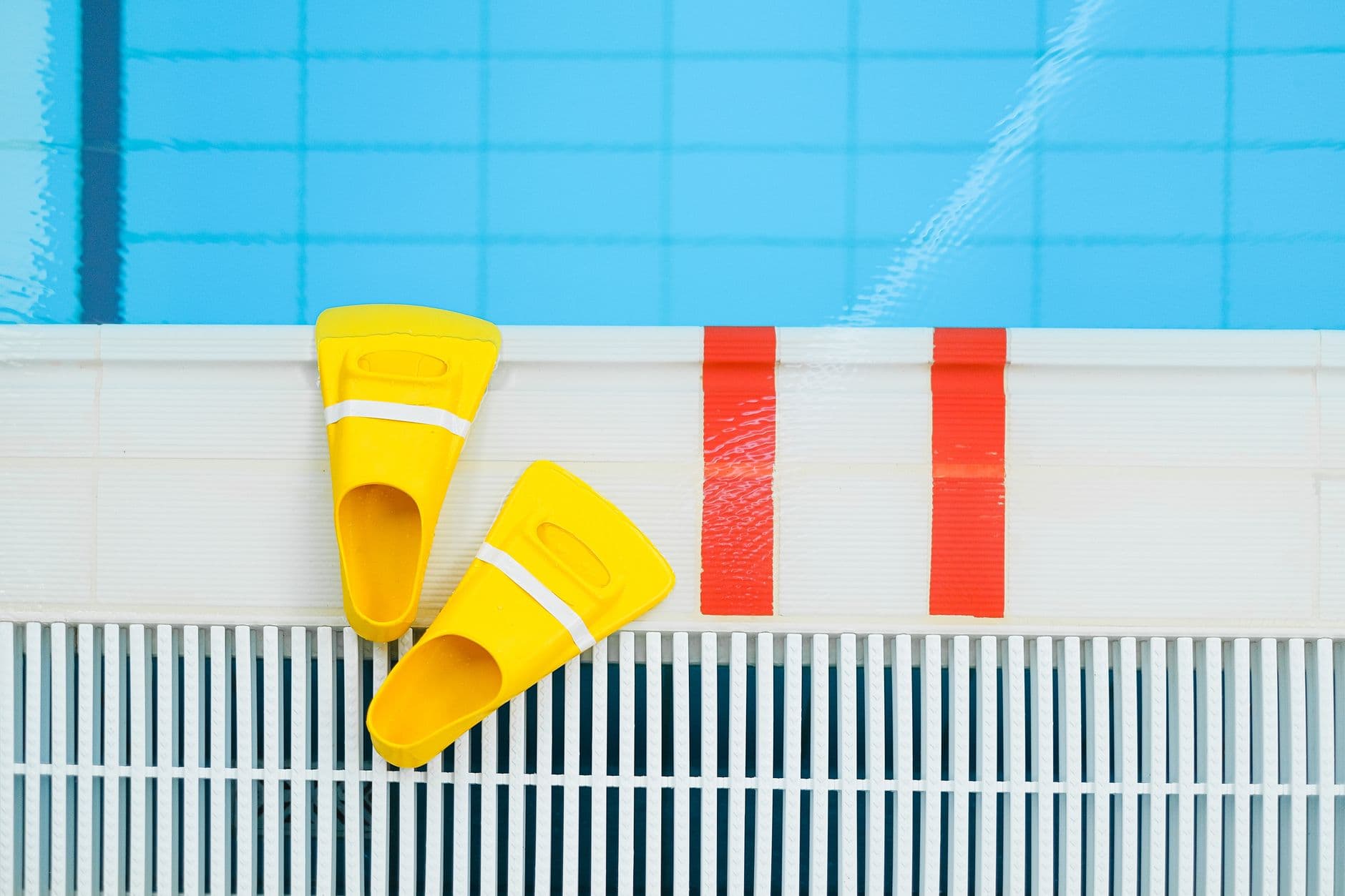
Paddles lower your training load at steady speed and a four-week block changed nothing; fins raise energy cost. What the measurements say and how to use both.
SwimFast is an independent publication. We are not a swim school, a coaching service or a governing body, and nothing here is medical advice. Training paces and test protocols are cited from the published research or federation documents linked on each page. Never swim alone, never attempt breath-hold work without supervision, and check with a doctor before starting a new training programme.