What temperature should a pool be? The numbers, by who is in it
Competition pools have a rule: 25 to 28 °C. Everything else is a recommendation. The published numbers for babies, lap swimming, therapy and hot tubs, each with its source.
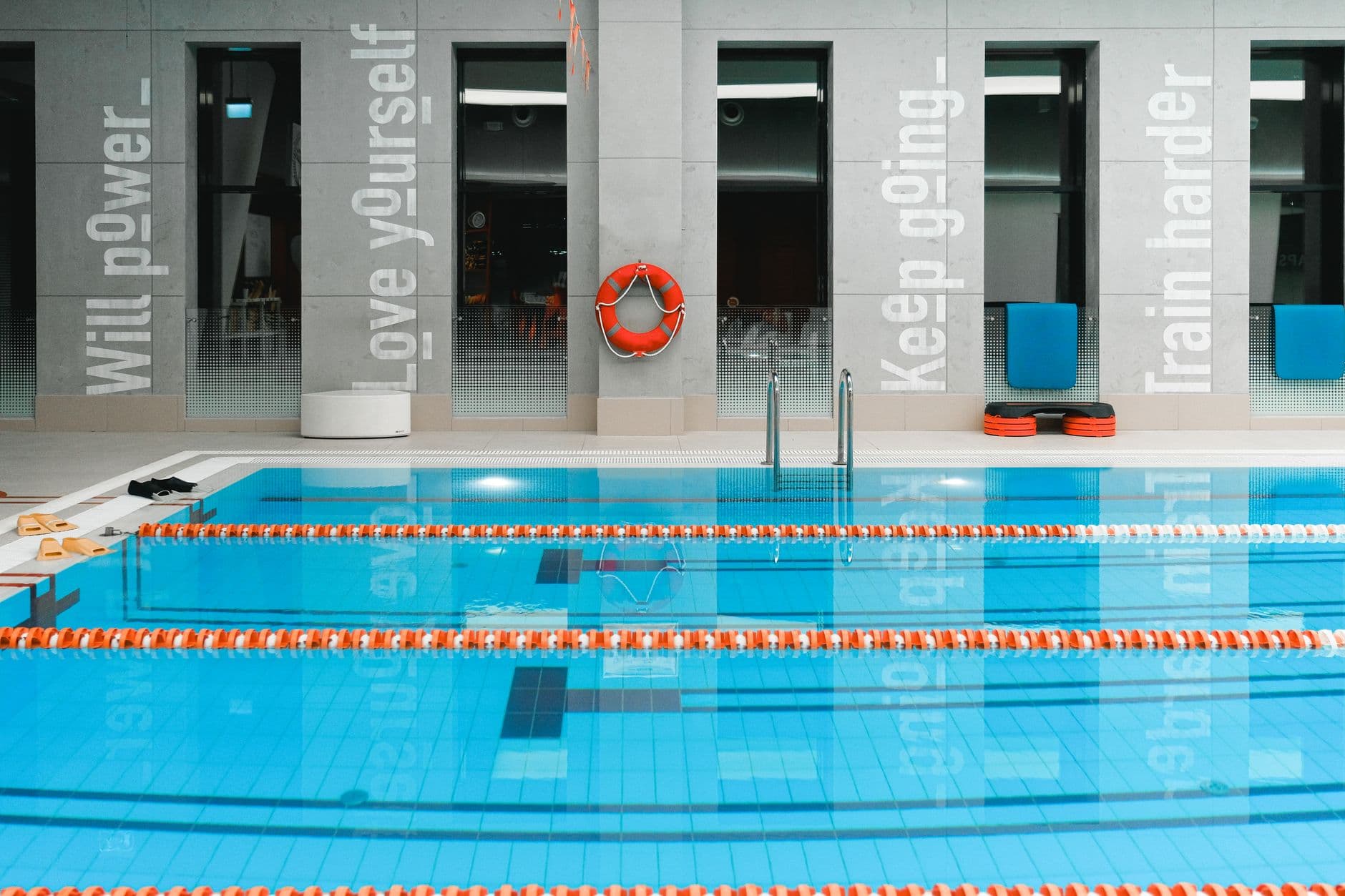
Almost every answer to this question online is a single number with nothing behind it. The honest answer is that there is one pool temperature written down as a rule, a handful published as recommendations by organisations that disagree with each other, and a large middle where nobody has set a figure at all.
So this page is organised by who is in the water rather than by a chart. Each number comes with the body that publishes it and, where it exists, the article number you can check it against. Where there is no standard, it says so instead of inventing one.
The only pool temperature that is actually a rule
A competition pool must be between 25.0 and 28.0 °C (77 to 82.4 °F). That is not a guideline. It is article 15.11.1 of the World Aquatics Competition Regulations in force from February 2026, sitting in the same section as the rules on water movement and inflow rates.
USA Swimming sets the identical band in rule 103.7.1 of its 2026 Rules and Regulations, and spells out the Fahrenheit conversion: 25 to 28 degrees Celsius, 77 to 82.4 degrees Fahrenheit, to be maintained for competition.
Two governing bodies on two continents landing on the same three-degree band is worth noticing, because it is the closest thing to an objective answer this question has. It is also colder than most people expect, and colder than most pools you have swum in. The rest of what the rules specify about a competition pool — depth, lane width, wall markings — is similarly precise and similarly surprising.
Why nobody publishes a number for your local pool
For an ordinary public pool there is no official figure, and that absence is itself informative. In the United States the reference document is the Model Aquatic Health Code, written by the CDC for states and counties to adopt. Its 4th edition sets a maximum temperature for an aquatic venue of 104 °F (40 °C) in section 5.7.4.7.2A — and sets no minimum, and recommends no ideal.
The code has a whole section on therapy pools (4.12.4) and does not give them a temperature either. It regulates slopes, jets and secondary treatment, and leaves the thermostat alone. A model code is not law until a state adopts it, and states amend it, so your county's rules are the ones that bind your pool.
What that means practically: when a leisure centre says its pool is kept at some particular temperature, that is an operating decision balancing swimmers, parents, heating costs and the building, not compliance with a standard. There is nothing to appeal to, which is why two pools in the same town can feel completely different.
The principle that decides every number here
There is one idea that makes the whole spread of numbers make sense, and the Arthritis Foundation states it plainly: in general, the slower the exercise movements, the warmer the water needs to be for most people.
Water pulls heat out of you far faster than air does. Whether you end up cold depends on the race between that loss and the heat your muscles are producing. A swimmer doing a hard set is a furnace and needs cool water to dump the excess. A baby floating in arms produces almost nothing and has a large surface area for their size. An arthritis class moving slowly and deliberately is somewhere closer to the baby than to the swimmer.
So there is no single correct pool temperature for the same reason there is no single correct amount of clothing. Once you are thinking in terms of heat produced against heat lost, the published numbers stop looking arbitrary and start looking like what they are: different answers to different problems.
Lap swimming: why a warm pool ruins a hard set
If you train, the complaint is usually that the pool is too warm rather than too cold, and the competition band explains why. At 25 to 28 °C a swimmer working hard can still shed heat. Push the water several degrees above that and the same set becomes noticeably harder: heart rate drifts up for the same pace, and the effort feels worse than the clock says it should.
That matters if you are using pace or heart rate to steer your training, because both move with the water. A threshold set swum in a warm pool is not directly comparable to the same set in a cool one. If your times have slipped and the pool feels like a bath, the water is a candidate before your fitness is — check what heart rate zones in the water actually tell you, and use the pace calculator to compare the sets honestly rather than from memory.
Warm water also brings forward the ordinary limits: you dehydrate in a pool without noticing, and cramp and post-swim exhaustion both arrive sooner. Bring a bottle to the lane end even though you are surrounded by water.
Babies and toddlers: the numbers, by age and by weight
This is the most searched version of the question and, usefully, the one with the most specific published guidance. Two British organisations give figures that agree with each other.
The Swimming Teachers' Association states that water and air temperature must be higher than for normal public swimming: at least 30 °C (86 °F), and 32 °C (89.6 °F) for babies under three months old or weighing less than 5.5 kilos (12 lb). That weight clause is the part almost nobody repeats, and it is the more useful of the two tests — a small baby loses heat like a small baby regardless of the date on the birth certificate.
Swim England publishes the same shape of advice with an upper bound: at least 32 degrees for children 0–3 months, 30 degrees for children 3–12 months, up to a maximum of 35 degrees (95 °F). Note that both organisations specify the air as well as the water, which is covered further down and is the detail that decides whether a baby is comfortable getting out.
What the baby guidance does not tell you
Three things, and they matter more than the number itself.
First, none of this is law. These are recommendations from membership organisations that train swimming teachers, not regulations, and a pool that runs a degree cooler is not breaking anything. It does mean that if a baby class is held in a pool at ordinary public temperature, the guidance is on your side when you ask about it.
Second, the STA adds a restriction that has nothing to do with heating: baby swimming during the first six months should not take place in sea water. That is a separate judgement from temperature.
Third, and most useful at the poolside: watch the child, not the thermometer. Shivering, blue-tinged lips or fingers, and unusual quietness or clinginess all mean the session is over now, whatever the gauge on the wall says. A small child can be losing heat steadily in water that feels pleasant to an adult who is moving. Get them out, dry and wrapped, and keep sessions short at first. Teaching a child to swim covers what to do with the time once they are in, and if the water is cold enough to need a decision about whether to swim at all, make it early rather than halfway through.
Warm water for joints, arthritis and rehab
Here the sources genuinely disagree, which is worth knowing before you trust any single figure. The Arthritis Foundation gives 83 to 90 °F (28.3 to 32.2 °C) as the recommended range for warm water exercise, saying most people find it comfortable and soothing to sore joints. In the UK, Versus Arthritis describes aquatic therapy pools running at 33–36 °C (91.4 to 96.8 °F) — warmer than the top of the American range, and well above any normal swimming pool.
Both can be right because they describe different activities. Aquatic therapy in a hospital pool is slow, assisted and often barely aerobic; a warm-water exercise class moves more. That is the Arthritis Foundation principle again: the slower the movement, the warmer the water.
What this means for you is that the right question is not "what temperature is best for arthritis" but "what am I going to do in there". Versus Arthritis also lists conditions your therapist needs to know about before a session — including a raised temperature, breathing difficulties, angina or heart problems, a kidney condition needing dialysis, and diabetes, asthma or epilepsy that is not well controlled. Warm water is a physiological load, not a neutral environment, so that conversation belongs with a doctor or physiotherapist rather than with an article.
The hot end: the one hard ceiling in the US code
The warm side is where this question stops being about comfort. The Model Aquatic Health Code puts the maximum temperature for any aquatic venue at 104 °F (40 °C), and repeats it specifically for spas in section 4.12.1.7A: water temperatures shall not exceed 104 °F. The code also requires heating equipment to be installed so as to prevent bather exposure above that figure, and limits hydrotherapy jet timers to 15 minutes.
That 15-minute timer is the quiet admission in the document. The ceiling is not only about scalding; it is about how long a person should be in water that warm at all. Above roughly body temperature you cannot shed heat to the water, so your core temperature climbs with nowhere to go, and drowsiness is the symptom that makes a hot tub more dangerous than it feels.
Two practical consequences. A pool that has drifted to 35 °C is not a mild inconvenience for swimming lengths — it is close to the therapy range and you should treat a hard set in it as a bad idea. And a hot tub after training is fine in moderation, but it is not a warm-down; a warm-down is easy swimming.
Who the hot tub sign is actually written for
The sign bolted to the wall by every public hot tub is not decoration. The Model Aquatic Health Code specifies what it has to say, and every line of it names a group at real risk: maximum water temperature 104 °F; children under five and people using alcohol or drugs that cause drowsiness shall not use spas; pregnant women and people with heart disease, high blood pressure or other health problems should not use spas without prior consultation with a healthcare provider; children under 14 supervised by an adult; and use of the spa when alone is prohibited where there are no lifeguards.
Read as a list of hazards rather than a list of rules, it is a good summary of who hot water hurts. The alcohol clause and the alone clause belong together: warm water plus a depressant plus nobody watching is the combination behind a large share of hot tub deaths.
The pregnancy line deserves particular attention, because raising core temperature is the specific concern rather than the water itself — swimming in a normal pool is a different proposition entirely, and what the evidence says about swimming while pregnant goes through it. Either way that is a question for your own clinician, not for a sign.
The cold end, and where the rules hand over to risk
Pools are rarely dangerously cold, but the governing bodies have drawn lines in open water that tell you where the risk begins. World Aquatics Part Three article 12.2.3 says open water race temperature should be a minimum of 16.0 °C (60.8 °F) and a maximum of 31.0 °C (87.8 °F). Below 18.0 °C (64.4 °F) a wetsuit is mandatory under article 10.2, and between 18 and 20 °C the Chief Referee may require wetsuits for everyone on the safety and medical officers' recommendation.
Cold water is the one end of this subject where getting it wrong is immediately dangerous, and the danger arrives in the first minute rather than gradually. If you are swimming anywhere colder than a heated pool, read the wetsuit rules and the evidence on cold limits and how to approach a first open water swim before you get in — and never make a decision about cold water while swimming alone.
An unheated outdoor pool in spring can sit well inside that range. The useful transfer is the 16 °C floor: if the sport will not race there even with safety boats, treat it as a temperature to work up to deliberately rather than one to discover by jumping in. An adult who is still learning to swim has no business in cold water at all, because the first reaction to cold is a gasp.
How a temperature is measured when it counts
This is the part that changes how much you trust any number, including the one on the wall of your pool. For open water races World Aquatics does not simply ask someone to dip a thermometer. Article 12.2.3.1 requires a commission — a referee, a representative of the organising committee, and a representative of one of the competing teams — and article 12.2.3.3 sets the method: the water temperature is measured two hours before the start, at three points around the course, at a depth of 40 cm, and recorded as the average of the three.
Three points, because water is not one temperature. Forty centimetres down, because the surface lies. Two hours before, because it changes. A commission including a team representative, because the figure decides whether wetsuits are worn and nobody should own that number alone.
Apply the same scepticism at home. A reading at the surface in the sunny corner of an outdoor pool is not the temperature your child is swimming in. Measure at swimming depth, away from the inlet, and more than once.
The air is half the problem
If a pool feels cold despite a reasonable water reading, the air is usually the culprit — and the rule books agree with you. USA Swimming's rule 103.7.2 requires that in indoor facilities the air temperature within 8 feet above deck level be no lower than 76 °F (24.4 °C), with relative humidity around 60% and air velocity around 25 feet per minute.
Air velocity is the one people miss. Moving air over wet skin is the fastest way to lose heat in the building, which is why standing on the deck between sets is colder than swimming and why a draught near the door ruins a session. The STA's insistence that both water and air be warmer for babies is the same physics applied to someone with less reserve.
The Model Aquatic Health Code takes a different approach for indoor venues, controlling air to protect the building rather than the swimmer: section 5.6.4.1.3A asks operators to keep the interior dew point below that of the walls to prevent structural damage and biological growth. Both facts are true at once, and they explain a lot about the chemical smell of a badly ventilated pool — a topic that runs into what chlorine actually does to skin and hair.
What to do when the pool is the wrong temperature
Adjust the session rather than the thermostat, because the thermostat is not yours.
If the water is too warm for training, drop the intensity and accept it, or move the hard work to a cooler pool or an earlier hour, and judge the set by effort rather than by the clock. Drink more than feels necessary. If it is too cool for comfort but fine for swimming, keep moving — a continuous swim is far warmer than a set with long rests, and a proper warm-up matters more than usual.
If it is too cool for a child or a baby, shorten the session hard and end it on your terms. If it is warm enough that you feel light-headed, get out, and treat that as a symptom rather than as weakness.
And if the number is persistently wrong for the people using the pool — a baby class in water at public-pool temperature, say — the published guidance above is what you quote when you ask the operator about it. For everything else in this corner of the sport, the rest of the numbers and standards section works the same way: find out who publishes the figure before you trust it, and the ones that nobody publishes are the ones to stop arguing about. Any decision that touches a medical condition, a pregnancy or an infant belongs with a professional who knows the person involved.
Frequently asked questions
What temperature should a pool be?
For competition, 25.0 to 28.0 °C (77 to 82.4 °F) — the only figure written as a rule, in World Aquatics article 15.11.1 and USA Swimming 103.7.1. For an ordinary public pool no governing body publishes an ideal number, so it is an operating decision rather than a standard. Babies, therapy and training each need something different.
Is 82 degrees too cold to swim?
No. 82 °F is 27.8 °C, which sits inside the 25 to 28 °C band that World Aquatics and USA Swimming require for competition — it is the temperature world championships are swum in. It can feel cool when you first get in, or if you are moving slowly, but for swimming lengths it is close to ideal.
What temperature should a pool be for a baby?
At least 30 °C (86 °F), rising to 32 °C (89.6 °F) for babies under three months old or weighing less than 5.5 kg (12 lb), according to the Swimming Teachers' Association. Swim England adds a maximum of 35 °C. Both are recommendations rather than law, and both specify warm air as well as warm water.
What is the warmest a pool is allowed to be?
In the United States the Model Aquatic Health Code caps any aquatic venue at 104 °F (40 °C), and repeats the limit for spas. It is a model code, so the binding version is whatever your state or county has adopted. Above body temperature you cannot lose heat to the water, which is why spa jet timers are limited to 15 minutes.
What pool temperature is best for arthritis?
The published figures disagree because they describe different activities. The Arthritis Foundation recommends 83 to 90 °F (28.3 to 32.2 °C) for warm water exercise, while UK aquatic therapy pools run at 33 to 36 °C for slower, assisted movement. The slower the session, the warmer the water needs to be. Ask a physiotherapist about your own case.
Why does the pool feel cold when the thermometer says it is warm?
Usually the air rather than the water. USA Swimming requires indoor air above 76 °F with humidity near 60% and air velocity near 25 feet per minute, because moving air over wet skin removes heat fast. A draught, a long rest between sets, or standing on the deck will all feel colder than swimming does.
Sources
- Competition Regulations, Part Two: Swimming Rules — article 15.11.1 (water temperature of a competition pool), and Part Three — articles 10.2 and 10.3 (wetsuits below 18 °C) and 12.2.3 to 12.2.3.3 (the 16–31 °C range, and how the temperature is measured), in force from February 2026 — World Aquatics
- 2026 Rules and Regulations — rule 103.7.1 (water temperature for competition) and 103.7.2 (air temperature, humidity and air velocity in indoor facilities) — USA Swimming
- 2023 Model Aquatic Health Code, Code Language, 4th Edition (February 2023) — sections 5.7.4.7.2A (maximum temperature for an aquatic venue), 4.12.1.7A and 4.12.1.10A (spa temperature and jet timer), 4.12.4 (therapy pools, with no temperature set), 5.6.4.1.3A (indoor air and dew point) and 6.4.2.2 (required spa signage) — Centers for Disease Control and Prevention
- Baby Swimming Policy — water and air temperature of at least 30 °C, and 32 °C for babies under three months or weighing less than 5.5 kg (12 lb) — Swimming Teachers' Association
- Baby swimming: a checklist for parents, carers and guardians — pool heated to at least 32 degrees for children 0–3 months and 30 degrees for 3–12 months, to a maximum of 35 — Swim England
- Hit the Pool to Relieve Joint Pain — recommended water temperature of 83 to 90 °F for warm water exercise, and the rule that slower movement needs warmer water — Arthritis Foundation
- Aquatic therapy (hydrotherapy) — pools usually 33–36 °C, and the conditions to tell a therapist about before a session — Versus Arthritis
Read next
How many laps is a mile? And why the swimming mile is not a mile
A mile is 70.4 lengths of a 25-yard pool and 64.4 of a 25-metre pool. The exact count for every pool, and why the race called the mile is 6% shorter.
How a swim meet works: heats, lanes, seeding and scoring
Heats, lane assignments, circle seeding, scratches, DQs and team points, explained straight from the rulebook that meet officials actually work from.
How deep is an Olympic pool? The rule book, not the guesses
An Olympic pool must be at least 2.5 m deep. The two metres you keep reading is a different championship. Every figure here is quoted from the World Aquatics rule book.
SwimFast is an independent publication. We are not a swim school, a coaching service or a governing body, and nothing here is medical advice. Training paces and test protocols are cited from the published research or federation documents linked on each page. Never swim alone, never attempt breath-hold work without supervision, and check with a doctor before starting a new training programme.