Swimming with ear tubes: what the guideline actually says
The AAO-HNS guideline tells clinicians not to push routine earplugs or swimming bans on children with ear tubes. The exact wording, the four exceptions and the evidence.
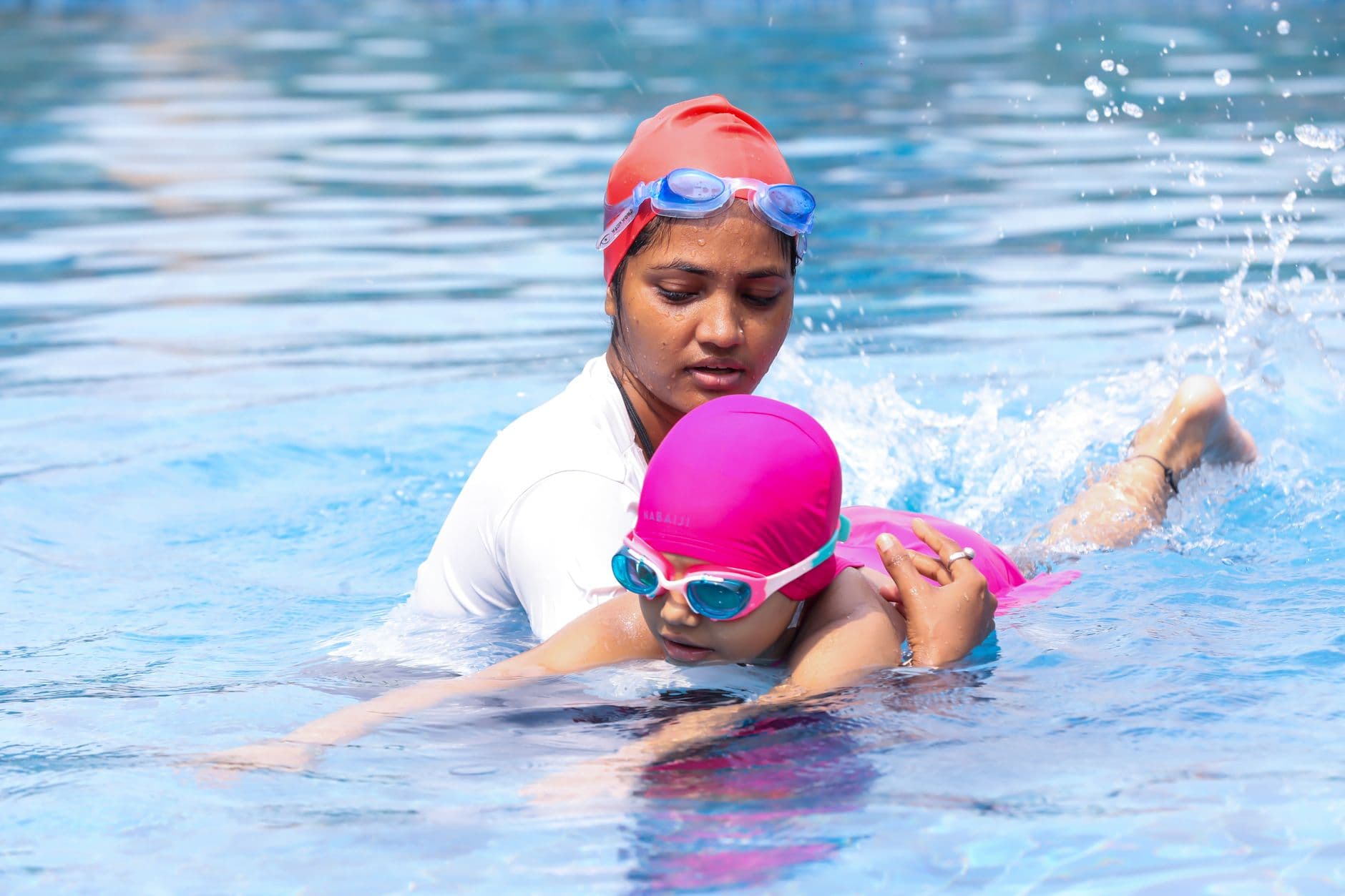
Your child has just had ear tubes put in, somebody handed you a pack of silicone earplugs, and the swim lesson is on Saturday. The assumption behind that pack — that water in the ear is the thing to protect against — is the one the current clinical guideline tells clinicians to stop making. This page quotes the recommendation word for word, lists the exceptions the same academy publishes for parents, and shows the numbers underneath.
The 30-second version. The American Academy of Otolaryngology–Head and Neck Surgery recommends that clinicians not encourage routine earplugs, headbands or avoidance of swimming for children with ear tubes. Plugs may still help in four specific situations, and dirty lake or ocean water is the one exposure with a measured association to recurrent drainage. The waiting period after surgery and anything unusual about your child's ears are decisions for the ear, nose and throat surgeon who placed the tubes.
The short answer, and why it surprises almost everyone
Yes — children with tympanostomy tubes can normally swim, and they do not normally need earplugs to do it. That is not a liberal reading of the evidence; it is the recommendation itself. The 2022 update of the American Academy of Otolaryngology–Head and Neck Surgery (AAO-HNS) clinical practice guideline on tympanostomy tubes in children states it as key action statement 15: clinicians should not encourage routine, prophylactic water precautions (use of earplugs or headbands, avoidance of swimming or water sports) for children with tympanostomy tubes.
Read it carefully, because every word is doing work. It is aimed at clinicians, not at you. It targets precautions that are routine and prophylactic — applied to every child, in advance, whether or not anything has gone wrong. And it names all three of the usual precautions, not just the plugs: headbands and "no swimming this season" are in the same sentence. What it does not say is that no child ever benefits from protection. Those cases exist, and they are listed below.
Tympanostomy tubes are called grommets in the UK, Australia and New Zealand. The term is the only difference; the surgery and the question are the same.
What a "recommendation against" means, and who it covers
Guideline statements come with a declared strength, and this one is a recommendation rather than a strong recommendation. In the AAO-HNS system that wording is deliberate: a recommendation means the guideline group judged the benefit of acting on it to be clear, but with somewhat less certainty than a strong recommendation, so individual circumstances can reasonably change the decision. It is a statement about what clinicians should stop doing by default, not a prohibition on any family ever using a plug.
The scope matters too. The guideline covers children aged 6 months to 12 years with tubes, or being considered for them. It is an update of the original 2013 guideline, and the 2022 group affirmed and kept all of the original key action statements while adding new evidence — so a page citing the 2013 version on this point is behind on the edition, not on the substance. There is also a plain language summary of the same guideline written for families, which is the fairest thing to read if you want the whole picture of tube care rather than only the water question.
The four situations where the academy says plugs may help
The same academy publishes a caregiver's guide alongside the guideline, and it is more useful than the guideline itself for a parent at a poolside. It says a child will not usually need earplugs for swimming and bathing while the tubes are in place and open, and that headbands or other efforts to keep water out of the ear canal are also unnecessary — but may be helpful in the following situations:
- Pain or discomfort when water enters the ear canal. If your child reliably complains, that is a reason on its own. Nobody learns anything in a lesson they spend flinching.
- Current fluid or drainage from the ear — an ear infection with the tube in place — or a history of frequent drainage.
- Swimming in lakes or non-chlorinated pools that are not clean.
- Dunking the head in the bathtub, because soapy water passes through the tiny hole in the tube more easily than plain water does.
Three of those four are about a specific exposure or a specific child, which is the point of the recommendation. The default is no precautions; these are the named reasons to depart from it. If one applies to your child, using a plug is not disregarding the guideline — it is using the part of it that most summaries leave out.
The evidence underneath: small benefit, measured honestly
The reason the recommendation reads the way it does is that the benefit of plugs has been measured, and it is tiny. A Cochrane review of randomised trials in children with ventilation tubes found that instructing children to swim and bathe with earplugs produced a statistically significant but very small reduction in ear drainage: from 1.2 episodes to 0.84 episodes over a year of follow-up. The reviewers translated that into the number that should settle most kitchen-table arguments — an average child would have to wear earplugs for about 2.8 years to prevent one single episode of drainage. The second trial in that review, which told children not to swim or submerge their heads at all, found no difference whatsoever: 1.17 episodes a year in both groups.
A later multicentre randomised trial in 244 children aged 2 to 10 pointed the same way, and its detail is the interesting part. Drainage happened in 32% of the children told to use plugs and headbands versus 22% of those left unprotected — a difference that was not statistically significant, and in the opposite direction from the folk wisdom. More telling: only about a third of drainage episodes had any timing relationship to water exposure at all, while roughly half happened during an upper respiratory infection. Ear drainage with tubes is mostly a cold problem, not a pool problem. If you want the same argument applied to the swimmer rather than the ear, we wrote it up in swimming with a cold.
A systematic review pulling together four randomised trials and five prospective cohorts — 1,299 patients, ages 3 months to 14 years — found no significant difference in drainage either between protected and unprotected water exposure, or between water exposure and none. Its authors put the cost of the old advice plainly: avoiding water is "at best inconvenient and at worst may delay learning to swim".
Chlorinated pool versus lake and ocean
If one exposure deserves more caution than the rest, the evidence says it is natural water. A 2026 survey study from a tertiary paediatric otolaryngology practice asked caregivers of 137 children who had had tubes placed at least six months earlier about their water habits, then checked the answers against the medical charts. Adjusting for age, smoke exposure and other confounders, children exposed to what the authors called "dirty" water — ocean, lake or untreated pool water — had 3.18 times the odds of recurrent tube drainage (95% confidence interval 1.33 to 7.62). Exposure to chlorinated or salt-treated pool water showed no significant association at all.
Two caveats, because they change how much weight the number can carry. This was a cross-sectional survey, not a trial: caregivers recalled their own habits, so it can show an association and not prove that the lake caused the drainage. And it is a single practice. What it does do is line up with the academy's own exception list and with a 2026 narrative review in a German ENT journal, which concluded that no general ear protection is needed for ordinary showering, bathing or surface swimming, while protection may be considered for lake or seawater — and for washing hair with shampoo, on the same surface-tension grounds as the soapy bath water above.
Practically: the chlorinated pool where lessons happen is the low-risk setting, which is lucky, because it is where most children actually swim. A warm lake in August is the one worth a plug and a word with the surgeon. If open water is part of your summer anyway, the rest of what changes out there is in your first open water swim, and temperature decisions for children are in what temperature a pool should be.
"How long after surgery can she swim?"
This is the most-asked version of the question and the one where honest reporting means admitting a gap. The AAO-HNS guideline's water statement is about children with tubes in place and open; it does not set a number of days after surgery. The academy's caregiver guide does not give one either. What exists is weaker evidence pointing in one direction: the Cochrane review notes that most surgeons advise keeping the ears dry in the immediate postoperative period, the systematic review above suggested protection "during the first month after surgery", and the 2026 narrative review likewise flagged a possible benefit in the first postoperative month. None of that is a guideline statement, and the trials were not designed to find the right waiting period.
So the accurate answer is: there is no guideline-backed universal waiting time, individual surgeons set their own, and the number that applies to your child is the one the surgeon who placed the tubes gives you. Ask for it before you leave the follow-up appointment, and ask whether it covers showers, bath dunking and surface swimming separately — those are three different exposures and they often get one blanket answer.
Bath time, shampoo and head dunking
The bath is the exposure parents worry about least and the guideline singles out most specifically. Soapy water has lower surface tension than plain water, so it passes through the narrow lumen of a tube more readily. That is why "dunking head in the bathtub" sits on the academy's list of situations where a plug may help, and why the 2026 review added hair washing with shampoo to the same category. Ordinary showering and ordinary bathing, with the head upright, are not on anyone's list of concerns.
The cheap version of a solution is in the academy's own guide: during bathing, use silicone earplugs, or coat a small cotton ball with petroleum jelly and use it to cover the opening of the ear canal. That is a hospital handout, not a product recommendation — there is no evidence that a custom-moulded plug outperforms a soft one at the thing that matters.
What not to use as an earplug
One warning from the caregiver guide is worth repeating in capital letters because it keeps happening: never use Play-Doh or Silly Putty as an earplug. These materials can become trapped in the ear canal and can require surgical removal. The guide lists soft earplugs, ear putty designed for the purpose, and neoprene headbands as the reasonable options.
Where the ear-protection industry oversells. Custom-moulded plugs for a child with tubes are sold on a risk the guideline recommends against treating as routine, and the measured benefit of any plug was 0.36 fewer drainage episodes per year. If you buy them because your child hates water in the ear or because you swim in a lake, that is a fine reason. If you are buying them because you were told the tubes make swimming dangerous, the guideline disagrees with whoever told you.
Depth, diving and the one hard limit
Where the evidence does change is pressure. Experimental work summarised in the 2026 review found that whether water passes through a tube at all depends on the surface tension of the liquid, the hydrostatic pressure, the tube type and the test model — which is a technical way of saying that surface swimming and deep submersion are not the same exposure. That review's practical recommendations were to avoid unprotected submersion and diving from height, and it stated that a patient with a tympanostomy tube in place is not considered fit for scuba diving. Scuba is the one clear no while tubes are in, and it is a question for the ENT surgeon rather than the dive shop.
For a child, this mostly translates into normal pool-deck rules rather than special ones: lessons, surface swimming and jumping in are the ordinary case, and diving from a height needs the water depth and the technique sorted out regardless of ears — see how to dive into a pool for the depth thresholds. And the rule this site repeats everywhere applies with no exception here: never use breath-holding sets or underwater distance games as a way to keep water out of anything. Hypoxic games are dangerous for reasons that have nothing to do with ear tubes.
If the ear starts draining
Drainage at the opening of the ear canal is the common complication of tubes, and the tube is doing its job when it lets that fluid out instead of trapping it behind the eardrum. It can be thin or thick, cloudy, yellow, green or even bloody, and most children have neither fever nor pain with it. The academy's advice to families, in order: antibiotic ear drops without oral antibiotics are all that is needed in most cases and are prescription items, not over-the-counter drops; clean dried crusting from the canal opening with a swab dipped in warm water or hydrogen peroxide; and do not swim during an infection while there is drainage or discharge coming from the ear, using a silicone plug or a petroleum-jelly cotton ball for bathing in the meantime.
That is where a swimming page has to stop. Drops, their duration and whether oral antibiotics are needed are clinical decisions. Pain, fever, dizziness, hearing that drops off, drainage that does not settle on treatment, or anything that worries you belongs with your child's doctor the same day — not with a search result.
Do not pause the swim lessons
Tubes are often placed at exactly the age when lessons matter most, so a default of "no swimming while the tubes are in" can quietly cost a child a year or two of water skills. That is the cost the systematic review named. And a child who hears better is, if anything, a better candidate for lessons than they were a month earlier — following an instructor in a loud, echoing pool is not a small thing.
If you are deciding when to start, we went through the evidence and the age thresholds in what age a child should start swim lessons, and the parent-led version — including what flotation aids actually cost a child in skill terms — is in how to teach a child to swim. Neither changes because of tubes. What changes is that you now have a sentence to say at the pool desk when somebody tells you children with grommets are not allowed in: the current clinical guideline recommends against routine avoidance of swimming, and you can name it.
Adults and teenagers with tubes
Here the honest answer is a shrug with a reason attached. The AAO-HNS guideline is explicitly scoped to children aged 6 months to 12 years, so the key action statement above does not formally cover an adult who has just had a tube placed, or a 15-year-old. It is a guideline about paediatric otitis media, not a general ruling on tubes and water.
The physics does not care about the birthday — surface tension, pressure and tube type behave the same in an adult canal — and the 2026 review's practical recommendations were written for patients generally, including the scuba limitation. But "the same advice probably applies" is an inference, not a citation, and adults get tubes for a wider range of reasons. If you swim seriously and have tubes, ask your ENT about the exposures you actually do: surface swimming, depth and diving are not one question.
How long the tubes stay, and what happens after
Tubes are temporary, and the water question expires with them. The academy's caregiver guide says most ear tubes last about 6 to 18 months, that most come out within 12 to 24 months, and that by the time a tube falls out roughly 80% of children have much better ear function and will not need it replaced; a tube still in place after two to three years can be removed. NHS patient information, written for the UK, puts the usual range at 6 to 12 months for a grommet to fall out naturally. Those are overlapping estimates of the same thing from two bodies, not a contradiction to resolve — expect somewhere around a year and do not be surprised by either side of it.
One number is worth knowing because it changes the conversation afterwards: about 1 to 2 out of every 100 children still have a small hole in the eardrum after a short-term tube falls out, rising to as many as 1 in 5 after a long-term tube. A persistent perforation is not the same situation as an open tube, and water advice for it is a separate discussion with the surgeon. The follow-up schedule exists partly to catch this: the guide describes a check within three months of insertion, reviews roughly every six months while the tubes are in, and a final check 6 to 12 months after they come out.
What this page cannot decide
A guideline describes what should usually happen. Your child's surgeon knows what the eardrum looked like, which tube went in and why. If their instructions differ from the guideline — a waiting period, a plug for the pool, no swimming for a stated reason — follow the surgeon, and ask what the reason is, because the exception list above means there often is a good one.
What you can take from this page is the baseline, and it is not what most people assume: routine earplugs and swimming bans are not recommended, the measured benefit of plugs is very small, drainage mostly tracks colds, untreated natural water is the exposure with real evidence behind it, and the one firm limit is scuba diving. The other half of the ear-and-water story — the outer canal, a different problem with different prevention — is swimmer's ear. More of our technique guides, including the water-confidence skills that lessons are built on like floating on your back, are indexed under technique.
How this page was researched. The recommendation is quoted from the published abstract of the 2022 AAO-HNS guideline update; the exceptions, the bathing advice, the Play-Doh warning, the tube-duration figures and the perforation rates come from the academy's own caregiver guide for that guideline. The effect sizes come from the Cochrane review, the 2019 randomised trial, the 2022 systematic review and the 2026 survey study, each linked below with its design named. Where the evidence is weak or indirect — the post-operative waiting period, adults — the page says so instead of picking a number. This is general information about a clinical guideline, not medical advice for an individual child.
Frequently asked questions
Can kids swim with ear tubes?
Yes, in almost all cases. The 2022 AAO-HNS clinical practice guideline recommends that clinicians not encourage routine earplugs, headbands or avoidance of swimming and water sports for children with tympanostomy tubes. Protection may still help for pain on water entry, current or frequent ear drainage, unclean lake or non-chlorinated water, and dunking the head in soapy bath water.
How long after ear tube surgery can a child swim?
There is no guideline-backed universal waiting period. The AAO-HNS water recommendation applies to tubes already in place and sets no number of days, while weaker evidence suggests a possible benefit from protection during the first post-operative month. Practice varies between surgeons, so the number that applies is the one the surgeon who placed the tubes gives you.
Do children with ear tubes need earplugs for swimming?
Not routinely. In the Cochrane review, earplugs reduced ear drainage from 1.2 to 0.84 episodes per year, meaning an average child would wear them about 2.8 years to prevent one episode. A later randomised trial found no significant difference either. Plugs make sense for a named reason — discomfort, recurrent drainage, dirty water — not as a default.
Can a child with ear tubes swim in a lake or the ocean?
This is the exposure with the most evidence against it. A 2026 survey of 137 children found 3.18 times the odds of recurrent tube drainage with ocean, lake or untreated pool water, and no association with chlorinated or salt-treated pools. The AAO-HNS caregiver guide also lists unclean lakes and non-chlorinated pools among the reasons to use protection.
Should swim lessons be postponed until the ear tubes fall out?
The guideline recommends against routine avoidance of swimming, and a systematic review warned that avoiding water is at best inconvenient and at worst may delay learning to swim. Tubes often go in at the age when lessons matter most, and better hearing helps a child follow an instructor in a noisy pool. Ask the surgeon about timing rather than assuming a ban.
Can you scuba dive with ear tubes?
No. A 2026 narrative review of the evidence states that a patient with a tympanostomy tube in place is not considered fit for scuba diving, and also advises against unprotected submersion and diving from height. Whether water passes through a tube depends on pressure, so surface swimming and depth are different exposures. Clear scuba plans with the ENT surgeon.
Is swimming with grommets different from swimming with ear tubes?
No — grommet is the British, Australian and New Zealand word for the same device Americans call an ear tube or tympanostomy tube. NHS patient information describes a grommet draining fluid and keeping the eardrum open, usually falling out naturally within 6 to 12 months. The water evidence and the guideline recommendation apply to both names.
Sources
- Rosenfeld RM, Tunkel DE, Schwartz SR, et al. Clinical Practice Guideline: Tympanostomy Tubes in Children (Update), 2022 — key action statement 15 on water precautions — Otolaryngology–Head and Neck Surgery (AAO-HNS Foundation)
- Ear Tubes — A Caregiver's Guide (patient information for the 2022 guideline): earplug exceptions, bathing, tube duration, perforation rates — American Academy of Otolaryngology–Head and Neck Surgery
- Clinical Practice Guideline: Tympanostomy Tubes in Children — guideline landing page and patient materials — American Academy of Otolaryngology–Head and Neck Surgery
- Rosenfeld RM, Keppel KL, Vaughan WK, Monjur TM. Plain Language Summary: Tympanostomy (Ear) Tubes in Children, 2022 — Otolaryngology–Head and Neck Surgery
- Moualed D, Masterson L, Kumar S, Donnelly N. Water precautions for prevention of infection in children with ventilation tubes (grommets), 2016 — 1.2 vs 0.84 episodes/year, 2.8 years to prevent one — Cochrane Database of Systematic Reviews
- Subtil J, et al. Effect of Water Precautions on Otorrhea Incidence after Pediatric Tympanostomy Tube: Randomized Controlled Trial Evidence, 2019 — 244 children, 32% vs 22%, P = .09 — Otolaryngology–Head and Neck Surgery
- Moffa A, et al. Water protection in paediatric patients with ventilation tubes: Myth or reality? A systematic review, 2022 — 9 studies, 1,299 patients — Acta Otorrinolaringológica Española (English Edition)
- Irace AL, et al. Outcomes and Characteristics of Water Exposure in Children with Tympanostomy Tubes, 2026 — untreated water OR 3.18 (95% CI 1.33–7.62) — Otolaryngology–Head and Neck Surgery
- Ulrich Seidel D, Volcan GA. Water precautions following tympanostomy tube insertion — evidence and practical recommendations, 2026 (narrative review) — HNO (Springer Medizin)
- Glue ear — grommets and how long they stay in place — NHS
Read next
How to do an open turn, and when the rules make you use two hands
The open turn step by step, and the two-hand touch rule read from the 2026 regulations: three separate conditions, and three different ways to be disqualified.
Why do swimmers wear two caps? To pin the goggle straps down
The second cap covers the goggle straps and stops the first one wrinkling. Two caps is explicitly legal, and two is the written maximum — here is the rule.
What age should a child start swim lessons?
The official answer is the first birthday for lessons, but babies can be in water long before that. Here is where each health body draws the line, and why it matters.
SwimFast is an independent publication. We are not a swim school, a coaching service or a governing body, and nothing here is medical advice. Training paces and test protocols are cited from the published research or federation documents linked on each page. Never swim alone, never attempt breath-hold work without supervision, and check with a doctor before starting a new training programme.