How to do an open turn, and when the rules make you use two hands
The open turn step by step, and the two-hand touch rule read from the 2026 regulations: three separate conditions, and three different ways to be disqualified.
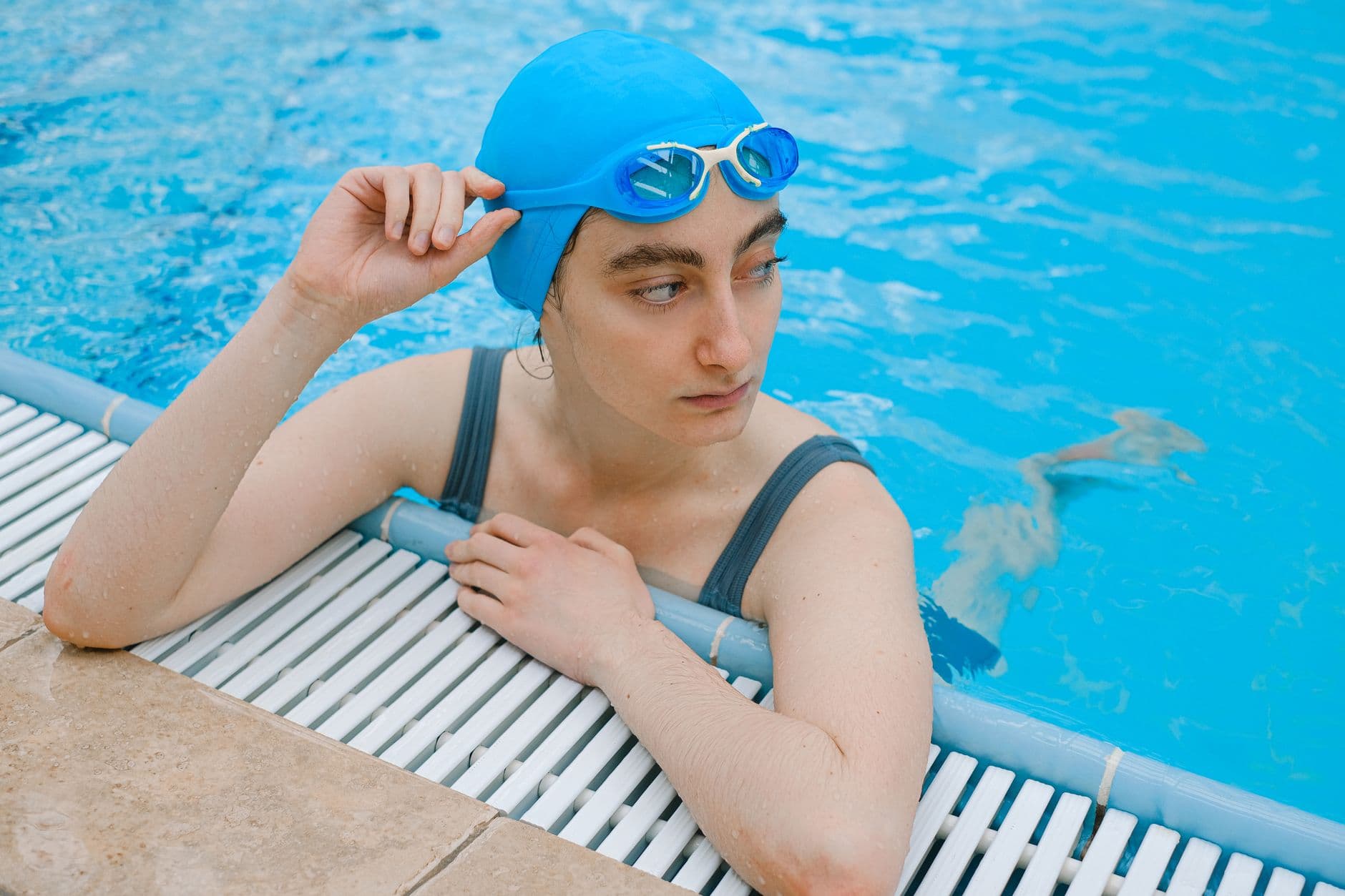
Most pages about the open turn treat it as the turn you do when you cannot do a flip turn. That gets it backwards. In breaststroke and butterfly the open turn is not a fallback but the only legal option, and the rule defining it is strict enough to account for one of the most common disqualifications anyone has published numbers for.
So this guide is two things: the step-by-step, because the mechanics and the mistakes differ from a flip turn, and the rule itself, read out of the World Aquatics Competition Regulations in force from February 2026 and the 2026 USA Swimming Rules and Regulations and cited by article so you can check any of it. For the freestyle turn, see how to do a flip turn.
What is an open turn, and which strokes make you do one?
An open turn is a turn where your hands touch the wall first. You reach, touch, tuck your knees under you, plant your feet, and push off. Your head clears the water in the middle of it, which is where the name comes from: the turn is open to the air, unlike a flip turn, which happens entirely underwater.
Which strokes require one is decided purely by the touch rule. In breaststroke and butterfly, World Aquatics articles 7.7 and 8.5 require that at each turn the touch is made with both hands. You cannot do that and somersault, so the turn is open by necessity. In freestyle and backstroke the requirement is much looser, so almost everyone flips. Note the two are not the same category, though: plenty of good masters swimmers use an open turn in freestyle by choice, while nobody is allowed a flip turn in breaststroke.
How to do an open turn, step by step
Seven steps, and the ones that get rushed are the last three rather than the touch.
- Approach at speed. Take the last stroke into the wall rather than drifting the final metre. Gliding in is the single most common way an open turn loses time.
- Touch with both hands at the same height. Arms extended, hands level, roughly shoulder-width apart. Anywhere on the wall is legal.
- Tuck immediately. The knees come up toward your chest while the hands are still on the wall, not after they leave.
- Drop one elbow and drive it back. One arm releases and goes straight back past your hip, under the surface; the other stays on the wall a fraction longer as a pivot.
- Turn your hips and plant your feet. The body rotates onto its side as the feet arrive, shoulder-width apart, toes sideways or slightly down, knees bent to about ninety degrees.
- Throw the second arm over. It comes over your head to join the first, and that motion is what puts your face back in the water.
- Push off into a streamline, then come up. Hands stacked, head tucked, body on its front. In butterfly, one or more dolphin kicks and one arm pull. In breaststroke, the pullout sequence, which has its own order and its own disqualifications.
If you fix one thing, fix step one. A turn cannot generate speed that was not carried into it.
The touch is one rule with three separate ways to fail it
Here is where almost every explanation online stops short. Everyone says "both hands at the same time." The rule asks for three things, and they fail independently.
World Aquatics article 7.7, for breaststroke, says the touch must be made with both hands separated and simultaneously, at, above, or below the water surface. Article 8.5 says the identical thing for butterfly. Three conditions, and that is not a reading imposed on the text — it is how officials get it. World Aquatics publishes a Swimming Rule Quick Reference Infraction Sheet, in force from 13 March 2026, to help judges write up infractions, and its entry for both strokes reads as one offence with three sub-items: did not touch at the turn or finish with both hands; separated; simultaneously. The British Swimming disqualification card prints the same three as separate tick-boxes, with a blank for the turn it happened at.
A judge does not tick "bad touch." They tick which of the three conditions failed. One hand, stacked hands and staggered hands are three different calls against the same article.
"Simultaneously" is the one swimmers lose, and it is almost never a deliberate one-handed touch. It is a tired swimmer whose stronger arm arrives a fraction early, which is why the call is likelier at the last turn of a 200 than the first.
What "separated" means in the 2026 rulebook, and what it does not
"Separated" sounds like it demands a visible gap, and that misunderstanding makes swimmers splay their hands wide and lose reach. The February 2026 text settles it inside the article itself. In both 7.7 and 8.5, "separated" means the hands cannot be stacked one on top of the other, and the regulation adds two clarifications in plain language: it is not necessary to see space between the hands, and incidental contact at the fingers is permitted.
So hands that touch at the fingertips are legal. Hands side by side with no daylight between them are legal. One palm resting on the back of the other is not.
If you race in the United States, note the wording: the 2026 USA Swimming rulebook gives the requirement in one sentence at 101.2.4 and 101.3.4 without those clarifying phrases. The standard officials apply is the same, but if you are ever told a gap is required, the explicit text is in the World Aquatics article.
In freestyle and backstroke, nothing says you must use your hands
The contrast is what makes the breaststroke and butterfly rule make sense. World Aquatics article 5.2 says that in freestyle, at least one part of the athlete's body must touch the wall upon completion of each length and at the finish. One part of the body. Not a hand. USA Swimming 101.5.3 is shorter still: upon completion of each length the swimmer must touch the wall.
That is why a freestyle flip turn is legal despite the hands never arriving — your feet are part of your body. Backstroke article 6.4 also requires only one part of the body, then imposes its own conditions on the rotation, which have their own guide: the backstroke start and the flags.
In freestyle, missing the wall is essentially the only way the turn itself gets you disqualified. U.S. Masters Swimming puts it plainly in its turns guide: you may turn any way you like, but you must touch.
The elbow allowance almost nobody uses
In breaststroke, your elbows have to stay under the water. Article 7.4 says so, and so does USA Swimming 101.2.2. Both then carve out three exceptions that rarely get mentioned: the elbows may come out of the water on the final stroke before the turn, during the turn, and on the final stroke at the finish. That matters, because reaching with high elbows gives a flatter, longer reach than keeping them buried. The rule anticipated it. You are allowed to attack the wall.
Both rulebooks add a second allowance in the same place: at the last stroke before each turn and at the finish, an arm stroke not followed by a leg kick is permitted. Normally breaststroke is strictly one pull then one kick, every cycle. Into the wall, you may pull and not kick.
After the touch, you may turn any way you like
The constraint is on the touch and on the position you leave in, not on what happens between them. Article 7.3 for breaststroke and 8.2 for butterfly both state that rolling onto the back is not permitted at any time except at the turn after the touch of the wall, where it is permissible to turn in any manner as long as the body is on the breast from the beginning of the first arm stroke after leaving the wall. USA Swimming 101.3.4 puts it even more directly: once a touch has been made, the swimmer may turn in any manner desired.
That licenses the fast version of the turn. You can come off the wall on your side, or briefly past it, and rotate onto your front as you push. What you cannot do is take that first arm stroke before you are on your front.
Standing on the bottom: legal in freestyle, a disqualification in breaststroke
This is the rule most likely to catch an adult swimmer in a shallow-end pool, and it is split by stroke in a way almost nobody knows.
World Aquatics 10.2.4 says an athlete must not stand or walk on the pool bottom, except during freestyle events or the freestyle portion of medley events, where standing is permitted. USA Swimming 102.21.6 spells out the limit: standing on the bottom during a freestyle race shall not disqualify a swimmer, but the swimmer must not leave the pool, or walk, or spring from the bottom. Standing during any other stroke results in disqualification. And 10.2.3 adds the condition that applies to every stroke: when performing a turn you must make physical contact with the wall, and must not take a stride or step from the bottom.
Read together: in a freestyle race you may stand and catch your breath, but not walk and not push off the floor. In breaststroke or butterfly, putting your feet down at all is a disqualification — worth knowing before the heat if the pool is shallow enough that your feet find the bottom at the turn.
Article 10.2.5 belongs in the same list, because people do it at the wall without thinking: you must not pull on the lane rope.
Where the time actually is: the push-off, not the touch
Swimmers obsess over the touch because it is the part that gets called. The time lives elsewhere.
Chainok and colleagues at the University of Porto measured eighteen age-group swimmers with twelve land and eleven underwater cameras plus triaxial force plates, then ran the open turn through a regression. For the turn-out phase, 93 per cent of the variance came from first gliding distance and time, second gliding depth, turn-out time, and push-off force. Nothing from the touch. For turn-in, 86 per cent came from the approach times at 7.5 and 2.5 metres, mean stroke length, and rotation time: how fast you arrive, and how quickly you rotate.
Caveat: eighteen swimmers aged about twelve is a small sample, and a regression explains variation in that group rather than predicting what will make you faster. It is a map of where to look, which is how the authors frame it.
What happens at the wall in a real race
For elite racing there is better data. Cuenca-Fernandez and colleagues analysed 256 races by 128 male swimmers at the European short-course championships, split into start, swimming and turn sections. In the 200s, the turn variable that improved as swimmers progressed toward the final was the time over the first 5 metres off the wall: 1.51 per cent in breaststroke, 2.19 per cent in butterfly. In the 100s, turn performance did not change between rounds at all.
Read that as a priority list: where elite swimmers found something to improve in the two open-turn strokes, it was the metres after the push-off. The force-plate finding in our flip turn guide, that longer wall contact produced faster turns rather than slower ones, applies here too.
IM transitions are three different turns with three different rules
In an individual medley you turn between strokes three times, and World Aquatics 9.4 governs all three: each section must be finished in accordance with the rules for that stroke. The touch belongs to the stroke you are leaving; the push-off to the one you are entering.
- Butterfly to backstroke. Touch with both hands, separated and simultaneously (art. 8.5). Leave the wall on your back (art. 6.2).
- Backstroke to breaststroke. Touch with any part of the body, while on your back (art. 6.5 via 9.4). Be on the breast from the first arm stroke (art. 7.2).
- Breaststroke to freestyle. Touch with both hands, separated and simultaneously (art. 7.7). Be on the breast, with one allowance below (art. 9.3).
The allowance in that last row is the detail worth having. Article 9.3 says the body must be on the breast during the freestyle section except when executing a turn, then explicitly permits leaving the wall on the back, provided no kicking happens until the swimmer has returned past the vertical to the breast — at which point kicking, including dolphin kicks, may begin.
So you may push off that transition on your back and rotate; you simply may not kick until past vertical. The USA Swimming equivalent at 101.6.2 is one short sentence without that elaboration. For why the order is what it is, see the medley stroke order.
Which IM transition is fastest? The one controlled study says it did not matter
Coaches name four techniques for the backstroke-to-breaststroke transition: open, somersault, bucket, and crossover. Which is fastest is argued endlessly. The one study that measured all four found no difference.
Chainok and colleagues (2021) had eighteen eleven and twelve-year-olds perform all four after a four-week training block, with hydrodynamics from inverse dynamics and kinematics tracked by twenty-three cameras. Time spent averaged 4.86 seconds plus or minus 0.98 and breakout distance 6.04 metres plus or minus 0.94, consistent across all four, with no differences in time or average velocity out to 7.5 metres. The crossover produced the highest push-off velocity index, 0.68, without that converting into a faster transition. The authors concluded the hydrodynamics and pull-out strategy were independent of the technique selected.
Be careful with that. Eighteen young swimmers is a small sample, and finding no difference is not proof the four are equivalent, especially for an adult or an elite swimmer. What it supports is a practical decision: pick the transition you can execute cleanly and legally under fatigue, and stop shopping.
Breathing: where the air comes from, and the thing not to do
An open turn looks like a breathing opportunity and that is a trap: your face clears the surface during the fastest part of the movement, while you are rotating and planting your feet.
Take the air early, as the first elbow drives back and the hips turn, not when the second arm comes over. Wait for the second arm and you will be mid-inhale at the moment you should be pushing off, leaving the wall late and shallow. Breathe into the turn, not out of it.
Never practise turns by holding your breath to extend the underwater. Repeated breath-holding in water can cause a blackout with no warning signs, which is why the American Red Cross, USA Swimming and the YMCA of the USA issued a joint statement against hypoxic training. Swim with a lifeguard or a partner present, and stop if you feel light-headed. If turns leave you breathless in a way normal swimming does not, or you have a respiratory or cardiac condition, that is a conversation for a doctor before it is a technique problem; why you are tired after swimming covers the ordinary causes.
How many open turns your race actually contains
Every one of these contacts has to satisfy all three conditions, and a single failure ends the swim.
A 200 breaststroke in a 25-yard pool asks for seven legal two-hand touches; the same race in a 50-metre pool asks for three. More than twice the exposure to the same call, and one reason a short-course swim is not simply a faster long-course one. Short course versus long course covers the rest.
Four ways an open turn goes wrong, and what to change
When the turn is not working it is usually one of these, and each has a different fix.
- You glide into the wall. The commonest fault by a distance. Count your strokes on the way in so you know where the wall is, then take that last stroke rather than reaching for it. It also stops one-handed touches, because a committed stroke lands both hands.
- Your feet land too deep or too shallow. Too deep and you push yourself upward instead of forward; too shallow and you surface immediately. Plant at roughly the depth your push-off should travel.
- You stop at the wall. The hands arrive and the turn pauses while you breathe. Fix the sequence, not the speed.
- You come up too early off the wall. The push-off is the fastest you will move all length, so surfacing early throws it away. In butterfly that is where the underwater dolphin kick belongs, and it has a point of diminishing return worth knowing.
One more, specific to adults coming back to swimming: if turning makes you dizzy, the open turn is the gentler option, because the head rotation is far smaller than a somersault. That is a real reason to prefer it in freestyle, not a compromise. If water in the face is itself the obstacle, start with getting comfortable in the water before working on walls.
How to tell whether yours is getting better
Repetition without a measurement feels like progress. Two numbers are enough.
The first is a 7.5-metre in-and-out time, the window the Porto studies used: start the clock at a fixed mark on the way in, stop it at the same mark going out. You want it to fall with the touch still legal.
The second is breakout distance, where your head reaches the surface after the push-off. Mark it against a tile line and keep it constant. If the in-and-out time falls while the breakout stays put, the turn improved. If it falls because you surfaced earlier, it did not.
Our pace calculator turns a split into speed per hundred, so you can see what a turn gain is worth over a race; the course time converter handles 25-yard against 50-metre comparisons, where the different turn count shows up; and the interval calculator gives send-offs with enough rest to turn well rather than just often. The rest sits in technique and workouts.
One last thing, belonging to the rules rather than the mechanics: if you are disqualified for a touch, ask which of the three conditions the official called. Both hands, separated, or simultaneously. The answer is on the card they filled in, and it tells you what to practise. Why swimmers get disqualified explains how the call is made and what can be appealed.
Frequently asked questions
Do you have to touch the wall with both hands in butterfly?
Yes. World Aquatics article 8.5 requires that at each turn and at the finish of a butterfly race the touch is made with both hands, separated and simultaneously, at, above or below the water surface. USA Swimming 101.3.4 and 101.3.5 say the same. One hand, or hands arriving at different moments, is a disqualification.
Is a flip turn faster than an open turn?
In freestyle, yes, because a flip turn carries speed through the wall instead of stopping at it. But the comparison rarely matters, since in breaststroke and butterfly a flip turn is illegal and in freestyle a strong open turn beats a rushed flip. Published turn research points to the push-off and glide, not the style of rotation, as what decides turn time.
Can you touch the wall with one hand in breaststroke?
No. Article 7.7 requires both hands, separated and simultaneously, at every turn and at the finish. The most common version of this disqualification is not a deliberate one-handed touch but a tired swimmer whose stronger arm arrives slightly first, which still fails the simultaneous condition.
Does separated mean there has to be a gap between your hands?
No. The February 2026 World Aquatics regulations define it inside articles 7.7 and 8.5: separated means the hands cannot be stacked one on top of the other, it is not necessary to see space between them, and incidental contact at the fingers is permitted. Hands side by side touching at the fingertips are legal.
Can you stand up during a swimming race?
In freestyle events, and the freestyle section of a medley, standing on the bottom is allowed under World Aquatics 10.2.4 and USA Swimming 102.21.6, but you must not walk, leave the pool, or spring off the bottom. In any other stroke, standing on the bottom is a disqualification. And at every turn, in every stroke, you must touch the wall.
How do you breathe during an open turn?
Take the breath early, as the first elbow drives back past your hip and your hips rotate toward the wall, rather than waiting for the second arm to come over your head. Waiting leaves you inhaling at the moment you should be pushing off. Never hold your breath to extend the underwater phase.
Sources
- Competition Regulations, Part Two: Swimming Rules — articles 5.2 and 5.3 (freestyle), 6.2 to 6.5 (backstroke), 7.3, 7.4 and 7.7 (breaststroke), 8.2, 8.5 and 8.6 (butterfly), 9.3 and 9.4 (medley) and 10.2.3 to 10.2.5 (the race), in force from February 2026 — World Aquatics
- 2026 Rules and Regulations — articles 101.2.2 and 101.2.4 (breaststroke stroke, turns and finish), 101.3.4 and 101.3.5 (butterfly turns and finish), 101.4.3 (backstroke turns), 101.5.3 (freestyle turns), 101.6.2 (individual medley) and 102.21.6 (standing on the bottom) — USA Swimming
- Swimming Rule Quick Reference Infraction Sheet, in force from 13 March 2026 — the two-hand touch written as one infraction with three sub-items — World Aquatics
- Disqualification card — the two-hand touch printed as three separate tick-boxes, with the turn distance left blank — British Swimming
- Swimming Turns: The Complete Guide — open turns and the disqualification section — U.S. Masters Swimming
- Chainok P, Machado L, de Jesus K, Abraldes JA, Borgonovo-Santos M, Fernandes RJ, Vilas-Boas JP (2021). Backstroke to Breaststroke Turning Performance in Age-Group Swimmers: Hydrodynamic Characteristics and Pull-Out Strategy — Int J Environ Res Public Health 18(4):1858
- Chainok P, de Jesus K, Mourao L, Fonseca PFP, Zacca R, Fernandes RJ, Vilas-Boas JP (2022). Biomechanical Features of Backstroke to Breaststroke Transition Techniques in Age-Group Swimmers — Frontiers in Sports and Active Living 4:802967
- Cuenca-Fernandez F, Ruiz-Navarro JJ, Polach M, Arellano R, Born D-P (2023). Short-course performance variation across all race sections: how 100 and 200 m elite male swimmers progress between rounds — Frontiers in Sports and Active Living 5:1146711
- Joint Statement on Hypoxic Blackout, November 2022 — American Red Cross, USA Swimming and YMCA of the USA
Read next
Swimming with ear tubes: what the guideline actually says
The AAO-HNS guideline tells clinicians not to push routine earplugs or swimming bans on children with ear tubes. The exact wording, the four exceptions and the evidence.
Why do swimmers wear two caps? To pin the goggle straps down
The second cap covers the goggle straps and stops the first one wrinkling. Two caps is explicitly legal, and two is the written maximum — here is the rule.
What age should a child start swim lessons?
The official answer is the first birthday for lessons, but babies can be in water long before that. Here is where each health body draws the line, and why it matters.
SwimFast is an independent publication. We are not a swim school, a coaching service or a governing body, and nothing here is medical advice. Training paces and test protocols are cited from the published research or federation documents linked on each page. Never swim alone, never attempt breath-hold work without supervision, and check with a doctor before starting a new training programme.