Swimming on your period: what actually works in the water
Yes, you can swim. Which products hold in water and which fail, the FDA's 8-hour tampon rule, what the pool rules really say, and the shark question answered.
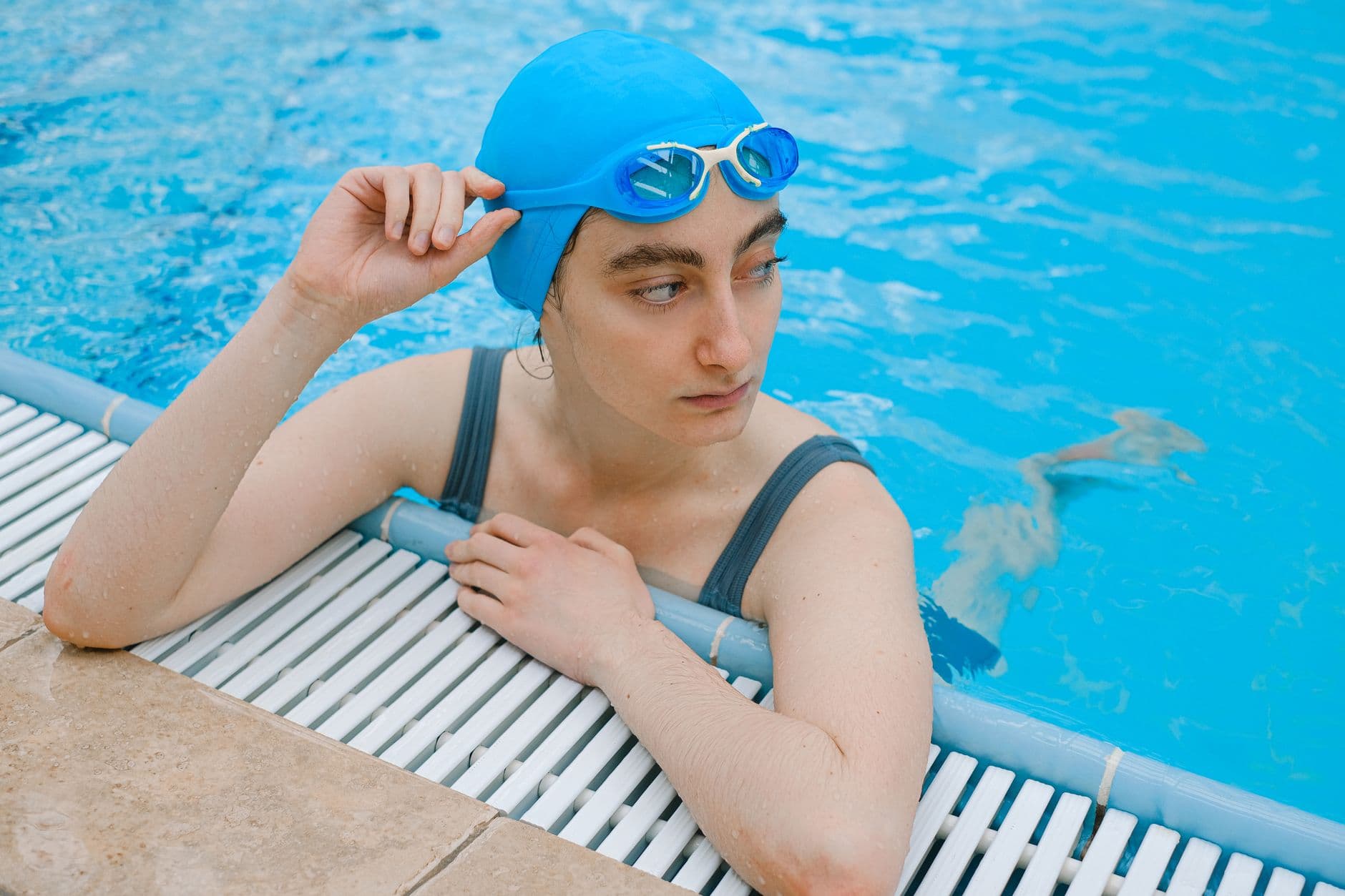
Yes, you can swim on your period. The honest answer is that short, and everything useful is in the detail: which product holds in water, what the water does to the flow, and whether a heavy day means shortening the session. This page answers those in order with the health sources named. It is general information, not advice about your own body — anything that worries you belongs with a clinician who can examine you.
The 20-second version. Swim. Use something internal — a tampon or a cup — or swimwear built for it. A pad will not work in water. Change a tampon on the way out, not six hours later. And if cramps are the problem, swimming is one of the things the NHS actually lists as helping.
The short answer, and who says so
The NHS page on period pain puts "try some gentle exercise like yoga, swimming, walking or cycling" in its list of things to do, alongside a warm bath, a heat pad and painkillers. Australia's healthdirect says the same thing in different words: heat packs, exercise and relaxation may help you manage period pain.
That matters more than it looks. Swimming is not merely tolerated during a period by the services that publish guidance — it is named as one of the self-care measures. So the question is not whether you are allowed in the water, but what you wear and how you plan the set. None of which is a reason to push through pain that is new, severe or worsening: the last section covers the symptoms that belong with a GP.
What the water does to your flow — and what it doesn't
You will read everywhere that water pressure stops your period. The careful version of that claim comes from the International Shark Attack File, run by the Florida Museum of Natural History: evidence suggests that when swimming, water pressure will temporarily stop the flow of menstrual blood, reducing the chances that any blood is released into the water.
The two hedges in that sentence are the whole practical point. "Evidence suggests" — an inference, not a measured quantity; nobody publishes a figure for how much flow is held back. "Temporarily" — it lasts while you are submerged, not on the pool deck or in the thirty seconds between the ladder and your towel.
So the useful conclusion is the opposite of the one people take from it: the water is not the awkward part, the exit is. Whatever you wear has to work for the walk to the changing room.
What works in the water: tampons, cups and discs
The NHS describes a tampon as a small tube of cotton wool you insert to soak up blood before it leaves the body. Because it sits internally and absorbs at the source, it is not competing with the pool. It is the product most people swim with, and the one the next section's safety rules are written about.
A menstrual cup is silicone, sits internally, and the NHS notes it collects blood rather than absorbing it. In water that difference is in your favour: nothing absorbent is exposed to the pool at all. Cups are reusable, which is why many pool regulars end up on one. Menstrual discs use the same collect-rather-than-absorb principle and sit differently inside; they are not on the NHS product list, so treat claims about their performance in water as the manufacturer's rather than published guidance.
One genuine reassurance from the NHS, because it stops people trying: it is not possible for a tampon to get lost inside you — the vagina holds it in place. If one is inserted correctly you should not feel it; if you can feel it or it hurts, it is probably not in properly, and that is worth sorting out on dry land rather than in the water.
Period swimwear, and how much to believe about it
Here the honest answer is less satisfying than the marketing. The NHS does describe period underwear: pants of absorbent fabric that soak up blood in the same way as pads, with a layer to prevent leaks. That phrase is the problem for swimming — anything working by absorption is competing with a pool full of water.
Swim-specific period swimwear is built differently, and the brands selling it describe a lining meant to hold a light flow in water rather than soak like a towel. Neither the NHS, the FDA nor the CDC publishes anything on how well that works, so this page will not invent a figure. What can be said fairly: it is the only external product designed for the job, and a light day is the condition it is described for.
If you need certainty — a race, a long swim, a heavy day — the internal products are the ones the health bodies describe as doing this. Many people wear both: a cup or tampon for the swim, swimwear as backup for the exit.
Why a pad is the one thing that won't work
The NHS describes a pad as a strip of padding with a sticky side, whose absorbent material soaks up the blood. In a pool that mechanism works against you three ways at once — worth spelling out, because "just use a pad" is one of the most common suggestions online.
- It saturates with pool water, not blood. An absorbent pad cannot tell the difference. It fills in the first minute and has no capacity left for the job you wore it for.
- The adhesive is made for dry fabric. A wet swimsuit is the worst surface for it, and a pad loose inside a swimsuit is a worse problem than the one you were solving.
- It becomes visible and heavy. A swollen pad in a swimsuit is conspicuous in exactly the way nobody wants.
Pantyliners are the same material in a smaller size and fail the same way. A pad is fine before and after the swim; it is the wrong tool for the time you are in the water.
Swimming with nothing at all: the honest answer
"Can you swim on your period without anything?" is one of the most searched versions of this question, so it deserves a straight answer rather than a dodge.
Physically, nothing stops you. Combine the water-pressure point above with a genuinely light day and often nothing happens. Plenty of people swim this way and no health body publishes a rule against it. What you are accepting is uncertainty, concentrated at the exit rather than in the water — so the sensible version is a light day, a dark swimsuit, a towel at the end of the lane, and a short session. On a heavy day, going without is how you end up cutting a session short for the wrong reason.
Using a tampon safely: the numbers that matter
This is the part with actual published rules, from the FDA, which authorises tampons for sale in the United States. Four numbers, all from the same page:
- Change each tampon every 4 to 8 hours. That is the window, not a suggestion to leave it as long as possible.
- Never wear a single tampon for more than 8 hours. The FDA states this as a limit, not a guideline.
- Use the lowest absorbency you need. The FDA gives a neat self-test: if you can wear one tampon up to 8 hours without changing it, the absorbency may be too high.
- Use tampons only when you have your period. Not in advance, and not "just in case" for a swim.
For a swimmer the practical rule follows from the eight-hour limit rather than from anything about swimming: insert a fresh one before you get in, change it when you get out. A session sits well inside the window, so the way to get this wrong is to forget afterwards — easy to do while you are showering the chlorine off your skin and hair. The NHS adds the plainest prevention step: wash your hands, follow the instructions, and do not leave a tampon or cup in longer than recommended.
Toxic shock syndrome, in proportion
Toxic shock syndrome is why the eight-hour limit exists, and it should be stated accurately rather than hidden or dramatised. The NHS describes it as a rare but life-threatening condition caused by an infection, which can happen when using a tampon or menstrual cup, or from an infected wound. The FDA notes that tampon-associated cases have declined significantly over the years. Rare and serious at once means the right response is to know the signs, not to avoid the product.
Signs that need medical help the same day. The NHS lists a high temperature or feeling hot, cold or shivery; muscle aches; a raised skin rash that feels like sandpaper; and flu-like symptoms. The FDA's list for tampon users adds a sudden fever (usually 102 °F / 39 °C or more), vomiting, diarrhoea, dizziness, and fainting or feeling faint on standing, plus a rash that looks like sunburn.
What to do: the NHS instruction is direct — if you are using a tampon or menstrual cup, remove it, and say that you were using one when you call for help. In the UK that means NHS 111 or a same-day GP appointment; the FDA's wording for the US is to stop using tampons and seek medical attention immediately. This applies during your period or soon after it, whether or not you have been swimming.
One more thing from the NHS: if you have had TSS before, your doctor may advise you not to use tampons at all. That is the kind of individual instruction that overrides anything a web page tells you.
Will I contaminate the pool? What the pool rules actually say
This fear keeps people out of the water, and it is the one place where the published guidance is clearer than most people expect. The CDC's page on blood and vomit in pools says two things directly relevant here. First: chlorine kills germs found in blood, naming hepatitis B and HIV. Second, more pointed: the CDC is not aware of any instances in which a person has become infected with bloodborne germs after being exposed to blood in a pool. It adds that while there is no public health reason to do so, aquatic staff might choose to treat a blood spill in the water as they would vomit.
Be precise about what that page is and isn't. It is written for operators handling a visible contamination event — an injury, a nosebleed — and its clean-up protocol (close the pool, raise free chlorine to 2 ppm at a pH of 7.5 or less for 30 minutes) is for that. The CDC does not mention menstruation anywhere on it. So nobody official has written "your period is fine in a pool" in those words. What they have written is that chlorine handles the germs in question and that no such infection is known to them.
Together, the fear of contaminating a pool is not supported by the documents that govern pools. The CDC's actual asks of swimmers apply to everyone: shower for at least one minute before getting in, and stay out if you have diarrhoea.
The ocean, the lake and the shark question
The shark question comes up in the autocomplete every time, so here is the source that actually studies it. The International Shark Attack File says a shark's sense of smell could detect menstrual blood, as it could urine or any other bodily fluid, but that there is no positive evidence that menstruation is a factor in shark bites.
Their bite records run at roughly eight men for every two women, which they attribute to historical exposure — more men surfing, diving and swimming long distances — rather than any preference. They give the balanced version rather than a slogan: someone minimising every risk could stay out of the water while menstruating, but many people dive while menstruating and the file has seen no obvious pattern of increased encounters.
So in open water your period is not the thing to plan around. What genuinely changes an open-water swim is in our guide to a first open-water swim: water temperature, how far you are from an exit, and the fact that there is no changing room at the 800-metre mark. On a heavy day that last point is the real constraint, and it argues for a loop close to shore rather than a point-to-point. If cold is part of it, settle the wetsuit decision separately.
Cramps, heavy legs and whether to train at all
There is real evidence here, and it is worth quoting at its actual strength rather than inflated. The 2019 Cochrane review of exercise for period pain, by Armour and colleagues, pooled 12 trials and 854 women. Comparing exercise with no treatment, it found a reduction in menstrual pain of about 25 mm on a 100 mm pain scale, which the authors call likely to be clinically significant. The dose in those studies was roughly 45 to 60 minutes, three or more times a week, regardless of intensity.
Armour et al., Cochrane Database of Systematic Reviews, 2019. The review grades this low-quality evidence, with high variation between trials.
Now the limitations, because they change how to read it. Cochrane graded this low-quality evidence, with high variation between trials. More importantly here: all the included studies used exercise regularly throughout the month, and some asked women not to exercise during menstruation. So the finding supports regular swimming as a way to have less painful periods. It is not a measurement of what one swim does on day two.
What that leaves is reasonable and unglamorous. Regular training is well supported as part of managing period pain — an argument for the habit discussed in should you swim every day. A day when you feel heavy and slow is a real physiological day, not a motivation failure, the same logic as why you feel wiped out after swimming. Train by effort, not the clock.
How to set up the session on a heavy day
Everything above turns into a handful of practical choices.
- Fresh product in right before you get in. The eight-hour clock starts then, and the session ends well inside it.
- Warm up longer than usual. If you are stiff and crampy the warm-up is doing more work than normal. Add a few hundred metres of easy swimming before anything hard.
- Pace by feel, then check it against a number. Rather than guessing whether you were slow, put a time into the pace calculator and compare it with a normal week. If you train off threshold, your CSS pace is the honest reference, and a few seconds off it on a bad day is information, not a verdict.
- Shorten the set, not the swim. Dropping from 10 × 100 to 6 × 100 keeps the habit. Skipping entirely is what breaks the regular pattern the Cochrane review supports.
- Eat something first — see what to eat before swimming.
- Towel at the finishing end. The exit is the part the water-pressure point does not cover.
- A sprint set is not the day's test. If cramp is a feature of your period, the cramp guide matters more than your 50 time. Push off the wall smoothly rather than explosively.
If you share a lane, none of this changes lane etiquette: swim the pace you can hold today and let faster swimmers past at the wall. There is nothing to announce to anyone.
When it isn't just a period
This is the section that matters most, and the one a page about swimwear usually leaves out. Period pain that responds to a heat pack and some easy swimming is one thing. The symptoms below are from the NHS's own lists, and they belong with a doctor rather than a training plan.
The NHS says to ask for a same-day GP appointment, or get help from NHS 111, if your pelvic or period pain is severe or worse than usual and painkillers have not helped. It says to see a GP if your periods become more painful, heavier or irregular; if period pain stops you doing your usual daily activities; if you have pain during sex or when peeing or pooing; if you are bleeding between periods; or if you have a swollen tummy, loss of appetite, or are losing weight without trying.
On heavy periods the NHS notes that feeling tired or short of breath a lot can go with them. Take that seriously if you are a swimmer, because it is also what a heavy training week feels like and the two get confused: fatigue and breathlessness that do not match your training load are a reason to get checked rather than to add another session. Heavy periods can be normal for you, but they can also have a cause worth finding — healthdirect lists endometriosis among the causes of painful periods, and both services set the same threshold: if it is stopping your normal activities, get it looked at.
None of this is a reason to stop swimming. It is a reason to let a clinician look at the underlying thing while you carry on with the part the guidance already supports. Pregnancy is a different set of rules, covered in swimming while pregnant. For training structure, start with the workouts section.
Where this comes from
Swimming as gentle exercise for period pain is from the NHS period pain page, with healthdirect (Australia) for the equivalent advice on exercise and heat. The product descriptions — including that a tampon cannot get lost inside you, and that period underwear absorbs "in the same way as pads" — are quoted from the NHS periods page; the failure modes of a pad in water are the mechanical consequence of that description, not a sourced claim. The 4-to-8-hour window, the 8-hour maximum, the lowest-absorbency self-test and the US TSS signs are from the FDA; the UK TSS symptoms, the instruction to remove a tampon or cup and say so when calling for help, and the note about prior TSS are from the NHS. The water-pressure claim and the shark material come from the International Shark Attack File, reported with its own hedges intact: "evidence suggests", and "temporarily". Pool statements are from the CDC's pages on blood and vomit in pools and on keeping a pool healthy; neither mentions menstruation, which is said here rather than glossed over. The pain figure is the 2019 Cochrane review by Armour and colleagues at its stated strength: about 25 mm on a 100 mm scale, low-quality evidence, from studies of regular exercise across the month rather than during menstruation. No claim is made about swim-specific period swimwear, because no health body publishes one.
Frequently asked questions
Can you swim on your period without a tampon?
Yes. Nothing physically prevents it, and no health body publishes a rule against it. A menstrual cup or disc works internally without absorbing, and swimwear made for periods is the external option. Going with nothing is realistic on a light day, but you are accepting uncertainty — mostly at the exit, not in the water.
Can you swim on your period with a pad?
Not usefully. The NHS describes a pad as absorbent material that soaks up blood, and in a pool it soaks up pool water instead — it saturates almost immediately, the adhesive does not hold on a wet swimsuit, and it swells visibly. Pads are fine before and after the swim, but not during it.
Does water pressure stop your period while you swim?
Partly, and only while you are in the water. The International Shark Attack File says evidence suggests water pressure temporarily stops the flow of menstrual blood while swimming. Both hedges matter: it is an inference rather than a measured amount, and it ends when you climb out, which is why the exit is the part to plan for.
How often should I change a tampon if I am swimming?
The FDA says change every 4 to 8 hours and never wear one for more than 8 hours. For a swim, that means inserting a fresh one before you get in and changing it when you get out. A normal session sits comfortably inside the window, so the usual mistake is forgetting about it afterwards, not the swim itself.
Will my period contaminate the swimming pool?
The published guidance does not support that worry. The CDC states chlorine kills germs found in blood, including hepatitis B and HIV, and that it is not aware of anyone becoming infected with bloodborne germs after exposure to blood in a pool. Its clean-up protocol is written for visible spills, and it does not mention menstruation at all.
Is it safe to swim in the sea on your period because of sharks?
The International Shark Attack File says there is no positive evidence that menstruation is a factor in shark bites, and reports no obvious pattern of increased encounters among people who dive while menstruating. In open water the things worth planning around are temperature and distance from an exit, not your cycle.
Sources
- Period pain — self-care measures, including gentle exercise such as swimming — NHS
- Periods — pads, tampons, menstrual cups and period underwear — NHS
- Toxic shock syndrome — symptoms, what to do and prevention — NHS
- Heavy periods — when to see a GP, and the tiredness and breathlessness that can go with them — NHS
- Facts on Tampons and How to Use Them Safely — U.S. Food and Drug Administration
- What to Do When There is Blood or Vomit in the Pool (reviewed 16 November 2026) — Centers for Disease Control and Prevention
- Guidelines for Keeping Your Pool Safe and Healthy — Centers for Disease Control and Prevention
- Menstruation and Sharks — International Shark Attack File — Florida Museum of Natural History, University of Florida
- Armour M. et al. (2019), Exercise for dysmenorrhoea — Cochrane Database of Systematic Reviews
- Managing period pain — heat, exercise and when to see a doctor — healthdirect Australia
Read next
Can you swim with a cold? The neck check, and when to stay out
A head cold without fever is usually fine to swim through. A fever is not. The rule sports medicine uses, how thin the evidence is, and what changes in a pool.
Does swimming build muscle, or is it just cardio?
Swimming loads your muscles, but the load drops the moment you slow down. What the trials actually measured, where swimming does add muscle, and what to add.
Swimming with asthma: what the evidence actually supports
Swimming provokes four to six times less bronchospasm than running, and elite swimmers have more asthma than other athletes. Both are true. What to do about it.
SwimFast is an independent publication. We are not a swim school, a coaching service or a governing body, and nothing here is medical advice. Training paces and test protocols are cited from the published research or federation documents linked on each page. Never swim alone, never attempt breath-hold work without supervision, and check with a doctor before starting a new training programme.