How to stop getting water up your nose when you swim
Water goes up your nose when no air is coming out of it. The fix is a slow nose exhale, and the timing changes for turns, backstroke, diving in and going upside down.
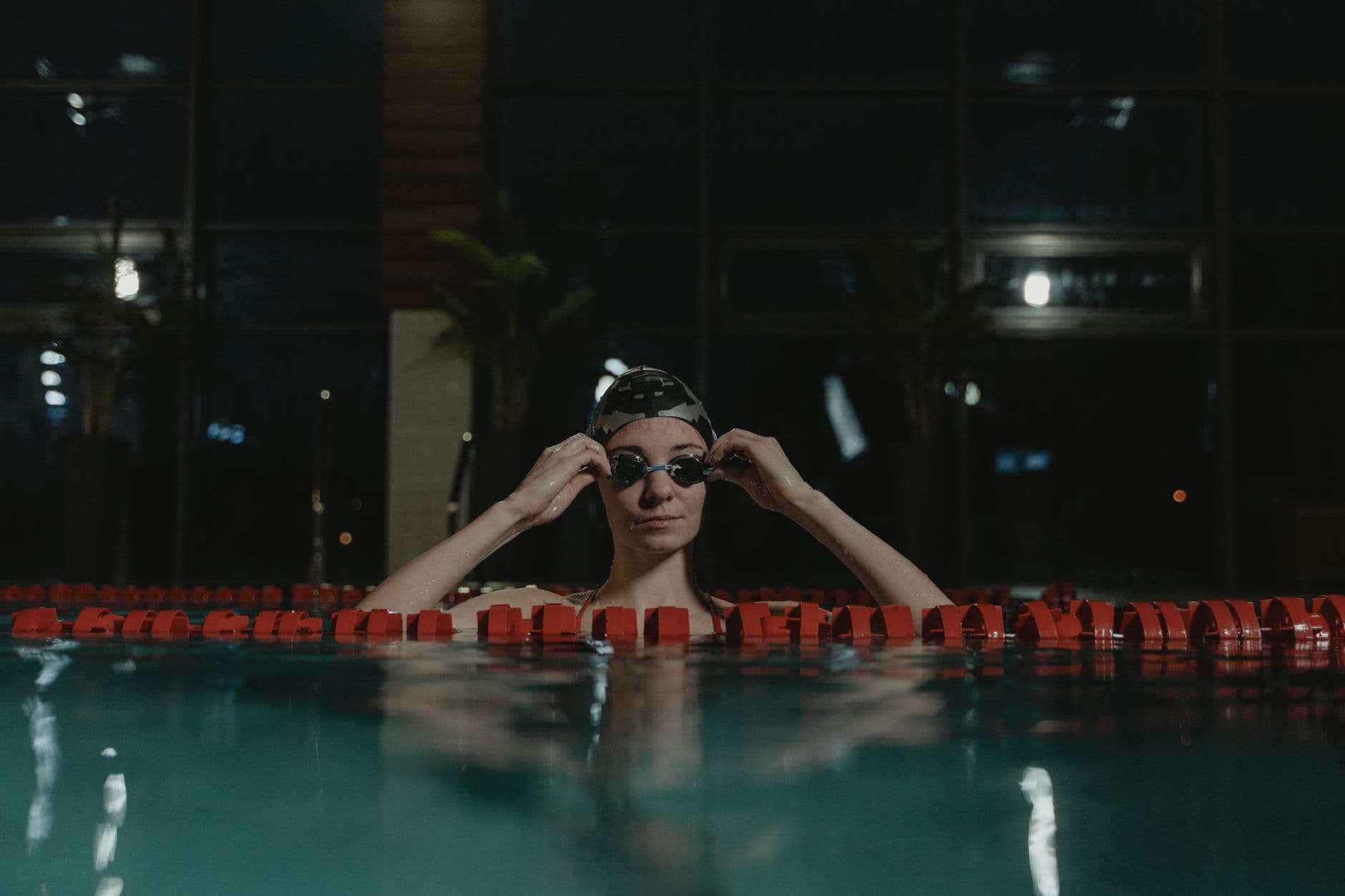
Water goes up your nose because nothing is coming out of it. Your nose is an open pipe into the back of your throat, and water moves up it whenever the pressure outside beats the air inside. That is the whole mechanism, and it is why the answer is never toughness or practice for its own sake: it is a thin, steady stream of air going the other way, started before the water arrives.
The reason the question has so many versions — Google splits it into when diving, when jumping in, when swimming, when upside down, when I flip turn and underwater — is that the moment you have to start that stream of air is different in each one. One habit, four different timings. This guide takes them one at a time, separates what is measured from what is coaching consensus, and ends with the things you should never do to keep your nose dry.
Why water goes up your nose at all
Your mouth has a lid. Your nose does not. Close your lips and nothing gets in; your nostrils stay open whatever you do with your face. So the only thing standing between pool water and your sinuses is the pressure balance at the end of that pipe, and water wins that contest in three situations: when your head goes deeper, when you hit the surface hard, and when you turn upside down.
Which means the fix is airflow. U.S. Masters Swimming says it plainly in its own guidance on post‑pool congestion: blowing air out of your nose while swimming “can actually help keep too much water from getting in there.” Air leaving the pipe occupies the pipe. There is no second technique.
You do have a valve back there. The soft palate is what stops food going up into your nose when you swallow, and some swimmers can hold it closed deliberately. We could not find any study measuring how reliably swimmers keep that seal while their heart rate is at 160 and their attention is on a wall, and published coaching guidance does not rely on it either — all of it relies on airflow. Treat the valve as a bonus and the air as the method.
The habit itself: a trickle, not a blast
Scott Bay, a USMS‑certified Masters coach and ASCA Level 5 coach, gives the practical version in his USMS article on breath control: “To control your exhale, hum while exhaling slowly through your nose.” Humming is the trick worth stealing, and it works for two reasons. It forces the exhale to be slow and continuous instead of one hard puff, and it gives you something to hear, so you know the air is still going out without having to think about it.
The blast is the common mistake. Empty your lungs in two seconds and you arrive at your next breath desperate — and gasping with a wet face is exactly how swimmers inhale water. The volume of air you need to keep water out is tiny. The duration is what matters.
The other half of the rule comes from the USMS Adult Learn‑to‑Swim teacher guide: you can breathe out through your mouth or your nose, but you always breathe in through your mouth. In freestyle, most of the exhale can leave through the mouth and the nose only needs the trickle; if your breathing pattern is still the thing falling apart, fix that first with freestyle breathing and come back to the nose.
Flip turns, where most swimmers meet this
Why do you get water up your nose during a flip turn? Because the exhale starts too late. As you tuck, your face sweeps through the water upside down and the water column pushes straight down your nasal passage. If no air is leaving the nose at that moment, water takes the space. USMS puts the fix in one line: exhale through your nose when starting your flip.
Note starting. The near‑universal error is to begin the exhale when you feel water — by which point it is already in, and you spend the push‑off coughing instead of streamlining. The air has to be moving before your chin reaches your chest, which means the cue belongs to the approach, not the somersault.
There is a second cause worth checking if the timing is right and it still happens: a flat, rushed turn drives a wave of water into your own face. A turn that rotates compactly moves your head through much less water than one that flops sideways, so the fault can be the flip turn itself rather than your breathing. And while you are rebuilding it, there is nothing wrong with doing your sets on an open turn: you keep training, and your face stays level.
Backstroke, where it is constant rather than occasional
Backstroke is the situation people describe as hopeless, and it is genuinely the hardest one, because the water never stops arriving. You are face up, so your own wake washes back over your nose, and every hand entry drops water on your face from above. There is no quiet moment in the stroke to start an exhale in.
So on backstroke the trickle is not a one‑second trick, it is continuous and light for the whole length: hum the entire 25. If you are gasping by the flags, the trickle is too strong.
Head position is the other half. A head tipped too far back lets water run over the face instead of past the ears, and a head that wanders makes you swim into your own wash; the fixes for both are in swimming backstroke straight. The single worst moment in the whole sport for this is the backstroke turn, where you roll onto your front, somersault and push off on your back — upside down, inverted, and switching surfaces, all in about a second. Expect to lose that one for a while.
Jumping in and diving
An entry is a pressure event. You hit the surface, the water is driven into whatever is open, and nothing you do afterwards helps. The exhale has to already be running before you touch the water.
For a feet‑first jump, that means the hum starts on the pool deck and keeps going until your head is back above the surface, because the water closes over your face while you are still travelling down. Chin tucked slightly rather than up: a head tipped back meets the surface nose‑first.
For a dive, the same rule with a tighter window, and the entry shape does more work than the breathing. A steep entry with the head in line slides in; a flat one slaps the surface with your face and forces water everywhere. The angles, and the water depth you need before you dive at all, are in how to dive into a pool — that one is a safety question, not a comfort question.
Upside down, underwater and handstands
This is the version that defeats children in the shallow end, and it is the hardest for a reason: being inverted means both pressure and gravity are pushing water the wrong way down your nose, and there is no brief moment to get away with. The trickle has to last the whole time you are upside down, every time, which is a lot of air for a kid doing handstands.
Depth makes it worse in a way you can feel. The deeper your head, the harder the water pushes at an open nose, which is why swimmers who are fine on the surface still lose it on a deep duck dive or on the first metres of an underwater dolphin kick off the wall.
And here is the line that matters more than a dry nose. Do not solve this by holding your breath. Bay’s USMS article is blunt about it: “When you hold your breath underwater, however, you’re at risk for shallow water blackout, which can cause you to inhale water and die.” The 2022 joint statement from the American Red Cross, USA Swimming and the YMCA of the USA calls hyperventilating before underwater swimming and extended breath‑holding “dangerous and potentially deadly activities” — and prefers the term hypoxic blackout, precisely because depth has nothing to do with it. It can happen in waist‑deep water.
The order to learn it in, from zero
If you are starting from not being able to put your face in, the nose is step three, not step one. The sequence below is the one in the USMS Adult Learn‑to‑Swim volunteer teacher guide, which is written for instructors teaching adults who cannot swim at all.
- Bubbles on the surface. Facing the wall, purse your lips and blow on the water. Nothing is submerged yet.
- Bottom lip in, then the whole mouth, blowing out the entire time.
- The bottom of your nose in the water. The guide treats the nose, eyes and ears as the three openings a fearful adult has to get wet, and it wets them one at a time on purpose.
- Whole face in, still blowing out.
- Bobs. Bend your knees, submerge completely, blow out through your mouth, stand, breathe in through your mouth. One breath in each time — the joint statement above tells instructors to allow a single inhalation before submerging, never a series of deep ones.
- The same bobs, now blowing out through your nose too. This is the rep that builds the habit.
- Swimming. Start blowing out as soon as you start stroking, not when you need air.
The guide’s instruction for our exact problem is one sentence: “Sometimes, students get water in their nose. If this happens, remind the student to only blow out through their nose and breathe in through the mouth.” If you are working through this on your own, learning to swim as an adult has the rest of the progression, and getting past the fear of water covers the part that is not technique.
What to do when exhaling is not fixing it
Three different failures hide behind “I tried that and it still happens”, and they need different answers.
It only happens at one specific moment. Good news: that is a timing problem in one situation, not a breathing problem. Isolate it. Six to eight reps of that one thing — just the turn, just the push‑off, just the jump — with generous rest, and stop while it is still going well. Chasing lengths while you fix it only teaches you to flinch.
You are exhaling but arriving desperate. The trickle is too hard. Hum instead of blow; you should be able to hum through a whole length and still want to breathe rather than need to.
It happens on every length regardless. Then the culprit is probably where your head is, not what your nose is doing, and the water is running over your face before any exhale could help. That is a body position problem, and it is worth measuring rather than guessing.
When a nose clip is a tool, and when it is a crutch
Nose clips get sneered at, and the sneering is wrong. The USMS teacher guide recommends them outright for the hard cases — “in extreme cases, recommend nose plugs” — while banning the thing people actually do instead: “No nose pinching allowed because you can’t do this and swim at the same time.” The pinch is the crutch. The clip is equipment. USMS also lists clips first among the things that help swimmers who get congested after every session, in both styles: the kind on a head strap and the kind that grips on its own.
A clip is the right tool when it buys you training you would otherwise not get: backstroke sets, artistic swimming, an adult who can finally start swimming lengths because the fear hurdle is gone, or anyone whose nose streams for hours afterwards. It becomes a crutch in one specific way — if it is the only reason you can swim at all, the exhale habit never gets built, and clips do come off mid‑length. Use it and keep practising bobs without it.
What the rulebook says about nose clips
If you race, the question is whether a clip is legal. In the World Aquatics Competition Regulations in force from February 2026, the answer is explicit for two of the three disciplines where it comes up.
- Open water (Part Three, Article 10): “An Athlete may wear a nose clip and/or use earplugs.” Named, permitted, no conditions.
- Artistic swimming (Part Seven, Article 11): “Nose clips or plugs and small ear stud jewellery may be worn.” The figures session, where athletes must wear black swimwear and a white cap, allows goggles and nose clips too.
- Pool swimming (Part Two, Article 14): nose clips are not mentioned at all. What that article bans, beyond permitted swimwear, is any device “that may aid his/her speed, buoyancy, or endurance (such as, for example, webbed gloves, flippers, fins, or adhesive substances)”. A nose clip is not that kind of device and does not appear on any prohibited list.
One caveat that matters more than the text above: at a club meet the referee applies your national federation’s rulebook, not the World Aquatics one, so check that document or ask the referee rather than trusting a web page. And at your local lap swim, nobody is checking anything.
Adults and children get stuck in different places
An adult’s version of this problem is tension. The instinct is to hold everything — breath, shoulders, jaw — and a held breath is a nose with no air coming out of it, so the problem feeds itself. What adults need is permission to go slower and shorter: five bobs done calmly beat a length done braced.
A child’s version is different. Water up the nose stings and startles, and a child who gets a bad one will not volunteer for a second attempt — which is how a confident swimmer suddenly refuses to go under. The fix is the game, not the instruction: humming contests, blowing a ping‑pong ball along the surface, bobs counted out loud. Teaching a child to swim has the sequencing, and the thing not to do is insist on the attempt that just hurt.
The runny nose two hours later is a different problem
Most people searching this have a second complaint: the nose that streams all afternoon. That one is not water still sitting in your head. In a study of 47 licensed adolescent swimmers aged 10 to 17 in Istanbul, nasal discharge rose measurably after a training session, while acoustic rhinometry found the nasal airway itself unchanged. It is one small study in one pool, and the swimmers were teenagers rather than adults, so treat it as a direction: the afternoon stuffiness looks like irritation, not plumbing.
USMS points at the pool rather than your technique for this — chlorine sensitivity after years of swimming, poor ventilation in an indoor pool, and trying a different pool before you cut down your swimming. The same logic as what chlorine does to skin and hair: the water chemistry is the variable, and it is not the same in every building.
Where this page stops: SwimFast does not publish medical guidance, and this is the border. USMS’s own article draws it in a sentence — if you develop an infection, or the congestion persists for days or weeks, see a doctor. Pain, fever, bleeding or anything one‑sided is a question for a clinician, not for a swimming site.
How to tell whether it is working
This habit is unusually easy to measure, so measure it instead of hoping. Pick the one situation that fails, write down how many clean reps out of eight you get today, and check the same number in a fortnight. Clean means no cough, no stop, no flinch — not “nearly”.
Do it at a pace that leaves room for an exhale: rushing is what breaks the trickle, and most swimmers rush because they are chasing an interval that was never realistic. Set the rest honestly with a pace clock, and use the pace calculator to see what your easy pace actually is before you decide what easy feels like.
Expect weeks, not days. The exhale has to become something you do without deciding to, and there is no published trial on how long that takes — coaches describe it in sessions rather than in days, and so do we.
What never to do to keep water out
- Never hold your breath to keep your nose dry. It is the one fix that looks like it works and the one that can kill you. Breath‑holding underwater and hyperventilating beforehand are what the Red Cross, USA Swimming and the YMCA of the USA jointly call dangerous and potentially deadly.
- No hypoxic or breath‑holding sets, whatever the set is called and whoever wrote it. If you want to work on breath control, the safe version is slow exhaling, not held breath, and what swimming does to lung capacity covers what that training can and cannot change.
- Never practise any of this alone. Underwater work belongs in a lifeguarded pool with someone who can see you.
- Do not pinch your nose shut to swim. You cannot pinch and swim at the same time, and USMS bans it in lessons for that reason. A clip if you need one; a hand, never.
- Get out if you feel lightheaded, or if your vision narrows or greys. That is not something to push through, and it is not a nose problem.
If you want the rest of the mechanics around the moments that break first, the technique section has the turns, the dive and the breathing patterns the nose exhale has to fit inside.
Where this comes from, and what is not measured
The exhale‑through‑the‑nose instruction, the humming cue, the learn‑to‑swim progression and the nose‑clip guidance are all published U.S. Masters Swimming material, cited below with its authors and dates. That is coaching consensus from a national governing body, not experimental evidence, and it is labelled that way on purpose: we found no trial measuring how often water enters the nose with and without an exhale, nor any measuring how long the habit takes to build. The nose‑clip rules are quoted from the World Aquatics Competition Regulations in force from February 2026. The post‑swim nasal discharge finding is one study of 47 adolescent swimmers. The breath‑holding warnings are from the 2022 joint statement of the American Red Cross, USA Swimming and the YMCA of the USA, and from USMS’s own article on breath control.
Frequently asked questions
Why do I get water up my nose during a flip turn?
Because the exhale starts too late. Going upside down pushes water straight down an open nasal passage, and by the time you feel it, it is in. U.S. Masters Swimming's instruction is to exhale through your nose when you start the flip, not when you reach the wall - the air has to be moving before your chin tucks.
Should you breathe out through your nose or your mouth when swimming?
Either, and on most strokes both: the USMS Adult Learn-to-Swim guide's rule is that you can breathe out through your mouth or nose but always breathe in through your mouth. Keep a small amount going out of the nose whenever your face is in the water, and send the rest out of your mouth.
Is it bad to use a nose clip when swimming?
No. USMS recommends nose plugs for swimmers who cannot solve it any other way, and the World Aquatics rules name nose clips as permitted in open water and artistic swimming. The habit worth avoiding is pinching your nose with your hand, which USMS bans in lessons because you cannot pinch and swim at once.
Why is my nose running for hours after I swim?
That is irritation rather than water still inside you. One study of 47 adolescent swimmers measured a rise in nasal discharge after a session while the nasal airway itself was unchanged. USMS points at chlorine sensitivity and pool ventilation. If it turns into an infection or lasts days, see a doctor rather than a swimming guide.
How do you stop water going up your nose when you jump in?
Start the exhale before you touch the water and keep it going until your head is back above the surface, because the entry itself drives water into anything open. Tuck your chin slightly instead of tipping your head back, which is what makes a feet-first jump meet the surface nose-first.
Sources
- How Can I Avoid a Stuffy Nose, Runny Nose, or Sinusitis After Swimming? (Kelly O'Mara, 31 December 2019) — U.S. Masters Swimming
- 3 Myths About Flip Turns (and the Truths Behind Them) (Cokie Lepinski, 7 January 2025) — U.S. Masters Swimming
- How to Work Safely on Breath Control (Scott Bay, 4 April 2023) — U.S. Masters Swimming
- Adult Learn-to-Swim Volunteer Teacher Swim Lesson Guide (bobs, bubbles and nose plugs) — U.S. Masters Swimming
- Competition Regulations, in force February 2026 - Part Two art. 14 (pool), Part Three art. 10 (open water), Part Seven art. 11 (artistic swimming) — World Aquatics
- Joint Statement on Hypoxic Blackout and Inaccurate Use of the Terminology Shallow Water Blackout (November 2022) — American Red Cross, USA Swimming and the YMCA of the USA
- Eksi N. et al. (2021). Evaluation of exercise-induced bronchoconstriction and rhinitis in adolescent elite swimmers. North Clin Istanb 8(5):493-499 — North Clin Istanb
Read next
How to do an open turn, and when the rules make you use two hands
The open turn step by step, and the two-hand touch rule read from the 2026 regulations: three separate conditions, and three different ways to be disqualified.
Why do swimmers wear two caps? To pin the goggle straps down
The second cap covers the goggle straps and stops the first one wrinkling. Two caps is explicitly legal, and two is the written maximum — here is the rule.

What age should a child start swim lessons?
The official answer is the first birthday for lessons, but babies can be in water long before that. Here is where each health body draws the line, and why it matters.
SwimFast is an independent publication. We are not a swim school, a coaching service or a governing body, and nothing here is medical advice. Training paces and test protocols are cited from the published research or federation documents linked on each page. Never swim alone, never attempt breath-hold work without supervision, and check with a doctor before starting a new training programme.